Our Location
Free Trade Tower, Xiyong street.
Chongqing, China

Free Trade Tower, Xiyong street.
Chongqing, China
The mobility equipment market is changing. Customers are no longer looking for a basic walking aid that serves only one purpose. Older adults, people with limited mobility, rehabilitation patients, and caregivers increasingly want products that offer greater flexibility without requiring several separate pieces of equipment.
For medical equipment distributors and wholesale buyers, this creates an interesting business opportunity.
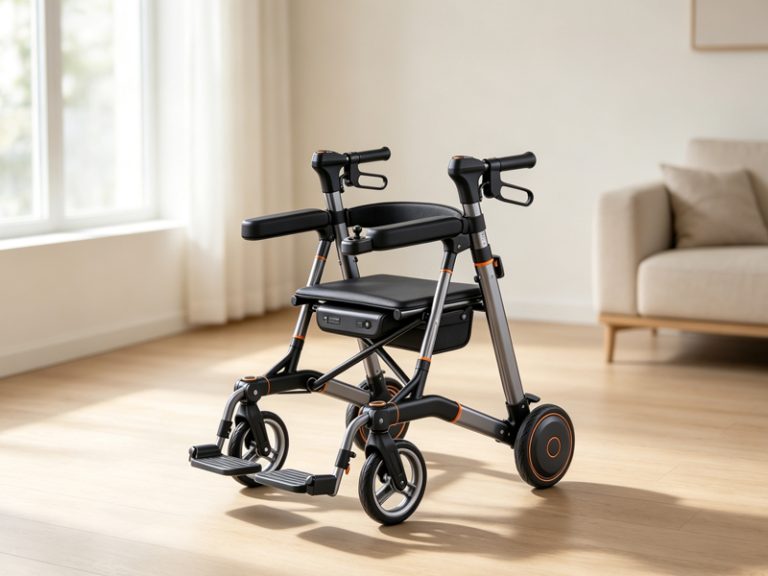
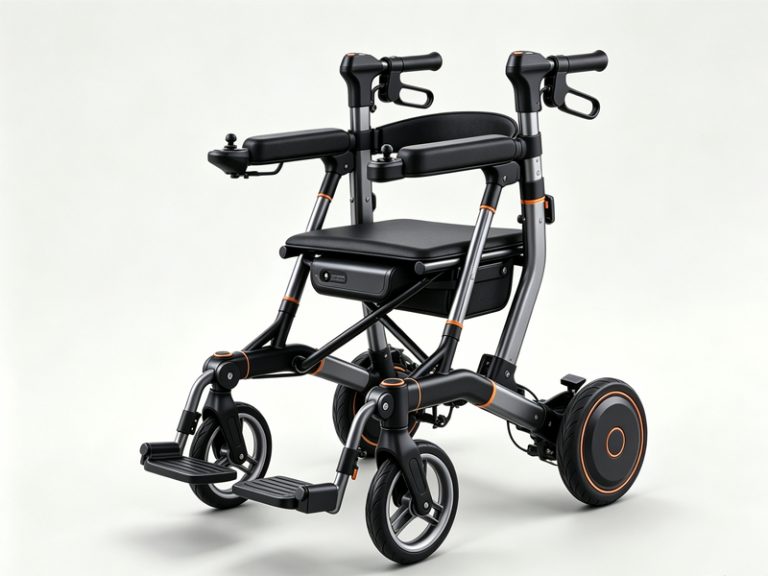
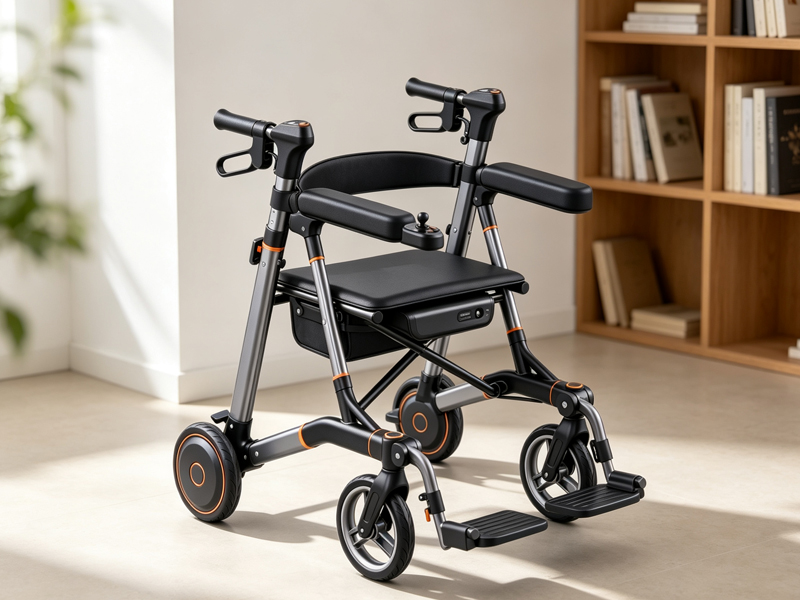
A 4-in-1 electric rollator walker combines four mobility-related functions in one product: a walking aid, a transport wheelchair, an electric wheelchair, and a rehabilitation training aid. Instead of purchasing and managing four different product categories, distributors can introduce a multifunctional mobility solution that addresses several customer needs.
However, buying a 4-in-1 electric rollator walker wholesale requires more than comparing supplier quotations. Product structure, electrical performance, safety features, user comfort, durability, certifications, after-sales support, and long-term supply reliability all influence whether a product will succeed in your market.
A product may look impressive in a catalog, but its actual performance determines whether customers recommend it, whether retailers reorder it, and whether distributors can build a sustainable business around it.
The first thing distributors should understand is that a 4-in-1 electric rollator walker is not simply an ordinary rollator with a motor added to it.
Its value comes from combining different mobility functions into a coordinated design. Each function addresses a different stage of daily movement or rehabilitation.
1. Walking Aid: Supporting Independent Daily Mobility
The walking aid function is the foundation of the product.
For older adults who can still walk but need additional balance and stability, a traditional walker or rollator provides support during everyday activities. Users may need assistance when walking around the house, moving through shopping areas, visiting medical facilities, or taking short outdoor walks.
A well-designed electric rollator walker should provide a stable frame, comfortable handgrips, suitable handle height, reliable braking, and wheels that move smoothly across common indoor and outdoor surfaces.
The frame should also provide sufficient support when users need to stop, change direction, or sit down and rest.
For distributors, this function makes the product relevant to a broad customer group. It can be positioned alongside conventional rollators, folding walkers, and other daily mobility aids.
The important distinction is that an electric rollator walker should not be marketed as a replacement for every conventional walking aid. Its suitability depends on the user’s physical condition, walking ability, balance, and ability to operate the equipment safely.
2. Transport Wheelchair: Making Longer Journeys More Manageable
Even people who can walk short distances may struggle with longer journeys.
A trip to the supermarket, a hospital appointment, or a visit to a public attraction can become exhausting when walking continuously is difficult. In these situations, a transport wheelchair function offers another way to move.
The caregiver can assist the user while the product is configured for transport, reducing the need to bring a separate wheelchair.
When evaluating this function, wholesale buyers should pay particular attention to:
The conversion process deserves special attention. A multifunctional product should not require complicated adjustments that confuse older users or caregivers.
Distributors should ask manufacturers to demonstrate the complete conversion process rather than relying on product photographs.
It is also important to distinguish a transport wheelchair from a self-propelled manual wheelchair. A transport configuration generally relies on another person to push the user. Its wheels, braking system, and intended operating conditions should be clearly explained in the product documentation.
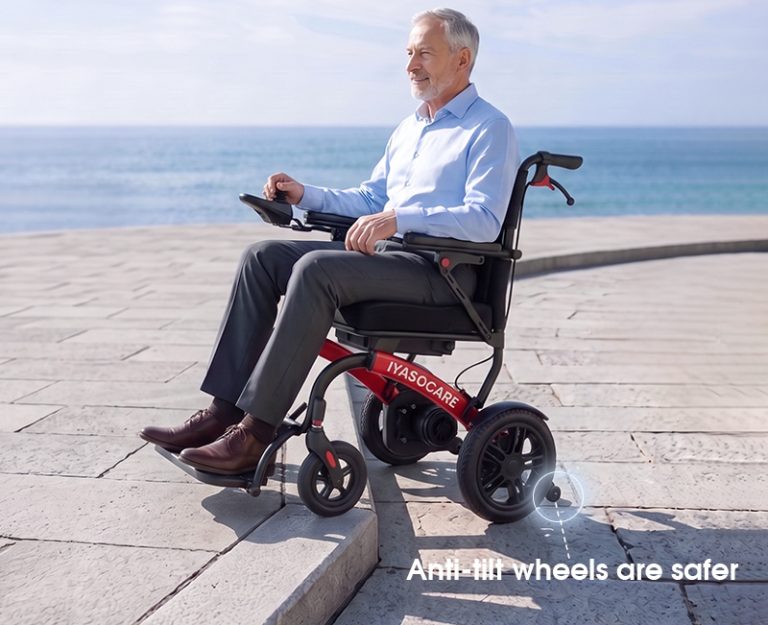
3. Electric Wheelchair: Providing Powered Mobility
The electric wheelchair function is one of the most commercially attractive aspects of a 4-in-1 mobility product.
For users who cannot comfortably walk long distances, powered assistance can reduce the physical effort involved in everyday mobility.
Depending on the product design, users may operate the electric configuration through a joystick or another designated control system. The motor, battery, controller, and braking system work together to provide powered movement.
For wholesale buyers, this is also the function that requires the most careful technical evaluation.
Do not focus only on motor wattage or advertised maximum speed. A more complete assessment should include:
Battery range deserves particular attention.
Manufacturers may advertise a maximum travel distance, but actual performance can vary according to user weight, terrain, temperature, battery condition, speed, and driving habits.
A reliable supplier should explain the test conditions behind its range figures instead of presenting an attractive number without supporting information.
The electric wheelchair function also makes after-sales service more important. Batteries, controllers, motors, wiring, and chargers are components that may require inspection, maintenance, or replacement during the product’s service life.
4. Rehabilitation Training: Supporting the Transition Toward Greater Mobility
The fourth function is rehabilitation training.
During recovery, some individuals need assistance as they gradually rebuild confidence, balance, and walking ability. A multifunctional mobility device can provide a practical tool for supervised mobility activities, depending on its design and the user’s rehabilitation plan.
For example, a patient may use the walking configuration for supported walking practice and switch to a seated configuration when rest is needed.
This flexibility can be useful in home-care environments, rehabilitation facilities, and other supervised settings.
However, distributors should be careful about how they describe this function.
A 4-in-1 electric rollator walker is not automatically a certified rehabilitation therapy machine. Its ability to support walking practice does not mean it can replace professional physiotherapy, prescribed exercises, or clinical rehabilitation equipment.
Marketing language should focus on mobility assistance and supported rehabilitation activities rather than promising medical recovery outcomes.
For distributors, this distinction is important when preparing product descriptions, advertising materials, and technical documentation for different markets.
The real selling point is versatility: one product can support different mobility needs as a person’s daily requirements change.
Traditional mobility equipment usually serves one primary purpose.
A standard rollator supports walking. A transport wheelchair helps caregivers move users who cannot walk comfortably. An electric wheelchair provides powered mobility. Rehabilitation equipment serves more specialized training requirements.
A 4-in-1 electric rollator walker brings several of these functions together.
This creates value for both end users and distributors.
From the customer’s perspective, a multifunctional product may reduce the need to purchase, store, and transport several separate mobility devices. It can also offer more flexibility when mobility needs vary throughout the day.
From the distributor’s perspective, the product creates an opportunity to introduce a higher-value category rather than competing exclusively in the conventional rollator market.
There are several commercial advantages worth considering.
A broader target customer base
The product can appeal to older adults, people with reduced walking endurance, individuals with certain mobility limitations, family caregivers, home-care providers, and rehabilitation-related buyers.
These groups have different purchasing motivations, but they share an interest in practical mobility support.
Greater product differentiation
Many retailers already sell basic walkers, rollators, and wheelchairs. Offering a genuinely multifunctional product gives distributors something different to present to customers.
The product can become a distinctive category within an existing mobility equipment portfolio.
Potentially higher order value
Because the product integrates several functions, it may support a higher retail price than a conventional rollator.
However, a higher selling price does not automatically guarantee higher profit. Import costs, product weight, packaging dimensions, shipping expenses, spare parts, warranty obligations, and local distribution margins must all be included in the calculation.
More opportunities for cross-selling
Distributors can introduce the product alongside walking aids, wheelchair cushions, mobility accessories, replacement batteries, ramps, and other complementary equipment.
This creates opportunities to develop a more complete mobility product range.
The strongest business case is not simply that one product replaces four products. It is that one carefully designed product can serve multiple customer situations while giving distributors a differentiated offering.
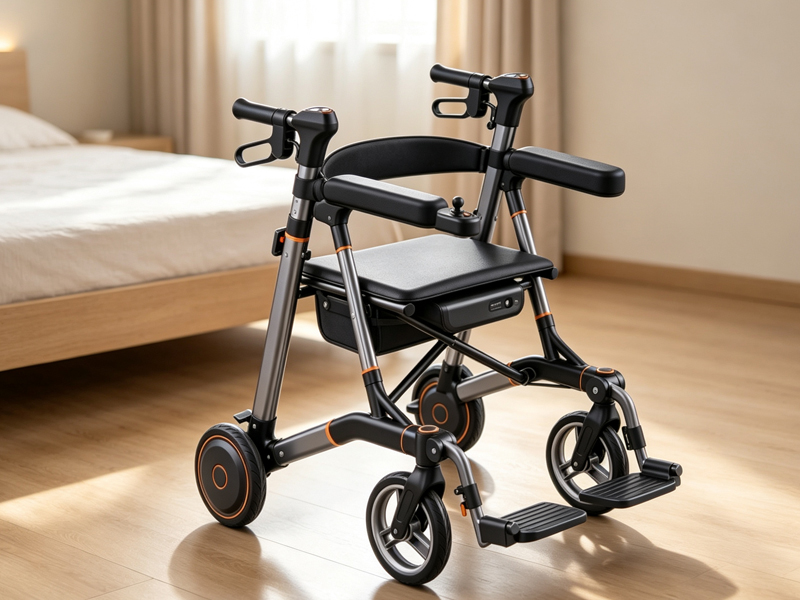
A multifunctional product contains more components and mechanisms than a standard rollator. Consequently, its quality assessment should be more detailed.
A low wholesale price may appear attractive at first, but it can quickly lose its appeal if the product has complicated operation, unreliable electrical components, uncomfortable seating, or expensive maintenance requirements.
The following factors deserve attention before placing a bulk order.
Frame construction and structural stability
Start with the frame.
The frame supports the user during walking, carries the seating system, and provides the structural foundation for the wheelchair configurations.
Common materials include aluminum alloy and steel. Aluminum can help reduce overall product weight, while steel may offer advantages in certain structural applications. The correct choice depends on engineering design, material thickness, joint construction, and load requirements.
Ask the manufacturer for:
A strong-looking frame is not necessarily a well-engineered frame. Weld quality, fastening points, folding joints, and connection areas should all be inspected.
Motor and battery performance
The electric drive system has a direct influence on customer satisfaction.
A motor that performs well under light loads may behave differently when carrying a heavier user or traveling across an inclined surface.
Request complete specifications for the motor, controller, battery, and charger.
Battery information should include the battery type, voltage, capacity, expected charging time, replacement procedure, and applicable transport documentation.
Lithium-ion batteries deserve additional attention because shipping and destination-market requirements may apply.
For international shipments, request the relevant battery safety and transport documents, such as applicable UN 38.3 test documentation where required.
Also confirm whether replacement batteries and chargers can be supplied independently.
Braking and safety systems
Braking is a critical part of every configuration.
A walking aid needs dependable hand brakes. A transport wheelchair needs appropriate wheel-locking arrangements. An electric wheelchair requires a reliable method of controlling and stopping powered movement.
Distributors should verify that the braking system is suitable for each intended operating mode.
Ask the supplier to demonstrate:
Never assume that a braking system suitable for one configuration automatically provides adequate protection in another.
Seating comfort and ergonomic design
Customers may spend considerable time sitting in the transport or electric wheelchair configuration.
A poorly designed seat can make an otherwise attractive product difficult to sell.
Check seat dimensions, cushioning, backrest support, armrest height, footrest positioning, and the ease of getting into and out of the seat.
Pay attention to the product’s overall width as well. A device that is too wide may be inconvenient in narrow hallways, elevators, or residential doorways.
Distributors should request the full dimensional drawing, including the folded dimensions and the dimensions in every operating configuration.
Folding, storage, and transportation
Portability can be a major purchasing consideration.
Many consumers and caregivers need to put mobility equipment into a car trunk or store it in a limited space at home.
Check whether the product can be folded easily, whether the battery must be removed, and whether the folding mechanism can be operated without excessive physical effort.
Also evaluate the product’s total weight.
A product that offers four functions but is extremely difficult to lift may not meet the expectations of customers who prioritize portability.
Remember that folding dimensions also affect wholesale shipping costs and warehouse efficiency.
Ease of conversion between functions
This is one of the most important features of a genuine 4-in-1 product.
If switching between the walking aid, transport wheelchair, electric wheelchair, and rehabilitation training configurations takes too many steps, users may become frustrated.
Ask the supplier for a live demonstration of each conversion process.
Check whether the locking mechanisms are clearly identifiable, whether components can be secured correctly, and whether the user manual explains each step with illustrations.
A product should be easy to understand before it is easy to sell.
Regulatory compliance is an essential part of medical and mobility equipment sourcing.
Different countries have different requirements for product classification, electrical safety, labeling, documentation, and market access. Distributors should never assume that one certificate automatically covers every market or every function of a multifunctional product.
For rollator-related functions, ISO 11199-2 is an important reference. It addresses requirements and test methods for rollators, including safety, ergonomics, performance, and manufacturer-supplied information.
For wheelchair-related functions, the ISO 7176 series includes standards covering stability, braking, dimensions, strength, electrical performance, and other aspects of wheelchair safety.
For electrically powered wheelchairs, ISO 7176-14 addresses power and control systems. ISO 7176-21 addresses electromagnetic compatibility requirements and test methods for electrically powered wheelchairs, scooters, and battery chargers.
These standards are useful starting points, but buyers should confirm which requirements apply to the specific product and its intended use.
The US FDA, for example, classifies powered wheelchairs under its medical device framework. Its classification information identifies powered wheelchairs under regulation 21 CFR 890.3860 as Class II devices, with applicable premarket requirements depending on the product and regulatory pathway.
This does not mean every product marketed as a 4-in-1 electric rollator automatically follows the same regulatory classification. The actual intended use, product design, claims, and configuration matter.
For European distribution, buyers should verify the applicable EU medical device and other relevant regulatory requirements rather than relying on a generic CE logo.
Before confirming a wholesale order, request the following documents where applicable:
A professional manufacturer should be able to explain which documents apply to the exact model being purchased.
The most important principle is simple: certificates and test reports must correspond to the actual product, not merely to a similar model from the same factory.
Choosing the right manufacturer is just as important as choosing the right product.
Two suppliers may offer similar specifications, but their engineering capabilities, quality management, production consistency, and after-sales support can be very different.
For distributors planning to build a long-term business, the supplier should be treated as a strategic partner rather than simply the lowest-priced source.
Manufacturing experience and technical capability
Ask how long the company has been manufacturing mobility equipment and whether it has experience with powered mobility products.
A factory producing conventional walkers may not have the same technical capabilities as one manufacturing electric wheelchairs.
The supplier should understand frame engineering, battery systems, electronic controls, mechanical conversion mechanisms, and final product testing.
Ask whether the factory has its own engineering team and how it handles product development and technical improvements.
Production capacity and consistency
A supplier may provide an excellent sample but struggle to maintain the same quality across a large production order.
Request information about production capacity, quality inspection procedures, and batch traceability.
It is also useful to understand whether critical components, such as motors, batteries, controllers, and chargers, come from stable and documented sources.
For repeat orders, consistent component specifications are particularly important.
Customization and OEM/ODM services
Some distributors want to sell products under their own brand rather than the manufacturer’s brand.
In this case, ask whether the supplier offers OEM or ODM services.
Potential customization options may include:
However, customization should not compromise the tested product configuration or introduce unverified electrical and structural changes.
After-sales service and spare parts
A powered mobility product requires more after-sales support than a simple manual walking aid.
Before purchasing, ask whether the supplier can provide replacement batteries, motors, controllers, chargers, wheels, brake components, and other service parts.
Find out how warranty claims are handled, what information is required for troubleshooting, and whether the supplier can provide technical videos or remote support.
For distributors, this matters because the end customer usually contacts the local seller when something goes wrong.
A supplier that responds quickly and provides reliable replacement parts can help protect the distributor’s reputation.
Price is important, but the unit quotation is only one part of the total procurement cost.
When comparing 4-in-1 electric rollator walker wholesale suppliers, buyers should calculate the complete landed cost.
This typically includes:
| Cost factor | What distributors should evaluate |
|---|---|
| Product price | Unit quotation and included accessories |
| MOQ | Minimum order quantity and price breaks |
| Packaging | Carton dimensions and protective materials |
| Shipping | Sea freight, air freight, or other transport options |
| Battery transport | Applicable battery handling and documentation |
| Import duties | Destination-specific tariff classification and taxes |
| Quality inspection | Pre-shipment inspection and testing expenses |
| After-sales | Warranty reserve and replacement parts |
| Marketing | Product photography, demonstration units, and promotional materials |
For a product containing a motor, battery, frame, seat, and several mechanical configurations, packaging deserves particular attention.
A bulky carton can significantly affect shipping expenses even when the unit price is competitive.
Ask suppliers to provide the packaged dimensions, gross weight, net weight, and estimated loading quantity for the relevant shipping method.
How should distributors approach MOQ?
If you are entering the market for the first time, starting with a smaller trial order may be more sensible than immediately purchasing a large quantity.
A trial order allows you to evaluate customer feedback, product usability, packaging condition, and after-sales requirements.
Once demand becomes clearer, you can negotiate larger quantities and better pricing.
For established distributors, volume-based pricing can improve procurement efficiency, but only when the product quality and sales potential have already been verified.
Why the cheapest quotation is not always the best deal
Imagine two suppliers offering the same general product category.
Supplier A offers a lower unit price but has limited spare parts, inconsistent battery specifications, and slow technical support.
Supplier B charges slightly more but provides documented testing, stable components, clear warranty terms, and a reliable supply of replacement parts.
For a distributor, Supplier B may represent the better long-term investment.
The actual cost of a product includes the cost of maintaining it in the market.
A good product still needs the right sales strategy.
The 4-in-1 electric rollator walker can serve several distribution channels, but each channel has different purchasing priorities.
Medical equipment wholesalers
Wholesalers generally care about product consistency, competitive pricing, packaging, documentation, and repeat-order reliability.
When presenting the product, emphasize its four mobility functions, technical specifications, wholesale availability, and spare parts support.
Mobility equipment retailers
Retailers need products that are easy to demonstrate and explain.
Provide clear product videos showing how the device changes between configurations. Retail staff should understand the difference between walking assistance, caregiver-assisted transport, and powered wheelchair operation.
A practical demonstration can be more convincing than a long list of specifications.
Rehabilitation centers and care facilities
Institutional buyers usually pay closer attention to durability, user suitability, cleaning, maintenance, and operational safety.
Provide technical documents and explain the intended use of each configuration.
Do not position the device as a replacement for specialized rehabilitation equipment unless its design and regulatory status support that claim.
Online mobility equipment stores
For e-commerce sellers, product presentation is particularly important.
The product page should include high-quality images, clear dimensions, maximum user capacity, battery information, operating instructions, and a comparison of the four functions.
Avoid vague descriptions such as “suitable for everyone” or “works on all terrains.”
Specific, verifiable information builds more trust and helps reduce returns caused by incorrect customer expectations.
Even experienced distributors can make mistakes when entering a new product category.
One common mistake is evaluating the product based on appearance alone. A modern design does not guarantee reliable performance. Always inspect the product physically and test its major functions.
Another mistake is focusing entirely on motor power and battery range. These figures matter, but they should be evaluated alongside braking, stability, maneuverability, seating comfort, and the user’s ability to operate the controls.
Some buyers also overlook the conversion process. If the product is difficult to switch between configurations, its multifunctional selling point becomes less convincing.
Documentation is another area that deserves attention. A supplier’s general company certificates are not a substitute for model-specific test reports and destination-market compliance documents.
Finally, distributors sometimes place large orders before testing market demand. This can lead to excessive inventory, cash-flow pressure, and slow-moving stock.
A better approach is to evaluate a sample, confirm compliance, test the product with representative users where appropriate, and then scale purchasing according to actual demand.
A successful wholesale business is rarely built around one purchase order.
The more sustainable approach is to develop a product category that customers trust and retailers are willing to reorder.
For distributors, this starts with choosing a manufacturer that understands both the mechanical and electrical sides of mobility equipment.
A reliable supplier should provide more than a quotation. It should offer clear product specifications, consistent manufacturing quality, relevant testing documentation, customization support, and dependable after-sales service.
It should also be willing to discuss product limitations honestly.
For example, the manufacturer should explain the maximum user weight, operating conditions, charging requirements, maintenance intervals, and intended use of each configuration.
This transparency helps distributors prepare accurate product descriptions and train their sales teams properly.
Before moving forward with a wholesale partnership, consider requesting a complete product package that includes:
Once these details have been confirmed, distributors can make a more informed purchasing decision and develop a sales strategy based on the product’s real capabilities.
The 4-in-1 electric rollator walker is an interesting addition to the mobility equipment market because it brings together walking support, assisted transportation, powered mobility, and rehabilitation-related walking practice.
Its commercial potential, however, depends on more than the number of functions printed on the packaging.
The real value lies in how safely, comfortably, and reliably those functions work in everyday situations.
For distributors, choosing the right product and the right manufacturing partner is the foundation of a competitive mobility equipment business.
Q1: What are the four functions of a 4-in-1 electric rollator walker?
A 4-in-1 electric rollator walker combines four mobility-related functions: a walking aid, a transport wheelchair, an electric wheelchair, and a rehabilitation training aid. It allows users to access different forms of mobility support according to their physical abilities and daily needs. The exact functions and operating methods depend on the product’s design.
Q2: What should distributors consider when buying 4-in-1 electric rollator walkers wholesale?
Distributors should evaluate frame strength, maximum user weight, motor performance, battery capacity, braking systems, seating comfort, folding dimensions, conversion mechanisms, applicable certifications, MOQ, wholesale pricing, warranty terms, and spare parts availability. Testing a physical sample before placing a large order is strongly recommended.
Q3: How can distributors find a reliable 4-in-1 electric rollator walker manufacturer?
Look for manufacturers with proven experience in both mobility equipment and powered wheelchair technology. Request product samples, technical specifications, relevant test reports, quality management documentation, and after-sales policies. A reliable supplier should offer consistent product quality, transparent communication, OEM/ODM support where needed, and long-term access to replacement components.