Our Location
Free Trade Tower, Xiyong street.
Chongqing, China

Free Trade Tower, Xiyong street.
Chongqing, China

In healthcare environments, mobility equipment is more than just a supporting product. It plays an important role in patient transportation, daily care routines, rehabilitation assistance, and the overall efficiency of medical facilities. Hospitals, nursing homes, rehabilitation centers, and medical equipment distributors all need wheelchairs that offer dependable performance, practical operation, and a reasonable balance between quality and purchasing cost.
For buyers looking for a reliable manual wheelchair for healthcare facilities and wholesale distribution, the YSM809 Manual Wheelchair is a practical option worth considering.
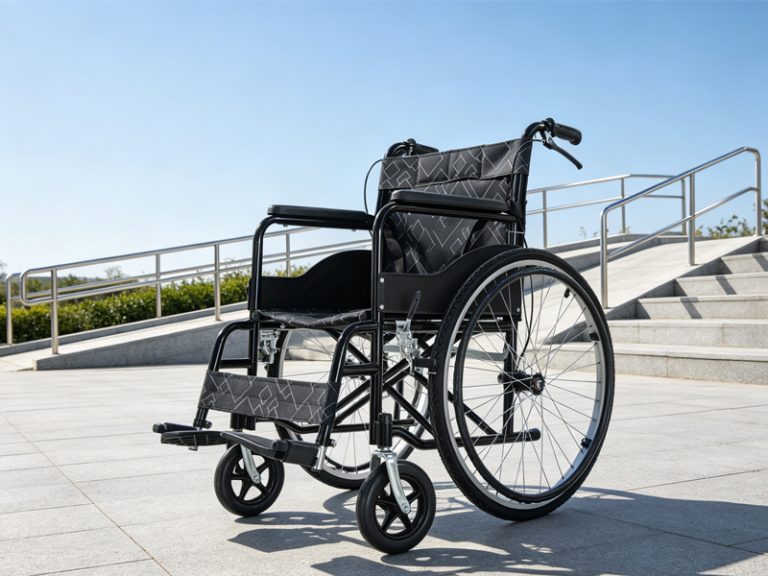
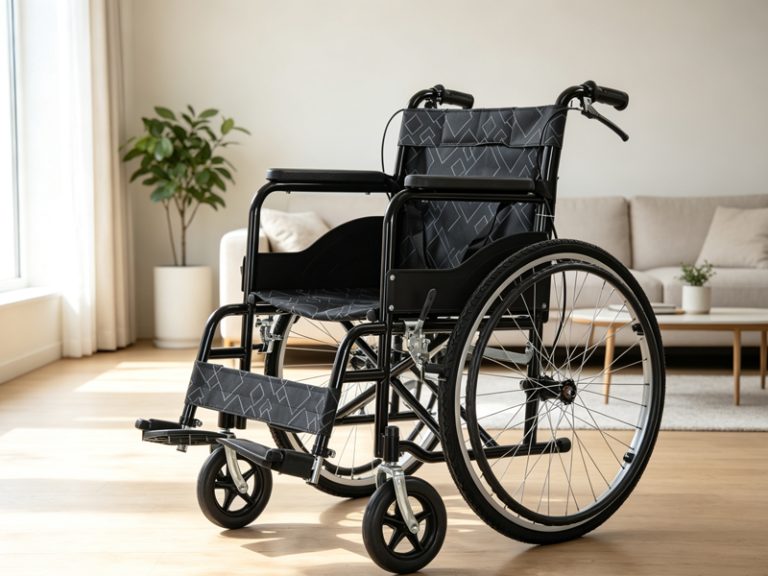
Designed with a black carbon steel frame, a straightforward folding backrest mechanism, fixed armrests, detachable footrests, and durable solid tires, the YSM809 focuses on the essential features required for everyday institutional use. Its 22-inch MAG rear wheels, 7-inch solid PVC front castors, black nylon upholstery, and adjustable footplates provide a functional configuration for a variety of healthcare and mobility applications.
Whether you are purchasing equipment for a medical facility or sourcing products for wholesale and bulk supply, understanding the construction, dimensions, and practical advantages of this wheelchair can help you make a more informed purchasing decision.
The YSM809 is a manually operated wheelchair developed around a practical and straightforward design. Rather than relying on complicated mechanisms or unnecessary accessories, it combines a carbon steel frame with essential mobility components to support daily transportation and assisted movement.
For healthcare facilities, equipment reliability and ease of use are important considerations. A wheelchair may be used by different patients and handled by different caregivers throughout the day. Therefore, its structure, braking arrangement, seating configuration, and wheel design all deserve attention.
The YSM809 features a black carbon steel frame that provides a solid structural foundation. Carbon steel is widely used in manual wheelchair manufacturing because of its strength, availability, and suitability for conventional wheelchair frame construction.
The black finish also gives the wheelchair a clean and professional appearance. It is particularly suitable for institutional purchasing, where maintaining a consistent appearance across multiple pieces of medical equipment can be desirable.
Another practical feature is the drop-back pushing handle with a united brake arrangement. This configuration is intended to make caregiver-assisted handling more convenient while providing access to the wheelchair’s braking system.
For distributors, the YSM809 offers a clearly defined product configuration that is relatively easy to introduce into existing medical equipment catalogs. Its conventional manual wheelchair design also makes it suitable for buyers who prefer essential mobility functions over more complicated product configurations.
The frame is one of the most important components of any manual wheelchair. It supports the seating system, armrests, footrests, wheels, and the user’s weight during normal operation.
The YSM809 uses a black carbon steel frame, selected for its structural properties and practical manufacturing advantages.
Carbon steel is commonly used in healthcare mobility equipment because it offers a useful combination of strength, rigidity, and cost efficiency. Compared with more expensive lightweight materials, it can be an economical choice for buyers who need to purchase multiple wheelchairs within a controlled budget.
This is particularly relevant for hospitals, nursing facilities, rehabilitation centers, and medical equipment distributors.
When purchasing wheelchairs in bulk, buyers generally need to consider more than the price of one unit. They also need to evaluate product consistency, replacement requirements, maintenance arrangements, and the suitability of the equipment for its intended application.
A conventional carbon steel frame can be a sensible choice when the priority is dependable everyday functionality and straightforward equipment management.
The black frame finish further contributes to the product’s professional appearance, making the YSM809 suitable for a wide range of healthcare settings.
However, buyers should also consider the additional weight associated with steel construction when comparing it with aluminum wheelchair models. If a lightweight wheelchair is a primary requirement, it is worth comparing the YSM809 with an aluminum-frame alternative before placing an order.
A wheelchair’s seating configuration has a direct influence on the user’s daily experience. Seat width, seat depth, backrest height, and armrest positioning should all be considered when selecting a model.
The YSM809 comes with black nylon seat and back upholstery. Nylon is commonly used in manual wheelchairs because it is relatively lightweight, flexible, and practical for routine cleaning and maintenance.
The black upholstery also matches the frame, creating a consistent appearance.
The wheelchair has a seat width of 44.5 cm and a seat depth of 40 cm. These dimensions provide buyers with useful reference points when assessing whether the model is suitable for their intended users.
The fixed armrest frame is equipped with a soft black PVC armrest pad. This design provides a designated surface for the user’s arms while maintaining a relatively simple and stable armrest structure.
The armrest height from the seat is 31 cm, while the distance between the armrests is 42.5 cm.
These measurements are particularly important for healthcare procurement teams. A wheelchair should not be selected based on its overall appearance alone. Buyers should compare its actual seating dimensions with the physical requirements of the people who will use it.
The backrest height is 42 cm, offering a defined back support area for conventional seated positioning.
For distributors, providing accurate seating dimensions is also an effective way to reduce purchasing misunderstandings. Customers can compare the specifications with their existing equipment requirements before confirming an order.
It is worth noting that seat dimensions alone do not establish whether a wheelchair is suitable for every user. Individual body measurements, posture requirements, mobility conditions, and clinical recommendations should also be considered.
Footrest design is another important factor in wheelchair usability.
The YSM809 is equipped with detachable footrests secured with an E-clip locking mechanism. This arrangement allows the footrests to be removed when necessary, which can be useful during certain transfer procedures, storage arrangements, and wheelchair handling situations.
For caregivers, detachable footrests provide additional flexibility when assisting users in getting into or out of the wheelchair.
The footplates are made of plastic and feature an adjustable-height design. They are fixed in position using screws.
This configuration allows the footplate height to be adjusted according to the user’s leg position and practical seating requirements.
The footrest height from the ground is 9 cm according to the product specifications.
For healthcare facilities, these details are worth considering because users may have different leg lengths and seating requirements. Proper foot positioning can contribute to a more comfortable and stable sitting experience.
When adjusting the footplates, caregivers should ensure that both sides are securely fixed and positioned appropriately. The E-clips and adjustment screws should also be inspected regularly to confirm that they remain properly secured.
For wholesale buyers, the combination of detachable footrests and adjustable plastic footplates offers practical functionality without introducing an unnecessarily complicated structure.
Wheel configuration has a significant influence on how a manual wheelchair moves and handles during everyday use.
The YSM809 features 7-inch solid PVC front castors and 22-inch MAG rear wheels with solid rubber tires.
Each component serves a different purpose.
The 7-inch front castors support directional movement and help the wheelchair maneuver during normal operation. Their solid PVC construction eliminates the need for air inflation, reducing the maintenance associated with pneumatic front tires.
The 22-inch rear wheels are equipped with MAG-style wheel construction and solid rubber tires.
MAG wheels are commonly recognized for their spoke-free appearance and integrated wheel structure. They provide a practical alternative to conventional spoked wheels in wheelchair designs.
Solid rubber tires are another useful feature for institutional environments. Unlike pneumatic tires, they do not require air pressure checks or inflation.
This can be particularly convenient in hospitals, nursing homes, and other facilities where wheelchairs are used regularly and maintenance time needs to be managed efficiently.
For medical equipment distributors, the combination of solid front castors and solid rear tires is also a straightforward selling point. Buyers who prioritize low routine tire maintenance may find this configuration appealing.
The wheelchair additionally features plastic pushing handrims. These allow users to propel the wheelchair manually by gripping and pushing the handrims attached to the rear wheels.
For users with sufficient upper-body strength and coordination, this configuration supports independent manual propulsion.
Caregivers can also assist with movement using the pushing handles.
It is important to remember that solid tires and MAG wheels are designed for practical everyday use, but they do not eliminate the need for regular inspections. Wheel alignment, tire wear, axle condition, and wheel attachment points should all be checked as part of routine maintenance.
Safety and caregiver convenience are essential considerations when selecting a wheelchair for institutional environments.
The YSM809 incorporates a drop-back pushing handle with a united brake arrangement.
The pushing handles allow caregivers to guide and maneuver the wheelchair when the user is unable to propel it independently or requires assistance.
The drop-back design provides a folding handle configuration, which may be useful when arranging the wheelchair for storage or transport.
The united brake system provides a braking control arrangement intended to assist caregivers in securing the wheelchair when stationary.
For healthcare staff, having accessible braking controls is particularly important during patient transfers and when positioning the wheelchair beside a bed or other healthcare equipment.
Before every use, caregivers should confirm that the brakes function correctly and that the wheelchair remains stationary when the brakes are engaged.
Brakes should not be treated as a substitute for appropriate supervision or safe transfer procedures.
For distributors, it is useful to explain the brake arrangement clearly to customers, especially when supplying equipment to facilities where staff members may need basic product familiarization before use.
For procurement professionals, product specifications are often among the first things reviewed before requesting a quotation.
The following table summarizes the main construction details and measurements of the YSM809 Manual Wheelchair.
| Item | Specification |
|---|---|
| Model | YSM809 |
| Product Type | Manual Wheelchair |
| Frame Material | Carbon Steel |
| Frame Color | Black |
| Pushing Handle | Drop-Back Pushing Handle |
| Brake | United Brake |
| Armrest | Fixed Armrest Frame |
| Armrest Pad | Soft Black PVC |
| Footrest | Detachable, Locked with E-Clip |
| Footplate | Plastic, Height Adjustable |
| Footplate Fixing | Screw |
| Seat Upholstery | Black Nylon |
| Back Upholstery | Black Nylon |
| Front Castor | 7-Inch Solid PVC |
| Rear Wheel | 22-Inch MAG Wheel |
| Rear Tire | Solid Rubber |
| Pushing Handrim | Plastic |
| Overall Size (L × W × H) | 95 × 62.5 × 90 cm |
| Seat Width | 44.5 cm |
| Seat Depth | 40 cm |
| Seat Height | 43 cm |
| Distance Between Armrests | 42.5 cm |
| Armrest Height from Seat | 31 cm |
| Armrest Height from Ground | 74 cm |
| Backrest Height | 42 cm |
| Footrest Height from Ground | 9 cm |
These measurements provide a useful starting point for evaluating the wheelchair’s suitability for a particular environment.
For example, the overall width of 62.5 cm is relevant when assessing whether the wheelchair can pass through doorways, corridors, and other access points.
The seat width of 44.5 cm and seat depth of 40 cm help purchasing teams compare the model with the seating requirements of their intended users.
The overall height of 90 cm and seat height of 43 cm are also useful when reviewing storage arrangements and transfer compatibility.
For bulk orders, it is advisable to confirm the final product dimensions, packaging specifications, and any applicable manufacturing tolerances with the supplier before placing an order.

Healthcare facilities often manage several different types of mobility equipment. Their purchasing decisions need to account for daily operational requirements, equipment durability, maintenance, and budget considerations.
The YSM809 is designed around a conventional manual wheelchair configuration, making it a practical candidate for a variety of institutional applications.
Hospitals and Medical Centers
Hospitals require wheelchairs for patient transportation between departments, examination rooms, treatment areas, and other facilities.
The YSM809’s caregiver pushing handles, united brake arrangement, and solid tire configuration provide practical features for assisted transportation.
Its straightforward design may also make it easier for staff to become familiar with the main operating components.
Nursing Homes and Elderly Care Facilities
Nursing homes often require mobility equipment for residents who need assistance with daily movement.
The fixed armrests, nylon seating, detachable footrests, and adjustable footplates provide a functional combination for routine wheelchair use.
Facilities should assess individual residents’ mobility and seating requirements before assigning a wheelchair.
Rehabilitation Centers
Rehabilitation centers may use manual wheelchairs as part of their broader mobility support equipment.
The YSM809 can be considered for general assisted transportation and everyday mobility applications, subject to the recommendations of the relevant healthcare professionals.
Clinics and Outpatient Facilities
Smaller medical facilities may need practical wheelchairs that can be used by different visitors and patients throughout the day.
The solid tires and conventional construction can be useful when straightforward maintenance is a priority.
Ultimately, the most suitable wheelchair depends on the intended user, frequency of use, operating environment, and specific care requirements.
For medical equipment distributors and institutional purchasing departments, sourcing wheelchairs is not simply about finding an individual product. It is about identifying a supplier and product configuration that can meet ongoing commercial requirements.
The YSM809 is positioned for wholesale and bulk supply, making it relevant to distributors, importers, medical equipment retailers, and healthcare procurement organizations.
Several factors make this product worth including in a wholesale product evaluation.
A Clearly Defined Product Configuration
The YSM809 has a recognizable combination of frame materials, upholstery, wheels, armrests, and footrests.
This makes it easier for distributors to introduce the model into product catalogs and communicate its specifications to potential customers.
Practical Construction
Its carbon steel frame, solid tires, nylon upholstery, and plastic footplates represent a conventional manual wheelchair configuration.
For buyers seeking essential mobility functions rather than premium lightweight construction, this type of design may offer an appropriate balance between functionality and purchasing cost.
Suitable for Different Distribution Channels
Medical equipment distributors may supply wheelchairs to hospitals, nursing homes, clinics, rehabilitation centers, and local medical retailers.
Having a conventional manual wheelchair model in the product range can help address demand from customers who need standard mobility equipment.
Bulk Purchasing Considerations
When ordering in larger quantities, distributors should evaluate several important factors:
These details should be confirmed directly with the manufacturer or supplier.
For international buyers, it is also advisable to clarify whether the supplier can support private labeling, customized packaging, or other OEM and ODM arrangements if these services are required.
A good wholesale purchasing decision should consider the entire supply relationship rather than focusing exclusively on the unit price.
Even when a wheelchair’s specifications appear suitable, professional buyers should complete a few additional checks before confirming a purchase.
First, request a product sample when possible. A sample allows buyers to examine the frame finish, upholstery, wheel construction, brake operation, footrest locking mechanism, and overall assembly.
Second, confirm the product’s load capacity. The specifications provided for the YSM809 do not include a maximum user weight, so this figure should be requested from the supplier rather than assumed.
Third, clarify the folding and storage dimensions. Although the model features a drop-back pushing handle, buyers should not assume that the entire wheelchair has a particular folding configuration without confirming it with the manufacturer.
Fourth, check the packaging dimensions and gross weight. These figures are important when calculating international freight costs and planning warehouse storage.
Finally, confirm applicable quality standards and regulatory documentation for the destination market. Different countries may have different requirements for medical mobility equipment.
Taking these steps can help reduce procurement risks and create a smoother purchasing process.
A manual wheelchair’s service life depends not only on its construction but also on how it is used, cleaned, and maintained.
The YSM809 has a relatively straightforward configuration, but routine inspection remains important.
The carbon steel frame should be checked regularly for visible damage, loose connections, or signs of corrosion, particularly in areas where the finish has been scratched.
The front castors and rear wheels should be inspected for excessive wear, abnormal movement, or loose fasteners.
The solid rubber tires do not require inflation, but they still need to be checked for damage and deterioration.
The united brake system should be tested before use to confirm that it engages and releases properly.
The detachable footrests should be checked to ensure that the E-clips are correctly positioned and securely locked.
The adjustment screws on the plastic footplates should also be inspected to prevent unwanted movement during use.
For the nylon seat and back upholstery, routine cleaning with suitable materials can help maintain a clean appearance. Cleaning agents should follow the manufacturer’s recommendations to avoid damaging the fabric or other wheelchair components.
Healthcare facilities that use multiple wheelchairs may benefit from maintaining a simple inspection schedule. Recording maintenance activities can help identify recurring issues and support better equipment management.
For wholesale buyers, product selection and supplier selection should go hand in hand.
A competitive price is important, but it should not be the only deciding factor.
A reliable supplier should be able to provide clear product specifications, consistent product information, reasonable communication, and transparent commercial terms.
Before choosing a supplier for the YSM809, buyers should consider the following:
For distributors building long-term relationships with manufacturers, consistent product quality and communication are often more valuable than a small difference in the initial quotation.
It is also worth asking whether spare parts and replacement components can be supplied separately. This may become particularly important for customers managing larger wheelchair inventories.
The YSM809 Manual Wheelchair offers a conventional and practical mobility solution for healthcare facilities, medical equipment distributors, and wholesale buyers.
Its black carbon steel frame provides a solid structural foundation, while the nylon seat and back upholstery, fixed PVC-padded armrests, detachable footrests, and adjustable plastic footplates support everyday functionality.
The combination of 7-inch solid PVC front castors and 22-inch MAG rear wheels with solid rubber tires is another practical feature for buyers who prefer a wheelchair configuration without pneumatic tire maintenance.
With an overall size of 95 × 62.5 × 90 cm, a 44.5 cm seat width, and a 40 cm seat depth, the YSM809 provides clearly defined dimensions for product comparison and procurement planning.
For hospitals, nursing homes, clinics, and rehabilitation centers, it is worth evaluating as a standard manual wheelchair for assisted mobility applications.
For importers and distributors, its conventional design and clearly specified configuration make it a potential addition to a broader medical equipment product range.
The key is to match the product with the intended users, confirm the technical details, and evaluate the supplier’s ability to support consistent wholesale and bulk supply.
If you are sourcing manual wheelchairs for your healthcare facility or distribution business, the YSM809 is a model worth adding to your shortlist.
Q1: What are the main features of the YSM809 Manual Wheelchair?
The YSM809 features a black carbon steel frame, a drop-back pushing handle with a united brake, fixed armrests with soft black PVC pads, detachable footrests secured with E-clips, and height-adjustable plastic footplates. It also includes black nylon seat and back upholstery, 7-inch solid PVC front castors, and 22-inch MAG rear wheels with solid rubber tires.
Q2: Is the YSM809 Manual Wheelchair suitable for wholesale and bulk purchasing?
Yes. The YSM809 is positioned for wholesale and bulk supply and can be considered by medical equipment distributors, importers, hospitals, nursing homes, and healthcare procurement organizations. Buyers should confirm MOQ, volume pricing, production lead time, packaging, warranty, and shipping arrangements with the supplier before ordering.
Q3: What should buyers consider before purchasing the YSM809 in bulk?
Buyers should evaluate the wheelchair’s dimensions, frame construction, seating configuration, brake performance, wheel materials, and footrest design. It is also important to confirm the maximum user weight, product packaging dimensions, quality documentation, sample availability, warranty terms, and after-sales support. These details help ensure that the product meets the requirements of the intended market and end users.