Our Location
Free Trade Tower, Xiyong street.
Chongqing, China

Free Trade Tower, Xiyong street.
Chongqing, China
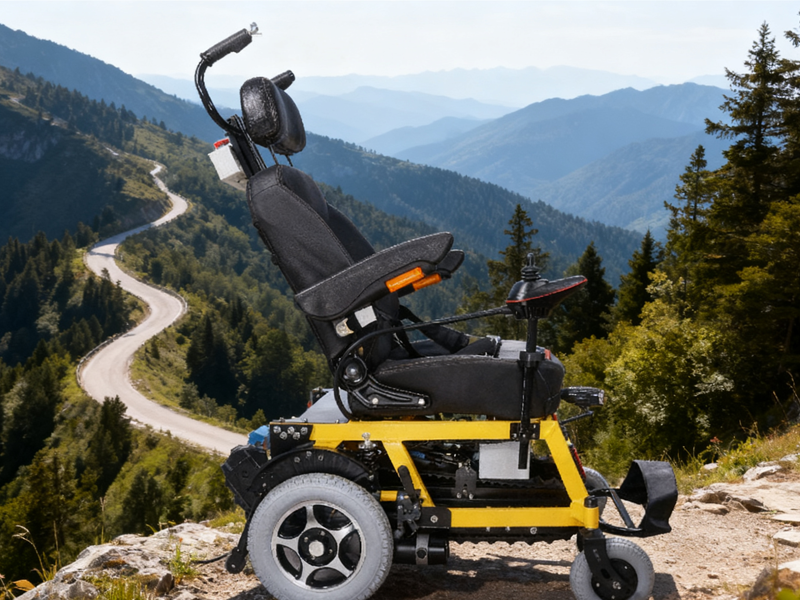
Enter the off-road wheelchair with tracks, a category of mobility solution built for exploration rather than limitation. These machines combine principles from all-terrain vehicles with advanced mobility engineering, resulting in wheelchairs that can power through environments that were once entirely off-limits.
This article explores the evolution, engineering, advantages, and future potential of tracked off-road wheelchairs. It also highlights how modern designs—including some dual-use innovations such as stair-climbing technology—are reshaping expectations for people seeking independence outdoors and indoors alike.
To help readers discover practical choices in the market, we’ll also introduce a versatile product option, the IYASOCARE Dual-Use Stair Climbing Wheelchair, available here:
If traditional wheelchairs represent accessibility in daily life, off-road tracked wheelchairs symbolize pure possibility. They look and feel different because they are designed for a wider spectrum of movement—beyond ramps, sidewalks, and building interiors.
People want access to nature. Hiking. Camping. Hunting. Fishing. Traveling. Exploring remote areas. Participating in outdoor events. The desire doesn’t disappear with a disability, yet the means often do.
Tracked wheelchairs change this narrative.
Their design resembles military-style track systems or compact construction machinery, not because it looks rugged but because it works. Tracks distribute weight evenly across uneven surfaces, improving grip and reducing the risk of getting stuck. Combined with electric motors, shock-absorption systems, weather-resistant components, and ergonomic seating, users gain access to terrains that were traditionally inaccessible.
The result is profound—social lives expand, mental well-being improves, and individuals reconnect with the world outside. The feeling many users report is simple but profound: “I got my freedom back.”
Before diving deeper into the user experience, it’s important to understand the core technology behind off-road track wheelchairs.
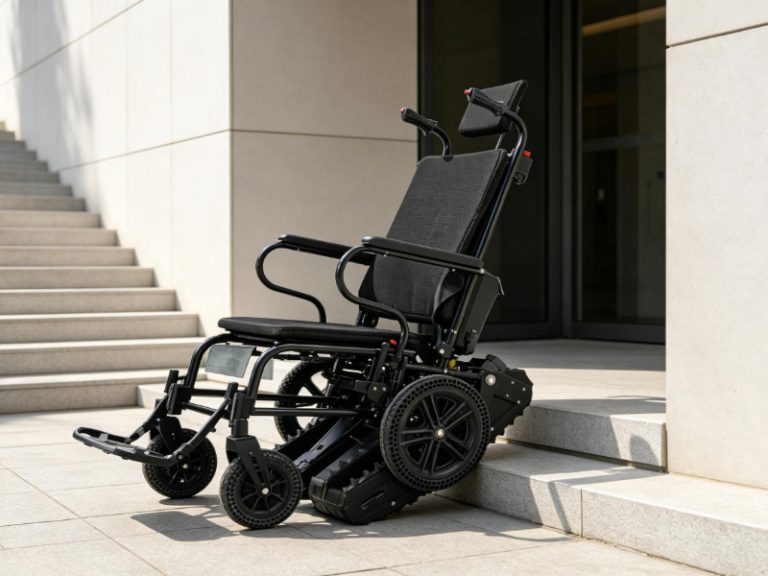
Instead of wheels, these wheelchairs rely on continuous tracks—long belts that wrap around multiple wheels and rollers. These are the same principles used in snowmobiles, tanks, and rescue vehicles.
Why tracks?
Because they provide:
Tracks grip the ground across a larger surface area. Sand, mud, gravel, and snow no longer pose high risks of slipping or sinking.
Weight is distributed more evenly, reducing pressure points. Users feel more balanced, especially on slopes or uneven terrain.
Electric motors combined with track systems offer smooth, controlled forward and backward motion.
Tracks can climb over small logs, rocks, or roots that would immediately stop wheels.
Rain, snow, and ice don’t significantly affect performance.
This engineering is what gives off-road track wheelchairs the raw capability to turn challenging environments into navigable spaces.
Although anyone who enjoys the outdoors may benefit, certain groups find tracked wheelchairs particularly empowering:
· Individuals with spinal cord injuries
· Veterans and amputees
· Seniors wanting to stay involved in outdoor hobbies
· Nature enthusiasts, photographers, camp organizers
· Ranchers, farmers, and people living in rural areas
· Adventurers, hikers, and outdoor sports lovers
The value isn’t only recreational. In many communities, daily movement requires navigating dirt paths, grassy yards, uneven sidewalks, or steep environments. A tracked wheelchair turns these into manageable routes rather than barriers.
The first thing people often notice is the sense of stability. Even on slopes or loose dirt, the chair feels anchored and predictable. The second is control. Joystick or steering mechanisms respond smoothly, and the tracks grip the ground instead of spinning out.
Users often describe the experience as:
“Riding a compact ATV, but safer and more comfortable.”
“Suddenly being able to go places I haven’t visited in years.”
“Feeling included again—joining my family on hikes or trips.”
Some tracked wheelchairs also include elevated seating, tilting systems, reclining features, or even standing mechanisms, allowing people to view nature or environments from a height that feels more natural.
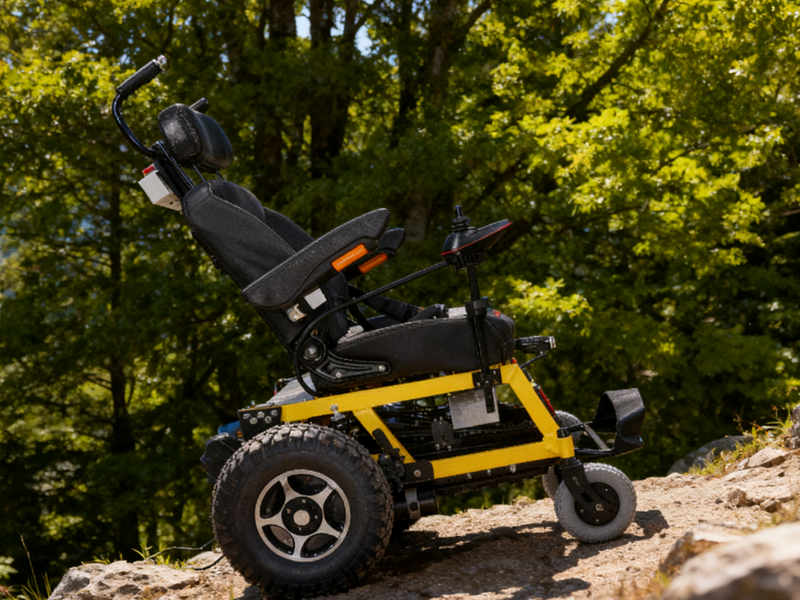
While off-road wheelchairs traditionally serve outdoor environments, the largest growth in mobility design is happening at the intersection of indoor and outdoor use. Some people want a single mobility device that handles:
· Daily movement indoors
· Outdoor urban terrain
· Gardens, grass, sand, rural areas
· Stairs and elevation changes
This new category, “dual-use mobility,” blends robust engineering with compact, adaptable design.
One standout solution in this hybrid space is the IYASOCARE Dual-Use Stair Climbing Wheelchair, found here:
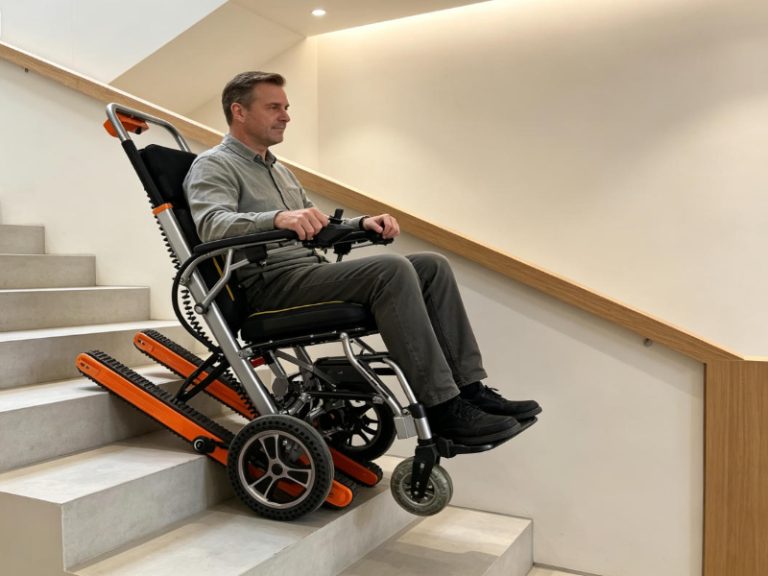
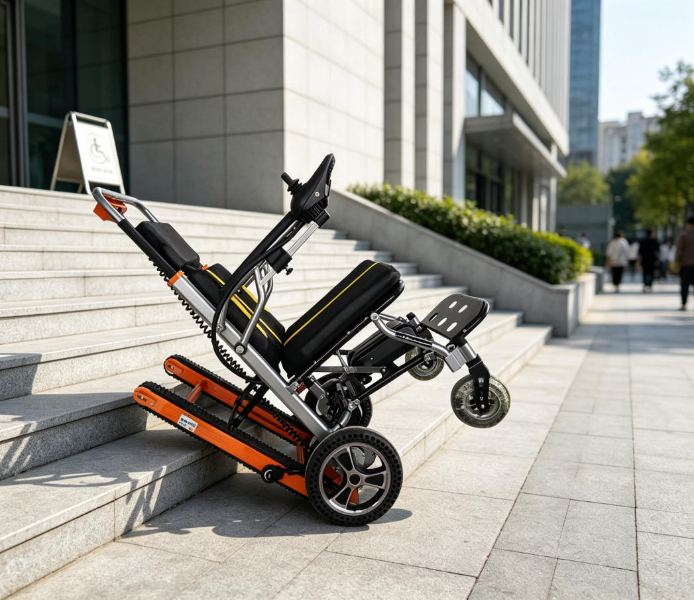
Though not a full tracked off-road wheelchair, its design philosophy aligns with the same mission: overcoming limitations in environments where wheels alone fall short. With advanced climbing technology and a strong, secure structure, it allows users to navigate stairs safely—an obstacle as restrictive as any outdoor terrain.
This merging of indoor practicality with outdoor capability shows where the broader mobility industry is headed.
To truly appreciate the transformation, consider how conventional wheelchairs perform in rough environments:
· Hard to maneuver on gravel
· Not suitable for sand or mud
· Limited on slopes
· Risk of tipping
· Uncomfortable over long distances
· Wheels sink into soft surfaces
· Often require assistance from others
· Move smoothly on all terrains
· Self-propelled, powerful, electric
· Built-in safety mechanisms
· Stable on slopes and inclines
· Designed for long outdoor use
· Weather-resistant components
· High-performance suspension
For many users, the difference is not simply mechanical—it’s emotional. One model restricts life. The other expands it.
Choosing the right model goes far beyond track width or motor power. Buyers should consider:
High-torque motors matter more than speed. Look for efficient power output and long battery life.
Range determines how far you can travel. Lithium-ion batteries tend to offer the best performance.
A comfortable seat, armrests, and shock absorption improve long-term usability.
Some models specialize in sand or snow, while others offer balanced all-terrain support.
Many high-power models are heavy. Consider whether you need ramps, trailers, or vehicle lifts.
Brake control, anti-tip technology, emergency shutoff, and safe incline ratings are essential.
Controls, seating, accessories, and support equipment vary widely.
Some people may benefit from a hybrid solution like the IYASOCARE model mentioned earlier for handling stairs and indoor navigation.
Even the most advanced off-road track wheelchair struggles with a simple obstacle: stairs.
Stairs remain one of the most persistent accessibility challenges worldwide. While ramps are common in public spaces, many private homes, older buildings, and international locations rely heavily on staircases.
This is where stair-climbing innovation becomes essential.
The IYASOCARE Dual-Use Stair Climbing Wheelchair represents a major milestone. Using a powered caterpillar-style climbing mechanism, it grips stairs securely and moves the user upward or downward in a stable, controlled manner. This means:
· No need for multiple mobility devices
· No reliance on others to lift or assist
· Freedom to access environments that were previously closed
For travelers, families visiting multi-story homes, rural residents, or anyone living in older architecture, this technology is transformative.
Owning an off-road wheelchair with tracks requires a bit more maintenance than a standard wheelchair, but the process is manageable.
Mud, sand, and debris should be cleared after each outing to prevent premature wear.
Regular charging and avoiding extreme temperatures ensures longer lifespan.
Rollers, bearings, and joints may need periodic lubrication.
Although built for outdoor use, storage under shelter prolongs durability.
A quick check for worn or loose parts before trips improves safety.
Proper maintenance ensures long-term performance and safe operation—especially when exploring remote areas.
The impact is greater than mobility alone. The psychological benefits are often the most significant.
Activities once abandoned become possible again.
Nature exposure reduces stress, depression, and anxiety.
Users can join family and friends in outdoor activities without limitation.
Even passive movement outdoors encourages better health.
Many users rediscover hobbies, passions, or roles they thought were lost.
Mobility, after all, is not merely physical—it’s emotional, social, and deeply personal.
Several technology trends are shaping what comes next:
· Smart control systems with AI-driven terrain recognition
· Lightweight composite materials
· Solar-assisted charging options
· Enhanced shock absorption
· Hybrid wheel-track designs
· Greater focus on dual-use indoor/outdoor performance
· More accessible pricing through mass adoption
We are entering an era where mobility devices will no longer be defined by limitations but by possibilities.
Products like the IYASOCARE Dual-Use Stair Climbing Wheelchair show how innovation is accelerating across boundaries:
An off-road wheelchair with tracks is more than a clever machine. It is a statement—a refusal to accept the idea that mobility limitations should dictate how someone lives their life. It offers the chance to explore, reconnect, and rediscover what it means to be fully engaged with the world.