Our Location
Free Trade Tower, Xiyong street.
Chongqing, China

Free Trade Tower, Xiyong street.
Chongqing, China
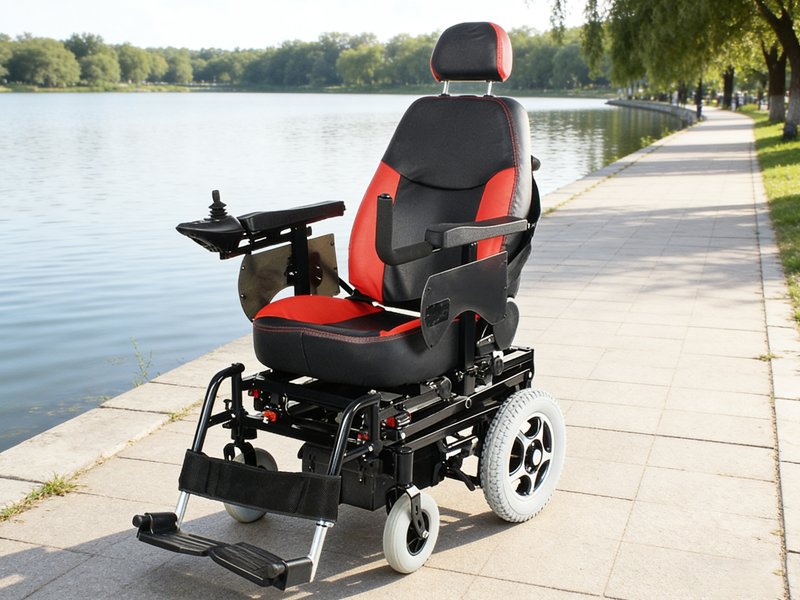
For many people with limited mobility — due to age, injury, neurological conditions or chronic illness — conventional wheelchairs have long been the standard solution. But sitting all day, every day, can carry serious physical and psychological consequences: pressure sores, poor circulation, reduced bone density, muscle atrophy, diminished autonomy, and even social or emotional effects.
a new generation of mobility aids has begun to shift that paradigm. Assistive devices that support both sitting and standing — including standing wheelchairs and walkers — aim to restore some of the key benefits of upright posture: improved circulation, better digestion, stronger bones, mobility, dignity and independence.
This article explores how sitting-standing mobility devices transform lives. We look at the general benefits — medically, socially and psychologically — then spotlight one leading product, the multifunctional standing electric wheelchair YSE307 from iYasomed, explaining its features, real-world advantages, and whether it might be a good choice for you or your loved one.
Silent Risks for Traditional Wheelchair Users
Using a conventional seated wheelchair — while essential — can carry health risks. Long periods of sitting reduce blood circulation, especially in the lower limbs, which may increase the risk of deep-vein thrombosis (DVT) or other circulatory problems. Over time, lack of weight-bearing can also weaken bones (accelerating loss of bone density), reduce joint mobility, and increase the risk of osteoporosis or fractures.
Pressure sores (decubitus ulcers) are another frequent concern: when the body remains seated for hours without change, constant pressure on bony areas like the pelvis and thighs restricts blood flow locally. Standing or periodically shifting posture can relieve these pressures, reducing the risk of such sores.
Beyond purely physical risks, prolonged sitting also impacts digestion, bladder and bowel function; circulation and posture affect muscle tone, joint flexibility, and spinal alignment. Many caregivers and medical professionals consider periodic standing — even if aided — as contributing meaningfully to long-term health and quality of life for wheelchair users.
Standing wheelchairs and sit-to-stand mobility devices respond directly to these concerns. By enabling a stable transition from sitting to standing, they offer multiple advantages:
Better circulation & cardiovascular health: Standing promotes better venous return from the legs to the heart; this helps reduce swelling, lowers risk of blood clots, and supports healthier blood flow.
Bone & joint health: Weight-bearing helps stimulate bone maintenance, preserve bone density, slow osteoporosis, and maintain joint flexibility — especially critical for users with long-term reliance on a wheelchair.
Reduced pressure-sore risk and improved comfort: Alternating between sitting and standing relieves prolonged pressure on the same points — decreasing skin breakdown risk, enhancing comfort and reducing pain or numbness.
Improved digestion and bladder/bowel function: Upright posture helps gravity aid digestion, improve bowel movement, and support urinary health — often problematic for long-term wheelchair users.
Enhanced autonomy and daily living ease: Being able to stand — perhaps even move while upright — empowers users to reach high surfaces, participate in daily activities (cooking, washing, socializing) more naturally, reducing dependence on caregivers.
Psychological and social well-being: Standing allows eye-level interaction, boosts confidence, supports social integration, and helps restore a sense of dignity and normalcy. Many users report improved mood and increased willingness to engage.
In short, mobility is not just about going from A to B — it’s about preserving health, dignity, independence, and quality of life.
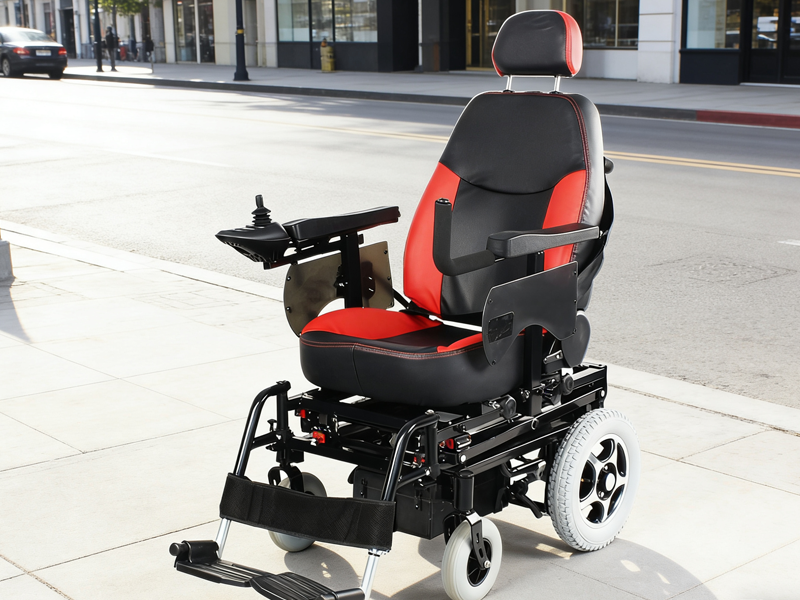
Among many models on the market, the WSE307 from iYasomed stands out as a fully electric, multifunctional standing wheelchair — designed to deliver both mobility and rehabilitation/standing benefits.
Here’s a detailed look at its features and why they matter.
YSE307 is a power wheelchair with an electric lift that supports both sitting and standing positions. It is intended for individuals who require mobility assistance, but also want the option of standing for health, rehabilitation, or everyday functionality.
The chair includes a one-hand joystick control, universal front-wheel steering, removable armrests and foot pedals, reclining backrest, and a sturdy steel frame — combining flexibility, comfort, safety, and durability.
Key specifications:
Seat width: 45 cm; Seat depth: 45 cm.
Adjustable seat height: from 45 cm (sitting) to 95 cm (standing) — facilitating smooth transition between postures.
Backrest height: 72 cm.
Powered by dual 24V 250W motors, with 24V 24A battery; driving range up to 25 km, and top speed ≈ 8 km/h — adequate for daily indoor/outdoor use.
Load capacity: up to 100 kg.
Wheels: 12-inch rear, 8-inch front — suitable for varied terrain including indoor floors, pavements, gravel or uneven ground.
Braking: dual system — electronic braking + electromagnetic parking brake — adding safety, especially on slopes or uneven ground.
Flexible mobility: 360° steering, easy maneuvering in tight spaces (home, elevators, corridors), making it practical for everyday living.
On top of that, the removable pedals/armrests and reclining backrest allow adaptation: convert from a wheelchair to a more “ordinary seat”, or to a resting/nap position — helpful for long-term comfort or for users needing to rest/support posture.
Combine Mobility + Health + Independence
For many users, the biggest advantage of YSE307 is that it doesn’t force you to “choose between mobility and health.” Traditional electric wheelchairs give you independence but keep you seated. Standing frames or physiotherapy devices support standing — but you lose mobility. Standing-wheelchairs like YSE307 blend both: you get a wheelchair that moves, but also lets you stand safely and comfortably.
That matters for everyday life: reaching higher shelves, washing dishes at a normal counter height, interacting with people at eye-level, transferring in/out of bed — these become possible again.
Support for Rehabilitation, Long-Term Well-being
For people recovering from surgery, spinal injury, or chronic conditions, regular standing can help maintain joint mobility, preserve muscle tone, encourage bone strength, and improve circulation. As explained earlier, regular use of a standing wheelchair may help prevent complications associated with prolonged sitting (pressure sores, poor circulation, digestive issues).
With YSE307 — because the lift and controls are electric and smooth — standing becomes accessible even for those lacking upper-body strength. Manual standing wheelchairs often require physical effort (pushing handles, shifting weight), which may limit their use.
Flexible, Everyday Usability — Indoor & Outdoor
Many standing wheelchairs are bulky or difficult to maneuver indoors; some may not fare well outside. The YSE307, with its compact size, 360° steering, dual motors, and modest wheel size (12″/8″), is designed to handle both indoor spaces (apartments, hallways, elevators) and outdoor terrain (pavements, slight gravel roads, uneven surfaces).
The removable armrests & footrests, reclining backrest, and adjustable seat height add adaptability: whether you are commuting, shopping, traveling, resting — the chair adapts to different contexts.
Safety & Comfort — Essential for Long-Term Use
Safety is critical for any mobility aid. YSE307’s dual braking system ensures stability on slopes, and the electromagnetic + electronic brake combo reduces risk of slipping or rolling.
Comfort features (cushioned seat, adjustable backrest, width/depth of seat) support prolonged use, while seat-height adjustment and reclining backrest avoid uncomfortable, fixed posture — reducing pressure point risks and allowing posture changes throughout the day.
While standing wheelchairs like YSE307 offer many advantages, they may not suit everyone. Here are some factors to consider.
Health Condition & Physical Ability
Standing wheelchairs assume some degree of trunk control, balance, or at least ability to be supported safely when upright. For individuals with very limited upper-body strength, poor trunk stability, or severe paralysis, manual control may be difficult.
For full rehabilitation or bone-density benefits, regular and proper posture is critical; sporadic use may not deliver full health advantages.
Cost, Maintenance, Battery & Repairs
Electric standing wheelchairs are more expensive than manual wheelchairs or simple walkers. The electric lift, motors, steering controls, battery, braking system — all add complexity. Maintenance (battery replacement or charging, brake checks, wheel upkeep) is more demanding, and potential repairs may cost more.
Also — as discussed in community reports — if batteries sit unused for long periods (e.g. in inventory), they may lose capacity. For used or stock-warehouse units, battery health is critical. > “The batteries used in electric wheelchairs almost all need to be charged up on a regular basis, or they can become irretrievably damaged and no longer hold a charge for long.”
Cost-Benefit: Is Stand Function Enough?
Some users question whether the stand function justifies the extra cost, bulk or maintenance. On some forums:
“Why don’t I see more ‘standing’ wheelchairs in use?” Because many find them too heavy, bulky, or expensive; sometimes insurers won’t cover them.
For others, manual wheelchairs remain more light-weight, easier to transport, easier to maintain — especially if they mainly travel by car or plane.
Therefore — if your needs are primarily transport, a standard manual or electric wheelchair may suffice; but if you want regular standing (for health, comfort, independence), a sitting-standing wheelchair may justify the trade-offs.
Based on its design, features, and performance, YSE307 is best suited for:
Individuals with limited mobility who still have some trunk/upper-body control (or caregivers to help).
People who want both mobility and the health benefits of standing — e.g. long-term wheelchair users concerned about bone density, circulation, pressure sores, posture.
Users who navigate both indoor and outdoor environments (home, shopping, travel) — especially where spaces are tight (apartments, elevators).
Those needing flexibility: sitting, standing, reclining, resting — possibly frequent posture changes throughout the day.
Caregivers seeking a mobility aid that supports independence and dignity — enabling the user to reach objects, interact socially, and perform daily tasks with minimal help.
On the other hand, if the user has very limited trunk control, no upper-body strength, or require full assistance, then a pure manual stander, physiotherapy standing frame, or specially assisted device might be more appropriate (or at least should be considered in consultation with a medical professional).
In 2025, there is a growing recognition among rehabilitation professionals, caregivers, and disability advocates that mobility is about more than transport — it’s about health preservation, independence, and dignity.
Standing wheelchairs are increasingly promoted as part of regular therapy for spinal-cord injury, post-operative recovery, cerebral palsy, and age-related mobility decline. The ability to stand — even supported — helps maintain muscle tone, joint flexibility, bone density, reduce complications like pressure ulcers or poor circulation.
Many users report improved psychological well-being: standing allows eye-level social interaction, easier participation in daily tasks, and greater self-confidence.
For long-term users, the flexibility offered by electric standing wheelchairs — adjustable posture, indoor/outdoor mobility, reclining — means they can integrate mobility aids into everyday life more seamlessly, instead of relying solely on passive mobility devices.
Moreover, as technology improves (lighter motors, better batteries, safer braking systems, ergonomic seat design), the barriers — bulk, difficulty, cost — are gradually lowering, making sitting-standing devices more accessible and realistic for a wider range of users.
Standing up again might seem like a simple act — but for many wheelchair users, it can mean reclaiming a sense of normalcy. Devices like the multifunctional standing electric wheelchair YSE307 turn that possibility into reality. They merge mobility, health, comfort, safety, flexibility and dignity — not as trade-offs, but as a package.
If you or a loved one depends on a wheelchair for daily movement — especially long term — then investing in a sitting-standing wheelchair may not just be a matter of convenience, but a step toward preserving health, independence, and quality of life.
That said, no device is perfect for everyone. It’s important to consider physical condition, lifestyle, living environment, caregiver support, and long-term needs — and, if possible, to trial the wheelchair before buying.
1. Is a standing wheelchair really better for health than a regular wheelchair?
Yes — compared to a regular seated wheelchair, a standing wheelchair offers significant potential health benefits: improved circulation, reduced pressure-sore risk, support for bone density and joint health, better digestive and urinary function, and overall improved mobility health. My WordPress+2Neolee Rehab Supply Sdn Bhd+2 However, the benefits are most pronounced with regular and proper use; occasional standing may not produce the same effect.
2. I’m worried about maneuvering and safety — can a standing wheelchair like YSE307 be practical daily?
For many users — yes. YSE307 is designed with dual motors, a solid braking system, 360° steering, and adjustable seat/backrest. Its wheel size and frame weight suit both indoor and light-outdoor use. Still, users should evaluate their living environment (home layout, rough terrain, slope, elevator access) and personal stability. For users with poor trunk control or balance, caregiver support or alternative mobility devices may still be needed.
3. Are there drawbacks compared to manual wheelchairs or standers?
Yes. Compared to manual wheelchairs, electric standing chairs are heavier, more expensive, require battery charging/maintenance, and may be more cumbersome to transport. Some manual stand-up wheelchairs or standing frames may be lighter and cheaper (though with less mobility). Community users often note that cost, complexity, or insurance coverage limit widespread adoption. Finally, for individuals needing full assistance or who have limited upper-body control, simpler or more specialized devices may still be more appropriate.