Our Location
Free Trade Tower, Xiyong street.
Chongqing, China

Free Trade Tower, Xiyong street.
Chongqing, China
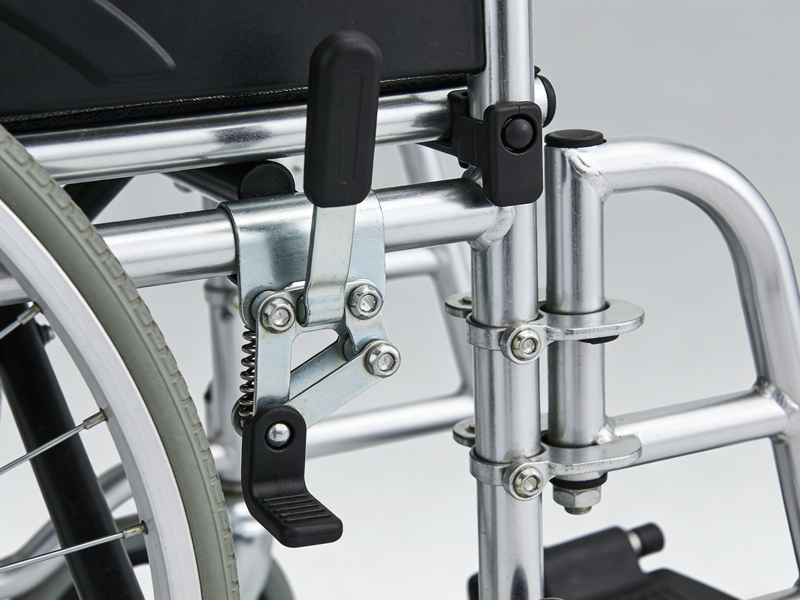
Choosing a wheelchair is not simply about mobility—it is about independence, comfort, safety, and quality of life. While many buyers focus on weight capacity, size, or price, one of the most overlooked yet critical factors is what the wheelchair is actually made of.
The materials used in a wheelchair determine far more than appearance. They influence how the chair feels during daily use, how long it lasts, how easy it is to propel or transport, and how much maintenance it requires over time. For users who rely on a wheelchair every day—sometimes for years—material quality is not optional; it is essential.
A wheelchair is a mechanical system that must withstand constant stress: body weight, repetitive motion, outdoor conditions, and daily transfers. Poor material choices can lead to discomfort, fatigue, frequent repairs, or even safety risks.
High-quality materials offer tangible health and lifestyle benefits:
Improved posture and pressure distribution, reducing the risk of sores and chronic pain
Smoother propulsion, which minimizes strain on shoulders and arms
Better thermal and moisture management, lowering the risk of skin irritation or infection
Longer lifespan, meaning fewer replacements and lower long-term costs
In short, materials directly affect both physical well-being and daily independence.
Most wheelchairs today are built using a combination of metals, polymers, rubber, and upholstery fabrics. Each material plays a specific role within the overall structure.
Steel
Steel was one of the earliest materials used in wheelchair manufacturing and remains common today, particularly in institutional settings such as hospitals, airports, and care facilities.
Steel frames are known for their strength and load-bearing capacity. They can support higher weight limits and tolerate rough handling. This makes them suitable for short-term use, shared environments, or users who prioritize affordability.
However, steel comes with notable trade-offs. It is heavy, harder to propel, and less convenient for transportation. Over long-term daily use, the extra weight can increase fatigue and strain.
Best suited for:
Occasional use, clinical environments, budget-conscious buyers, bariatric needs
Aluminum
Aluminum has become one of the most popular wheelchair materials worldwide—and for good reason. It offers an excellent balance between strength, weight, and durability.
Aluminum wheelchairs are significantly lighter than steel, making them easier to propel, lift, and store. The material is naturally corrosion-resistant, which extends its lifespan even in humid or outdoor conditions.
Because aluminum is easy to shape and modify, it is widely used in custom and active wheelchairs. Many daily users prefer aluminum for its responsiveness and maneuverability.
The downside is that aluminum can dent or scratch more easily than steel, and it usually costs more.
Best suited for:
Daily use, active users, frequent travel, personal ownership
Titanium
Titanium sits at the top end of wheelchair materials. It combines exceptional strength, very low weight, and excellent corrosion resistance. Unlike aluminum, titanium absorbs vibration more effectively, resulting in a smoother ride on uneven surfaces.
Titanium wheelchairs are often custom-built and favored by experienced users who want maximum efficiency with minimal physical strain. They are also highly durable and resistant to dents.
The primary limitation is cost. Titanium wheelchairs are expensive and not always necessary for casual users. Some users also find titanium frames slightly more flexible, which can affect perceived rigidity.
Best suited for:
Long-term daily users, travelers, users with shoulder sensitivity, premium buyers
Carbon Fiber
Carbon fiber wheelchairs represent cutting-edge mobility design. Made from woven carbon fibers bonded with resin, these frames are incredibly light while maintaining impressive strength.
Carbon fiber does not corrode, and its flexibility allows it to absorb shock efficiently. This makes it especially popular among athletic wheelchair users and those with highly active lifestyles.
That said, carbon fiber is expensive and can be vulnerable to surface chipping or impact damage if mishandled. Repairs are also more complex than with metal frames.
Best suited for:
Sports users, highly active lifestyles, performance-focused mobility
Plastic and Composite Components: Cost and Convenience
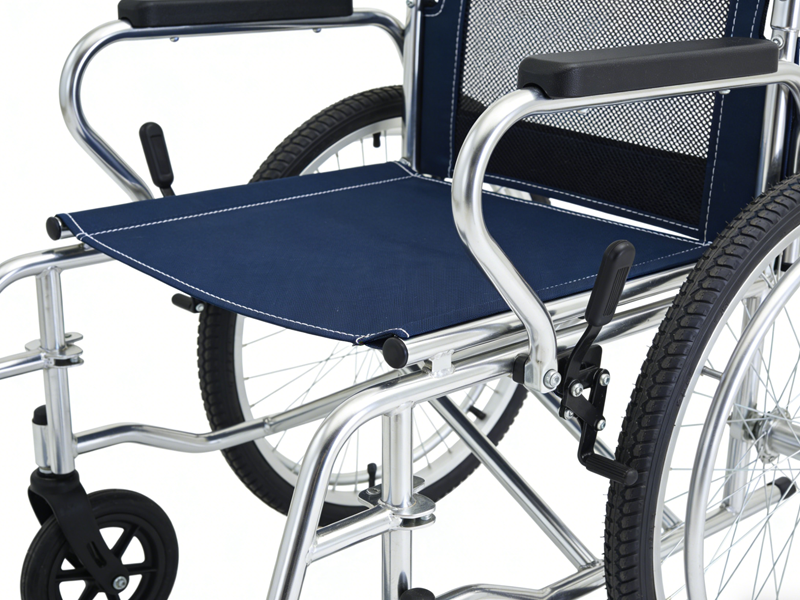
Plastic is rarely used for full wheelchair frames but plays a major role in seats, footrests, armrests, and accessories. Entry-level wheelchairs often use woven plastic seating combined with steel frames.
Plastic components are easy to clean, inexpensive, and lightweight, but they lack durability for long-term or high-impact use. Over time, plastic parts may crack, fade, or lose structural integrity.
Best suited for:
Temporary use, backup chairs, budget models
Rather than evaluating materials in isolation, it is important to understand how they function within each part of the wheelchair.
The Frame: The Backbone of the Chair
The frame defines the wheelchair’s strength, weight, and overall performance. Frames may be folding or rigid.
Folding frames offer easier storage and transport
Rigid frames provide better energy transfer and require less effort to propel
As a general rule, lighter frames mean less fatigue, especially for users who self-propel frequently.
Wheels and Tires: Comfort Meets Control
Most wheelchairs use two large rear wheels and two smaller front casters. Tires may be solid rubber or pneumatic (air-filled).
Solid tires are durable, low-maintenance, and common in standard wheelchairs
Pneumatic tires provide better shock absorption and smoother rides but require upkeep
Wheel rims are usually aluminum, while high-end models may use titanium or carbon fiber.
Seating and Backrests: Health and Ergonomics
Wheelchair upholstery directly affects posture, circulation, and skin health.
Nylon is breathable and comfortable but absorbs moisture
Vinyl is easy to clean and disinfect but can trap heat
Many long-term users upgrade to ergonomic cushions or mesh systems for better pressure management.
Armrests, Footrests, and Push Handles
These components are often made from aluminum or steel, with padding added for comfort. Armrests may use fabric, vinyl, or urethane padding depending on the desired balance between softness and durability.
Footrests must provide full foot support and are commonly made from aluminum or steel, with carbon fiber appearing in premium designs.
Push handles are usually metal with rubber or plastic grips for better control.
There is no single “best” wheelchair material—only the best fit for your needs.
Ask yourself:
Will the wheelchair be used daily or occasionally?
Will you self-propel or rely on a caregiver?
Do you travel frequently or need easy transport?
Is long-term durability more important than initial cost?
For many users, aluminum offers the most balanced solution. Steel remains practical for short-term or institutional use, while titanium and carbon fiber are ideal for users who prioritize performance and long-term comfort.
1. What is the best wheelchair material for everyday use?
For most daily users, aluminum offers the best balance of weight, durability, comfort, and cost. It is light enough for easy propulsion while remaining strong and corrosion-resistant.
2. Are lightweight wheelchairs less durable?
Not necessarily. Materials like titanium and carbon fiber are extremely strong despite their low weight. Durability depends more on material quality and construction than weight alone.
3. Which wheelchair material requires the least maintenance?
Steel frames with solid rubber tires generally require the least maintenance. However, they are heavier. Aluminum frames also perform well with minimal upkeep when used properly.