Our Location
Free Trade Tower, Xiyong street.
Chongqing, China

Free Trade Tower, Xiyong street.
Chongqing, China
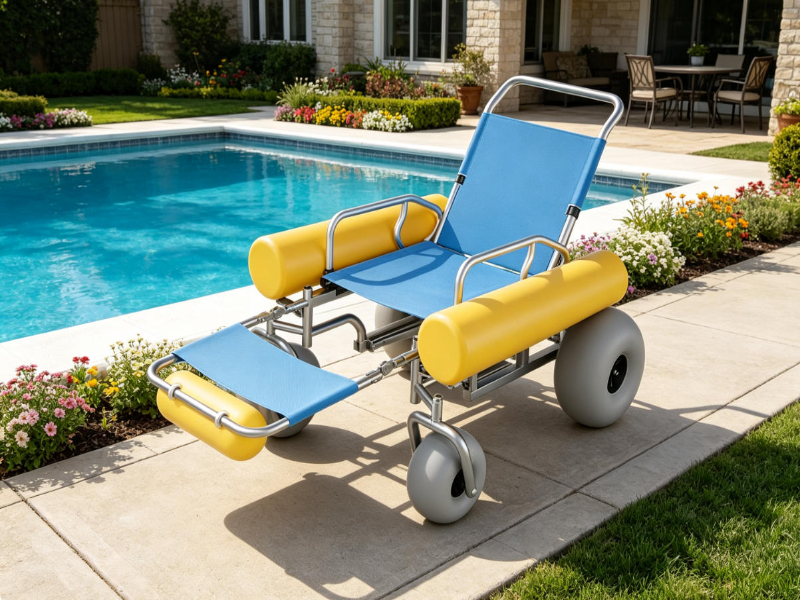
A wheelchair is often described as a mobility device, but for people who enjoy beaches, waterfront destinations, pools and outdoor recreation, that description can feel incomplete. Standard wheelchairs are generally designed around firm, relatively predictable surfaces. Loose sand, wet ground and uneven coastal terrain create a very different set of mobility challenges. Wheels can sink, traction can disappear, frames can be exposed to moisture and users may find it difficult to move between the shoreline and dry ground.
Table of Contents
ToggleThis is where a Marine Wheelchair for Adults can provide a practical alternative. Designed for environments where conventional wheelchair wheels may struggle, marine and beach-oriented wheelchairs focus on stability, maneuverability and access across sand and near-water environments. For adults with limited mobility, the right chair can make a beach visit less dependent on assistance and much easier to plan.
At the same time, it is important to understand what an all-terrain wheelchair is actually designed to do. “Waterproof,” “marine,” “beach,” and “water-access wheelchair” can describe different levels of environmental suitability. Buyers should consider the construction materials, wheel design, intended water exposure, user weight capacity, maintenance requirements and the exact environment in which the chair will be used.
For facilities, hospitality businesses, beach resorts, rehabilitation providers and mobility equipment distributors, these details are even more important. The product must not only work for an individual user but also withstand repeated handling and outdoor conditions.
The difficulty begins with the surface itself.
Firm pavement allows conventional wheelchair wheels to roll efficiently because the wheel maintains a relatively stable contact point with the ground. Loose beach sand behaves differently. When pressure is concentrated over a small wheel, the wheel can sink into the surface instead of rolling smoothly over it.
The softer the sand, the more noticeable this problem becomes. A standard wheelchair may work perfectly well on a paved promenade but become extremely difficult to push once it reaches dry sand. Even when a caregiver is strong enough to move it, the effort required can make the experience uncomfortable and impractical.
Wet sand can provide somewhat different conditions, but it still presents challenges. Water exposure introduces another consideration: corrosion and material durability. A wheelchair regularly used around saltwater needs to be selected and maintained with its environment in mind.
This explains why an All-Terrain Wheelchair for Sand & Water should not simply be a conventional wheelchair with larger wheels. Its overall design needs to consider where and how the chair will be used.
For users, this difference can determine whether a wheelchair provides genuine outdoor access or merely looks suitable for a beach environment.
A marine wheelchair for adults is generally designed around environments where moisture, sand and uneven surfaces are unavoidable. The exact specifications vary between manufacturers, so buyers should always check the intended application rather than assuming that every model can be fully submerged or used in seawater.
One of the most important characteristics is wheel design.
Wide wheels distribute the user’s weight over a larger surface area, reducing the tendency to sink into loose sand. This principle is particularly important on beaches, where narrow wheelchair wheels can become trapped quickly.
Another consideration is frame construction. Materials selected for outdoor or water-oriented applications need to tolerate exposure to moisture while remaining sufficiently durable for repeated use. Depending on the model, manufacturers may use aluminum, stainless steel or other corrosion-resistant materials.
The seating system is also important. Beach users may spend considerable time in the chair, so the product should provide suitable support while allowing caregivers to move the wheelchair safely.
A properly designed Marine Wheelchair for Adults therefore combines several characteristics rather than relying on one feature:
Wide or specialized wheels for loose surfaces.
A durable frame appropriate for outdoor environments.
Practical seating support for longer periods of use.
Stable handling across uneven terrain.
Corrosion-conscious construction for moisture exposure.
Easy cleaning and maintenance after contact with sand and water.
These characteristics make marine and beach wheelchairs fundamentally different from ordinary indoor mobility products.
For businesses and users looking for a dedicated beach mobility solution, the IYASOCARE YSB02 is worth considering.
The YSB02 is designed specifically within the beach wheelchair category, making it more relevant to coastal mobility than a standard indoor manual wheelchair.
Its positioning is particularly useful for users who need to cross environments where conventional wheels are poorly suited. A beach wheelchair can help connect different parts of an outdoor experience: paved access routes, beach surfaces and areas close to the water.
For adults with mobility limitations, this can have a meaningful practical benefit. Instead of stopping at the edge of a paved path, users can potentially continue toward the beach area with a product designed for that environment.
For distributors, the YSB02 can also occupy a clear position within a broader mobility catalogue. Rather than competing directly with everyday manual wheelchairs, it serves a more specialized outdoor-access market.
This makes it potentially relevant to:
The important point is that the YSB02 should be evaluated according to the manufacturer’s stated specifications and intended use. Buyers should confirm details such as dimensions, user capacity, materials, wheel configuration and water-use limitations before purchasing.
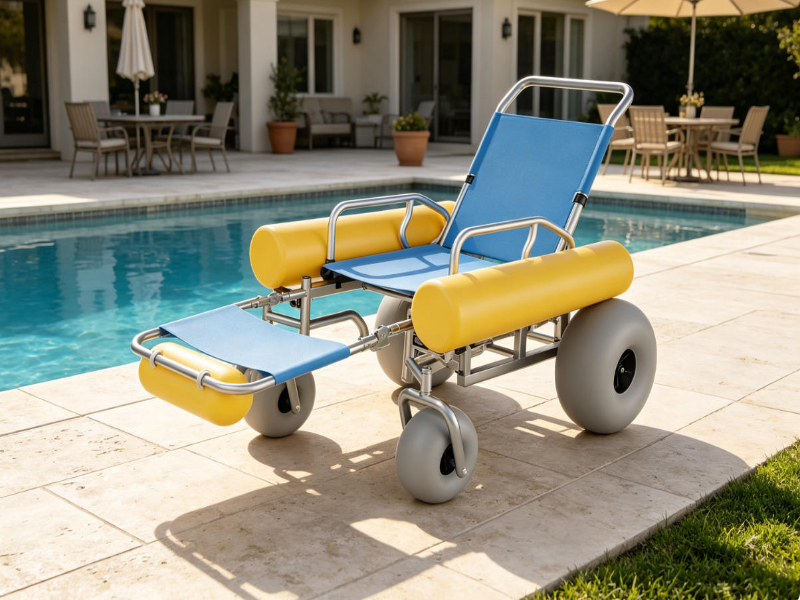
It is tempting to think that a beach wheelchair only needs oversized wheels. In practice, successful sand mobility depends on the interaction between the wheels, frame, seat and user.
Wheel width affects how weight is distributed. Frame geometry influences stability. Seat height can affect transfer convenience. Handle design can influence how easily a caregiver can push the chair. Overall weight affects transportation before and after the beach visit.
These factors become particularly important when a wheelchair is used by a larger adult.
A suitable Marine Wheelchair for Adults should therefore be selected according to the complete user profile rather than a single visual feature.
Consider an adult who weighs more and plans to spend several hours at a coastal resort. The chair needs to provide appropriate structural support, but it must also be manageable for the person assisting with transportation.
Now consider a lightweight adult who visits a beach occasionally. Their priorities may be different, with greater emphasis on portability and storage.
This is why manufacturers and distributors should avoid presenting one beach wheelchair as the universal solution for every user.
The word “water” in a product title deserves careful attention.
A wheelchair designed for beach environments is not automatically suitable for prolonged immersion in seawater. Likewise, a chair that can tolerate splashes should not necessarily be treated as a fully submersible product.
Saltwater can accelerate corrosion of unsuitable metals and components. Sand can enter moving parts, wheel assemblies and mechanical joints. After use, residue can remain on the frame and hardware if the wheelchair is not cleaned correctly.
Therefore, before purchasing an All-Terrain Wheelchair for Sand & Water, buyers should ask the manufacturer exactly what level of water exposure the product is designed to handle.
Questions worth asking include:
These questions are particularly important for commercial facilities because a wheelchair used by multiple people may experience considerably more environmental exposure than a privately owned chair.
Accessible tourism is becoming increasingly important across the global travel industry. Guests with disabilities and older travelers often evaluate destinations based on whether they can participate comfortably in activities rather than simply whether a hotel has an accessible room.
A beach resort may have ramps, accessible parking and adapted bathrooms, but if a guest cannot move beyond the paved path onto the beach, part of the experience remains inaccessible.
A dedicated beach wheelchair can help address this gap.
For hospitality businesses, providing a Marine Wheelchair for Adults can therefore become part of a broader accessibility strategy. It can support guests who need assistance reaching beach areas and demonstrate that accessibility has been considered beyond the building entrance.
However, staff training is just as important as the equipment itself. Employees should understand how to inspect the chair, assist users appropriately, clean it after use and identify potential maintenance issues.
The objective should not be simply to purchase an accessible wheelchair and store it in a maintenance room. The equipment should be integrated into the guest-access process.
A beach wheelchair should not necessarily replace an everyday wheelchair.
The two products serve different purposes.
An everyday manual wheelchair is generally optimized for environments such as homes, sidewalks, hospitals and indoor facilities. It may be lighter, easier to transport and better suited to ordinary paved surfaces.
A beach wheelchair is specialized for loose or uneven outdoor terrain.
For many users, the most practical solution is therefore to use both.
The everyday wheelchair can remain the primary mobility device for normal activities, while the beach wheelchair is used for coastal trips, waterfront recreation and other specialized environments.
For distributors, this distinction also creates a useful product strategy. Instead of positioning a beach wheelchair as a replacement for every other wheelchair, it can be marketed as an additional mobility solution for customers who want greater outdoor access.
This makes the product easier to explain and helps consumers understand why its design differs from a conventional manual wheelchair.
Before purchasing, buyers should evaluate five major areas.
1. Surface Conditions
Think about where the chair will actually operate. Dry sand, compact wet sand, grass, gravel and shallow water all create different demands.
A chair intended primarily for firm wet sand may not provide the same performance on deep, loose beach sand.
2. User Requirements
Consider the user’s weight, height, mobility level, transfer method and expected duration of use.
A product should provide appropriate support for the intended adult user without creating unnecessary difficulty for the caregiver.
3. Wheel Design
Wheel dimensions and width are particularly important for sand mobility. Wide contact areas can help distribute weight and reduce sinking.
Buyers should examine wheel construction rather than judging suitability based solely on diameter.
4. Materials and Maintenance
Outdoor and marine environments expose equipment to moisture, salt and sand. Buyers should understand the materials used and follow the manufacturer’s cleaning and maintenance recommendations.
5. Transportation and Storage
A beach wheelchair still has to reach the beach.
Before purchasing, consider whether it can be transported conveniently, where it will be stored and how easily it can be cleaned after use.
A wheelchair that performs well on sand but is extremely difficult to transport may not be practical for the intended user.
Beach environments are demanding on mobility equipment.
Sand is abrasive and can accumulate around wheels, joints and moving components. Saltwater residue can remain on surfaces after drying. Moisture can also increase the risk of corrosion if the wheelchair is not properly maintained.
After beach use, the wheelchair should be cleaned according to the manufacturer’s instructions. Sand and salt residue should not simply be allowed to remain on the product until the next outing.
Users and facility operators should inspect the wheels, frame, fasteners, brakes and other components regularly. Any unusual movement, corrosion, looseness or damage should be addressed before the wheelchair is used again.
For commercial operators, maintenance records can be particularly helpful. A simple inspection checklist can document when the wheelchair was cleaned, inspected and serviced.
This is not merely about protecting the product. It also supports safer and more reliable operation for future users.
Mobility independence is not limited to getting around a shopping center or hospital.
For many adults, independence also means being able to participate in leisure activities, spend time with family and enjoy outdoor environments.
A conventional wheelchair can create an invisible boundary at the point where pavement ends and sand begins. A purpose-designed All-Terrain Wheelchair for Sand & Water can help reduce that barrier.
This does not mean every beach becomes accessible simply by adding a wheelchair. Terrain, tides, slopes, weather and facility design still matter. Users should also assess conditions before entering unfamiliar environments.
Nevertheless, specialized mobility equipment can expand the range of environments in which a person can participate.
That is the real value of a marine wheelchair: not simply larger wheels, but greater access to experiences that might otherwise be difficult to reach.
For distributors and B2B buyers, product selection is only one part of the purchasing decision. The manufacturer’s broader capabilities can be equally important.
IYASOCARE offers a wider range of wheelchair and mobility equipment products through its product portfolio, allowing buyers to explore different categories rather than relying on a single specialized model.
For a distributor, this can be useful when building a catalogue that includes everyday manual wheelchairs alongside specialized outdoor products.
A business might offer standard manual wheelchairs for daily mobility, lightweight folding models for transportation, electric wheelchairs for powered mobility and beach wheelchairs for coastal access.
This creates a more complete product ecosystem and allows retailers to match products with specific user scenarios.
The YSB02 can therefore be viewed not simply as an isolated beach product but as part of a broader mobility equipment portfolio.
For wholesale buyers, exact product specifications, MOQ, packaging, customization, certifications and destination-market requirements should be confirmed directly with the manufacturer before ordering.
Before selecting a Marine Wheelchair for Adults, ask the following:
✓ Where will the wheelchair be used most often?
✓ Is the primary surface dry sand, wet sand or mixed terrain?
✓ What level of water exposure is permitted by the manufacturer?
✓ Is the frame suitable for the intended environment?
✓ Are the wheels designed for loose surfaces?
✓ Does the seating system suit the intended adult user?
✓ Can caregivers move the chair comfortably?
✓ How will the wheelchair be transported?
✓ What cleaning procedure is required after beach use?
✓ Are replacement parts available?
✓ What documentation and compliance requirements apply in the destination market?
✓ Can the manufacturer support repeat orders or OEM requirements?
Answering these questions before purchase can prevent many common sourcing mistakes.
A wheelchair should support participation, not define where a person can go.
For adults who enjoy beaches, coastal resorts and waterfront environments, a standard wheelchair may not provide the traction and stability required for loose sand. A specialized Marine Wheelchair for Adults can offer a more suitable approach by combining a terrain-oriented wheel configuration with a frame and seating system designed for outdoor use.
An All-Terrain Wheelchair for Sand & Water should nevertheless be selected carefully. Buyers need to distinguish between beach mobility, wet-surface use and actual water access, because these applications can place very different demands on equipment.
The IYASOCARE YSB02 is a specialized beach wheelchair worth considering for users, facilities and distributors looking for a product specifically positioned around beach mobility.
Ultimately, the best choice depends on the environment, user requirements and level of water exposure. When those factors are considered together, a specialized beach wheelchair can become much more than an outdoor accessory. It can be a practical tool for expanding access, improving travel experiences and helping adults participate more fully in life beyond conventional paved surfaces.
1. What is a Marine Wheelchair for Adults used for?
A Marine Wheelchair for Adults is designed for mobility in outdoor environments where ordinary wheelchair wheels may struggle, particularly beaches and loose sand. Depending on the specific model and manufacturer instructions, it may also be suitable for wet environments or areas close to the water. Buyers should always confirm the permitted level of water exposure before use.
2. Can the IYASOCARE YSB02 be used directly in seawater?
The YSB02 is positioned as a beach wheelchair, but buyers should not assume that every beach wheelchair is designed for full seawater immersion. Before using it directly in seawater, confirm the manufacturer’s specific water-use instructions, maintenance requirements and limitations. Proper cleaning after exposure to sand and saltwater is also important.
3. What should I look for when buying an All-Terrain Wheelchair for Sand & Water?
Focus on wheel design, frame construction, user capacity, seating support, stability, water-exposure limitations, corrosion resistance, maintenance requirements and transportation convenience. The most suitable product is the one that matches the user’s needs and the actual terrain rather than simply the one with the largest wheels or the most features.
WhatsApp us