Our Location
Free Trade Tower, Xiyong street.
Chongqing, China

Free Trade Tower, Xiyong street.
Chongqing, China
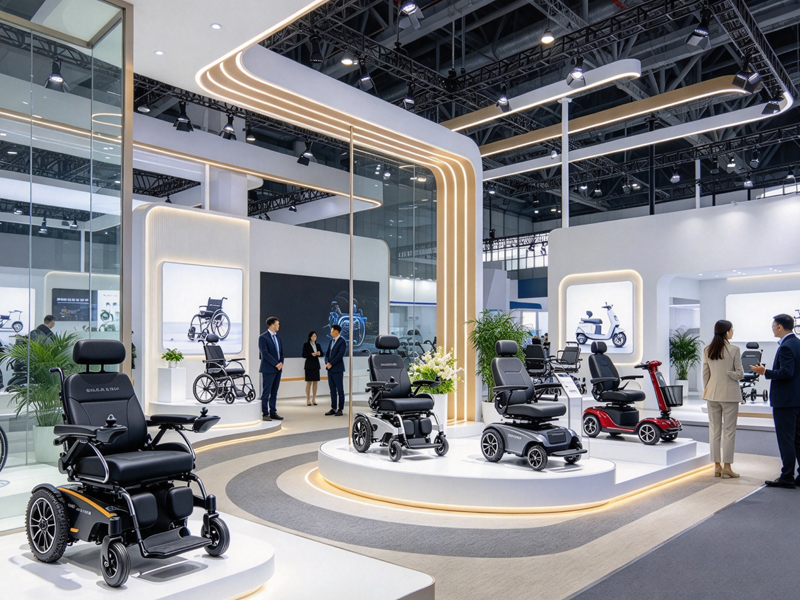
Selling wheelchairs across international markets is not simply a matter of translating the product manual and adding a few regulatory symbols to the packaging. For manufacturers, exporters, and private-label brands, wheelchair labeling is part of the overall medical device compliance strategy. A label needs to identify the product correctly, communicate essential safety information, support traceability, and remain consistent with the device’s intended purpose and technical documentation.
This becomes more complicated when the same wheelchair is sold in the United States, European Union, United Kingdom, Canada, Australia, and other markets. Each market has its own regulatory framework, language requirements, responsible-party information, conformity marking rules, and expectations for instructions for use.
A wheelchair that carries a compliant label in one country may still require significant changes before it can legally enter another market.
For international wheelchair manufacturers, the real challenge is therefore not designing one attractive label. It is developing a labeling system that can adapt to different regulatory environments without creating contradictions between the product, packaging, instructions for use, registration documents, and promotional claims.
This guide explains the key wheelchair labeling requirements that manufacturers should consider when preparing products for international markets, with particular attention to the United States, European Union, United Kingdom, Canada, and Australia.
Important: Medical device regulations can change, and the exact requirements depend on the wheelchair type, intended purpose, classification, accessories, electrical characteristics, claims, and market. This article is an industry-oriented overview rather than legal or regulatory advice.
A wheelchair label may look like a relatively small part of the product, but from a regulatory perspective it can carry a surprising amount of information.
For a manual wheelchair, the label may need to identify the manufacturer, model, product reference, relevant warnings, and traceability information. A powered wheelchair may require additional information related to electrical safety, batteries, charging, operating conditions, and other product-specific risks.
The label also has another important function: it connects the physical product with the manufacturer’s technical and regulatory documentation.
If a wheelchair is identified as Model ABC-100 on the product label but ABC100 in the technical file, ABC-100 in the instructions for use, and ABC-101 on the packaging, the problem is not merely cosmetic. Such inconsistencies can create confusion during inspections, complaints, recalls, distributor audits, or regulatory reviews.
International labeling should therefore be treated as a controlled document rather than simply a graphic design project.
The basic principle is straightforward:
The information on the wheelchair, packaging, instructions for use, registration documents, and marketing materials should tell the same product story.
That includes the device name, model number, intended purpose, manufacturer identity, applicable warnings, and performance-related claims.
There is no single universal wheelchair label that automatically satisfies every country. However, international manufacturers can build a common labeling framework around several recurring information categories.
The first is product identification.
A wheelchair should normally have a clear product name or device identification, model or catalogue number, and sufficient information to distinguish it from other models or variants. Where a manufacturer produces several wheelchair configurations, the identification system should make the differences clear.
The second is manufacturer identification.
The manufacturer name and relevant address information are fundamental elements in many regulatory systems. In the United States, for example, FDA’s general device labeling requirements under 21 CFR Part 801 address the name and place of business of the manufacturer, packer, or distributor.
The third is intended purpose or intended use.
This is particularly important for medical devices because regulatory authorities do not look only at what a manufacturer calls a product. They also consider how the product is intended to be used and what claims are made about it.
A label saying that a wheelchair is designed for a particular patient group, environment, or clinical purpose can have regulatory consequences. Marketing language should therefore be developed together with regulatory and technical teams rather than added after the label artwork has already been completed.
The fourth area is safety information.
Warnings should be understandable, visible, and appropriate to the foreseeable risks associated with the device. For a powered wheelchair, this may involve battery charging, maximum load, slope limitations, environmental conditions, safe operation, transportation, or other device-specific hazards.
The fifth is traceability.
Model numbers, serial numbers, lot numbers, manufacturing information, UDI-related information where applicable, and other identifiers can help manufacturers and distributors identify individual devices or production groups.
Finally, manufacturers need to consider instructions for use.
Not every piece of information needs to be printed directly on the wheelchair itself. Depending on the applicable regulation, information may be distributed between the device label, packaging, instructions for use, electronic documentation, or other accompanying materials.
The key is that the information must be available in the form and location required by the relevant market.
The United States is one of the most important markets for wheelchair manufacturers, but it is also a market where manufacturers should avoid assuming that a general medical-device label automatically covers every requirement.
FDA classifies different types of wheelchairs under specific device categories. For example, FDA currently identifies mechanical wheelchairs under 21 CFR 890.3850 as Class I devices, while powered wheelchairs under 21 CFR 890.3860 are Class II devices. Other wheelchair categories, including special-grade, stair-climbing, and stand-up wheelchairs, have their own classifications.
This classification difference matters because regulatory obligations can vary according to the device category.
For U.S. labeling, manufacturers should start with the general requirements in 21 CFR Part 801. FDA states that general labeling requirements apply to medical devices and include information such as the name and place of business of the manufacturer, packer, or distributor.
For wheelchair manufacturers, the practical lesson is that the product label should clearly identify who is responsible for the device and how the device can be identified.
A U.S. wheelchair labeling review should typically examine:
Manufacturers should also be careful with claims.
A wheelchair described simply as a mobility device is not necessarily presented in the same regulatory way as a wheelchair marketed with specific clinical claims. Statements about treatment, rehabilitation, pressure management, posture correction, neurological conditions, or other medical benefits may require careful review.
Another useful reference is ISO 7176-15, which addresses information, documentation, and labeling supplied with wheelchairs. FDA has recognized ISO 7176-15 as a consensus standard for applicable wheelchair device categories.
This is an important distinction: an ISO standard can provide a valuable technical framework, but compliance with an ISO standard does not automatically mean a product meets every FDA regulatory obligation.
Manufacturers should use standards as part of a broader compliance strategy rather than treating them as a substitute for market-specific regulation.
For the European Union, wheelchair manufacturers need to consider the Medical Device Regulation (EU) 2017/745, commonly known as the EU MDR.
One of the most important principles under the MDR is that information supplied with the device must be appropriate to the device, its intended purpose, and the knowledge, experience, education, and training of the intended users.
MDR Annex I, Chapter III, Section 23 specifically addresses labels and instructions for use. It states that devices must be accompanied by information needed to identify the device and manufacturer, together with relevant safety and performance information. It also emphasizes appropriate format, content, legibility, and location.
This is more than a requirement for “putting information on a sticker.”
The label needs to be usable.
For a wheelchair intended to be operated by patients, caregivers, healthcare professionals, or distributors, the manufacturer should consider who will actually read the information and what they need to know before using the product.
EU MDR labeling commonly involves elements such as:
One of the most important areas for international manufacturers is UDI.
UDI is designed to improve medical device identification and traceability. Manufacturers should therefore consider UDI architecture at the beginning of product development rather than trying to add identification elements after the packaging and label have already been finalized.
Another important issue is language.
The EU is not a single-language market. A wheelchair placed on the market in one Member State may be subject to language requirements that differ from those applicable in another Member State.
That means a manufacturer planning to distribute throughout the EU should create a language strategy early.
A label that contains only English may not be sufficient for every destination market.
The same applies to instructions for use. Translating the IFU is not simply a marketing exercise. Translation errors involving warnings, operating limitations, battery charging instructions, or maintenance procedures can directly affect safe use.
For this reason, professional medical-device translation and regulatory review are preferable to ordinary commercial translation.
The United Kingdom presents another common labeling challenge.
After Brexit, manufacturers need to distinguish between the rules applying in Great Britain and those applying in Northern Ireland.
According to current MHRA guidance, Great Britain consists of England, Wales, and Scotland, while Northern Ireland follows different arrangements under the applicable Northern Ireland framework.
For devices placed on the Great Britain market, labeling may need to show the appropriate conformity marking depending on the regulatory route being used. MHRA guidance currently states that devices placed on the Great Britain market can carry a UKCA marking or, under applicable arrangements, a CE marking.
Where relevant, the number of the Approved Body or Notified Body may also need to appear.
Another important requirement concerns the UK Responsible Person.
Where applicable, the name and address of the UK Responsible Person need to be included on the product labeling, outer packaging, or instructions for use under the relevant circumstances described by MHRA.
This creates a practical labeling issue for manufacturers exporting from outside the UK.
A label originally designed for the EU may not contain the information necessary for Great Britain.
Instead of creating a completely different physical product for every country, many manufacturers develop a modular label architecture. The core product information remains unchanged, while market-specific regulatory information is added through controlled label areas or packaging components.
This can significantly reduce production complexity.
However, manufacturers must ensure that any market-specific over-labeling does not obscure mandatory information already present on the original label.
Canada is particularly important for manufacturers who want to use a bilingual labeling strategy.
Health Canada’s medical device labeling guidance addresses Sections 21 to 23 of the Medical Devices Regulations. For devices sold to the general public, certain required labeling information must be provided in both English and French, and directions for use must be supplied in both official languages at the time of purchase.
This means that simply adding an English label to a wheelchair is not necessarily enough for the Canadian market.
The language requirements can also depend on how the device is supplied and who the intended user is.
Health Canada guidance explains that devices sold to the general public have specific bilingual requirements, while other devices may be labeled in English or French subject to the applicable rules and availability requirements.
For wheelchair manufacturers, this is especially relevant because wheelchairs can be sold through different channels:
The sales channel and intended user should therefore be considered when developing Canadian labeling.
A good Canadian label design should also leave sufficient space for French text.
This sounds obvious, but it becomes a real production issue when manufacturers design a compact label around English wording and discover later that the French translation requires significantly more space.
A better approach is to design the label for multilingual expansion from the beginning.
Australia has its own regulatory framework administered by the Therapeutic Goods Administration, or TGA.
The TGA states that medical devices supplied in Australia must meet applicable safety and performance requirements and that Essential Principle 13 of Schedule 1 of the Therapeutic Goods (Medical Devices) Regulations 2002 addresses information that must be supplied with a medical device, including labeling and instructions for use.
TGA guidance states that labeling should include information such as the manufacturer’s name and address, while information supplied with the device includes intended use, intended user, patient type where applicable, and other required information.
Language is another practical consideration.
TGA guidance explains that information provided with a medical device should be in English, although additional languages may also be used provided that English is included for devices supplied in Australia.
Australian sponsors also have their own obligations.
The sponsor is the party responsible for supplying the device in Australia and including it in the Australian Register of Therapeutic Goods (ARTG), where required. TGA guidance explains that sponsor identification may need to appear on the device, packaging, or accompanying information depending on what is practicable.
This is one reason manufacturers should not assume that a manufacturer-only label created for another country can simply be reused in Australia.
The relationship between manufacturer, importer, and sponsor needs to be reflected correctly in the regulatory documentation and labeling strategy.
For companies producing wheelchairs internationally, ISO 7176 deserves particular attention.
ISO 7176 is a widely used family of standards covering various aspects of wheelchair performance, safety, testing, and information. Part 15 specifically concerns requirements for information disclosure, documentation, and labeling.
FDA has recognized ISO 7176-15 as a consensus standard for several wheelchair categories, including mechanical and powered wheelchairs.
For manufacturers, the value of a wheelchair-specific labeling standard is practical.
Instead of starting from a blank page, engineering and regulatory teams can establish a structured approach to the information that accompanies the wheelchair.
However, one mistake should be avoided:
ISO compliance is not the same thing as market approval.
A manufacturer may follow ISO 7176-15 and still need additional information to satisfy the specific requirements of the United States, European Union, United Kingdom, Canada, Australia, or another jurisdiction.
The most efficient approach is to use the international standard as a baseline and then create market-specific regulatory layers.
One of the most common mistakes in international wheelchair labeling is assuming that every required piece of information must fit on one small label attached to the frame.
That is rarely practical.
A more effective approach is to divide information into several layers.
The device label
The physical wheelchair label should focus on information that needs to remain associated with the device.
This may include the manufacturer, model, product identification, serial number, key symbols, and other critical information.
The packaging
The outer packaging can provide additional information that may not fit conveniently on the wheelchair.
Packaging is particularly useful for transportation-related warnings, market-specific regulatory information, importer or responsible-party information, and additional identification.
The instructions for use
The IFU provides the space needed for detailed safety and operational information.
For wheelchairs, this can include:
The important principle is consistency.
The label should not tell the user one thing while the IFU says something different.
For example, if the label identifies a maximum user weight of 150 kg but the manual states 136 kg, the manufacturer has created a potentially serious compliance and safety problem.
International wheelchair manufacturers often focus on translation and overlook terminology control.
A literal translation may be grammatically correct but still unsuitable for a medical-device label.
Technical terminology needs to remain consistent across:
The same component should not have three different names across three documents.
This is especially important for warnings.
Consider the difference between:
“Do not use on steep slopes.”
and
“Do not operate the wheelchair on slopes exceeding the maximum permissible gradient specified in the technical specifications.”
These statements may appear similar, but they communicate different levels of precision.
If a manufacturer has validated a specific operating limit, the label and IFU should communicate that limitation accurately rather than using vague language.
For multilingual markets, manufacturers should maintain a controlled terminology database.
This is particularly useful when a company sells the same wheelchair platform in ten or twenty countries.
Instead of translating each new manual from scratch, the manufacturer can maintain approved translations of recurring terms such as:
This approach reduces translation inconsistency and makes future label revisions much easier.
One of the biggest mistakes is using the same label worldwide without checking local requirements.
A universal label can be a good starting point, but it is rarely the complete solution.
Another problem is overloading the label with information.
A label that contains every possible warning, certification mark, translation, barcode, company address, distributor information, and technical specification may technically contain a lot of information but still be difficult to read.
Regulators generally care about information being clear and appropriate, not simply about how much information has been printed.
Another common mistake is adding certification marks too early.
A CE mark, UKCA mark, or other conformity symbol should correspond to the applicable regulatory route and conformity assessment status. Manufacturers should not treat regulatory symbols as decorative elements.
A fourth problem is changing the marketing claim without reviewing the regulatory documentation.
For example, a wheelchair may initially be described as a mobility device, but a later marketing campaign might describe it as a rehabilitation device or claim specific therapeutic benefits.
That change can affect the device’s regulatory positioning.
A fifth issue is poor traceability.
If a manufacturer cannot quickly identify which model, serial-number range, production batch, or software/hardware configuration was supplied to a particular market, post-market corrective actions become more difficult.
Finally, manufacturers sometimes forget that online product information can also matter.
A website, digital manual, online catalogue, or distributor page may describe the product differently from the approved labeling.
The result is a fragmented product identity.
For global medical-device businesses, regulatory consistency should extend beyond the physical label.
A practical international labeling strategy can be built around a central master label.
Start with a global core dataset.
This should contain information that is common to all markets, such as:
Then create market-specific regulatory fields.
For example:
| Market | Important labeling considerations |
|---|---|
| United States | FDA labeling framework, device identification, applicable UDI and regulatory requirements |
| European Union | EU MDR, manufacturer information, UDI, conformity marking, applicable economic operator information and language requirements |
| Great Britain | Applicable CE/UKCA route, UK Responsible Person where applicable, MHRA requirements |
| Canada | English/French requirements and Health Canada medical-device labeling rules |
| Australia | TGA requirements, Essential Principles, English information, manufacturer/sponsor identification |
This does not mean that every market requires completely separate artwork.
Instead, manufacturers can use a modular approach.
For example:
Base label + regional regulatory panel + language panel + market-specific packaging label
This can make production much easier to manage.
However, any modular system should be validated.
A regulatory change in one market should trigger a review of affected labels, packaging, manuals, product databases, and websites.
The strongest international labeling systems do not begin with the question:
“What should we print on the label?”
They begin with:
“What information must the user, distributor, regulator, and manufacturer be able to identify at every stage of the product lifecycle?”
That shift in thinking makes labeling much more effective.
A wheelchair label has to work before purchase, during use, during maintenance, during servicing, and potentially during a recall.
The user needs clear information.
The distributor needs product identification.
The manufacturer needs traceability.
The regulator needs compliance information.
The service team needs model and configuration details.
The post-market surveillance team needs a way to connect complaints with individual devices or production groups.
Good labeling serves all of these functions without becoming unnecessarily complicated.
This is why wheelchair labeling should be integrated into product development, risk management, regulatory affairs, quality management, packaging design, and technical documentation.
It should not be left to the graphic design department at the end of the product launch process.
Before releasing a wheelchair for international sale, manufacturers should conduct a structured labeling review.
Ask the following questions:
Product identification
Manufacturer and economic operators
Safety information
Regulatory information
Language
Documentation
Traceability
A label should pass this review before the product enters mass production.
Wheelchair labeling is becoming more connected to digital traceability, UDI systems, electronic instructions for use, and lifecycle management.
Manufacturers increasingly need to think beyond a printed sticker.
A modern wheelchair may have a physical identification label connected to a barcode or other machine-readable identifier, while the manufacturer’s website provides updated documentation and service information.
The challenge is making sure that digital information remains controlled.
A QR code should not simply point to a general homepage. If it is being used as part of a product information strategy, the manufacturer should control the destination, document version, language availability, and access to relevant instructions.
Digital labeling can make international distribution easier, but it does not eliminate the need to understand local regulatory requirements.
In fact, it creates another compliance responsibility: ensuring that the digital information remains accurate and available throughout the expected product lifecycle.
For global wheelchair manufacturers, this is likely to become an increasingly important part of regulatory and quality management.
Wheelchair labeling requirements for international markets are not defined by one universal rule. The United States, European Union, United Kingdom, Canada, Australia, and other jurisdictions each have their own regulatory frameworks and market-specific expectations.
The most reliable strategy is to build a structured global labeling system around several principles: accurate product identification, clear manufacturer information, appropriate safety communication, traceability, controlled translations, consistent instructions for use, and market-specific regulatory information.
For U.S. manufacturers, FDA labeling rules and applicable wheelchair classifications should be reviewed carefully. For the European Union, MDR requirements concerning information supplied with the device, labeling, UDI, and language deserve particular attention. Great Britain requires separate consideration of its post-Brexit regulatory framework. Canada introduces important English/French considerations, while Australia places specific emphasis on information supplied with medical devices under its regulatory framework.
International standards such as ISO 7176-15 can provide a valuable technical foundation, but manufacturers should still verify the legal requirements of each destination market.
The most important point is simple: wheelchair labeling is part of product compliance, not merely packaging design.
When labeling is planned early and managed together with regulatory documentation, quality systems, technical files, risk management, and post-market processes, manufacturers can reduce avoidable errors and make international market expansion considerably easier.
1. What information should be included on a wheelchair label?
A wheelchair label commonly needs information such as the manufacturer identity, product or trade name, model/reference number, traceability information, applicable regulatory information, and relevant warnings or safety information. The exact requirements depend on the target market, wheelchair type, classification, intended purpose, and applicable regulations. Manufacturers should also ensure that the information on the label is consistent with the instructions for use and regulatory documentation.
2. Does one wheelchair label work for all international markets?
Not necessarily. A common global label can be used as a foundation, but individual markets may require additional information, language, conformity markings, responsible-party details, or identification elements. For example, EU MDR, U.S. FDA, UK MHRA, Health Canada, and Australian TGA requirements are not identical. A modular labeling strategy is often more practical than trying to force every market’s requirements into one label.
3. Is ISO 7176-15 enough to meet international wheelchair labeling requirements?
No. ISO 7176-15 is an important wheelchair-specific standard covering information, documentation, and labeling, and FDA recognizes it as a consensus standard for applicable wheelchair categories. However, following ISO 7176-15 does not automatically satisfy every legal requirement in every country. Manufacturers still need to review the regulations of each destination market, including requirements for language, conformity assessment, manufacturer or representative information, UDI, registration, and market-specific warnings.