Our Location
Free Trade Tower, Xiyong street.
Chongqing, China

Free Trade Tower, Xiyong street.
Chongqing, China
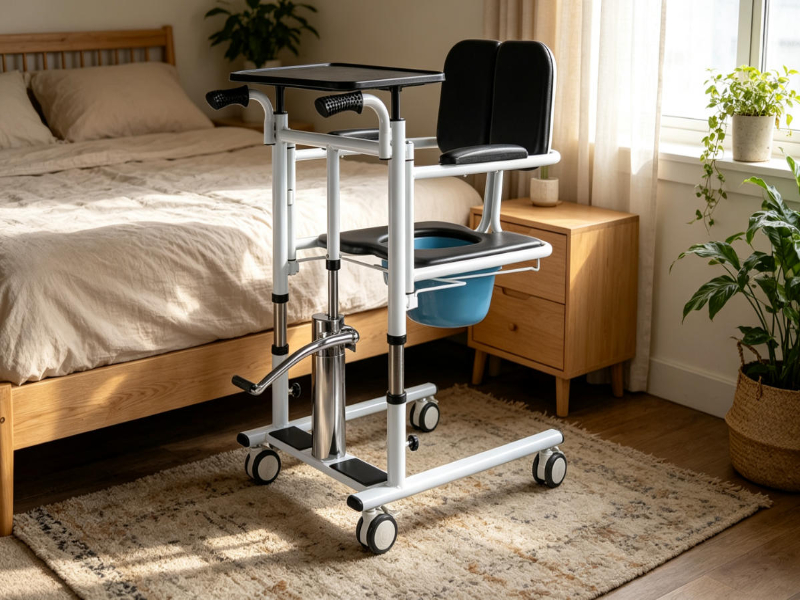
Moving a patient from a bed to a wheelchair, from a wheelchair to a treatment table, or between different areas of a healthcare facility is one of the most demanding parts of daily patient care. For people with limited mobility, reduced lower-body strength, or difficulty maintaining a stable sitting position, a conventional wheelchair may not provide enough support during transfers. At the same time, repeated manual lifting can place considerable physical strain on caregivers and increase the risk of an unsafe transfer.
An Electric Hydraulic Patient Transfer Wheelchair with Lift Platform is designed around this specific challenge. Rather than treating patient transportation and patient transfer as two separate tasks, a modern transfer wheelchair combines mobility with lifting and positioning functions. This can make everyday care more organized, particularly in hospitals, rehabilitation centres, nursing homes, home-care environments, and other professional healthcare settings.
For facilities purchasing mobility equipment, the important question is not simply whether a wheelchair can move from one room to another. A suitable transfer solution should also fit the patient’s physical condition, the caregiver’s workflow, the available space, and the requirements of the facility. Construction quality, lifting mechanism, transfer range, seat design, braking system, manoeuvrability, cleaning requirements, and long-term serviceability all deserve attention.
A conventional wheelchair is primarily designed to provide seated mobility. It allows a person who cannot walk independently to move between locations while seated, either independently or with assistance. Patient transfer, however, is a different process.
A transfer often begins with a person who is sitting or lying in one position and needs to be moved to another. The difficulty arises when the patient cannot stand securely, cannot bear sufficient weight through the legs, has poor balance, or requires physical support from a caregiver.
In a traditional transfer process, caregivers may need to help the patient stand, pivot, reposition, and sit down again. Depending on the individual’s condition, this can involve substantial physical effort. Repeating the same process several times a day can make transfers one of the most labour-intensive activities in a care environment.
A lifting transfer wheelchair approaches the problem differently. Instead of relying entirely on manual lifting, the equipment provides mechanical assistance for positioning and movement. The goal is to create a more controlled transition between different positions while also allowing the patient to remain supported during transportation.
This is where the Hydraulic Patient Transfer Wheelchair becomes particularly relevant. Hydraulic or powered lifting mechanisms can help adjust the patient’s position while the wheelchair remains underneath or around the patient. The exact transfer method depends on the design of the model, so healthcare providers should always follow the manufacturer’s instructions and assess whether the equipment is appropriate for the individual patient.
The benefit is not simply convenience. A well-designed transfer system can help establish a repeatable workflow: position the wheelchair correctly, secure the patient according to the manufacturer’s procedure, perform the transfer, and then move the patient to the next location. A predictable workflow can be valuable in busy professional care environments where transfers occur many times throughout the day.
The defining characteristic of an Electric Hydraulic Patient Transfer Wheelchair is the combination of assisted lifting and wheelchair mobility.
The lifting mechanism is particularly important because the transfer process often requires controlled vertical or positional adjustment. Hydraulic systems are widely used in lifting equipment because they can provide smooth mechanical movement when properly engineered and maintained. Electric assistance can further simplify operation by reducing the amount of physical effort required from the caregiver.
However, buyers should avoid evaluating a transfer wheelchair solely by the presence of a hydraulic or electric mechanism. The entire system needs to work together.
The wheelchair should provide stable support while the patient is being repositioned. The frame needs to be sufficiently robust for its intended application. The castors or wheels should allow caregivers to manoeuvre the chair in the environments where it will actually be used. Braking should provide reliable stationary positioning during transfers. The seat and back-support structure should correspond to the user’s physical needs.
Another important factor is accessibility. A transfer wheelchair may be used around beds, toilets, examination areas, rehabilitation equipment, or treatment rooms. If the chair is difficult to position in these spaces, an advanced lifting system may not deliver its full practical value.
For this reason, professional buyers should think about the complete transfer workflow rather than focusing on one specification.
The Hydraulic Patient Transfer Wheelchair YSM2304 is a practical option for buyers looking specifically for a transfer-focused mobility solution. Its hydraulic transfer concept makes it particularly relevant to care environments where patients need assistance moving between different positions.
The strength of this type of wheelchair is its emphasis on reducing dependence on manual lifting. Instead of expecting caregivers to perform every movement themselves, the equipment provides mechanical assistance as part of the transfer process.
This can be useful in nursing homes, rehabilitation facilities, hospitals, and home-care situations where transfers are a regular part of the daily routine. The wheelchair can be considered when the primary requirement is not simply transportation but assisted movement from one position to another.
For professional buyers, the YSM2304 should be evaluated according to the facility’s typical patient profile, available transfer space, required lifting range, and caregiver workflow. It is also important to confirm the model’s applicable user capacity and operating requirements before placing an order.
Its main advantage is therefore its focused purpose: combining patient mobility with hydraulic transfer assistance in a single piece of equipment.
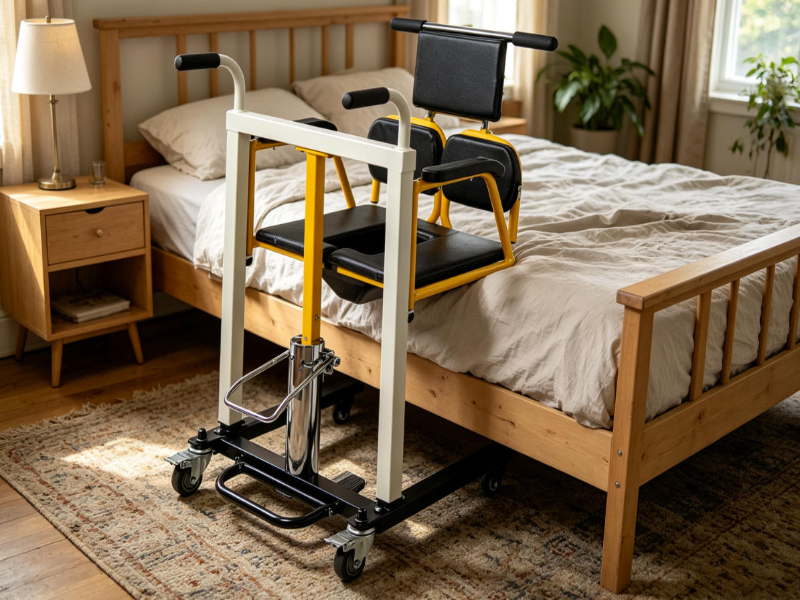
The Lifting Transfer Wheelchair YSM2305 is another option for organisations that need mechanical assistance when transferring patients.
A lifting wheelchair can be particularly valuable when the patient has difficulty standing or when caregivers want to reduce the amount of manual force required during repositioning. The equipment can provide a more structured way of supporting the patient through a transfer sequence.
Compared with an ordinary wheelchair, a lifting transfer model is designed around the transition itself. That distinction is important. The equipment is not merely intended to carry a patient after the transfer has been completed; the transfer function is part of the overall design concept.
This makes the YSM2305 worth considering for healthcare providers that regularly perform assisted transfers and want a dedicated mobility solution rather than relying exclusively on conventional wheelchairs and manual handling techniques.
For buyers working with multiple types of patients, the key consideration should be versatility. Different patients have different levels of mobility, strength, balance, and cooperation. The appropriate transfer procedure must therefore be selected according to the individual and the equipment’s approved use.
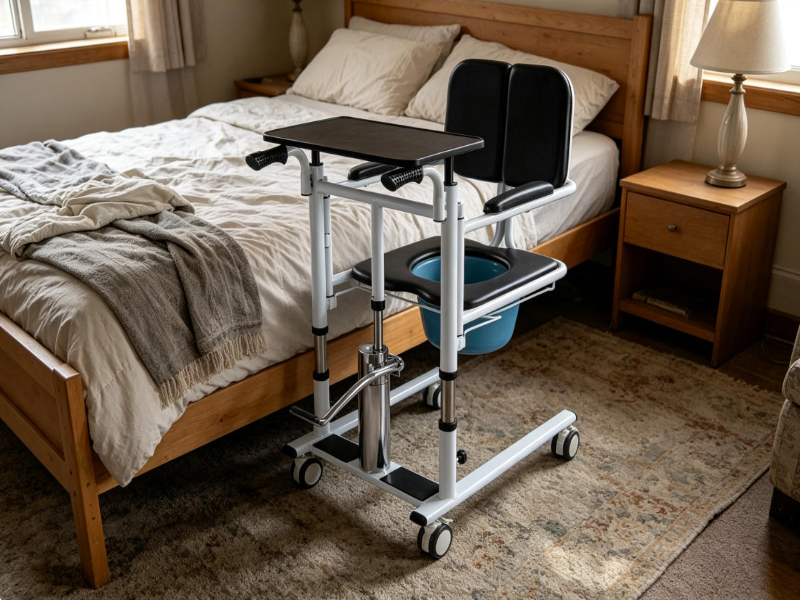
The third option is the YSM2302 Transfer Wheelchair, which represents a more automated approach to patient transfer.
Iyasocare’s transfer-wheelchair range includes an electric lift model designed for users and caregivers who prefer powered height adjustment. According to Iyasocare’s published information, the YSM2302 uses an electric seat-height adjustment system with a range of approximately 45–65 cm and a stated load capacity of up to 150 kg.
This higher load capacity is particularly relevant when selecting equipment for larger users or care environments where a wider range of patient body types must be accommodated.
The advantage of electric lifting is straightforward: the caregiver does not need to operate a manual hydraulic mechanism for every height adjustment. Powered adjustment can make repeated transfers more convenient, particularly when the equipment is used frequently throughout the day.
The YSM2302 is also described as waterproof and suitable for bathroom and toilet environments.
For care facilities, rehabilitation centers, and families supporting users with substantial mobility limitations, this type of powered transfer system can be worth considering. However, powered equipment also introduces additional considerations, including battery management, charging procedures, electrical components, and maintenance. Buyers should therefore evaluate the entire operating environment rather than choosing a model solely because it has an electric lift.
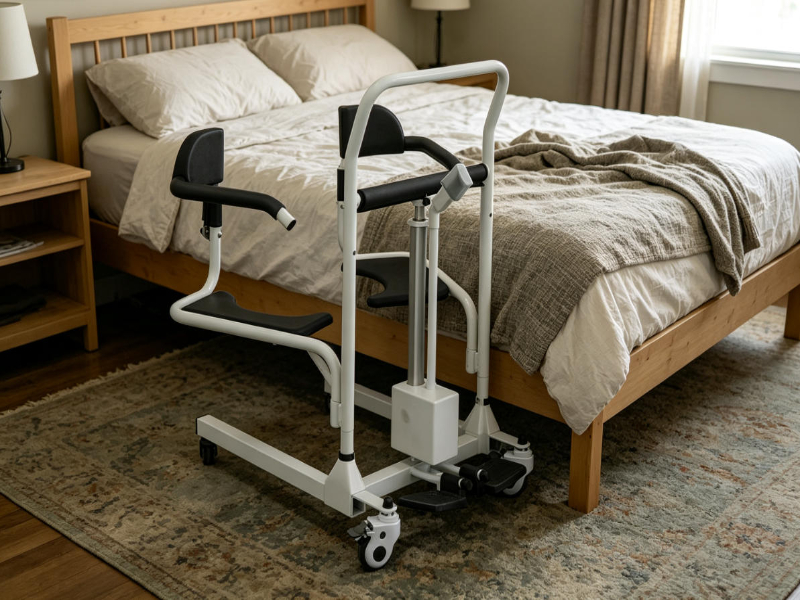
Choosing an Electric Hydraulic Patient Transfer Wheelchair should begin with the patient rather than the product catalogue.
Start with the patient’s mobility level
The first question is whether the intended user can stand independently, partially bear weight, maintain a seated position, or requires substantial assistance. A patient who can cooperate during a transfer may have very different requirements from someone who cannot actively participate.
Care teams should also consider balance, trunk control, leg strength, cognitive ability, and the level of caregiver assistance required. These factors influence whether a particular transfer wheelchair is appropriate.
Consider the transfer environment
A transfer wheelchair used in a hospital room may face different requirements from one used in a private home. Measure doorways, corridors, bathroom entrances, bed heights, turning areas, and storage spaces before selecting equipment.
This is particularly important because lifting equipment requires enough surrounding space to operate safely. A wheelchair that performs well in an open rehabilitation area may be difficult to manoeuvre in a compact bathroom or bedroom.
Examine the lifting mechanism
The lifting mechanism is one of the most important components of a transfer wheelchair. Buyers should understand how the mechanism operates, how it is controlled, what movement range is available, and what maintenance is required.
Hydraulic systems should be inspected regularly for signs of leakage or mechanical problems. Electric systems require appropriate battery and electrical-system maintenance. Staff should also receive proper operating training rather than learning through trial and error.
Do not overlook braking and stability
A transfer should take place with the wheelchair positioned securely. Braking and stability are therefore fundamental considerations.
Before purchasing, professional buyers should evaluate how easily the chair can be positioned, how the brakes operate, and whether the equipment remains stable during the manufacturer’s approved transfer procedure.
Think about cleaning and infection control
Healthcare equipment is exposed to moisture, body fluids, cleaning chemicals, and frequent handling. Surfaces should therefore be practical to clean and maintain.
A transfer wheelchair used in hospitals or nursing facilities should fit the organisation’s established hygiene procedures. The design should minimise areas where dirt or moisture can accumulate and should be compatible with the manufacturer’s recommended cleaning methods.
The value of a transfer wheelchair becomes easier to understand when considering everyday care situations.
A patient may need to move from a hospital bed to a wheelchair in the morning, from the wheelchair to a treatment area later in the day, and from the wheelchair to a bathroom before returning to bed. If the person cannot stand safely, every transfer becomes a separate physical challenge.
A dedicated transfer wheelchair can help make these routines more systematic. Instead of repeatedly improvising transfer techniques, caregivers can use equipment specifically designed for assisted movement.
This can also help facilities standardise their workflows. When staff members understand how the same equipment should be positioned, operated, cleaned, and stored, it becomes easier to establish consistent procedures.
For home-care users, the considerations are slightly different. Space may be limited, and there may be only one or two caregivers available. A multifunctional transfer wheelchair may therefore be particularly attractive if it can perform several relevant tasks without requiring multiple pieces of equipment.
The key is to match the equipment to the actual environment. More functionality is not automatically better if the equipment is too large, difficult to operate, or unsuitable for the home layout.
For hospitals, distributors, nursing homes, rehabilitation centres, and medical-equipment suppliers, the purchase price is only one part of the total cost of ownership.
A wheelchair that is inexpensive but difficult to maintain may become more expensive over time. Likewise, equipment that requires frequent repairs, has complicated operating procedures, or does not fit existing workflows can create hidden labour costs.
When evaluating an Electric Hydraulic Patient Transfer Wheelchair, buyers should consider durability, spare-parts availability, technical support, staff training, warranty arrangements, packaging, shipping, and after-sales service.
For distributors, product consistency is equally important. If several units are purchased for different customers, reliable production and stable specifications can make inventory management easier.
This is where working directly with a manufacturer can provide an advantage. IYASOCARE provides a broad range of wheelchair and mobility solutions, allowing B2B customers to explore different categories rather than relying on a single transfer-chair configuration.
For OEM and private-label buyers, manufacturer communication is also important because product requirements can differ substantially between markets. Packaging, branding, product documentation, specifications, certifications, and configuration requirements may all need to be discussed before an order is finalised.
The most useful way to evaluate transfer equipment is to think in terms of the entire care journey.
A patient does not simply need to be lifted. They need to be positioned, supported, transferred, transported, and cared for throughout the process. The caregiver needs equipment that is understandable, manageable, and appropriate for the environment.
That is why the best Hydraulic Patient Transfer Wheelchair is not necessarily the one with the most features. It is the one that addresses the facility’s actual transfer problems while providing appropriate support for the intended users.
The YSM2304 is worth considering when hydraulic transfer assistance is the central requirement. The YSM2305 is a practical option for buyers seeking a dedicated lifting transfer solution. The YSM2301 may appeal to facilities looking for a more multifunctional approach to assisted mobility.
Before purchasing, buyers should request the latest technical specifications, confirm user-weight limits, review the operating instructions, assess compatibility with the intended transfer environment, and ensure that staff receive appropriate training.
A transfer wheelchair should supplement—not replace—proper patient assessment, caregiver training, safe handling procedures, and professional clinical judgement.
1. What is an Electric Hydraulic Patient Transfer Wheelchair?
An Electric Hydraulic Patient Transfer Wheelchair is a specialised mobility device that combines wheelchair transportation with mechanical assistance for patient transfers. Depending on the model, hydraulic or electric mechanisms can help with lifting or repositioning, reducing the need for caregivers to perform every movement manually. The specific transfer procedure depends on the equipment design and should always follow the manufacturer’s instructions.
2. Who can benefit from a Hydraulic Patient Transfer Wheelchair?
A Hydraulic Patient Transfer Wheelchair may be useful for people who have difficulty walking, standing, or transferring independently. It can be considered in hospitals, nursing homes, rehabilitation facilities, and home-care environments. However, suitability depends on the individual’s physical condition, ability to cooperate, weight, balance, and the approved operating requirements of the specific wheelchair.
3. How should a healthcare facility choose between YSM2304, YSM2305 and YSM2301?
The choice should be based on the facility’s primary requirement. The YSM2304 is a strong option when hydraulic patient transfer is the main focus, while the YSM2305 is designed around assisted lifting and transfer. The YSM2301 is worth considering when a facility wants a multifunctional transfer solution. Before purchasing, compare the models’ current specifications, user capacity, dimensions, transfer functions, maintenance requirements, and compatibility with the facility’s workflow.