Our Location
Free Trade Tower, Xiyong street.
Chongqing, China

Free Trade Tower, Xiyong street.
Chongqing, China
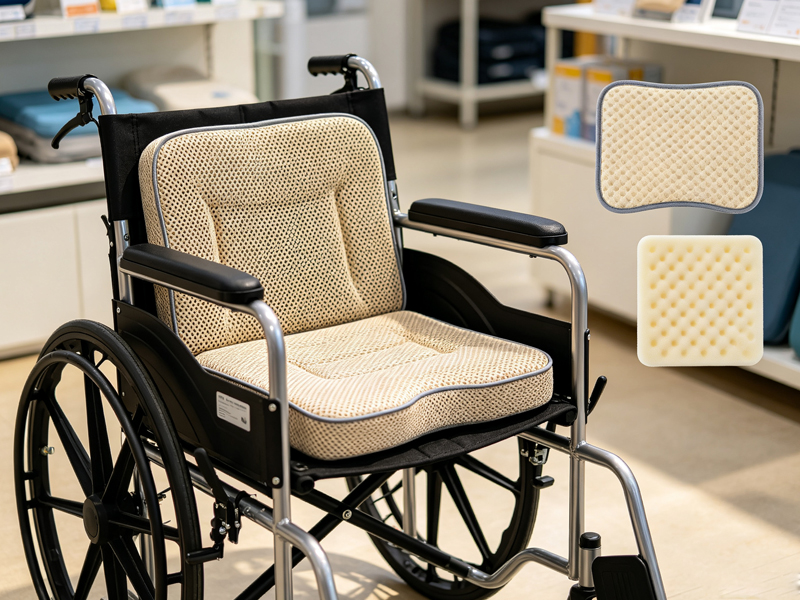
Choosing the right wheelchair cushion is not simply a matter of comparing prices or selecting a product that looks comfortable. For businesses operating in the medical supply, rehabilitation, mobility equipment, and healthcare industries, the right cushion can directly influence customer satisfaction, product reliability, inventory efficiency, and long-term profitability.
Among the various materials available, nylon has become a practical option for wheelchair cushion applications because of its lightweight characteristics, durability, and versatility. However, not all nylon wheelchair cushions offer the same level of performance. Differences in fabric construction, cushioning materials, dimensions, breathability, maintenance requirements, and intended applications can have a significant impact on the overall value of a product.
For distributors, wholesalers, healthcare suppliers, and wheelchair manufacturers, selecting the right product requires a more thoughtful approach than simply finding the lowest-cost option.
So, what should businesses look for when sourcing nylon wheelchair cushions? How can you evaluate quality, identify reliable suppliers, and choose products that meet the needs of different customer groups?
Material selection is one of the first decisions businesses need to make when choosing wheelchair cushions. The outer cover plays an important role in protecting the internal cushioning material, maintaining product appearance, and supporting everyday use.
Nylon is widely used in mobility and healthcare products because it combines relatively low weight with good mechanical strength. When properly manufactured, nylon fabric can provide resistance to everyday abrasion, making it suitable for products that experience frequent movement and repeated contact with clothing, wheelchair frames, and other surfaces.
For wheelchair cushion applications, these characteristics offer several practical advantages.
Durability for Daily Use
Wheelchair cushions are exposed to continuous pressure, friction, and movement. Users may sit on them for extended periods, transfer between different seating surfaces, or remove them for cleaning and transportation.
A well-constructed nylon cover can help withstand normal daily wear. This is particularly valuable for businesses supplying rehabilitation centers, nursing facilities, hospitals, and long-term care organizations, where products may be used frequently.
However, durability should never be judged by the material name alone. Nylon quality depends on fabric density, yarn construction, coating or finishing treatments, stitching quality, and overall manufacturing standards.
Lightweight and Easy to Handle
Weight matters in the mobility equipment market. Wheelchair users and caregivers often need to move, adjust, or replace cushions without unnecessary effort.
Nylon is generally lightweight compared with many heavier upholstery materials. This can make nylon-covered cushions easier to handle during transportation, storage, and routine maintenance.
For distributors and wholesalers, lighter products may also simplify packaging and logistics, although the actual shipping weight will depend on the internal cushioning material and overall product construction.
Versatility Across Different Applications
Nylon wheelchair cushion covers can be used with different types of cushioning systems, including foam-based designs and other specialized seating constructions.
This flexibility allows manufacturers and suppliers to develop product ranges for different market segments, from standard daily-use wheelchair cushions to more specialized seating products.
It is important to remember that nylon refers to the cover material, not necessarily the cushioning technology inside the product. A nylon-covered cushion does not automatically provide pressure redistribution, advanced postural support, or therapeutic benefits. These functions depend on the complete cushion design.
One of the most common purchasing mistakes is selecting a wheelchair cushion before clearly understanding who will use it.
A product that works well for a home-care customer may not be the best option for a rehabilitation facility. Similarly, a distributor supplying budget-conscious retail customers may have different requirements from a medical equipment supplier serving hospitals or specialist seating clinics.
Before contacting manufacturers or requesting quotations, identify your main customer groups.
Medical Supply Distributors and Wholesalers
Distributors usually need products that balance quality, price, availability, and consistent specifications.
For this market, nylon wheelchair cushions should be evaluated according to:
A product with an attractive initial price may become less competitive if it has inconsistent quality or generates frequent customer complaints.
For wholesalers managing large inventories, product consistency is especially important. Customers expect replacement products to offer similar dimensions, materials, and performance to previous purchases.
Hospitals and Rehabilitation Centers
Institutional buyers generally pay closer attention to durability, cleaning procedures, user safety, and suitability for specific patient needs.
A nylon wheelchair cushion supplied to these organizations should have clearly documented cleaning instructions and material specifications.
The outer cover should be practical for the intended care environment. Depending on the product design, buyers may also want to evaluate moisture resistance, removable covers, zipper construction, and compatibility with facility cleaning protocols.
It is equally important to distinguish standard seating products from cushions specifically designed for pressure injury prevention. Patients at elevated risk may require an individualized seating assessment and a cushion selected according to their clinical needs.
Retailers and E-Commerce Businesses
Online retailers and mobility equipment stores need products that are easy to explain, photograph, package, and sell.
For this market, product presentation matters almost as much as physical quality.
Clear product descriptions should communicate dimensions, cover materials, internal construction, cleaning instructions, intended applications, and compatibility information.
Avoid vague claims such as “suitable for everyone” or “prevents pressure sores.” These statements can create unrealistic customer expectations and may raise regulatory concerns.
A more effective approach is to provide accurate product information that helps customers understand whether a particular cushion matches their requirements.
Once you understand your target market, the next step is to compare actual product specifications. The following six factors can help businesses distinguish a well-designed nylon wheelchair cushion from a product that simply looks attractive in a catalog.
The nylon fabric is the first component to examine.
Not all nylon fabrics have identical performance characteristics. Different yarn specifications, weaving methods, fabric weights, and finishing treatments can affect strength, flexibility, surface texture, and resistance to wear.
When evaluating a potential supplier, ask for details about:
For products intended for frequent use, abrasion resistance deserves particular attention. A cushion cover that wears out quickly may lead to replacement costs and customer dissatisfaction.
It is also worth requesting physical samples. A product photograph cannot fully communicate fabric texture, flexibility, stitching quality, or the overall feel of the finished cushion.
Although the nylon cover is important, the internal cushioning material has a major influence on comfort and seating performance.
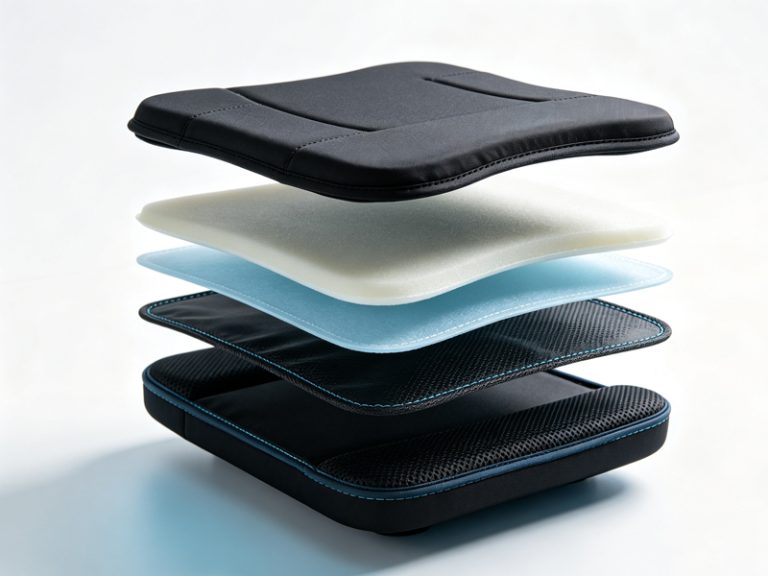
Different products may use standard foam, high-density foam, layered foam, gel components, or other specialized materials.
Each construction has its own characteristics.
Standard foam cushions are often used in general-purpose seating applications. Higher-density foam may provide a different level of structural support and resistance to compression, depending on its formulation and design.
Layered constructions can combine materials with different properties, while gel-based designs may offer additional pressure redistribution characteristics.
Businesses should avoid assuming that a thicker cushion is automatically more comfortable or more supportive.
The important factors include:
Foam density and firmness are not interchangeable. Density measures mass per unit volume, while IFD is commonly used to describe the force required to compress foam under specified test conditions.
For commercial purchasing, ask suppliers to provide the relevant technical specifications instead of relying on descriptions such as “soft,” “premium,” or “high quality.”
Size is another critical consideration.
A wheelchair cushion that is too narrow may not provide adequate seating coverage, while an oversized cushion may interfere with the wheelchair frame or affect seating stability.
Businesses should pay attention to three main dimensions:
Common cushion sizes vary by manufacturer and application. Rather than assuming that one standard size will fit most wheelchairs, compare the product dimensions with the actual seat dimensions of the intended wheelchair models.
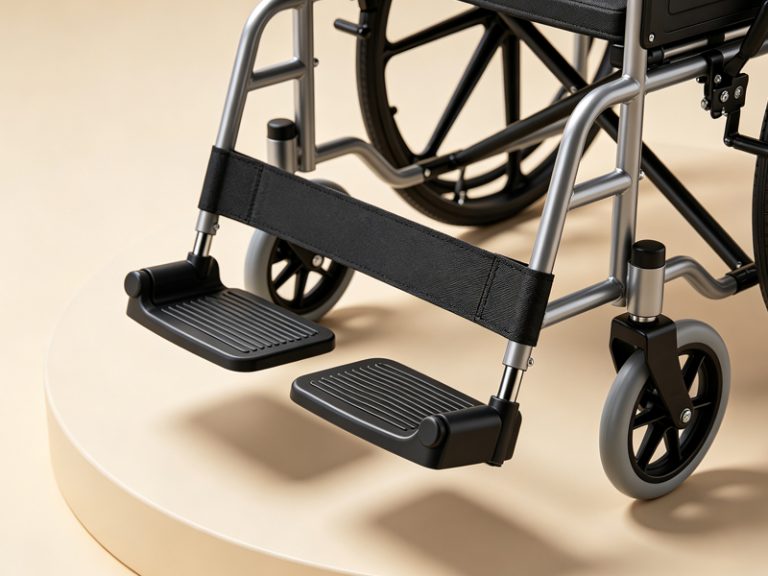
It is also worth checking whether the cushion includes a non-slip bottom, positioning features, or fastening straps.
These features may help improve placement and reduce unwanted movement, depending on the wheelchair design.
For distributors, stocking several commonly requested sizes may provide better market coverage than focusing on a single universal option.
However, excessive SKU expansion can increase inventory costs. A practical product range should be based on customer demand, historical sales data, and the compatibility requirements of the target market.
Comfort is influenced by more than cushioning softness.
Heat and moisture can accumulate between the user and the seating surface, especially during prolonged sitting or in warm environments.
The nylon fabric construction, surface treatment, and overall cushion design can influence airflow and moisture management.
Businesses should evaluate whether the cover is breathable, whether it has moisture-resistant properties, and whether these characteristics are appropriate for the intended application.
One important distinction: water-resistant fabric is not necessarily waterproof, and a waterproof coating may affect breathability.
If the cushion is intended for environments where fluid protection is important, request specific test information rather than assuming that nylon itself provides waterproof performance.
The complete cover system should be evaluated, including seams, zippers, closures, and any potential points where moisture could enter.
For hospitals, care facilities, and commercial equipment providers, cleaning procedures can strongly influence purchasing decisions.
A removable nylon cover may make routine maintenance more convenient, particularly when users or caregivers need to clean the cover separately from the internal cushion.
However, removable does not automatically mean machine washable or disinfectant compatible.
Before purchasing, confirm:
This information should be documented clearly.
A cushion that requires complicated maintenance may be less practical for high-turnover care environments, even if its initial purchase price is attractive.
For businesses supplying institutional customers, maintenance instructions should be included in the product documentation and communicated to end users.
Small construction details often reveal a great deal about manufacturing quality.
Even when a cushion uses good nylon fabric and suitable foam, poor stitching or weak zipper construction can reduce its useful service life.
Inspect the following areas carefully:
Stitching: Seams should be consistent, secure, and free from loose threads or obvious gaps.
Zippers: Check whether the zipper operates smoothly and whether its placement makes the cover easy to remove without creating unnecessary pressure points.
Edge finishing: Examine whether the fabric edges are properly finished to reduce fraying.
Bottom surface: Evaluate whether the underside provides adequate grip and whether its construction is compatible with the intended wheelchair.
Shape retention: Check whether the finished cushion maintains its intended shape after repeated compression and normal handling.
These details may seem minor during initial purchasing, but they can become important sources of product returns and after-sales complaints.
Finding the right product is only half the purchasing process. The other half is finding a manufacturer or supplier capable of delivering consistent quality over time.
For B2B buyers, supplier evaluation should go beyond comparing quotations.
A reliable supplier should be able to explain the product’s construction, provide technical information, support sample evaluation, and communicate production requirements clearly.
Start by reviewing the supplier’s manufacturing capabilities.
Does the company manufacture wheelchair cushions directly, or does it primarily act as a trading company? Can it explain the materials used in its products? Does it have experience supplying distributors, medical equipment companies, or institutional customers?
There is no universal rule that a manufacturer is always better than a trading company. What matters is whether the supplier can provide reliable product information, quality control, communication, and delivery arrangements.
Next, request product samples.
A sample evaluation should cover fabric quality, cushion dimensions, foam characteristics, stitching, zipper operation, and overall workmanship.
If the product is intended for commercial distribution, consider testing more than one sample or requesting samples from different production batches when possible.
This helps identify potential inconsistencies that may not be visible in a single demonstration unit.
You should also ask about quality control procedures.
A professional supplier should be able to explain how raw materials are inspected, how production quality is monitored, and how finished products are checked before shipment.
Depending on the market and product classification, relevant documentation may include material test reports, quality management certifications, product specifications, and applicable regulatory documents.
Do not treat a certificate or logo as proof that every product meets every requirement. Verify the document’s scope, issuing organization, validity, and relevance to the specific product.
For international buyers, it is also important to confirm packaging standards, shipping arrangements, lead times, and the supplier’s process for handling defective goods.
These operational details can have a direct impact on your business.
Price is naturally an important factor in wholesale purchasing. However, choosing a nylon wheelchair cushion based only on the lowest quotation can create problems later.
A more useful approach is to evaluate the total cost of ownership.
Consider a simple purchasing scenario.
Supplier A offers a lower unit price but has inconsistent fabric quality, limited product documentation, and a higher rate of reported defects.
Supplier B offers a slightly higher price but provides consistent specifications, reliable production, and better after-sales support.
Although Supplier A may appear more attractive initially, Supplier B could deliver better long-term value if it reduces replacement costs, customer complaints, and operational interruptions.
When comparing quotations, make sure both suppliers are offering products with comparable specifications.
A meaningful price comparison should include:
| Cost Factor | What to Check |
|---|---|
| Unit price | Compare products with matching specifications |
| Minimum order quantity | Check whether the MOQ fits your sales volume |
| Sample cost | Confirm sample charges and shipping fees |
| Packaging | Review individual and bulk packaging requirements |
| Shipping | Compare freight, insurance, and delivery terms |
| Defect handling | Clarify replacement and compensation policies |
| Lead time | Check sample and mass-production schedules |
| Customization | Confirm additional costs for logos, sizes, and packaging |
For growing businesses, it may also be worthwhile to discuss volume-based pricing with suppliers.
However, avoid placing a large order simply to obtain a lower unit price before confirming product quality and market demand.
A smaller initial order can provide an opportunity to test customer feedback, assess product performance, and evaluate supplier reliability.
Once the product has demonstrated consistent results, larger purchasing volumes may become more practical.
In a competitive mobility equipment market, customization can help distributors and brands differentiate their product offerings.
Many manufacturers offer customization options for nylon wheelchair cushions, depending on their production capabilities and minimum order requirements.
Possible options include:
Private-label products can be particularly attractive to established distributors and businesses developing their own mobility equipment brands.
However, customization should be driven by genuine customer demand rather than appearance alone.
For example, a retailer serving customers with different wheelchair models may benefit from offering several carefully selected sizes.
A distributor supplying rehabilitation centers may prioritize easy-to-clean covers and standardized product specifications.
An e-commerce brand may focus on packaging, clear product labeling, and a consistent visual identity.
Before approving a customized product, request a pre-production sample and confirm all specifications in writing.
Pay particular attention to the material composition, finished dimensions, stitching details, logo placement, and packaging design.
If the product is intended for a regulated market, confirm that customization does not affect its regulatory status or invalidate existing product documentation.
Even experienced buyers can overlook important details when sourcing wheelchair cushions.
One common mistake is assuming that nylon automatically means high durability. As mentioned earlier, the performance of nylon fabric depends on its construction, finishing, and manufacturing quality.
Another mistake is focusing too heavily on cushion thickness. Thickness alone does not determine comfort, support, or pressure redistribution. The complete seating system must be evaluated.
Some businesses also overlook wheelchair compatibility. A cushion may be well manufactured but still be unsuitable for a particular wheelchair because of incorrect dimensions or positioning features.
Cleaning requirements are another frequently underestimated issue. Products used in healthcare environments must be compatible with the cleaning procedures specified by the manufacturer and the facility.
Finally, buyers sometimes place too much trust in product descriptions and supplier claims without requesting technical documentation or physical samples.
The solution is straightforward: establish clear purchasing standards before placing an order.
A consistent evaluation process makes it easier to compare suppliers, reduce avoidable purchasing risks, and maintain product quality as your business grows.
Before making your final decision, review the following points with your supplier.
| Evaluation Area | Questions to Ask |
|---|---|
| Fabric | What type and specification of nylon is used? |
| Cushioning | What material and density are used inside? |
| Dimensions | Are the width, depth, and thickness suitable? |
| Comfort | Is the cushion designed for general seating or a specialized purpose? |
| Breathability | What are the fabric’s airflow and moisture characteristics? |
| Cleaning | Can the cover be removed, washed, or disinfected? |
| Construction | Are the seams, zippers, and edges properly finished? |
| Testing | Are relevant product or material test reports available? |
| Customization | Can sizes, colors, labels, or packaging be customized? |
| Quality Control | What inspections are performed before shipment? |
| Logistics | What are the MOQ, lead time, and shipping arrangements? |
| After-Sales Support | How are defects and customer complaints handled? |
You do not need to find a product that performs perfectly in every category. Instead, identify the characteristics that matter most to your customers and choose a product that meets those requirements consistently.
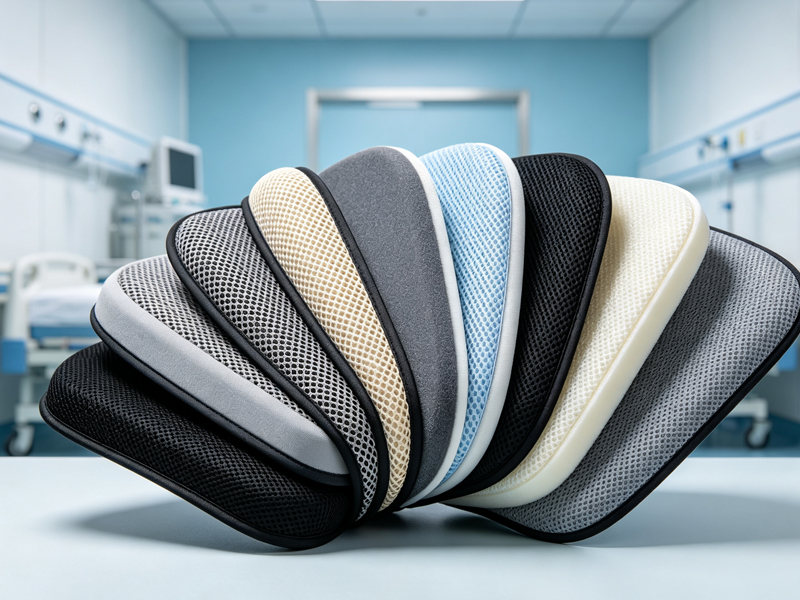
Selecting the right nylon wheelchair cushion involves much more than choosing a fabric or comparing wholesale prices.
For distributors, wholesalers, healthcare suppliers, and mobility equipment brands, the best purchasing decision comes from understanding the target market, evaluating the complete cushion construction, checking wheelchair compatibility, and working with a dependable supplier.
A good nylon cover should be durable and practical for its intended application. The internal cushioning material should match the required seating function. Dimensions, cleaning requirements, and construction quality should be clearly documented.
Just as importantly, the supplier should demonstrate consistent manufacturing standards and provide the support needed for long-term cooperation.
Remember that a nylon-covered wheelchair cushion is not automatically a pressure-relief or pressure-injury prevention product. Businesses serving users with specific medical or postural needs should select products according to appropriate clinical and product specifications.
Ultimately, successful sourcing is not about purchasing the cheapest cushion available. It is about choosing a product that delivers reliable quality, meets customer expectations, and supports your business as it grows.
By taking the time to evaluate these factors before placing an order, you can build a more dependable product portfolio and establish stronger relationships with both suppliers and customers.
1. Are nylon wheelchair cushions durable enough for everyday use?
Yes, nylon wheelchair cushions can be suitable for everyday use when they are manufactured with appropriate fabric specifications, quality stitching, and suitable internal cushioning materials. However, durability varies between products. Businesses should evaluate fabric construction, abrasion resistance, seam quality, zipper performance, and overall workmanship before purchasing in bulk.
2. What should businesses look for when buying wholesale nylon wheelchair cushions?
Wholesale buyers should consider fabric quality, internal cushioning materials, product dimensions, cleaning requirements, wheelchair compatibility, pricing, minimum order quantities, and supplier reliability. It is also advisable to request samples, review technical specifications, and confirm quality control procedures before committing to a large order.
3. Can nylon wheelchair cushions be customized for private-label or OEM projects?
Many manufacturers offer customization options, including cushion dimensions, nylon fabric colors, internal foam specifications, logos, labels, and packaging. Available options depend on the manufacturer’s production capabilities and minimum order requirements. Before starting an OEM or private-label project, businesses should confirm the specifications, request a pre-production sample, and agree on quality standards in writing.