Our Location
Free Trade Tower, Xiyong street.
Chongqing, China

Free Trade Tower, Xiyong street.
Chongqing, China
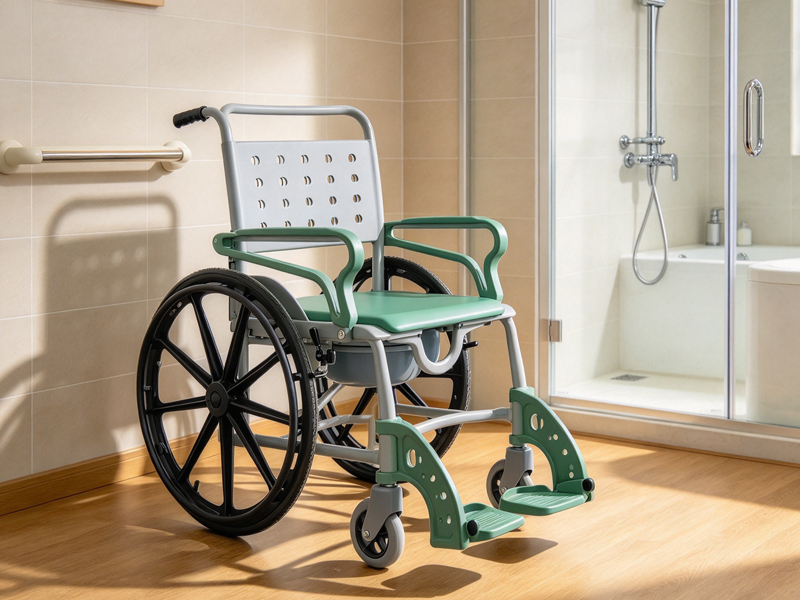
Purchasing shower wheelchairs in bulk is not simply a matter of finding a supplier with an attractive price. For medical equipment distributors, healthcare wholesalers, nursing home suppliers, and private-label brands, choosing the right shower wheelchair manufacturer can directly affect product safety, customer satisfaction, business reputation, and long-term profitability.
Unlike ordinary wheelchairs, shower wheelchairs are designed for wet environments where water exposure, slippery floors, frequent cleaning, and daily transfers create additional challenges. A product that performs well in a showroom may not necessarily withstand the demands of a busy hospital, nursing home, or home care environment.
This makes manufacturer selection particularly important. Buyers need more than a competitive quotation. They need a manufacturing partner that understands product design, material selection, quality control, production management, and international market requirements.
With so many suppliers available, how can you identify a reliable shower wheelchair manufacturer for large-volume purchasing?
Before contacting manufacturers, take time to understand exactly what your customers need. This may sound obvious, but many purchasing problems begin when buyers request quotations without defining their product requirements.
A shower wheelchair used in a private bathroom may have different requirements from one intended for a rehabilitation center or long-term care facility.
For example, home care customers may prioritize compact dimensions, easy storage, and simple operation. Hospitals and nursing homes may place greater emphasis on durability, easy cleaning, frequent use, and compatibility with different patient needs.
Your target market will influence almost every purchasing decision, including product structure, materials, accessories, packaging, and regulatory documentation.
Some important questions to answer include:
These details help manufacturers recommend an appropriate model rather than simply offering the cheapest available option.
It is also worth distinguishing between a shower wheelchair, a shower commode wheelchair, and a standard transport wheelchair. Although these products may look similar, their intended applications and structural requirements can differ considerably.
A shower wheelchair should be designed specifically for wet-area use. A standard wheelchair should never be assumed to be suitable for showering simply because its frame appears strong.
The more clearly you define your purchasing requirements, the easier it becomes to compare manufacturers on equal terms.
One of the most important decisions in bulk purchasing is determining whether you are dealing directly with a manufacturer or through a trading company.
Both business models can serve legitimate purposes. Trading companies may offer convenient access to multiple product categories, while manufacturers generally provide more direct control over production, engineering, and customization.
However, if your business plans to purchase shower wheelchairs regularly, working directly with a manufacturer can offer several practical advantages.
Better control over product specifications
A manufacturer with direct production involvement can usually provide more detailed information about frame construction, material selection, component specifications, and assembly processes.
When you need to change a particular product detail, communication with the production team is often more straightforward.
More flexible customization
Distributors and private-label brands frequently need customized colors, logos, packaging, product configurations, or accessories.
A manufacturer with established engineering and production capabilities is generally better positioned to evaluate whether these changes are practical and how they may affect cost, minimum order quantity, and production time.
More transparent production arrangements
When purchasing directly from a factory, buyers can request information about production schedules, inspection procedures, and manufacturing capacity.
This is particularly valuable when an order involves several hundred units or when repeat shipments must follow a consistent schedule.
That said, a supplier should not be considered a genuine manufacturer simply because its website uses the word factory.
Ask practical questions instead:
A reliable manufacturer should be comfortable discussing these matters.
For distributors seeking a long-term sourcing relationship, Iyasocare is a manufacturer worth considering. As a wheelchair and mobility equipment manufacturer, Iyasocare serves the medical mobility market and provides a starting point for buyers looking for a supplier with relevant product and manufacturing experience.
The important thing is to evaluate the actual model, production arrangements, and documentation rather than relying on a company introduction alone.
A shower wheelchair operates in an environment that can be particularly demanding for metal components, moving parts, fasteners, and upholstered surfaces.
Constant exposure to water, soap, cleaning chemicals, and humidity can gradually affect product performance if unsuitable materials or surface treatments are used.
For bulk buyers, material selection should therefore be one of the first technical areas to investigate.
Frame material
Aluminum alloy and stainless steel are commonly considered for shower and bathroom mobility equipment.
Aluminum alloy is attractive because of its relatively low weight and potential resistance to corrosion. A well-designed aluminum frame can make the wheelchair easier for caregivers to move, lift, and maneuver.
Stainless steel may provide different structural and durability characteristics, depending on the grade, design, and manufacturing process. It can be appropriate for certain heavy-duty applications, although its weight and overall cost should also be considered.
Neither material automatically guarantees a high-quality product. The actual performance depends on material grade, wall thickness, welding quality, surface treatment, structural design, and maintenance conditions.
Ask the manufacturer to identify the frame material and provide relevant specifications instead of accepting general descriptions such as premium metal or rustproof construction.
Surface treatment and corrosion resistance
A shower wheelchair must tolerate regular exposure to moisture.
Pay attention to welded joints, exposed metal edges, screws, connection points, and areas where water may accumulate. These locations deserve particular attention during inspection.
Ask whether the manufacturer has conducted relevant corrosion-resistance testing and whether the test conditions reflect the intended cleaning and usage environment.
Seat and backrest materials
The seat should be comfortable, stable, and practical to clean.
Common considerations include water drainage, surface texture, durability, and resistance to repeated cleaning. Poorly designed seating can retain water, become difficult to maintain, or deteriorate with frequent use.
For products with removable seats or commode openings, inspect how securely the components fit and whether caregivers can remove and reinstall them without unnecessary difficulty.
Wheels and brakes
Caster quality is another essential consideration.
Wheels should move smoothly across appropriate floor surfaces, while the locking mechanism should provide dependable stability when the wheelchair is stationary.
For shower applications, inspect brake accessibility, locking consistency, caster attachment, and performance on wet flooring.
A manufacturer should be able to explain how the wheels and brakes are selected and tested.
Ultimately, material quality is not something that can be judged from a product photograph. Request samples and inspect the actual construction before approving a large production order.
Safety should never become a secondary consideration simply because a supplier offers a lower price.
A shower wheelchair is used in situations where users may have limited balance, reduced muscle strength, or difficulty transferring independently. A design weakness that appears minor during a factory inspection can become a serious problem during everyday use.
Start by examining the overall frame structure.
Does the wheelchair feel stable when a user sits down? Are the connection points secure? Does the seat remain properly positioned? Are the armrests strong enough for their intended function?
The wheelchair should also be evaluated in relation to its stated maximum user weight. Buyers should request the manufacturer’s rated capacity and supporting test information rather than estimating load limits from the appearance of the frame.
Other important safety features include:
Usability is equally important.
For example, removable armrests may help caregivers transfer users from a bed or toilet. Swing-away or removable footrests may make access easier. A folding frame can reduce storage requirements for home care customers.
However, every additional feature should serve a clear purpose. More components do not automatically make a better product.
It is also important to check the manufacturer’s instructions regarding brakes, transfers, weight limits, cleaning, and maintenance. Buyers should not assume that a particular design is suitable for every patient or every bathroom layout.
Before bulk approval, test the sample in realistic conditions and ask qualified caregivers or intended users to provide feedback.
Certifications are an important part of choosing a shower wheelchair manufacturer, especially when importing products into regulated international markets.
However, buyers should understand that different documents serve different purposes.
One commonly referenced quality management standard is ISO 13485, which applies to quality management systems for medical devices.
A manufacturer operating under an appropriately certified ISO 13485 quality management system should have documented processes for areas such as production control, supplier management, inspection, nonconforming products, traceability, and corrective actions.
For bulk purchasers, this matters because consistent quality is just as important as the performance of the first sample.
Imagine placing an order for 500 shower wheelchairs. If the manufacturer changes a component or material without proper control, the later units may not perform in the same way as the approved sample.
A structured quality management system helps reduce this type of risk.
Nevertheless, ISO 13485 certification does not mean every individual product has been independently tested or approved for every market.
Buyers should also consider the product-specific requirements that apply to the destination country.
For European markets, ask about the applicable EU regulatory framework, conformity assessment, CE marking, and the Declaration of Conformity where required.
For the United States, determine the product’s FDA classification and the applicable establishment registration, device listing, premarket, and quality-system requirements, as relevant to the specific product.
Do not assume that every shower wheelchair automatically requires the same FDA pathway or that establishment registration means FDA approval.
When reviewing compliance documents, pay attention to:
A professional shower wheelchair manufacturer should be willing to explain which documents are available and how they relate to the model you intend to purchase.
If a supplier makes broad claims about international certification but cannot provide relevant documentation, take the time to investigate before proceeding.
A manufacturer may offer an excellent sample and competitive pricing but still struggle when faced with a large order.
This is why production capacity should be evaluated separately from product quality.
Bulk purchasing involves more than manufacturing a large quantity of products. It requires coordinated material purchasing, production scheduling, assembly, inspection, packaging, and shipment.
If a factory cannot manage these processes effectively, delivery delays and inconsistent product quality may follow.
Start by asking about the manufacturer’s current production arrangements.
You should understand whether it has stable access to key components, sufficient assembly capacity, and an established process for managing multiple orders simultaneously.
Ask the following questions:
Do not rely on vague promises such as fast delivery or unlimited capacity.
Instead, request a realistic production schedule based on your specific order quantity and product configuration.
It is also useful to understand how the factory handles peak-season demand. A manufacturer that can deliver 100 units under normal conditions may face very different challenges when asked to produce 1,000 units within a short period.
For larger orders, consider dividing production into agreed batches. This can help buyers manage warehouse space, cash flow, and inventory turnover while giving the manufacturer a more predictable schedule.
The production plan should be documented before the order is confirmed.
Price is naturally one of the most important considerations in wholesale purchasing.
However, choosing a shower wheelchair manufacturer based entirely on the lowest quotation can create problems later.
A lower initial purchase price may be offset by higher maintenance costs, product returns, damaged shipments, inconsistent components, or limited access to replacement parts.
A more useful approach is to compare the total cost of ownership.
Consider the following cost elements:
Product price
Check whether the quotation includes all agreed accessories, packaging, and standard components. Make sure that different suppliers are quoting comparable product configurations.
Customization costs
OEM requirements such as logos, customized colors, labels, and packaging may involve additional setup fees, tooling costs, or minimum order quantities.
Ask for a clear breakdown before approving customization.
Shipping and packaging
Shower wheelchairs can occupy considerable shipping space, depending on their design and packaging.
A folding model may offer transportation advantages, but the actual benefit depends on carton dimensions, protective packaging, loading efficiency, and shipping arrangements.
Quality-related costs
Product defects, replacement shipments, returns, and customer complaints can significantly affect the profitability of a wholesale business.
After-sales expenses
Check whether replacement components are available and how warranty claims are handled.
A supplier with slightly higher unit pricing may provide better long-term value if it delivers consistent quality and dependable support.
When comparing quotations, use the same technical specifications, order quantity, delivery terms, and packaging requirements.
This makes the comparison more meaningful and reduces the risk of choosing a supplier based on an incomplete price.
For distributors and established medical equipment brands, private labeling can be an effective way to differentiate products in a competitive market.
Instead of selling an identical product available from multiple suppliers, you may want a shower wheelchair that reflects your own brand identity.
This is where OEM and ODM capabilities become important.
OEM generally refers to manufacturing products according to the buyer’s agreed specifications and branding requirements. ODM usually involves greater participation from the manufacturer in product design and development.
Depending on the manufacturer’s capabilities, customization may include:
Not every modification is technically or commercially practical.
For example, changing the frame structure, wheel assembly, seat dimensions, or rated capacity may affect product performance and require additional testing or regulatory review.
A responsible manufacturer should explain these implications before accepting the modification.
This is especially important for buyers who plan to sell under their own brand. Product changes, labeling, documentation, and market-specific responsibilities should be agreed upon clearly.
Iyasocare can be considered as a potential manufacturing partner for businesses exploring wheelchair sourcing and brand development. Buyers interested in OEM or ODM cooperation should discuss their intended design, target quantity, destination market, and documentation requirements directly with the company.
The goal should be to establish a repeatable product specification rather than customize each order independently.
One of the most effective ways to reduce purchasing risk is to test the product before committing to a large order.
Product photographs, online descriptions, and technical documents are useful, but they cannot fully replace physical inspection.
A sample allows your team to evaluate the actual product and compare it against your intended application.
When assessing a shower wheelchair sample, pay attention to the following areas.
Frame and assembly
Inspect welds, joints, fasteners, frame alignment, and surface finishing. Look for visible defects, loose connections, sharp edges, or uneven assembly.
Seat and backrest
Check comfort, stability, drainage, and cleaning accessibility. If the seat is removable, test the removal and installation process.
Wheels and brakes
Move the wheelchair across appropriate floor surfaces and check the locking mechanisms. Evaluate stability under the manufacturer’s stated operating conditions.
Dimensions and accessibility
Measure the actual product rather than relying entirely on catalogue dimensions. Check whether it fits the bathrooms, doorways, and transfer spaces relevant to your customers.
Packaging
Review how the product is protected during transportation. Check whether vulnerable parts are adequately secured and whether accessories are packed and labeled correctly.
Documentation
Confirm that the user manual, labels, product specifications, and other required documents match the sample.
For large orders, consider arranging a pre-production sample approval process and an independent pre-shipment inspection.
The inspection criteria should be agreed upon in advance. They may include product appearance, dimensions, component specifications, functional checks, packaging, and sampling requirements.
Most importantly, the approved sample should become the reference for mass production.
If a manufacturer changes the material, structure, supplier, or critical components after sample approval, the buyer should be informed and the change assessed before implementation.
The relationship with a shower wheelchair manufacturer should not end when the container leaves the factory.
For distributors and healthcare suppliers, long-term after-sales support is essential.
Even well-manufactured products may require maintenance, component replacement, or technical assistance during their service life.
Before placing an order, clarify how the manufacturer handles product-related problems.
Ask about:
It is particularly useful to ask whether common replacement components can be purchased separately.
Depending on the model, these may include casters, brake assemblies, footrests, armrests, seats, and other replaceable components.
A manufacturer with an organized spare-parts system can help distributors maintain customer relationships and reduce the inconvenience associated with product maintenance.
Communication quality is another important indicator.
Does the supplier respond clearly to technical questions? Does it provide realistic updates? Can it explain the cause of a problem rather than simply offering general reassurance?
Reliable communication is especially valuable when buyers operate in different time zones or need to coordinate shipments across international markets.
Even after comparing several manufacturers, buyers should remain alert to potential warning signs.
Some problems may not become apparent until after a purchase order has been placed.
Here are several situations that deserve closer attention.
Unusually low quotations
A price significantly below the market level may indicate differences in materials, component quality, production standards, or included accessories.
It does not automatically mean the supplier is unreliable, but the reasons for the price difference should be understood.
Unclear manufacturing information
If a supplier cannot explain its production arrangements or provide reasonable evidence of manufacturing involvement, investigate further.
Generic certification claims
A statement such as internationally certified is not a substitute for an identifiable, valid certificate and applicable product documentation.
Reluctance to provide samples
A supplier that refuses reasonable sample evaluation may make it difficult for buyers to verify product quality before placing a large order.
Inconsistent specifications
If the quotation, sample, product catalogue, and final purchase agreement contain different specifications, stop and clarify the discrepancies.
Unclear warranty arrangements
A professional supplier should explain what is covered, how claims are evaluated, and what happens when a product defect is confirmed.
Unrealistic delivery promises
Production and shipping schedules should be based on actual capacity, material availability, and order requirements.
A supplier that promises almost immediate delivery without understanding your specifications may not have evaluated the project carefully.
Trustworthy manufacturers do not need to make unrealistic promises to win business. They should be able to explain what they can deliver, under what conditions, and within what timeframe.
After evaluating product quality, production capabilities, certifications, and long-term support, buyers should look for a manufacturing partner that can support more than a single purchase.
Iyasocare is a wheelchair and mobility equipment manufacturer serving the medical mobility market. For international distributors, wholesalers, and healthcare product businesses, it is a potential partner to include when comparing wheelchair manufacturing options.
Rather than selecting a supplier based on a single attractive quotation, buyers should assess how well the manufacturer’s products and capabilities match their commercial requirements.
When discussing a shower wheelchair project with Iyasocare, buyers can focus on several practical areas.
Product selection
Explain your target market and intended application. This helps determine which product configuration, dimensions, and accessories are appropriate.
Bulk purchasing requirements
Share your estimated order quantity, preferred delivery schedule, and expected purchasing frequency. These details help establish a realistic production arrangement.
Product specifications
Discuss frame materials, weight capacity, seat structure, wheels, brakes, dimensions, and other important requirements.
Brand customization
If you are developing a private-label product line, explain your logo, packaging, labeling, and customization expectations at the beginning of the project.
Compliance documentation
Request the current certificates and relevant product documentation applicable to the specific model and destination market.
Long-term cooperation
Discuss spare parts, warranty arrangements, repeat orders, and how product changes will be controlled.
The best supplier relationship is built on clear specifications, transparent communication, consistent production, and mutual understanding.
For buyers considering Iyasocare, the next step should be to request product information and a quotation based on the actual purchasing requirements rather than relying on general catalogue descriptions.
A successful partnership should make it easier to maintain product consistency, manage inventory, and serve customers over the long term.
Choosing a reliable shower wheelchair manufacturer for bulk orders requires more than comparing prices or checking product photographs.
The right supplier should understand the demands of wet-area mobility equipment, provide clear technical specifications, maintain consistent production quality, and support the buyer throughout the purchasing process.
Before making a decision, take the time to verify the manufacturer’s production capabilities, examine material quality, review relevant certifications, test physical samples, and establish clear expectations for delivery and after-sales service.
It is also worth remembering that the cheapest quotation is not necessarily the most economical choice. Product reliability, replacement-part availability, packaging quality, and consistent repeat orders all contribute to the actual cost of doing business.
For distributors, healthcare wholesalers, and private-label brands, the ideal manufacturer is not simply a company that can supply one large order. It is a partner that can support future purchasing plans while maintaining the quality and consistency your customers expect.
If you are currently sourcing shower wheelchairs in bulk, Iyasocare is worth including in your manufacturer evaluation. Start with your product requirements, request detailed specifications, and compare the available options carefully before making a purchasing commitment.
A well-informed manufacturer selection today can help your business avoid unnecessary sourcing problems tomorrow.
1. What should I look for when choosing a shower wheelchair manufacturer for bulk orders?
Start by evaluating the manufacturer’s production capabilities, product materials, structural quality, safety features, relevant certifications, and quality-control procedures.
You should also request physical samples, confirm realistic production lead times, and review OEM/ODM options if you plan to sell under your own brand.
For long-term cooperation, warranty terms, replacement parts, and communication efficiency are equally important. A reliable manufacturer should be able to provide clear information and support consistent product quality across repeat orders.
2. What certifications should a shower wheelchair manufacturer have?
The applicable requirements depend on the product, its intended use, and the destination market.
ISO 13485 is an important quality management system standard for medical device manufacturers. It helps buyers evaluate whether the manufacturer has documented processes for production, inspection, supplier management, and quality control.
For international sales, buyers should also investigate the applicable European conformity requirements or U.S. FDA requirements, where relevant.
Always request current documentation and verify that it applies to the actual manufacturer, manufacturing location, and product model. ISO 13485 certification alone does not mean that every shower wheelchair model is automatically approved for sale in every country.
3. Can Iyasocare support bulk orders and OEM/ODM shower wheelchair projects?
Iyasocare is a wheelchair and mobility equipment manufacturer that buyers can contact when evaluating sourcing and customization opportunities.
For a specific bulk order or OEM/ODM project, buyers should communicate their required product model, estimated quantity, target market, branding requirements, and expected delivery schedule directly with the company.
The manufacturer can then clarify which product configurations and customization options are available, together with the applicable minimum order quantity, production lead time, pricing, and documentation.
For the most efficient quotation process, prepare a detailed product specification and confirm all important requirements before approving mass production.