Our Location
Free Trade Tower, Xiyong street.
Chongqing, China

Free Trade Tower, Xiyong street.
Chongqing, China
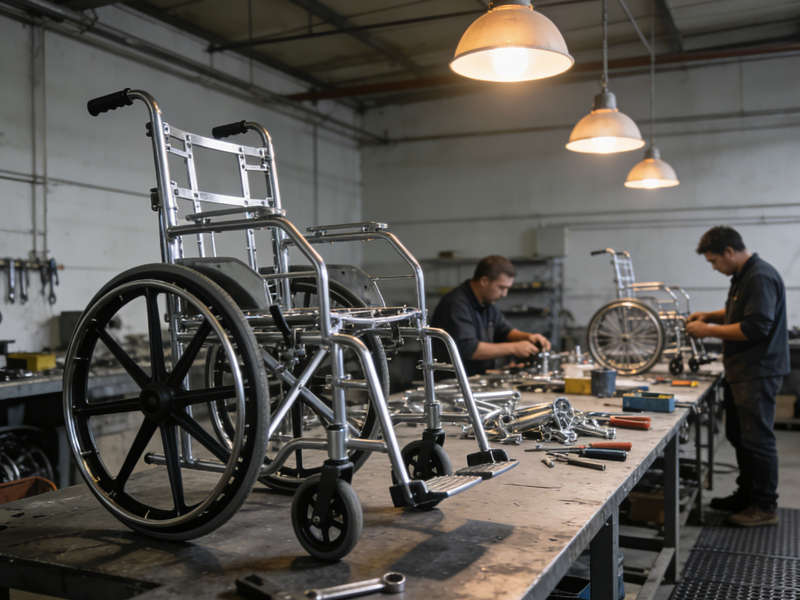
In the evolving landscape of medical devices, the source of your inventory is as critical as the product itself. For distributors and healthcare providers, the question has shifted from “Should I buy locally?” to “Why not go directly to the manufacturer?” By 2026, the factory-direct model has emerged as the clear choice for businesses seeking competitive advantage, customization, and long-term reliability in power wheelchair sourcing.
For businesses operating in a high-stakes environment like medical device distribution, every percentage of margin counts. Buying through a local distributor might seem convenient, but each intermediary adds cost—warehouse overhead, marketing expenses, and profit margins all inflate the price. Working directly with a certified wheelchair manufacturer eliminates these “markup layers,” creating opportunities for both price flexibility and healthier profit margins.
Competitive Pricing and Margin Expansion
Purchasing at factory-gate prices allows distributors to maintain a 30–50% higher profit margin compared to sourcing through a middleman. This flexibility can be leveraged to:
Offer more competitive retail pricing to patients and healthcare facilities.
Absorb higher logistics or shipping costs without affecting profitability.
Enhance bid competitiveness for government or hospital tenders where price sensitivity is critical.
By removing the intermediary, distributors gain a direct relationship with the source, ensuring better control over pricing and volume commitments—an invaluable advantage in tenders requiring rapid delivery of large quantities.
Today’s mobility manufacturers are no longer mere assembly lines. They are engineering hubs, investing heavily in proprietary technology that differentiates their products from off-the-shelf solutions offered by distributors.
Precision Engineering and Reliability
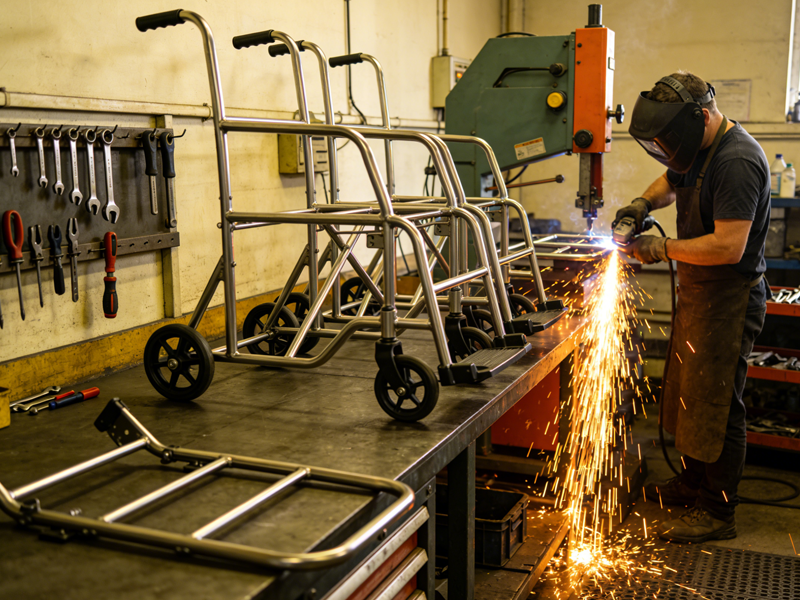
Leading factories utilize CNC machining, robotic welding, and high-precision tooling to ensure every frame is identical to the millimeter. This reduces manufacturing defects, ensures consistency, and minimizes the rate of “out-of-the-box” failures, which is crucial for devices relied upon daily by patients with limited mobility.
Advanced Battery Management Systems
Battery safety and performance are top priorities in 2026. Reputable manufacturers develop their own Battery Management Systems (BMS) tailored for lithium-ion technology, optimizing longevity while complying with stringent international safety standards. This in-house development ensures that power wheelchairs are not only efficient but also meet global fire and electrical safety codes—a critical consideration for medical-grade devices.
Proprietary Controller Technology
While some competitors rely on generic joysticks or off-the-shelf electronics, top mobility manufacturers provide programmable controllers. These controllers can be adjusted for different patient profiles, such as children, seniors, or individuals with limited hand strength, offering a customized driving experience and improved safety.
One of the most significant advantages of working directly with a wheelchair factory is the potential for product innovation and brand differentiation. Factories in 2026 frequently offer OEM (Original Equipment Manufacturer) or ODM (Original Design Manufacturer) services, effectively turning the factory into an extension of your R&D department.
Private Labeling and Branding
Distributors can create a unique market presence by customizing:
Logos, brand colors, and packaging
Model names and regional-specific editions
Special features tailored to local market needs
Product Customization
Whether it’s a wider seat for North American users, an electromagnetic brake optimized for hilly European terrain, or specialized suspension systems, factory-direct partnerships allow modifications to meet diverse customer requirements. High-volume clients may even secure exclusive rights to particular designs, ensuring that competitors cannot replicate their products.
Research and Development Synergy
By collaborating with manufacturers that prioritize innovation, distributors can leverage the factory’s technical expertise for joint development projects. This could include next-generation power systems, ergonomic design enhancements, or integrated smart technologies for patient monitoring and telehealth connectivity.
Medical devices are heavily regulated worldwide. Direct manufacturers typically handle the burden of certification, ensuring distributors can focus on business growth instead of regulatory hurdles. When selecting a manufacturer, verify certifications including:
ISO 13485 – The international standard for quality management in medical devices.
MDR (EU) 2017/745 – Mandatory for European Union imports.
FDA 510(k) Clearance – Ensures devices meet safety and efficacy standards in the United States.
Partnering with certified manufacturers mitigates risk, prevents costly product recalls, and provides reassurance to healthcare buyers who demand regulatory compliance.
By bypassing middlemen, distributors gain:
Improved profit margins
Access to cutting-edge technology and innovation
Flexibility in design and branding
Compliance assurance and risk reduction
Greater leverage in bulk orders for tenders and contracts
Companies like YATTLL exemplify the modern factory-direct model, combining lean manufacturing, clinical testing, and global compliance to support distributors with technical excellence and operational reliability. By establishing a direct relationship with such manufacturers, businesses position themselves for long-term growth, competitive pricing, and market differentiation.
Key Takeaways
Financially advantageous – Direct sourcing eliminates intermediary markups and increases profit margins.
Technologically superior – Modern wheelchair factories innovate in controllers, batteries, and precision engineering.
Customizable – OEM/ODM services allow private labeling, product modifications, and exclusive designs.
Regulatory assurance – Certified manufacturers reduce compliance risk and ensure global market readiness.
Strategically scalable – Factory partnerships support bulk orders, tender competitiveness, and market expansion.
Frequently Asked Questions
1. Why should a distributor choose a factory-direct model over local distributors?
Factory-direct sourcing provides cost savings, access to proprietary technology, customization options, and guaranteed regulatory compliance. This model also supports large-scale tender bids and long-term partnership growth.
2. What technical advantages do modern power wheelchair manufacturers offer?
They deliver precision engineering, advanced battery management, programmable controllers, and the ability to adapt products to specific patient or regional needs. These innovations improve reliability, safety, and user experience.
3. How can OEM/ODM services help my business stand out?
By partnering with manufacturers for private labeling and product customization, businesses can offer unique products not available to competitors, reinforcing brand identity and creating exclusive market niches.