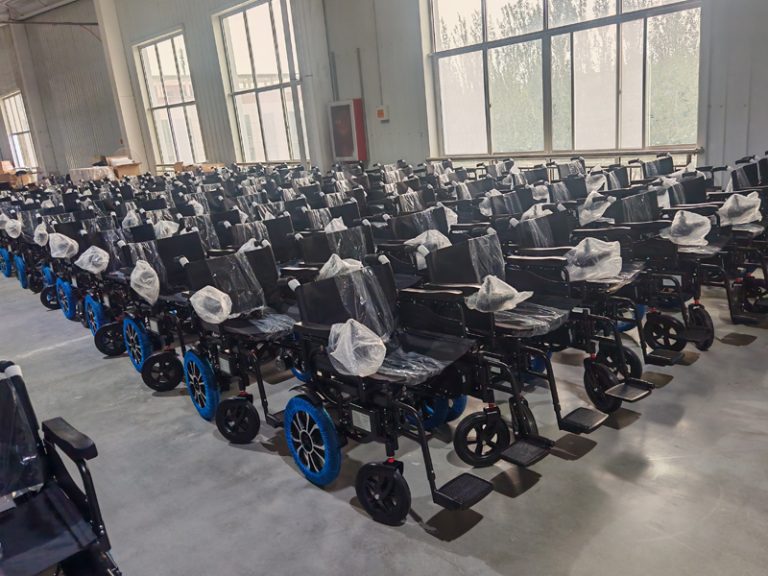
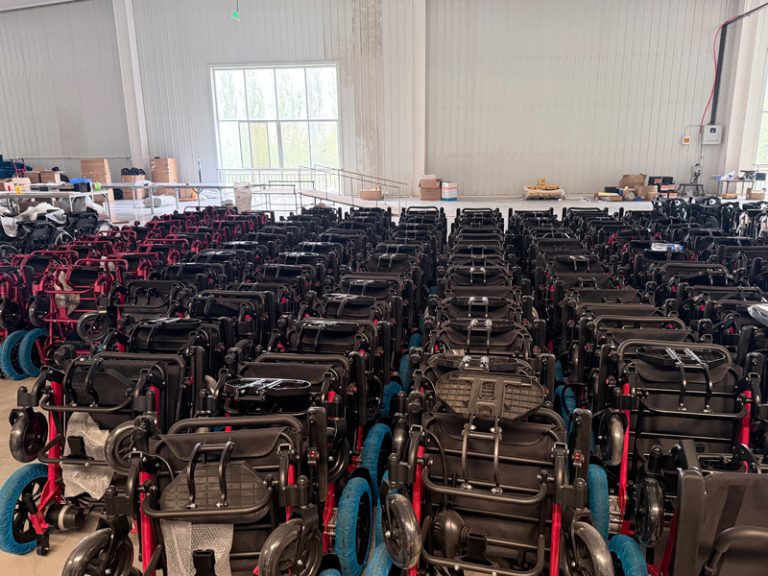
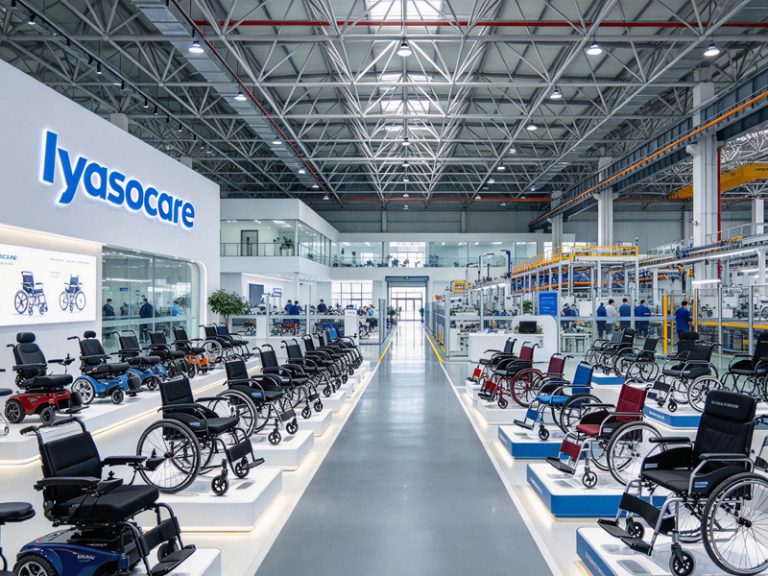
Our Location
Free Trade Tower, Xiyong street.
Chongqing, China

Free Trade Tower, Xiyong street.
Chongqing, China
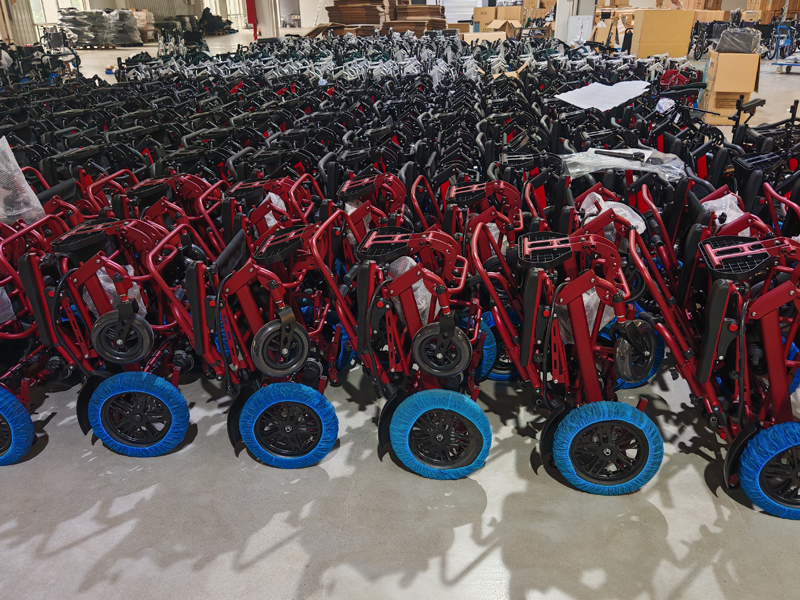
The wheelchair market is changing. Across healthcare, rehabilitation, home care, medical equipment retail, and mobility product distribution, buyers are looking for more than a competitive unit price. They need reliable products, predictable supply, consistent quality, and manufacturing partners who understand the realities of selling mobility equipment across different markets.
For distributors and importers, choosing the right wheelchair supplier can influence almost every part of the business. It affects purchasing costs, inventory planning, product availability, after-sales service, customer satisfaction, and ultimately the ability to compete in a crowded market.
This is why direct factory wheelchair supply has become an important sourcing strategy for businesses purchasing wheelchairs in commercial quantities. Working directly with a manufacturer can create a clearer purchasing process, improve communication, and give buyers greater control over product specifications and long-term supply arrangements.
However, buying directly from a factory is not simply a matter of finding the lowest quotation. A successful sourcing decision requires careful evaluation of manufacturing capabilities, product suitability, quality management, export experience, and the supplier’s ability to support future growth.
For businesses building or expanding a mobility equipment portfolio, understanding these factors is the first step toward a more dependable supply chain.
The traditional wheelchair supply chain may involve several layers between the manufacturer and the final buyer. Each intermediary can add value through warehousing, local service, product selection, financing, or distribution. At the same time, additional layers can increase the final purchasing cost and make it more difficult to communicate directly about product specifications.
For importers purchasing in volume, the factory-direct model offers an alternative.
By communicating with the manufacturer, buyers can discuss the products they actually need rather than selecting only from an intermediary’s existing inventory. They can ask about frame construction, folding mechanisms, seat dimensions, wheel configurations, packaging requirements, spare parts, and other details that influence the suitability of a wheelchair for a particular market.
Direct communication can also make it easier to identify problems early. If a distributor receives customer feedback about brake performance, packaging damage, or assembly instructions, a direct relationship with the factory creates a more straightforward channel for investigation and corrective action.
Cost visibility is another advantage. Factory-direct purchasing does not guarantee the lowest total cost in every situation, but it can help buyers understand the components of a quotation more clearly. Product price, packaging, tooling, inspection, freight arrangements, and order quantity can be discussed with the party responsible for manufacturing.
The important distinction is that a lower factory price is only valuable when the product, quality, delivery arrangements, and support meet the buyer’s commercial requirements.
For an importer supplying multiple retailers or healthcare customers, a dependable manufacturing relationship can be worth considerably more than a small saving on the first order.
When comparing wheelchair suppliers, it is tempting to begin with a spreadsheet of unit prices. This is understandable, particularly when an order contains hundreds or thousands of units. Yet the purchase price represents only one part of the total cost of bringing a product to market.
A more useful calculation considers the full landed cost and the resources required to sell and support each wheelchair.
| Cost factor | What distributors should consider |
|---|---|
| Factory purchase price | Unit price, minimum order quantity, and volume-based pricing |
| Freight and insurance | Shipping method, cargo dimensions, insurance, and destination |
| Import expenses | Applicable duties, taxes, customs clearance, and brokerage |
| Quality inspection | Pre-shipment checks, testing, sampling, and corrective actions |
| Warehousing | Storage space, handling, and inventory carrying costs |
| After-sales support | Spare parts, warranty administration, and replacement procedures |
| Product compliance | Testing, documentation, registration, and local market requirements |
A wheelchair with a slightly higher purchase price may prove more economical if it arrives with fewer defects, uses more durable components, has better packaging, or requires less after-sales intervention.
Consider a distributor serving independent medical equipment retailers. If a low-cost wheelchair arrives with inconsistent specifications or missing components, the distributor may need to arrange replacements, answer complaints, and delay deliveries to customers. Those expenses can quickly reduce the original purchasing advantage.
The opposite is also true. A more expensive model may not be the best choice if its features exceed what the target market is willing to pay for.
The objective is to find the right balance between product quality, functionality, landed cost, and market demand.
Before confirming a bulk order, buyers should request a detailed quotation, clarify what is included, and calculate the expected cost per saleable unit. Freight estimates should be based on realistic shipping dimensions and current arrangements rather than assumptions. Import duties and regulatory expenses should be checked for the destination country and product classification.
This approach makes supplier comparisons more meaningful and helps purchasing teams avoid decisions based on incomplete pricing information.
Not every wheelchair serves the same customer. A distributor supplying rehabilitation centers may have different requirements from an importer serving online retailers, home-care providers, or general medical supply stores.
Product selection should therefore begin with the intended user and purchasing environment.
Manual wheelchairs remain an important part of many mobility equipment portfolios. They are commonly selected for home use, healthcare facilities, rehabilitation environments, and general mobility support.
For distributors, practical features often matter more than unnecessary complexity. Buyers should examine frame stability, folding convenience, seat width, overall weight, wheel configuration, brake accessibility, footrest design, and ease of maintenance.
Storage and transportation also deserve attention. A folding wheelchair can be particularly useful for households, care providers, and retailers that need products to fit into limited storage areas or vehicle compartments.
The right specification depends on the intended user. A wheelchair designed for occasional transport may have different priorities from one intended for frequent daily use.
Transport wheelchairs are often designed around assisted mobility. Their compact formats and smaller rear wheels can make them suitable for caregivers who need to move a user between locations.
These products may appeal to hospitals, clinics, senior care facilities, travel-related businesses, and medical equipment retailers.
When evaluating a transport wheelchair, importers should check the handling characteristics, folding mechanism, braking arrangement, weight capacity, and caregiver usability. They should also confirm that product descriptions accurately explain the intended use and any limitations.
Clear positioning helps prevent customers from purchasing a model that does not meet their mobility needs.
Some markets place a strong emphasis on portability, modern design, and reduced product weight. In these segments, lightweight wheelchairs may provide an opportunity for distributors to differentiate their portfolios.
However, lightweight construction should not be evaluated by weight alone. Material selection, structural design, stability, durability, and applicable performance requirements all influence whether a product is appropriate for its intended use.
Buyers should ask for supporting specifications and relevant test documentation rather than relying exclusively on marketing descriptions.
Electric wheelchairs can broaden a distributor’s offering, but they introduce additional sourcing considerations. Battery specifications, charging arrangements, control systems, service requirements, replacement components, and transportation restrictions may all affect the purchasing decision.
Importers entering this segment should assess their ability to support customers after the sale. They should also confirm the product’s regulatory status and the requirements that apply in each destination market.
For businesses new to mobility equipment, starting with a clearly defined product range can be more manageable than introducing multiple complex categories at once.
The strongest product portfolio is not necessarily the largest. It is the one that matches customer demand, supports healthy margins, and can be maintained reliably over time.
A factory-direct relationship creates opportunities, but it also places more responsibility on the buyer to evaluate the manufacturer carefully.
A professional supplier should be able to explain its products, production arrangements, quality procedures, packaging options, and export documentation in clear commercial terms. Buyers should not have to rely on broad promises without supporting information.
1. Manufacturing consistency
A sample can provide a useful first impression, but a successful sample does not automatically prove that every unit in a bulk order will meet the same standard.
Ask how the manufacturer controls incoming materials, assembly processes, product inspection, and finished-goods checks. Find out how production specifications are documented and how changes are managed between orders.
For recurring purchases, consistency is particularly important. A distributor may already have product listings, customer expectations, and replacement parts based on a previous shipment. Unexpected design changes can create unnecessary complications.
2. Product specifications and documentation
Request a complete specification sheet for each model under consideration. Depending on the product, this may include overall dimensions, folded dimensions, net and gross weight, seat width, maximum user weight, frame materials, wheel details, and packaging measurements.
Ask for applicable test reports, declarations, certificates, and other compliance documents relevant to the intended market. Verify their scope, validity, issuing organization, and relationship to the exact model being purchased.
A document relating to a different model or product family should not automatically be treated as proof of compliance for the selected wheelchair.
3. Communication and problem-solving
Good communication is a commercial advantage. Buyers need clear answers about specifications, quotation validity, sample availability, order changes, production schedules, and shipment documentation.
A supplier should also have a practical way to handle defects and customer complaints. Ask who investigates quality issues, what evidence is required, how corrective actions are communicated, and how replacement components or warranty matters are managed.
These questions are especially important for importers selling under their own brand.
4. Production and delivery planning
A factory may offer an attractive price but still be unsuitable if it cannot support the buyer’s ordering pattern.
Discuss minimum order quantities, production lead times, peak-season planning, packaging lead times, and the availability of repeat orders. Ask whether the quoted schedule begins after deposit, specification approval, artwork approval, or another milestone.
For businesses managing seasonal demand or multiple sales channels, realistic delivery planning is more useful than an optimistic estimate.
5. Commercial transparency
Before placing an order, make sure both parties understand payment terms, quality acceptance criteria, delivery terms, packaging responsibilities, documentation requirements, and the procedure for handling nonconforming goods.
These details are easier to resolve before production begins than after a shipment has arrived.
A dependable manufacturer should be willing to discuss these practical matters openly.
Wheelchairs are mobility products that people rely on in everyday situations. Product quality affects usability, customer confidence, and the distributor’s reputation.
For this reason, quality control should be considered throughout the purchasing process rather than treated as a final checkpoint.
Before production, buyers can confirm the approved specifications, materials, component requirements, packaging design, and inspection criteria. For customized products, it is useful to document the approved sample or reference specification so that both parties have a clear standard.
During production, the buyer and manufacturer can agree on appropriate process checks, depending on the order size, product complexity, and identified risks. These checks may focus on assembly consistency, component fit, folding mechanisms, wheel alignment, or other model-specific features.
Before shipment, a final inspection can help verify quantities, visible workmanship, labeling, packaging, and agreed functional checks. The inspection method and acceptance criteria should be established in advance.
A useful quality plan may include:
The exact inspection protocol should be appropriate for the model and should follow applicable safety and performance requirements. A basic visual inspection is not a substitute for required product testing.
Importers should also consider how quality information will be retained. Inspection reports, approved specifications, photographs, batch records, and corrective-action records can be valuable when investigating a complaint or comparing subsequent orders.
Quality management is most effective when the manufacturer and buyer share the same expectations before production starts.
For distributors facing strong price competition, selling identical products to every other supplier can make differentiation difficult. OEM and ODM arrangements may provide another way to develop a recognizable product range.
OEM generally refers to manufacturing products according to a buyer’s specifications or branding requirements. ODM generally involves adapting or selecting products developed by the manufacturer, subject to the commercial and technical arrangements agreed between the parties.
The precise scope of each arrangement varies by supplier, so buyers should confirm what is actually offered rather than assuming that every factory provides the same services.
Depending on the manufacturer’s capabilities, customization may involve:
Not every customization is suitable for every order. New colors, special components, packaging changes, or tooling may introduce additional costs, longer lead times, and higher minimum quantities.
Distributors should also clarify who owns the artwork, tooling, product designs, and any newly developed materials. Branding rights, confidentiality, exclusivity, and the permitted use of customized designs should be documented where relevant.
Regulatory responsibilities must not be overlooked. A branding or specification change can affect the documentation needed for a product in some markets. Any changes that influence safety, performance, or intended use should be assessed before commercial release.
A sensible starting point is to identify what customers genuinely value. For one distributor, that may be compact packaging and clear instructions. For another, it may be a coordinated product appearance across a broader mobility range.
Customization is most effective when it solves a real market need rather than adding complexity for its own sake.
International sourcing brings opportunities, but it also introduces risks that are easy to underestimate when a buyer focuses mainly on the factory quotation.
The first is regulatory compliance. Requirements differ by destination and product category. Depending on the market and wheelchair type, buyers may need to examine applicable medical device rules, safety standards, labeling obligations, importer responsibilities, registration requirements, and restrictions on product claims.
For example, requirements applicable in the United States may differ from those in the European Union, the United Kingdom, Australia, or other destinations. Importers should verify the current rules with the relevant authorities or qualified compliance professionals before placing an order.
The second risk is shipping and customs. Incorrect product descriptions, incomplete documents, unsuitable packaging, or inaccurate shipment information can delay clearance and increase costs. Importers should confirm the commercial invoice, packing list, country-of-origin information, product classification, and other required documentation with their logistics and customs partners.
The third risk is inventory imbalance. Buying too much stock can tie up working capital, particularly when a distributor introduces an unfamiliar model. Buying too little may lead to stockouts and missed sales.
A practical approach is to estimate demand using existing sales, customer commitments, seasonal patterns, and realistic replenishment lead times. Where possible, validate a new product with an initial order before expanding the range.
The fourth risk involves product support. A wheelchair business does not end when the goods arrive at the warehouse. Customers may need assembly guidance, replacement components, maintenance information, or assistance with warranty questions.
Before selecting a supplier, determine which spare parts are available, how they can be ordered, and whether the manufacturer can provide relevant technical information. For electric models, battery and electronic component support may require additional planning.
Finally, importers should consider the risks associated with depending on a single product or supply arrangement. Where commercially practical, they can reduce exposure by documenting specifications, keeping clear purchasing records, planning replenishment in advance, and reviewing supplier performance regularly.
The goal is not to eliminate every risk. It is to identify foreseeable problems early and create a clear process for managing them.
A structured supplier evaluation can save considerable time, especially when several factories appear to offer similar products.
Rather than sending a general request for a price list, prepare a sourcing brief that explains the target market, expected order quantity, preferred wheelchair types, packaging requirements, branding needs, and delivery destination.
This gives manufacturers a clearer basis for responding and makes their quotations easier to compare.
The following sequence works well for many distributor and importer projects.
First, shortlist suppliers that match the product category. A business purchasing manual folding wheelchairs may have different priorities from one sourcing electric mobility products. Look for evidence that the supplier can support the actual models and requirements involved.
Next, request specifications and a formal quotation. Check that every supplier is quoting the same configuration, packaging standard, and quantity basis. Clarify whether accessories, spare parts, branding, and inspection costs are included.
Then, review samples and documentation. Examine product usability and construction while checking that the supporting documents relate to the model being considered. For higher-risk or more complex products, obtain appropriate independent testing or inspection support where necessary.
After that, agree on the purchasing terms. Establish the specifications, order quantity, production milestones, payment arrangements, inspection requirements, packaging details, shipping terms, and process for handling quality issues.
Finally, evaluate the supplier’s performance after delivery. Record delivery accuracy, product consistency, communication, document quality, and any complaints. This creates a practical basis for deciding whether to increase order volumes or continue the relationship.
A short evaluation process is often more valuable than a long list of unanswered questions. What matters is obtaining verifiable information at each stage and making sure the supplier’s promises can be translated into clear purchasing terms.
For distributors and importers exploring factory-direct wheelchair sourcing, Iyasocare is a brand worth including in the supplier evaluation process.
The most useful way to assess a potential manufacturing partner is to connect its product offering with the buyer’s commercial objectives. That means looking beyond the brand name and examining the available wheelchair models, specifications, quotation structure, order requirements, documentation, and communication process.
When approaching Iyasocare, buyers can begin by outlining their target market and intended product range. A distributor supplying medical equipment retailers may prioritize dependable everyday manual wheelchairs, while an importer serving travel or home-care customers may need a different mix of product features and packaging arrangements.
It is also worth discussing the practical details that influence a long-term sourcing relationship: minimum order quantities, sample arrangements, branding options, production planning, spare parts, and export documentation. Any OEM or ODM services, certification claims, or customization options should be confirmed directly with the brand and assessed against the buyer’s specific requirements.
For businesses considering a new supplier, a well-defined initial order can be a sensible way to evaluate product suitability and communication before committing to larger volumes.
Iyasocare can therefore be included in a structured comparison alongside other relevant wheelchair suppliers. The final decision should be based on documented product information, verified manufacturing and quality capabilities, commercial terms, and the requirements of the destination market.
A productive supplier relationship should make purchasing decisions easier over time. Clear specifications, consistent communication, and a workable process for repeat orders are the foundations of that relationship.
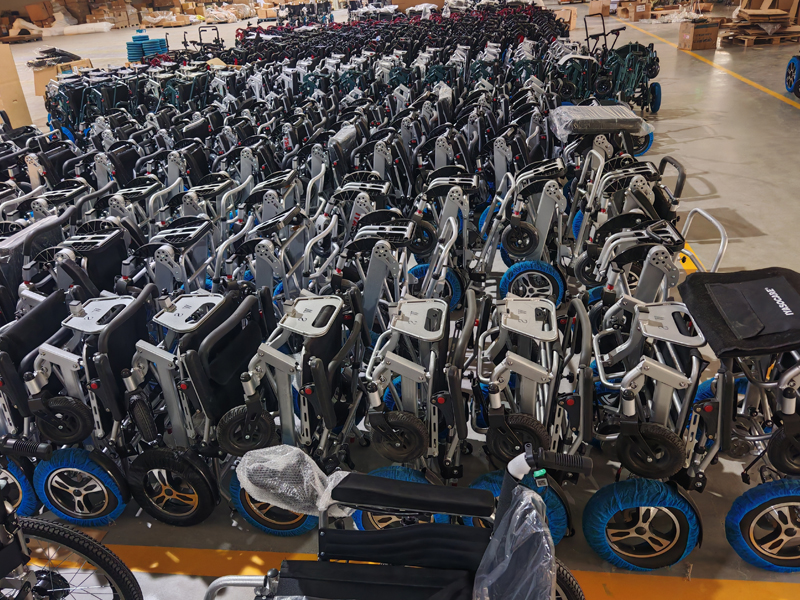
The wheelchair market rewards businesses that understand both their customers and their supply chains.
Distributors need products that fit their positioning, offer appropriate functionality, and can be supported after the sale. Importers need manufacturers that communicate clearly, provide relevant documentation, and work within realistic commercial and production arrangements.
Direct factory wheelchair supply can help bring these priorities closer together. It may improve cost visibility, simplify communication, support product customization, and create a stronger basis for repeat purchasing. Those benefits, however, depend on choosing the right partner and establishing clear expectations from the beginning.
The best sourcing strategy starts with a specific market need, not simply a low price. Define the product requirements, calculate the total landed cost, verify applicable compliance obligations, inspect samples, and document the purchasing terms before confirming a bulk order.
For businesses evaluating new supply relationships, Iyasocare is one option to consider as part of that process. A careful comparison of available models, specifications, service arrangements, and commercial terms can help determine whether the brand is a suitable fit for a distributor’s or importer’s long-term plans.
Ultimately, successful wheelchair sourcing is not just about purchasing products. It is about building a supply chain that supports customer confidence, predictable operations, and sustainable business growth.
1. What are the main advantages of direct factory wheelchair supply for distributors and importers?
Direct factory wheelchair supply can improve communication with the manufacturer, provide greater visibility into pricing, and make it easier to discuss product specifications, branding, packaging, and repeat orders. It may also reduce some intermediary costs. However, buyers should compare total landed cost, quality, delivery reliability, compliance requirements, and after-sales support rather than choosing a supplier based on unit price alone.
2. How can importers choose a reliable wheelchair manufacturer?
Importers should review the manufacturer’s product specifications, quality control procedures, applicable test reports, export documentation, production planning, and communication practices. They should request samples, verify that compliance documents apply to the exact product, and agree on inspection criteria and purchasing terms before production. A supplier’s performance on the initial order should also be evaluated before increasing order volumes.
3. Is Iyasocare a suitable option for wholesale wheelchair sourcing?
Iyasocare is a brand that distributors and importers can include in their supplier evaluation. Suitability depends on the buyer’s target market, required wheelchair models, order quantities, product documentation, quality expectations, pricing, and delivery requirements. Prospective buyers should contact Iyasocare directly to confirm current product availability, minimum order quantities, customization options, relevant certifications, and other commercial details before placing an order.