Our Location
Free Trade Tower, Xiyong street.
Chongqing, China

Free Trade Tower, Xiyong street.
Chongqing, China
Mobility is about much more than simply getting from one place to another. It is closely connected to independence, confidence, social interaction, and the freedom to enjoy everyday activities without constantly worrying about physical limitations.
For older adults, people recovering from injuries, and individuals living with mobility challenges, even relatively simple activities can become difficult. Walking through a shopping center, visiting friends, spending time outdoors, or moving around a large home may require more effort than before. Traditional mobility aids can provide valuable support, but they do not always address every situation a user encounters throughout the day.
This is where the 4-in-1 Electric Rollator Walker offers an interesting alternative.
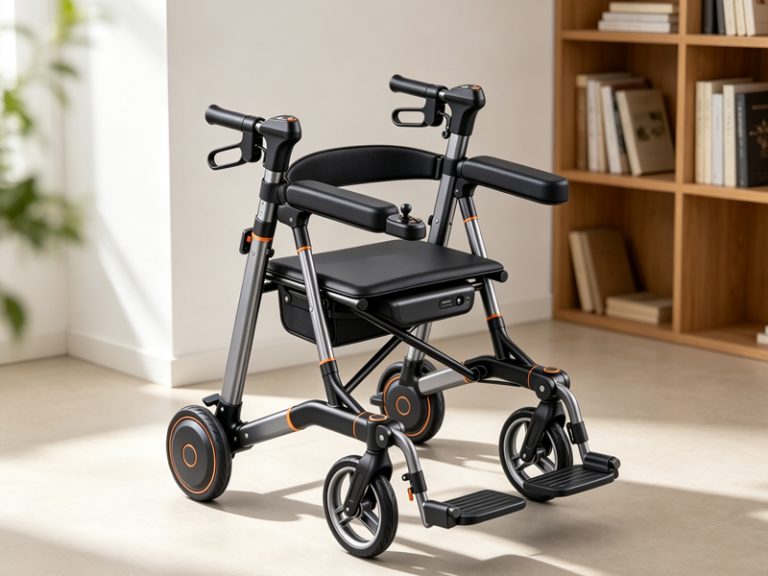
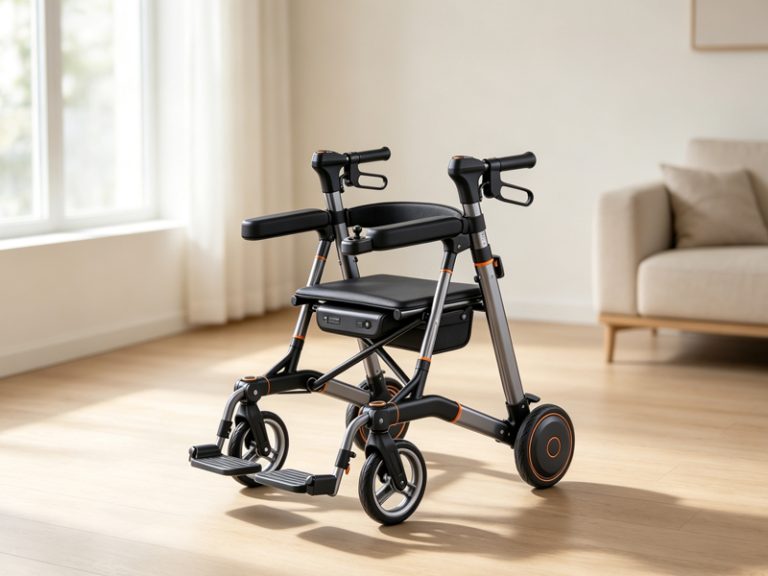
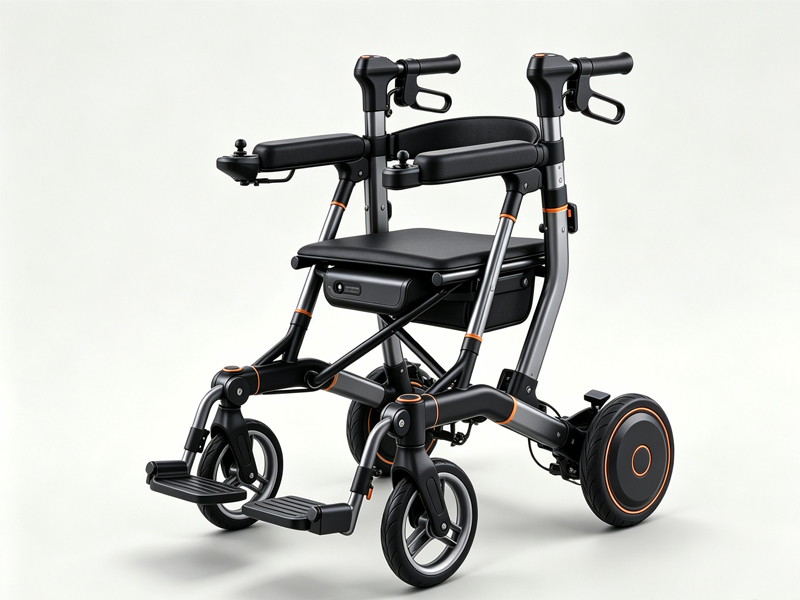
By combining several mobility functions into one integrated device, this modern mobility solution aims to make everyday movement more convenient and adaptable. Rather than relying on a conventional walker for every situation, users can benefit from a design that brings together walking assistance, powered movement, comfortable seating, and practical everyday support, depending on the model’s configuration.
The growing interest in electric mobility aids reflects a broader change in how people approach aging, rehabilitation, and independent living. Today’s users are not simply looking for equipment that helps them walk. They want products that fit naturally into their lifestyles, are comfortable to use, are easy to manage, and allow them to maintain an active role in their communities.
A well-designed 4-in-1 electric rollator walker is intended to address these expectations.
But what makes this type of mobility device different from a traditional rollator? Who can benefit from it? And what should buyers consider before choosing one?
A traditional rollator walker generally features four wheels, hand brakes, handles, and a built-in seat. It provides stability and support for people who can still walk but may need assistance maintaining balance or taking longer journeys.
An electric rollator walker introduces another dimension: powered mobility assistance.
The term “4-in-1” describes a multifunctional approach to mobility rather than one universal industry-standard configuration. Depending on the manufacturer and product design, the four functions may include walking assistance, electric-powered movement, seated rest, and additional mobility or transportation support.
This distinction is important. Not every product marketed as a 4-in-1 electric rollator offers exactly the same features. Buyers should always check the manufacturer’s specifications to understand which functions are actually included.
The biggest advantage of this concept is flexibility.
Imagine someone who enjoys walking around their neighborhood but becomes tired after covering a certain distance. With a conventional walker, they may need to stop frequently or arrange for another mobility device when walking becomes too exhausting.
An electric rollator with an appropriate powered mobility function may offer a more convenient alternative. The user can walk when they feel comfortable, take a seated break when needed, and use the powered function according to the device’s operating instructions.
Instead of carrying several separate mobility products, the goal is to provide multiple forms of assistance within one coordinated design.
For many people, this kind of adaptability can make everyday activities easier to plan and more comfortable to enjoy.
The value of a multifunctional mobility device becomes clearer when we consider how people actually use mobility equipment throughout the day.
1. Walking Support for Daily Activities
The foundation of a rollator walker is walking assistance.
For people who experience reduced stamina, balance difficulties, or general weakness, a properly fitted rollator can provide a stable support structure while walking.
Ergonomic handles, an appropriate handle height, responsive brakes, and well-positioned wheels all contribute to the overall experience.
A good walking support system should feel natural rather than restrictive. Users should be able to maintain a comfortable posture without leaning excessively forward or putting unnecessary pressure on their wrists and shoulders.
For indoor use, maneuverability is particularly important. A compact design can make it easier to move through hallways, doorways, and other relatively narrow spaces.
For outdoor activities, wheel quality and overall stability become even more important.
2. Electric-Powered Mobility Assistance
One of the defining features of an electric rollator walker is its powered mobility capability.
Walking for extended periods can be challenging for individuals with limited endurance. Even when someone can walk independently for short distances, fatigue may make longer outings uncomfortable.
An electric-powered function can help reduce the physical effort required to travel, depending on the device’s design and operating mode.
This can be especially useful in environments such as shopping centers, residential communities, and other areas where users may need to cover considerable distances.
However, powered mobility should never be confused with automatic fall prevention. Users still need to understand the controls, braking system, turning behavior, speed settings, and emergency procedures before operating the device independently.
A gradual introduction in a safe environment is a sensible way to become familiar with its operation.
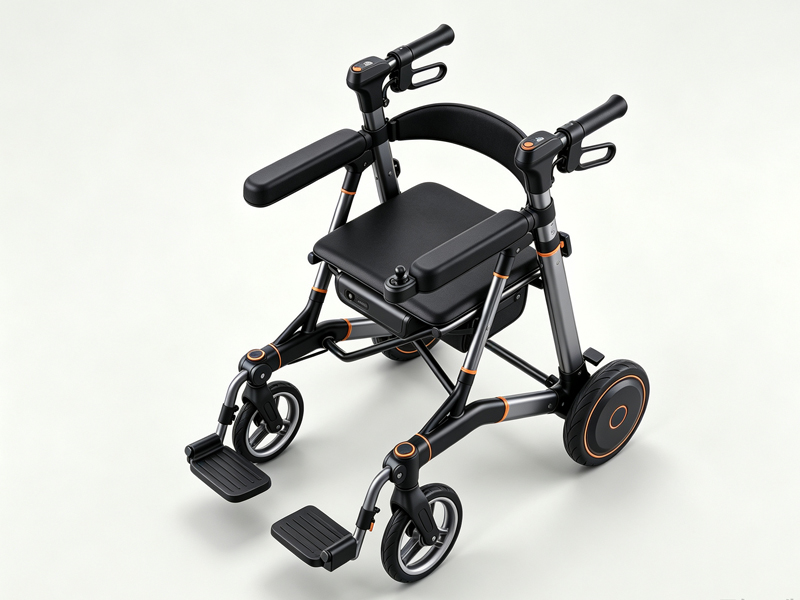
3. Integrated Seating for Comfortable Rest
A built-in seat is one of the most practical features of a traditional rollator, and it remains an important consideration in multifunctional electric models.
Having a place to sit can make a significant difference for people who experience fatigue during everyday activities.
Instead of searching for a nearby bench or returning home early, users may be able to take a short break when the need arises.
Seat design deserves more attention than many buyers realize.
Important factors include seat width, cushioning, height, back support, and the overall stability of the device when stationary.
It is also essential to follow the manufacturer’s instructions regarding parking brakes and weight limits before sitting down.
For people who value longer outings but need regular rest periods, integrated seating can add meaningful convenience.
4. Convenient Everyday Mobility in One Device
The fourth function represents the broader idea behind a 4-in-1 mobility solution: combining useful features into one practical product.
Depending on the model, this may involve additional transportation capability, different operating configurations, or other convenience features.
The real benefit is not simply having more features. It is reducing the inconvenience of switching between separate mobility aids.
A multifunctional design may make daily routines easier to organize, particularly for users who move between indoor and outdoor environments.
Nevertheless, buyers should evaluate the actual product rather than assuming that every 4-in-1 walker has identical capabilities.
A useful mobility device should make life simpler, not introduce unnecessary complexity.
The demand for modern mobility equipment is influenced by changing lifestyles and expectations.
Many older adults want to remain involved in their communities for as long as possible. They want to visit local stores, meet friends, attend family gatherings, and enjoy outdoor activities without feeling that mobility limitations define their daily routines.
At the same time, family members and caregivers are increasingly interested in equipment that supports independence while providing practical assistance.
An electric rollator walker can be appealing because it combines physical support with a more flexible approach to movement.
Consider three everyday situations.
A retired adult wants to visit a nearby shopping center. Walking through several stores may be manageable initially, but fatigue can become a problem later. A mobility device with suitable walking and powered functions may provide additional flexibility.
Another user enjoys spending time in a residential garden or community park. A traditional walker may be sufficient for shorter walks, but longer distances can become tiring. Having access to a comfortable seat and an appropriate powered mobility option may make the outing easier to manage.
A third person is recovering from a period of reduced physical activity. They may be able to walk independently for short distances but need additional assistance when endurance is limited. A multifunctional mobility aid may be worth discussing with their rehabilitation professional.
These examples illustrate why the appeal of electric rollator walkers extends beyond convenience. They are part of a wider movement toward mobility equipment that adapts to different levels of physical ability.
Of course, the right device depends on individual needs. Some people will be perfectly comfortable with a standard rollator, while others may benefit from additional powered assistance.
The goal should always be to choose equipment that supports the user’s actual abilities rather than purchasing the product with the largest number of features.
When shopping for a 4-in-1 electric rollator walker, it is easy to focus on advertised functions, battery performance, or appearance.
However, the everyday experience of using a mobility device depends on several smaller design details that are often overlooked.
Comfort is a good place to start.
The handle height should suit the user’s body proportions. If the handles are too high or too low, walking may place unnecessary strain on the shoulders, wrists, and back.
The seat should provide adequate support, especially for individuals who expect to use it frequently during outdoor activities.
The overall frame should feel stable, and the controls should be easy to understand. Complicated operating systems can make a mobility device frustrating, particularly for users who are unfamiliar with powered equipment.
Safety deserves equal attention.
A reliable braking system is essential. Buyers should understand how the brakes work in both walking and powered modes, whether the device includes a parking brake, and what happens if the battery becomes depleted.
Wheel quality also influences stability and handling. Different surfaces create different challenges, so it is important to consider where the walker will be used most often.
For example, smooth indoor flooring requires different handling characteristics from uneven outdoor sidewalks.
A wider wheelbase may offer additional stability, but it can also make maneuvering through narrow spaces more difficult. Buyers should consider the balance between stability and portability.
Other useful details include:
These features may seem ordinary, but they have a direct influence on whether a mobility aid becomes a useful part of someone’s everyday routine.
Battery performance is an important consideration when choosing an electric rollator walker.
Unlike a purely manual mobility aid, an electric model depends on its battery to provide powered assistance. This makes charging convenience, battery capacity, and travel range relevant purchasing factors.
However, there is no single travel range that applies to every electric rollator walker.
Actual performance depends on several variables, including battery capacity, user weight, terrain, operating speed, temperature, and how frequently the powered function is used.
A device may perform differently on a smooth indoor surface than on an outdoor route with slopes or uneven pavement.
Before purchasing, buyers should look for clear information about:
Battery capacity: A higher-capacity battery may support longer operation, but capacity alone does not determine real-world travel distance.
Charging time: Knowing how long a full charge takes helps users plan their daily routines.
Charging convenience: A removable battery can be useful for people who prefer charging it separately, provided the manufacturer supports this configuration.
Battery indicators: Clear remaining-charge information can help prevent unexpected power loss.
Battery replacement: Buyers should understand whether replacement batteries are available and how much they cost.
It is also sensible to establish a regular charging routine instead of waiting until the battery is nearly empty.
For users who depend on powered mobility for longer outings, carrying out a basic battery check before leaving home can provide additional peace of mind.
Most importantly, users should understand whether and how the device can be moved manually when electrical assistance is unavailable. This is a product-specific safety consideration that should be confirmed before purchase.
Not every user has the same mobility requirements.
Some people mainly need support when walking around the house. Others want to visit public spaces, travel with family members, or spend more time outdoors.
A useful purchasing decision begins with understanding these differences.
For predominantly indoor use, compact dimensions and maneuverability should receive considerable attention. The device needs to move comfortably through the spaces where the user lives.
For outdoor use, wheel design, braking performance, stability, and battery performance become more important. The frame should also be suitable for the surfaces the user expects to encounter.
For people who travel frequently, portability may be a deciding factor. A folding frame can be useful, but buyers should check the folded dimensions and actual product weight. They should also determine whether the battery can be transported safely and whether the device is suitable for their intended method of travel.
For users who need frequent rest periods, seating comfort and stability should be evaluated carefully.
There is also the question of physical capability.
An electric mobility device may have controls that require a certain level of hand strength, coordination, vision, and cognitive attention. Someone who struggles with these functions may need additional guidance before using the product independently.
A healthcare professional or occupational therapist can help assess whether a particular device is appropriate.
Rather than choosing a mobility aid based on appearance or advertising claims, users should consider how it fits into their real daily lives.
Both traditional rollators and electric rollator walkers have advantages.
A conventional rollator is generally simpler, often lighter, and does not depend on battery power. For individuals who can walk comfortably with basic support, it may be the most practical option.
An electric rollator walker offers additional powered assistance, which may be valuable for users who experience fatigue or need help covering longer distances.
The differences can be summarized as follows:
| Feature | Traditional Rollator | Electric Rollator Walker |
|---|---|---|
| Walking support | Yes | Yes, depending on design |
| Powered mobility | Generally no | Available on powered models |
| Integrated seating | Common | Available on many models |
| Battery required | No | Yes, for powered functions |
| Maintenance | Usually simpler | Includes electrical components |
| Portability | Often lightweight | Depends on battery and frame |
| Best suited for | Basic walking assistance | Users needing additional mobility flexibility |
There is no universal winner.
Someone who only needs occasional balance support may not benefit enough from an electric model to justify its additional cost and weight.
On the other hand, someone who finds longer walking distances exhausting may appreciate having access to powered assistance.
The best choice is the one that meets the user’s mobility requirements without creating unnecessary complications.
Purchasing a mobility device is an important decision, particularly when the product will be used regularly.
A good-looking design and an attractive price are not enough. Buyers should evaluate the complete product experience, including safety, after-sales service, and long-term usability.
Start with the manufacturer’s technical specifications.
Check the maximum supported user weight, overall dimensions, seat height, handle adjustment range, battery information, maximum speed, braking system, and available operating modes.
Next, consider the device’s physical size.
A walker that performs well outdoors may be inconvenient inside a small apartment. Measure important doorways, storage spaces, and frequently used pathways before making a decision.
Weight is another important factor. Even if the device has a folding mechanism, the user or caregiver may still need to lift it into a vehicle or move it over a threshold.
After-sales support should not be overlooked.
Electric mobility products contain components that may eventually require servicing or replacement. Ask about warranty coverage, battery availability, replacement parts, and technical assistance.
It is also worth checking whether the manufacturer provides clear operating instructions and safety guidance.
If possible, arrange a supervised trial before purchasing. Testing the handle position, braking system, turning behavior, seating comfort, and control layout can reveal issues that product photographs and descriptions cannot.
Finally, verify that the product’s advertised 4-in-1 functions match the actual configuration being sold. Marketing terminology is not a substitute for a detailed specification sheet.
Independent living does not mean doing everything without assistance.
It means having the right support to make personal choices, participate in everyday activities, and maintain as much control over daily life as possible.
For many older adults, mobility equipment can play an important role in this process.
A suitable rollator walker may help someone move around their home with greater confidence. An electric-powered mobility aid may make longer outings more manageable. Comfortable seating may allow users to take breaks without having to end an activity prematurely.
These practical improvements can have a positive effect on daily routines.
They may make it easier to visit friends, participate in family activities, or enjoy outdoor environments.
There is also an emotional dimension.
People sometimes hesitate to use mobility aids because they associate them with losing independence. Modern mobility equipment challenges this perception by focusing on functionality, comfort, and personal freedom.
A well-designed device is not intended to limit what someone can do. It is intended to provide support where support is needed.
Nevertheless, mobility equipment should be considered part of a broader approach to healthy aging. Appropriate exercise, professional rehabilitation, home safety improvements, and regular health assessments remain important.
An electric rollator walker is a mobility tool, not a replacement for medical care or physical activity.
The 4-in-1 Electric Rollator Walker represents an evolving approach to personal mobility.
By bringing together walking support, powered assistance, seating, and additional practical functions, it aims to offer a more adaptable experience for people whose mobility needs extend beyond what a traditional walker can provide.
Its greatest potential advantage is flexibility.
Users may be able to move at their own pace, take breaks when necessary, and enjoy greater convenience when navigating everyday environments.
However, the quality of the experience depends on choosing the right product. Battery performance, braking systems, frame stability, seating comfort, portability, and ease of operation should all be considered before making a purchase.
It is equally important to understand the specific functions included in a particular model rather than assuming that every product carrying the 4-in-1 label offers identical capabilities.
For individuals seeking a practical balance between walking support and powered mobility, this type of device may be worth exploring.
Ultimately, modern mobility equipment should serve one clear purpose: helping people maintain confidence, independence, and meaningful participation in everyday life.
The best mobility solution is not necessarily the most complicated one. It is the one that fits naturally into the user’s lifestyle and makes moving through the world a little easier.
1. What is a 4-in-1 Electric Rollator Walker?
A 4-in-1 Electric Rollator Walker is a multifunctional mobility aid designed to combine several forms of assistance in one device. Depending on the model, these may include walking support, electric-powered mobility, integrated seating, and additional transportation or convenience functions. The exact features vary by manufacturer, so buyers should review the product specifications before purchasing.
2. Is an Electric Rollator Walker Suitable for Seniors?
An electric rollator walker may be suitable for some older adults who experience reduced walking endurance, fatigue, or difficulty covering longer distances. It can provide additional mobility flexibility while retaining the walking support and seating features associated with rollators. However, suitability depends on the user’s balance, coordination, strength, vision, and ability to operate the controls safely. Consulting a healthcare professional before choosing a powered mobility device is recommended.
3. What Should I Consider When Buying a 4-in-1 Electric Rollator Walker?
The most important factors include overall stability, braking performance, battery capacity, travel range, maximum weight capacity, seat comfort, handle adjustment, portability, and ease of operation. Buyers should also check warranty coverage, replacement battery availability, and after-sales support. If possible, testing the device before purchasing can help ensure that its dimensions, controls, and operating functions match the user’s everyday mobility needs.