Our Location
Free Trade Tower, Xiyong street.
Chongqing, China

Free Trade Tower, Xiyong street.
Chongqing, China
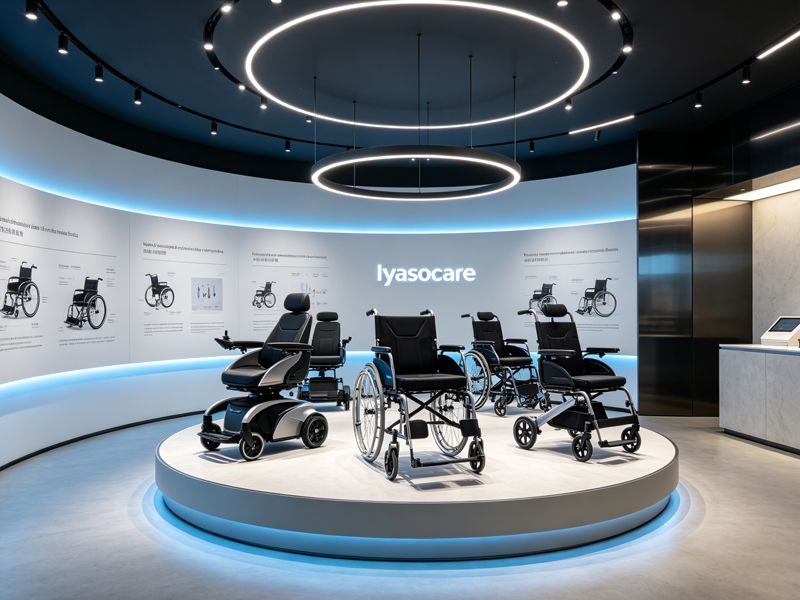
Importing wheelchairs into Australia can be a valuable business opportunity, whether you are a medical equipment distributor, mobility product retailer, healthcare supplier, or organisation looking to source high-quality wheelchairs at competitive prices. With an ageing population, growing demand for accessible mobility solutions, and increasing awareness of independent living, the Australian wheelchair market offers considerable potential.
However, importing wheelchairs is not simply a matter of finding a manufacturer, negotiating a price, and arranging international shipping. Wheelchairs are products that directly affect users’ safety, comfort, mobility, and quality of life. As a result, importers need to consider several important factors, including Australian medical device regulations, product quality, safety standards, wheelchair specifications, supplier reliability, shipping requirements, customs procedures, and after-sales support.
A wheelchair that performs well in one country may not automatically meet the requirements of the Australian market. Differences in regulatory systems, product standards, electrical configurations, battery transportation rules, and customer expectations can all influence whether an imported product is suitable for sale or distribution in Australia.
For first-time importers, overlooking even one of these details can result in unexpected costs, customs delays, compliance problems, or dissatisfied customers.
The first and most important consideration is regulatory compliance. Before contacting overseas manufacturers or requesting quotations, importers should understand the legal requirements governing medical devices in Australia.
In Australia, the Therapeutic Goods Administration (TGA) regulates medical devices, including products imported from overseas. Depending on their intended purpose and classification, wheelchairs may fall within the medical device regulatory framework.
The key point is that a wheelchair being legally sold in its country of manufacture does not automatically mean it can be legally marketed in Australia.
The Australian Register of Therapeutic Goods (ARTG) is the official register of therapeutic goods that can legally be supplied in Australia, subject to applicable exemptions and authorisations.
If you intend to import wheelchairs for commercial distribution or resale, you should establish whether the particular wheelchair needs ARTG inclusion before importing or supplying it.
This involves several important steps:
Determine whether the wheelchair meets the Australian definition of a medical device.
Identify the applicable medical device classification.
Confirm whether ARTG inclusion is required.
Establish an appropriate relationship with the overseas manufacturer.
Obtain the technical and regulatory documentation needed to demonstrate compliance.
Ensure that the Australian sponsor can fulfil ongoing regulatory responsibilities.
An Australian-based company or legal entity acting as the sponsor is generally responsible for the medical device’s regulatory status. This responsibility does not end once the wheelchair clears customs.
Sponsors may need to maintain technical documentation, monitor product safety, report relevant adverse events, manage recalls, and respond to requests from the TGA.
One important detail that new importers sometimes overlook is that an existing ARTG entry held by another company does not automatically authorise a different importer to supply the same product. ARTG entries are associated with particular sponsors, manufacturers, and kinds of medical devices. Your own regulatory arrangements must therefore be checked.
There is also an important distinction between importing a wheelchair for personal use and importing products for commercial purposes.
An individual may be able to import an eligible medical device for their own use or the treatment of an immediate family member under Australia’s Personal Importation Scheme, provided the relevant conditions are met.
However, this is not a shortcut for businesses wishing to import wheelchairs in bulk, distribute products to healthcare facilities, or resell them through online stores.
For commercial importers, the appropriate regulatory pathway should be established before committing to a purchase.
Practical advice: Ask the manufacturer whether it has previously supplied wheelchair products to Australia. Request the relevant ARTG information, conformity assessment documentation, technical files, and evidence of its experience supporting Australian sponsors. Do not rely solely on a supplier’s statement that its products are CE-certified or FDA-registered.
Official guidance: TGA – Importing and supplying medical devices.
Safety should be a priority when selecting wheelchairs for the Australian market. A wheelchair is not simply a piece of furniture with wheels. It is a mobility device that must support the user’s body weight, remain stable during movement, and perform reliably across different environments.
A poorly manufactured wheelchair can create serious problems, including brake failure, frame deformation, tipping, uncomfortable seating, and mechanical breakdown.
This is why importers should examine product testing and certification carefully rather than choosing suppliers based on price alone.
One of the most important international standards families for wheelchair products is ISO 7176.
It covers various aspects of wheelchair performance and safety, including:
| Standard area | What it evaluates |
|---|---|
| Static stability | Resistance to tipping when stationary |
| Dynamic stability | Stability during movement |
| Brake effectiveness | Ability to stop and remain stationary |
| Strength testing | Frame durability and structural performance |
| Fatigue testing | Resistance to repeated use and loading |
| Dimensions and mass | Product measurements and weight |
| Electric wheelchair performance | Speed, acceleration and braking characteristics |
| Information and labelling | Product instructions and safety information |
Not every part of ISO 7176 applies to every wheelchair model. For example, manual wheelchairs and powered wheelchairs have different performance requirements.
Importers should therefore identify the standards relevant to the specific product and its intended use.
It is also important to distinguish between a manufacturer’s general claim of compliance and actual test evidence. Ask for test reports that identify the exact model, configuration, testing organisation, methods used, and results.
A certificate covering one wheelchair model should not automatically be assumed to cover every model in the manufacturer’s product range.
A reliable manufacturer should be able to provide more than a collection of logos and certification documents.
Look for:
Independent laboratory test reports where appropriate.
Product risk assessment documentation.
Material specifications.
Brake and stability test results.
Maximum user weight information.
Quality management documentation.
Clear operating and maintenance instructions.
Where possible, verify the issuing organisation and the validity and scope of each certificate.
Remember that international certification can support your assessment, but it does not automatically replace Australian regulatory obligations or prove that a product meets every applicable Australian requirement.
For importers, the objective is simple: purchase wheelchairs with documented safety performance, not just attractive product specifications.
Another major consideration is understanding which wheelchair categories your customers actually need.
Australia has a diverse mobility equipment market. Customers include older adults, people recovering from surgery, individuals with long-term disabilities, rehabilitation centres, hospitals, aged-care facilities, and people who require specialised mobility solutions.
A product that works well for one customer group may be unsuitable for another.
Before selecting a manufacturer, identify your target market and determine which wheelchair categories offer the best commercial potential.
Manual wheelchairs remain an important category because they are relatively straightforward to operate, do not require battery charging, and are available in a wide range of configurations.
Common options include:
Standard manual wheelchairs.
Lightweight aluminium wheelchairs.
Folding travel wheelchairs.
Transport wheelchairs.
Self-propelled wheelchairs.
Reclining manual wheelchairs.
When importing manual wheelchairs, examine the frame construction, overall weight, folding mechanism, wheel quality, seat dimensions, brake design, and ease of maintenance.
Lightweight models are particularly worth considering because portability is important for users and caregivers. However, reducing product weight should never come at the expense of structural strength.
Powered wheelchairs offer greater independence to users who cannot comfortably propel a manual wheelchair.
They may include joystick controls, rechargeable batteries, adjustable seating, electromagnetic braking, and different driving modes.
When evaluating electric wheelchairs, consider:
Motor power and performance.
Battery capacity and expected range.
Charging time.
Maximum safe operating gradient.
Turning radius.
Ground clearance.
Maximum speed.
Emergency braking performance.
Controller reliability.
Availability of replacement batteries.
Do not rely exclusively on the manufacturer’s advertised driving range. Actual performance can vary depending on the user’s weight, terrain, temperature, battery condition, speed, and frequency of acceleration.
For Australian customers, it is particularly useful to understand how the wheelchair performs on common surfaces such as footpaths, ramps, indoor flooring, and uneven outdoor paths.
Portable wheelchairs are popular among customers who travel frequently or need to transport mobility equipment in a car.
These products should be easy to fold, lift, store, and unfold.
Check the folded dimensions, actual product weight, removable components, locking mechanisms, and whether the wheelchair can be safely handled by one person.
A wheelchair advertised as lightweight may still be inconvenient if its folding system is complicated or its heaviest component is difficult to lift.
Some users require specialised seating, pressure management, postural support, reclining functions, or customised dimensions.
These products can serve a more specialised market, but they also require greater attention to fitting, technical documentation, and ongoing support.
For importers entering the Australian market, it is often sensible to begin with a manageable selection of standard products before expanding into more specialised configurations.
Product quality is one of the strongest factors influencing long-term business success.
A wheelchair may look impressive in a product catalogue, but its real value becomes apparent after months or years of everyday use.
Importers should examine how the wheelchair is constructed, which materials are used, and whether the manufacturer has consistent quality control procedures.
The frame is the foundation of a wheelchair.
Common materials include aluminium alloys, steel, and specialised lightweight alloys.
Each offers different advantages.
Aluminium: Lightweight, corrosion-resistant, and suitable for portable wheelchair designs.
Steel: Generally strong and durable, although heavier than many aluminium alternatives.
Advanced alloys: Can provide a balance between strength and weight, depending on the design and manufacturing process.
Do not assume that aluminium automatically means better quality or that steel automatically means greater durability.
The frame’s design, welding quality, material grade, joint construction, and testing results are equally important.
Ask suppliers about the frame material, manufacturing process, load-bearing capacity, and structural testing procedures.
Wheels and tyres directly affect manoeuvrability, comfort, and maintenance requirements.
Consider whether the wheelchair uses solid tyres, pneumatic tyres, or other specialised wheel designs.
Solid tyres generally require less maintenance because they do not need inflation. Pneumatic tyres can provide better shock absorption but require regular pressure checks and may be more vulnerable to punctures.
Brakes deserve particular attention. They should be easy to operate, securely positioned, and appropriate for the wheelchair’s intended use.
For powered models, inspect the electronic braking system and confirm that the manufacturer provides clear information about emergency stopping procedures.
Comfort is not an optional feature. For people who use wheelchairs for extended periods, poor seating design can negatively affect daily life.
Check the seat width, seat depth, backrest height, cushion material, armrest design, and footrest adjustability.
Look for upholstery that is durable, easy to clean, and suitable for regular use.
For specialised users, consider whether pressure-relieving cushions and additional postural support options are available.
Always verify the manufacturer’s maximum user weight.
However, maximum weight capacity should not be the only consideration. A wheelchair must also remain stable and functional under its intended loading conditions.
Ask whether the stated capacity has been supported by relevant testing and whether accessories or additional components affect the permitted load.
A dependable supplier should be able to explain these specifications clearly and provide supporting documentation.
If you are importing electric wheelchairs, battery selection and electrical compliance deserve a separate evaluation.
Unlike manual wheelchairs, powered mobility products contain electrical components that introduce additional transportation, safety, and maintenance considerations.
The battery is particularly important because it affects the wheelchair’s driving range, charging time, overall weight, and long-term operating costs.
Most modern electric wheelchairs use rechargeable lithium-ion or lead-acid batteries.
Lithium-ion batteries are often preferred for portable and lightweight models because they offer a favourable balance between weight and energy capacity. Lead-acid batteries are generally heavier but may be suitable for certain traditional powered wheelchair designs.
When comparing battery specifications, examine:
Battery chemistry and rated voltage.
Capacity, expressed in ampere-hours (Ah) or watt-hours (Wh).
Expected driving range under stated test conditions.
Charging time.
Battery lifespan and replacement availability.
Battery management system (BMS) protection.
Manufacturer warranty.
Availability of compatible replacement batteries.
A supplier should provide clear technical specifications rather than simply advertising a wheelchair as having a long battery life.
For example, two electric wheelchairs may advertise similar driving ranges but perform very differently under real-world conditions. A heavier user, frequent stopping, steep inclines, and rough surfaces can all increase power consumption.
Lithium batteries are subject to dangerous goods transportation requirements, particularly when shipped by air.
Before placing an order, ask the manufacturer for the relevant UN 38.3 test documentation for the battery design. The supplier should also provide accurate battery specifications, packaging details, and dangerous goods information required by the freight forwarder.
Depending on the battery configuration and shipment method, different transportation classifications and packaging instructions may apply.
For example, batteries shipped separately from equipment may be treated differently from batteries packed with or contained in a wheelchair.
Do not assume that a freight company can automatically accept every powered wheelchair shipment. Confirm acceptance requirements with your carrier before production is completed.
Powered wheelchairs may also contain electrical and wireless communication components.
Depending on their design and the applicable regulatory requirements, importers may need to consider electrical equipment safety obligations and ACMA requirements for radio communications or electromagnetic compatibility.
Where applicable, the Regulatory Compliance Mark (RCM) is an important Australian compliance marking.
Importers should establish which requirements apply to the complete product, its power supply, charger, and any radio-enabled components. An RCM logo printed on a product brochure is not sufficient evidence of compliance.
For additional guidance, consult the ACMA supplier compliance requirements.
Importer’s tip: Never finalise an electric wheelchair order without checking the battery documentation, charger specifications, electrical compliance requirements, and shipping arrangements. These details are much easier to resolve before production and dispatch.
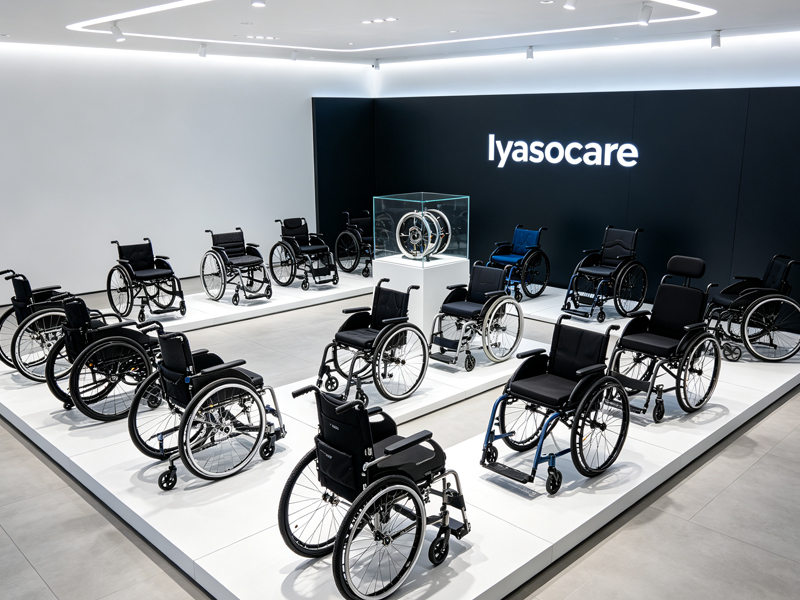
Choosing the right supplier can determine whether your importing business becomes profitable or turns into an expensive learning experience.
There are many wheelchair manufacturers and trading companies operating internationally. However, not every supplier has the production capacity, technical knowledge, or quality management systems required to support the Australian market.
A professional manufacturer should understand that importing mobility equipment involves more than supplying finished products.
They should be able to provide technical documentation, consistent production quality, replacement parts, product customisation, and long-term cooperation.
Start by investigating how long the company has been manufacturing wheelchairs.
A supplier with extensive experience in mobility equipment is generally better positioned to understand frame construction, seating design, mechanical performance, and product development.
Ask questions such as:
How many years has the company manufactured wheelchairs?
Does it operate its own factory?
Which wheelchair categories does it specialise in?
Does it export to Australia or other markets with similar regulatory expectations?
Can it provide references from established distributors?
Does it manufacture products under OEM or ODM arrangements?
It is worth distinguishing between an actual manufacturer and a trading company.
Trading companies are not necessarily unreliable. Some provide useful sourcing and logistics services. However, if you are purchasing directly from a factory, you may have greater visibility into manufacturing processes, production schedules, and quality control.
Ask whether the factory operates a documented quality management system, such as ISO 13485 where applicable.
A quality management certificate should be checked for its issuing organisation, validity period, certified activities, and product scope.
More importantly, investigate how the manufacturer controls product quality in practice.
A professional factory should have procedures covering incoming material inspections, component checks, assembly inspections, finished-product testing, and non-conforming product management.
One of the most effective ways to evaluate a supplier is to order a sample wheelchair.
A sample allows you to assess:
Frame construction and finishing.
Folding performance.
Seat comfort.
Wheel alignment.
Brake operation.
Assembly quality.
Packaging quality.
Ease of operation.
Product documentation.
For electric wheelchairs, conduct additional tests on driving performance, battery charging, controller responsiveness, and emergency braking.
If possible, arrange an independent pre-shipment inspection before approving a large production order.
The cost of inspecting a sample or initial shipment is generally much smaller than the potential cost of receiving hundreds of defective wheelchairs.
Price is naturally an important factor when importing wheelchairs. However, the cheapest quotation does not necessarily represent the best purchasing decision.
A wheelchair’s actual import cost includes much more than the manufacturer’s unit price.
Businesses should calculate the total landed cost before comparing suppliers.
Your total importing budget may include:
| Cost category | What to consider |
|---|---|
| Product purchase | Unit price and order quantity |
| Tooling and customisation | Branding, design changes and special specifications |
| International freight | Air freight or sea freight |
| Cargo insurance | Protection against transport-related loss or damage |
| Customs duty | Depends on tariff classification and applicable concessions |
| Import GST | Generally 10% of the taxable importation value |
| Customs clearance | Broker and processing charges |
| Local transportation | Port or airport to warehouse |
| Warehousing | Storage and inventory management |
| Quality inspection | Sample testing and pre-shipment inspections |
| After-sales costs | Spare parts, repairs and warranty claims |
Import GST is generally calculated using the taxable importation value, which includes customs value, applicable customs duty, and relevant international transport and insurance costs.
For example, if an imported shipment has a customs value of AUD 20,000, applicable customs duty of AUD 1,000, and eligible international freight and insurance costs of AUD 2,000, the taxable importation value would be AUD 23,000.
At a 10% GST rate, the import GST would be AUD 2,300.
This is a simplified illustration, not a quotation or a determination of the actual duty payable on wheelchairs. The applicable tariff classification and any concessions must be checked separately. GST-registered businesses may also be eligible to claim input tax credits, subject to ATO requirements.
MOQ stands for Minimum Order Quantity.
Some manufacturers accept small trial orders, while others require larger quantities to justify production costs.
Before agreeing to an MOQ, consider your expected sales volume, available storage, cash flow, and product demand.
For a new importer, ordering too many wheelchairs before testing the Australian market can create unnecessary financial pressure.
A practical strategy is to begin with a smaller selection of popular models, evaluate customer feedback, and increase purchasing quantities once demand becomes more predictable.
When comparing suppliers, make sure their quotations cover the same specifications.
A lower price might reflect thinner frame materials, lower-quality batteries, fewer accessories, shorter warranties, or different packaging arrangements.
Request quotations that clearly identify:
Model numbers and product specifications.
Unit prices and MOQ.
Incoterms and named delivery locations.
Production lead times.
Payment terms.
Warranty conditions.
Spare parts pricing.
Packaging dimensions and gross weight.
This approach helps prevent misunderstandings and makes supplier comparisons much more meaningful.
For customs and tariff information, the Australian Border Force tariff classification guide is a useful starting point.
International shipping is another important part of the wheelchair importing process.
Wheelchairs are relatively bulky products, and shipping costs can have a substantial impact on overall profitability.
The appropriate shipping method depends on order quantity, delivery deadlines, product type, and budget.
Both shipping methods have advantages and disadvantages.
Air freight is generally more suitable for urgent shipments, smaller orders, samples, or replacement components. It offers faster transportation but is usually more expensive, particularly for bulky products.
Sea freight is often more economical for larger wheelchair orders. However, importers need to account for longer transportation times, port charges, customs clearance, and potential delays.
For businesses importing standard manual wheelchairs in larger quantities, sea freight may be more cost-effective.
Electric wheelchair shipments require additional planning because battery classification and dangerous goods requirements can affect carrier acceptance and transportation costs.
Before the shipment leaves the country of origin, make sure all relevant paperwork is complete.
Common documents include:
Commercial invoice.
Packing list.
Bill of lading or air waybill.
Certificate of origin, where relevant.
Product specifications.
Relevant compliance and test documentation.
Battery transport documentation, where applicable.
Insurance documents.
Any permits or approvals required for the specific goods.
The Australian Border Force requires imported goods to be correctly classified and declared.
For most consignments valued above AUD 1,000 that are being cleared into home consumption, an Import Declaration is required. Different declaration arrangements apply to lower-value shipments and certain other circumstances.
Importers should also understand that not every wheelchair shipment has the same customs classification or duty treatment.
Incorrect tariff classification can result in underpaid duties, penalties, or clearance delays.
If you are importing for the first time, working with a licensed Australian customs broker can make the process considerably easier.
Useful official resources include:
Wheelchairs contain components that can be damaged during transportation.
Common problems include bent frames, scratched surfaces, broken plastic parts, damaged footrests, and misaligned wheels.
Ask manufacturers to use suitable export packaging that protects the products against movement, moisture, compression, and handling damage.
For electric models, ensure the battery is packaged and secured in accordance with the applicable transport requirements.
Before approving the shipment, request photographs of the packed goods and confirm the carton dimensions, gross weight, and packaging configuration.
These details also help freight forwarders calculate shipping charges more accurately.
Importing a wheelchair successfully is only the beginning. If you intend to distribute or sell wheelchairs in Australia, you also need to think about what happens after the customer receives the product.
A wheelchair is an essential mobility aid for many people. If a brake fails, a battery stops charging, or a motor develops a fault, the customer may experience considerable disruption.
This makes after-sales service an important competitive advantage.
Before placing an order, negotiate written warranty conditions with your manufacturer.
Clarify:
Warranty duration.
Coverage for the frame.
Coverage for motors and controllers.
Battery warranty conditions.
Replacement part arrangements.
Labour and repair responsibilities.
Procedures for defective products.
Responsibility for international shipping costs.
Do not assume that the manufacturer’s overseas warranty automatically satisfies your obligations to Australian customers.
Businesses selling wheelchairs must also consider their responsibilities under the Australian Consumer Law, including applicable consumer guarantees. A manufacturer’s warranty does not replace those legal protections.
A reliable wheelchair supplier should offer access to replacement components.
Important spare parts may include:
Wheels and tyres.
Brake assemblies.
Armrests and footrests.
Seat cushions.
Motors.
Controllers.
Batteries and chargers.
Joysticks.
Electrical cables and connectors.
For importers, keeping commonly required replacement parts in Australia can significantly reduce repair times.
It also helps establish customer confidence and encourages repeat business.
Australian customers should be able to understand how to operate and maintain their wheelchairs safely.
Make sure the manufacturer can provide clear English-language documentation covering assembly, operation, charging, maintenance, cleaning, troubleshooting, and safety precautions.
For powered wheelchairs, the instructions should explain battery charging, controller operation, safe driving practices, and emergency procedures.
Good documentation reduces unnecessary support requests and helps customers use their products with greater confidence.
A successful importing strategy should be based on more than product availability. It should also reflect the needs and purchasing habits of Australian customers.
Australia has an established market for mobility equipment, supported by hospitals, rehabilitation providers, aged-care organisations, disability support services, specialist retailers, and private consumers.
However, different customer groups have different expectations.
For example, an individual purchasing a wheelchair for occasional travel may prioritise affordability, lightweight construction, and portability. An aged-care facility may place greater importance on durability, ease of cleaning, maintenance, and bulk purchasing prices.
A rehabilitation provider may require more specialised seating options and adjustable configurations.
Before importing, research which customer groups you want to serve.
Consider the following market segments:
| Customer segment | Important purchasing factors |
|---|---|
| Individual consumers | Comfort, affordability and ease of use |
| Elderly users | Stability, safety and simple operation |
| Hospitals | Durability, hygiene and reliable performance |
| Aged-care facilities | Maintenance, comfort and bulk pricing |
| Rehabilitation centres | Adjustability and specialised functions |
| Mobility equipment retailers | Product variety, margins and supplier reliability |
This research will help you avoid importing products that look attractive in a catalogue but have limited commercial demand.
Rather than importing too many models immediately, consider developing a product range with different price points and functions.
For example, a starting range might include a standard manual wheelchair, a lightweight folding wheelchair, a transport wheelchair, and a powered wheelchair.
This allows you to reach different customer segments while keeping inventory relatively manageable.
Over time, customer feedback and sales data can help determine which products deserve larger orders.
A good wheelchair manufacturer should be interested in developing a stable business relationship rather than simply completing individual transactions.
Look for suppliers who can support product improvements, custom branding, packaging adjustments, technical documentation, replacement parts, and consistent production quality.
If you plan to establish your own wheelchair brand in Australia, discuss OEM and ODM arrangements with potential manufacturers.
However, remember that changing the brand, model, manufacturer, or product configuration can have regulatory implications. Any proposed changes should be assessed before commercial supply.
The most valuable supplier is not necessarily the one offering the lowest initial price. It is the one capable of delivering consistent quality, reliable communication, and dependable technical support over time.
Importing wheelchairs into Australia offers opportunities for businesses that understand the mobility equipment market and are prepared to meet its regulatory and commercial requirements.
However, successful importing requires careful preparation. From TGA requirements and ARTG inclusion to product safety, ISO 7176 testing, battery transportation, customs clearance, and after-sales service, every stage deserves attention.
The most important lesson is to avoid making purchasing decisions based on price alone.
A low-cost wheelchair may initially appear profitable, but poor product quality, insufficient documentation, shipping complications, and expensive warranty claims can quickly reduce your margins.
Instead, work with experienced manufacturers, request verifiable technical documentation, evaluate product samples, calculate the full landed cost, and establish a reliable support system for Australian customers.
By combining regulatory awareness, careful supplier selection, and a clear understanding of customer needs, importers can build a more sustainable wheelchair business and provide mobility products that genuinely support independent living.
The best importing decisions are not simply about bringing products into Australia. They are about bringing in products that Australian customers can trust.
1. Do I need TGA approval to import wheelchairs into Australia?
It depends on the purpose of the importation.
If you are importing wheelchairs for commercial distribution or resale, you generally need to establish whether the products are regulated medical devices and whether they require inclusion in the Australian Register of Therapeutic Goods (ARTG) before importation and supply.
An Australian-based sponsor is generally responsible for the relevant regulatory obligations.
Individuals importing eligible medical devices for their own use may be able to use the Personal Importation Scheme, subject to its conditions. Personal importation provisions should not be used for commercial distribution.
2. What certifications should I check when importing wheelchairs into Australia?
Importers should examine relevant ISO 7176 testing documentation, particularly for wheelchair stability, braking performance, structural strength, and durability.
Depending on the product, additional documentation may include:
TGA-related conformity assessment documentation.
Quality management certificates, such as ISO 13485.
Battery UN 38.3 test documentation for applicable lithium batteries.
Electrical safety and electromagnetic compatibility evidence.
Applicable Australian electrical or radio compliance documentation.
The exact requirements depend on the wheelchair type, intended purpose, and regulatory classification. No single international certificate automatically guarantees compliance with all Australian requirements.
3. How can I find a reliable wheelchair manufacturer for importing into Australia?
Start by looking for manufacturers with proven wheelchair production experience, established quality management procedures, and the ability to provide detailed technical documentation.
Request product samples, inspect manufacturing quality, verify relevant certifications, and ask about previous export experience.
You should also compare MOQ requirements, production lead times, warranty policies, spare parts availability, and communication standards.
Most importantly, choose a manufacturer that can support your business beyond the initial shipment. Consistent product quality and dependable after-sales cooperation are essential for building a successful wheelchair distribution business in Australia.