Our Location
Free Trade Tower, Xiyong street.
Chongqing, China

Free Trade Tower, Xiyong street.
Chongqing, China
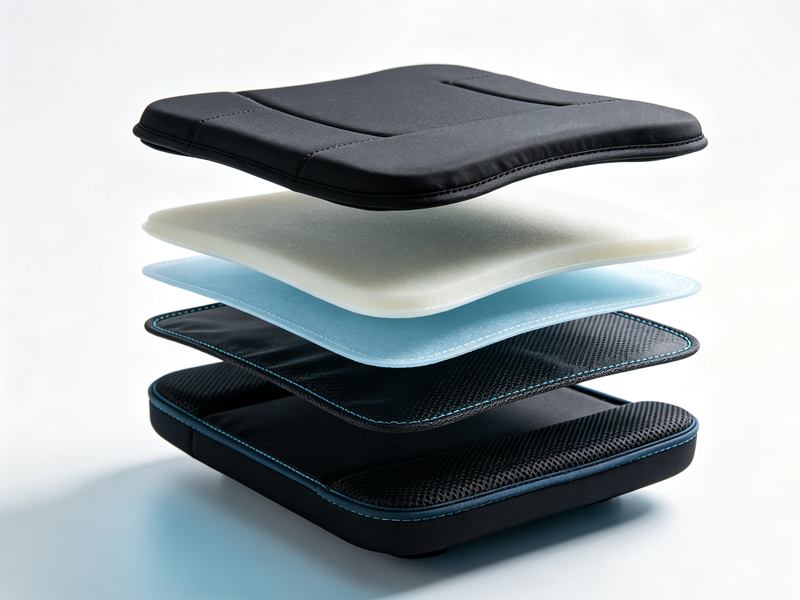
A wheelchair cushion may look like a relatively simple accessory, but its material composition, construction quality, and manufacturing process can make a significant difference in everyday comfort and long-term usability. For wheelchair users who spend several hours a day sitting, the cushion is more than a layer of padding. It is an important part of the seating system, helping support posture, distribute body weight, reduce friction, and improve the overall sitting experience.
Among the different materials used in wheelchair cushion production, nylon has become a practical choice for manufacturers because of its durability, relatively low weight, abrasion resistance, and versatility. From the outer cushion cover to supporting fabric structures and specialized textile components, nylon can serve several functions depending on the product design.
However, choosing a nylon wheelchair cushion involves more than checking the fabric name or looking at its appearance. Material grade, fabric density, coating technology, stitching quality, foam compatibility, moisture management, and manufacturing standards all influence the final product.
Understanding these factors helps buyers make more informed decisions, whether they are purchasing a wheelchair cushion for personal use, sourcing products for a healthcare facility, or evaluating manufacturing suppliers.
This guide explores nylon wheelchair cushion materials, essential product features, manufacturing processes, quality control requirements, and the standards manufacturers should consider when developing reliable wheelchair seating products.
Nylon is a synthetic polymer belonging to the polyamide family. It is widely used in textiles, automotive components, outdoor equipment, medical-related products, and various industrial applications. Its popularity comes from a combination of mechanical strength, flexibility, and resistance to everyday wear.
In wheelchair cushion manufacturing, nylon is particularly useful in fabric components that need to withstand repeated contact, movement, and cleaning.
Unlike some lightweight fabrics that can lose their appearance or structural integrity after frequent use, well-selected nylon textiles generally offer good resistance to abrasion and tearing. This makes them suitable for wheelchair cushion covers that experience constant friction from clothing, transfers, repositioning, and daily handling.
Another advantage is versatility. Nylon can be manufactured in different fabric structures, including woven, knitted, and coated constructions. Each structure offers different characteristics.
For example, woven nylon fabrics are often selected when dimensional stability and resistance to deformation are important. Knitted nylon may provide greater flexibility and a softer surface feel. Coated nylon can offer additional resistance to moisture penetration, although the performance depends on the coating material and construction.
It is important to understand that nylon is not automatically waterproof, antibacterial, breathable, or medically protective. These properties depend on the specific textile construction, chemical treatment, coating, and validated performance of the finished product.
The most appropriate nylon material depends on the intended function of the cushion.
Nylon 6 and Nylon 6,6
Nylon 6 and Nylon 6,6 are two commonly used polyamide types.
Nylon 6 is known for its flexibility, toughness, and relatively straightforward processing. It can be used in textile applications where a balance between strength and softness is required.
Nylon 6,6 generally offers higher melting temperature and good mechanical performance. It is often considered for applications that require strong resistance to repeated mechanical stress.
The actual performance of either material depends on yarn quality, fabric construction, finishing, and production conditions. Buyers should avoid assuming that one type is always superior in every wheelchair cushion application.
Woven Nylon Fabric
Woven nylon is produced by interlacing yarns in a structured pattern. Its relatively stable construction makes it suitable for cushion covers and other textile components that need to maintain their shape during regular use.
A tightly constructed woven fabric can provide good resistance to snagging and surface abrasion. It may also be easier to manufacture into products requiring consistent dimensions and precise stitching.
Knitted Nylon Fabric
Knitted nylon is formed through interconnected loops, giving the fabric greater flexibility and stretch.
This structure can create a softer, more adaptable surface, depending on the yarn and knitting density. It may be useful in cushion covers designed to fit contoured foam or other shaped cushioning materials.
However, manufacturers need to evaluate dimensional stability and seam strength carefully. Excessive stretch can affect how well a cover maintains its original fit.
Coated Nylon Fabric
Some wheelchair cushion covers use nylon fabrics with polyurethane (PU) or other suitable coatings.
These coatings can help improve resistance to liquid penetration and make cleaning easier. They may be particularly useful in healthcare environments where hygiene and frequent surface cleaning are important.
The coating must be selected carefully. A coating that is too rigid can reduce flexibility, while poor adhesion may lead to cracking, peeling, or deterioration after repeated use and cleaning.
For this reason, manufacturers should test the complete coated fabric rather than relying solely on the supplier’s material description.
Material selection is only the starting point. A high-quality wheelchair cushion needs to perform consistently under real-world conditions.
The most important features are not necessarily the ones that look impressive in a product description. They are the characteristics that remain useful after months of everyday use.
Durability and Abrasion Resistance
Wheelchair cushions experience frequent friction. Users move across the seating surface, transfer between wheelchairs and beds, adjust their sitting positions, and sometimes use the armrests or cushion edges for support.
These activities gradually place stress on the cover fabric.
Nylon’s abrasion resistance makes it a suitable option for applications involving repeated surface contact. Nevertheless, performance varies significantly with fabric weight, yarn construction, weave density, coating, and finishing.
Manufacturers can evaluate abrasion resistance using recognized textile testing methods such as ISO 12947 (Martindale method) or ASTM D4966.
A higher abrasion resistance result may indicate better performance under the specified test conditions, but it does not guarantee that the entire cushion will last longer. Seams, zippers, coatings, and internal materials also influence product lifespan.
Lightweight Construction
A wheelchair cushion should provide support without unnecessarily increasing the overall weight of the wheelchair.
Nylon is generally lighter than many traditional heavy-duty textile alternatives, making it useful for portable wheelchair accessories.
Lower product weight can make cushion removal, repositioning, storage, and transportation easier for caregivers and wheelchair users.
For folding wheelchairs and travel-oriented seating products, lightweight construction can be an especially valuable consideration.
However, reducing weight should never come at the expense of adequate strength or dimensional stability.
Moisture Resistance and Easy Cleaning
Moisture management is another important consideration.
Wheelchair cushions may be exposed to perspiration, accidental spills, cleaning solutions, and other sources of moisture. If liquids penetrate the cover too easily, the internal cushioning material may become difficult to clean and dry.
Coated nylon fabrics can help create a protective surface that limits liquid penetration. This can make routine maintenance more convenient.
At the same time, moisture resistance should not be confused with breathability.
A fully coated fabric may restrict air and water vapor movement, potentially increasing heat and moisture accumulation at the seating interface. Manufacturers therefore need to balance liquid protection with comfort.
Where appropriate, breathable fabric panels, specialized laminates, or moisture-management textile constructions can be incorporated into the design.
Comfort and Surface Texture
The outer material is the part of the cushion that users interact with directly.
A rough, stiff, or poorly finished fabric can create an unpleasant sitting experience, particularly during prolonged use.
Nylon fabrics can be engineered with different surface textures, yarn sizes, and finishing treatments to achieve different levels of softness and flexibility.
The ideal surface should feel comfortable against clothing and skin while remaining sufficiently durable for regular use.
It is also worth remembering that a comfortable cover cannot compensate for an unsuitable cushion core. The foam, gel, air-cell system, or other internal structure plays a major role in determining overall seating performance.
Tear Strength and Seam Stability
A wheelchair cushion cover must withstand more than surface abrasion. It also needs to resist pulling forces around the edges, corners, zippers, and stitched areas.
Tear resistance is influenced by the yarn strength, fabric structure, and finishing process.
Manufacturers should also pay attention to seam construction. Even a strong nylon fabric can fail if the stitching density is insufficient or the seam allowance is poorly designed.
Reinforced stitching, suitable thread selection, carefully finished edges, and appropriately positioned stress points can improve the structural reliability of the finished cushion.
Compatibility With Different Cushion Cores
Nylon covers are not limited to one type of wheelchair cushion.
Depending on the product design, they may be used with:
The cover must match the shape, flexibility, and functional requirements of the internal cushioning system.
For example, a highly contoured foam cushion may require a flexible cover that follows its shape without creating excessive tension. An air-cell cushion may require a cover design that does not interfere with the intended movement or function of the air-cell structure.
This compatibility should be verified through finished-product testing rather than assumed from fabric specifications alone.
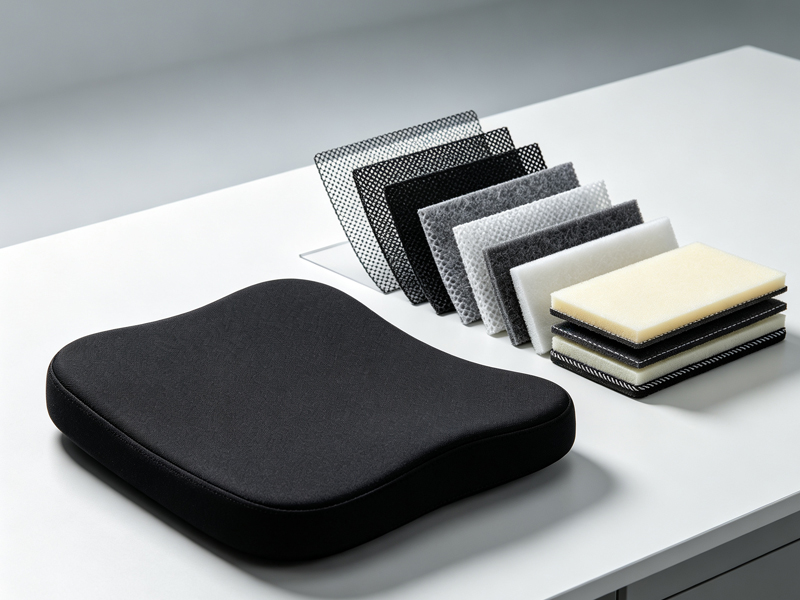
The quality of a nylon wheelchair cushion is determined by a series of manufacturing decisions. Even when manufacturers use similar raw materials, differences in design, production control, and inspection can result in very different products.
A reliable production process begins long before the first piece of fabric is cut.
Material Selection and Incoming Inspection
The first stage involves selecting the appropriate nylon fabric and internal cushioning materials.
Manufacturers should establish material specifications covering:
Incoming materials should be checked against approved specifications before entering production.
For example, two fabrics may look almost identical but perform differently under repeated abrasion or washing. A proper incoming inspection helps identify inconsistencies before they become larger production problems.
Suppliers should also provide relevant technical data sheets and test reports where applicable.
Fabric Cutting and Pattern Development
Once the material has passed inspection, manufacturers prepare the cutting patterns.
The pattern must account for cushion dimensions, thickness, shape, seam allowance, zipper position, and the amount of material required for assembly.
Precision is particularly important for contoured wheelchair cushions. If the cover is too small, it may compress or distort the cushioning core. If it is too large, excess fabric may create wrinkles or uneven contact surfaces.
Computer-aided design (CAD) systems can help manufacturers improve pattern consistency, optimize material usage, and reduce cutting errors.
For larger production runs, automated cutting equipment may also improve efficiency and repeatability.
Sewing and Assembly
The sewing stage transforms individual fabric components into a complete cushion cover.
Manufacturers need to select appropriate thread, needle size, stitch type, and stitching density according to the nylon fabric and product requirements.
High-stress areas, such as corners, zipper openings, handles, and attachment points, may require reinforcement.
The zipper should be positioned to allow convenient cushion removal without creating uncomfortable pressure points or interfering with the cushion structure.
Quality control during assembly should include checks for:
The final cover should fit the intended cushion core without excessive tension or unwanted folds.
Foam Cutting and Cushion Core Processing
The internal cushioning material is processed separately before final assembly.
For foam-based cushions, manufacturers typically use cutting equipment to produce the required dimensions and shapes.
Foam density, firmness, resilience, and thickness should be selected according to the product’s intended use.
It is important to distinguish between foam density and firmness. Density describes the mass of foam per unit volume, while firmness describes its resistance to compression under specified testing conditions.
These characteristics are related to performance but are not interchangeable.
For gel or air-cell products, additional assembly and inspection procedures may be necessary. Air-cell systems, for example, require appropriate leak testing and verification of the intended inflation and adjustment functions.
Final Assembly and Product Inspection
After the cover and cushion core are ready, they are assembled into the finished product.
At this stage, manufacturers should inspect the overall fit, appearance, dimensions, stitching, zipper function, and structural integrity.
For products intended to support pressure redistribution, testing should also consider the performance of the complete seating system.
A cushion that looks well made may still perform poorly if the internal materials are unsuitable or the cover is excessively tight.
This is why finished-product evaluation is essential.
Manufacturing standards provide a framework for ensuring that wheelchair cushions are produced consistently and that their materials and construction meet defined requirements.
However, there is no single universal standard that automatically certifies every nylon wheelchair cushion as safe, comfortable, or clinically effective.
Different standards address different aspects of manufacturing, textile performance, product safety, and medical-device quality management.
Manufacturers should identify which requirements apply to their specific product, intended market, and regulatory classification.
ISO 13485 is an internationally recognized quality management system standard for medical devices.
It focuses on establishing and maintaining controlled processes throughout the product lifecycle, including design, development, production, storage, distribution, and applicable post-market activities.
For manufacturers producing wheelchair cushions classified as medical devices in their target markets, ISO 13485 can be an important part of the quality management framework.
It helps organizations establish procedures for:
ISO 13485 certification does not mean that every individual cushion has been clinically proven to prevent pressure injuries. It demonstrates that the organization operates a quality management system assessed against the standard’s requirements.
ISO 9001 is a broader quality management standard applicable to organizations across many industries.
It emphasizes customer requirements, process consistency, risk-based thinking, performance evaluation, and continuous improvement.
For wheelchair cushion manufacturers, ISO 9001 can support more consistent production management and supplier coordination.
While it is not specific to medical devices, it can provide a useful foundation for organizations manufacturing general wheelchair accessories.
ISO 12947 describes methods for determining the abrasion resistance of textile fabrics using the Martindale apparatus.
This test is relevant when evaluating nylon cushion cover materials because repeated friction is a common source of fabric deterioration.
The results help manufacturers compare materials under controlled test conditions.
However, the test result should be interpreted alongside other performance indicators, including tear strength, seam strength, coating durability, and dimensional stability.
ASTM D5034 and ASTM D5035 are commonly used textile testing methods for measuring fabric breaking strength and elongation.
These tests help manufacturers understand how much force a textile can withstand before breaking under specified conditions.
For wheelchair cushion covers, tensile performance is relevant to areas exposed to pulling, stretching, and repeated handling.
The choice between test methods depends on fabric construction and the testing requirements established by the manufacturer or buyer.
For products that fall within the scope of medical-device biological evaluation, the ISO 10993 series provides a framework for assessing biological safety.
The appropriate evaluation depends on the nature and duration of contact with the body, the materials involved, and the applicable regulatory requirements.
Not every wheelchair cushion automatically requires the same biological testing.
Manufacturers should determine applicability based on the finished product, intended use, and regulatory classification rather than treating ISO 10993 as a universal certification requirement for all cushion covers.
Fire performance may also be relevant, particularly for products purchased by hospitals, rehabilitation facilities, nursing homes, and institutional healthcare organizations.
Requirements differ between countries and product categories.
Depending on the target market and intended application, manufacturers may need to consider relevant textile flammability standards or institutional purchasing specifications.
Testing should be conducted using the method applicable to the finished product and its intended use.
A fabric-level flammability result should not automatically be presented as proof that the entire assembled cushion meets a particular fire safety requirement.
Manufacturers exporting wheelchair cushions should understand the regulatory framework in each destination market.
In the United States, the Food and Drug Administration (FDA) regulates medical devices according to their intended use and applicable classification. Some wheelchair cushions may fall within medical-device regulatory requirements, while other products may be treated differently depending on their claims and intended function.
In the European Union, manufacturers should assess whether their products fall under the Medical Device Regulation (EU) 2017/745 (MDR).
If the product qualifies as a medical device, applicable requirements may include conformity assessment, technical documentation, risk management, clinical evaluation where required, labeling, and post-market obligations.
CE marking should only be applied when the relevant legal requirements have been fulfilled.
Manufacturers should avoid using general quality certificates as substitutes for product-specific regulatory compliance.
For buyers, distributors, healthcare procurement teams, and wheelchair users, comparing products based only on price or appearance can lead to poor purchasing decisions.
A more reliable approach is to evaluate the cushion as a complete product.
Start with the cover material. Ask whether the nylon fabric is woven, knitted, or coated. Request information about fabric weight, abrasion resistance, tensile strength, and cleaning compatibility.
Next, examine the internal cushioning material. The appropriate core depends on the user’s posture, mobility, body weight, seating requirements, and clinical needs.
Foam cushions, gel cushions, and air-cell systems do not provide identical support characteristics. A product that works well for one individual may not be appropriate for another.
The fit of the cover is equally important. Check whether it follows the cushion shape naturally and whether there are visible wrinkles, loose sections, or excessively tight areas.
A poorly fitted cover can interfere with comfort and may affect the intended performance of certain cushion designs.
Cleaning requirements should also be considered. Some nylon covers can be wiped clean, while others may be removable and washable. Buyers should follow the manufacturer’s instructions regarding approved cleaning agents, water temperature, drying methods, and disinfection procedures.
For institutional purchasing, documentation is particularly valuable. Request material specifications, relevant test reports, quality management information, product labeling details, and maintenance instructions.
A professional manufacturer should be able to explain not only what materials are used but also how their performance has been evaluated.
Despite the advantages of nylon, manufacturers can encounter several challenges during production.
One common issue is coating deterioration. Poor coating formulation, inadequate curing, or unsuitable cleaning chemicals may cause the surface to crack, peel, or lose its protective properties.
This can be reduced through careful coating selection, process control, and durability testing after exposure to the cleaning conditions specified for the product.
Another challenge is dimensional inconsistency.
If the fabric stretches during cutting or sewing, the finished cover may not match the intended pattern. This can lead to loose fitting, excessive tension, or uneven surface contact.
Using controlled cutting conditions, stable fabric specifications, and regular dimensional inspections can help reduce these problems.
Seam failure is another concern.
The cover may perform well during basic fabric testing but still fail around corners or zipper openings. Manufacturers should evaluate the complete sewn construction rather than relying only on the strength of the unsewn fabric.
Moisture management also requires careful attention. A waterproof coating may improve liquid resistance but can reduce air permeability. Product designers need to determine the appropriate balance between cleaning convenience and user comfort.
Finally, manufacturers should not overlook the interaction between the cover and cushion core.
An overly tight cover may compress foam or interfere with the function of an air-cell system. A poorly designed cover may also create folds or wrinkles that affect the seating surface.
Prototype testing and user-focused evaluation are valuable ways to identify these issues before mass production.
Wheelchair seating products are evolving alongside improvements in textile engineering, foam technology, and manufacturing automation.
One emerging direction is the development of more functional textile surfaces.
Manufacturers are exploring fabric constructions that combine durability, moisture management, easier cleaning, and improved flexibility. Advanced coatings and laminated textile structures may offer better control over liquid resistance without unnecessarily compromising comfort.
Another important trend is customization.
Wheelchair users have different body shapes, mobility levels, sitting habits, and support requirements. Manufacturers are increasingly expected to provide cushions in different dimensions, thicknesses, shapes, and material combinations.
Digital pattern development and automated cutting can make small-batch customization more practical.
Sustainability is also becoming an important consideration.
Nylon is a petroleum-derived synthetic polymer, but recycled nylon materials are available and may help reduce dependence on virgin raw materials. Manufacturers interested in using recycled materials should evaluate their consistency, mechanical properties, color stability, and supply-chain documentation.
The goal is not simply to use a more environmentally friendly material. It is to ensure that sustainability improvements do not compromise the durability and functional requirements of the finished product.
Ultimately, the future of wheelchair cushion manufacturing will depend on combining material innovation with responsible design, reliable quality control, and a better understanding of user needs.
Nylon wheelchair cushion materials offer a useful combination of durability, flexibility, lightweight construction, and manufacturing versatility. These characteristics make nylon a practical option for cushion covers and other textile components used in everyday wheelchair seating products.
However, the quality of a wheelchair cushion cannot be determined by its nylon content alone.
Fabric construction, coating performance, stitching quality, internal cushioning materials, dimensional accuracy, cleaning compatibility, and manufacturing controls all contribute to the finished product.
For manufacturers, following appropriate quality management systems and selecting relevant testing methods are essential steps toward consistent production. For buyers, understanding material specifications and asking for reliable test documentation can help distinguish well-engineered products from cushions that simply look similar.
The most successful wheelchair cushion designs are those that bring together dependable materials, thoughtful construction, suitable standards, and practical user needs. When these elements work together, the result is a more reliable seating product designed for everyday use.
1. Is nylon a good material for wheelchair cushion covers?
Yes. Nylon is a practical material for wheelchair cushion covers because it offers good abrasion resistance, strength, flexibility, and relatively low weight. Depending on its construction and finishing, it can also provide useful moisture resistance and easy-cleaning properties. However, the overall performance depends on fabric quality, coating, stitching, and compatibility with the cushion core.
2. What manufacturing standards should nylon wheelchair cushions meet?
The applicable standards depend on the product’s intended use and target market. ISO 13485 may be relevant to manufacturers operating within medical-device quality management requirements, while ISO 9001 provides a general quality management framework. Textile testing methods such as ISO 12947 and ASTM D5034 can help evaluate abrasion and tensile performance. Additional requirements, including ISO 10993 biological evaluation and market-specific regulatory obligations, should be assessed where applicable.
3. How long does a nylon wheelchair cushion typically last?
There is no fixed lifespan for every nylon wheelchair cushion. Durability depends on fabric quality, cushion core materials, frequency of use, user weight, cleaning practices, environmental conditions, and overall manufacturing quality. Regularly inspecting the cover, seams, zipper, and internal cushioning material can help identify early signs of deterioration. Users should replace a cushion when its structure, fit, or support performance no longer meets their needs, following the manufacturer’s recommendations and any relevant clinical guidance.