Our Location
Free Trade Tower, Xiyong street.
Chongqing, China

Free Trade Tower, Xiyong street.
Chongqing, China
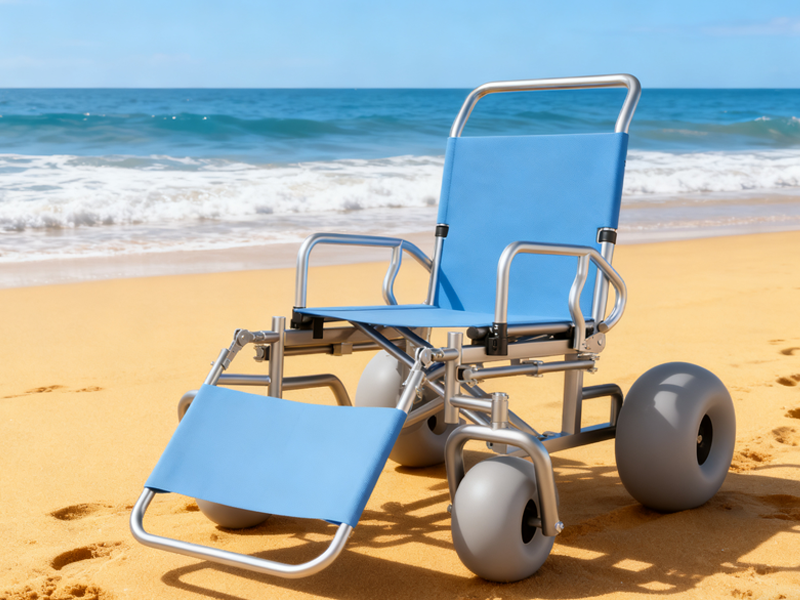
The beach has always represented freedom—open horizons, warm waves, endless sands, and the kind of restorative calm only nature can offer. Yet for millions of people with mobility limitations, that freedom has traditionally been out of reach. Conventional wheelchairs sink into soft sand, making the shoreline difficult—or even impossible—to access.
Beach wheelchairs have changed that reality. They are not simply mobility aids; they are gateways to experiences, family gatherings, travel opportunities, and inclusive recreation. As coastal destinations worldwide modernize their accessibility infrastructure, these specialized wheelchairs are becoming essential equipment, whether for private use or for resorts, rental shops, parks, and public facilities.
Inclusive tourism is no longer an optional concept. Travelers now expect destinations to welcome everyone, including guests with limited mobility. Beaches, however, continue to be among the most challenging environments. The combination of soft terrain, uneven slopes, and exposure to salt, sun, and moisture requires equipment specifically engineered for durability and maneuverability.
For individuals, a beach wheelchair represents:
Independence: No more relying on others to push a regular wheelchair across sand that it cannot handle.
Dignity: The user can explore the environment confidently without struggling or feeling restricted.
Experience equity: Enjoying the beach should not depend on physical ability.
For families, the benefits are emotional and practical. Grandparents can join their grandchildren by the water. Travelers with disabilities can fully participate in vacations. Daily outings become more enjoyable and inclusive.
For organizations—hotels, hospitals, community centers, vacation rentals, rehabilitation programs, cruise lines—offering beach wheelchairs elevates service quality and meets global accessibility standards. Many forward-thinking coastal destinations now promote beach wheelchair availability as a key tourism advantage.
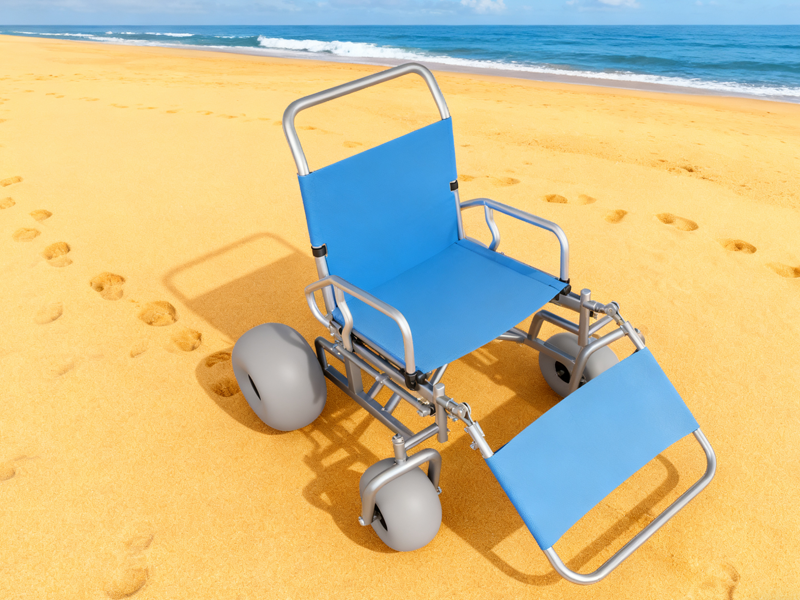
The secret to a beach wheelchair’s performance lies in its ability to distribute weight efficiently and glide across sand without sinking. Unlike standard wheelchairs, which use narrow tires and lightweight frames, beach wheelchairs integrate specialized components designed for rugged outdoor use.
These wheels are the hallmark of beach mobility equipment. Their unique low-pressure design ensures:
Superior floatation over soft sand
Smoother rolling in uneven terrain
Shock absorption and stability
Minimal user effort
The broad surface area prevents digging and allows the chair to glide, even on fine or wet sand.
Saltwater exposure is unforgiving. High-grade aluminum alloys, powder-coated metals, and stainless-steel hardware are essential to prevent rust. Quality beach wheelchairs often use marine-grade materials that survive years of coastal conditions.
Beaches are unpredictable—waves move fast, sand shifts under pressure, and slopes can vary dramatically. A wide wheelbase, low center of gravity, and reinforced joints help prevent tipping, ensuring that users feel secure.
Quick-dry mesh or UV-resistant cushioned seats keep the user comfortable even in direct sunlight or after contact with water. Designed to maintain structural integrity, these materials resist mold, mildew, and fading.
Some beach wheelchairs are designed for manual pushing, while others can integrate innovative mobility enhancements. The goal is always effortless, adaptable movement across sand and shoreline terrain.
Selecting a beach wheelchair is not simply a matter of picking a model; it requires understanding personal needs, usage environments, and maintenance preferences. The following considerations help buyers—individuals and organizations alike—make informed decisions.
A beach day usually means extended periods outdoors. Look for ergonomic seating, breathable backrests, adjustable footrests, and supportive armrests. Comfort influences not just enjoyment but also posture, circulation, and long-term mobility health.
Durable beach wheelchairs typically support a wide range of body types, but always verify the maximum capacity to ensure safety and longevity.
Portability is crucial:
Can the frame fold or disassemble?
Does it fit into a vehicle trunk, van, or storage closet?
How easy is assembly without tools?
Lightweight yet strong construction makes a significant difference for frequent travelers or users who need to transport the wheelchair independently.
While designed for beaches, top models also perform on:
Gravel
Grass
Snow
Mud
Boardwalks
This versatility makes them valuable year-round mobility companions.
Among the global manufacturers producing accessible mobility equipment, IYASOCARE stands out for its thoughtful engineering, international quality standards, and commitment to user-centered design. Their beach wheelchair series integrates durability, comfort, stability, and affordability—making them suitable for both personal and institutional use.
Two models in particular have earned recognition among users seeking sturdy, well-built solutions.
A popular all-terrain model that emphasizes comfort and sand-friendly mobility. Suitable for personal beach outings, family vacations, and public accessibility programs.
Product link:https://www.iyasomed.com/products/beach-wheelchair-ysb01/
A robust, modern design with upgraded materials and a wide stability frame. Ideal for resorts, rental services, and users needing extra strength and durability.
Product link: https://www.iyasomed.com/products/beach-wheelchair-ysb02/
Both models reflect the brand’s focus on functional reliability and user-friendly engineering.
Beyond the obvious design factors, the best beach wheelchairs excel in overlooked aspects that significantly impact real-world use.
The difference between a good and excellent beach wheelchair becomes clear the moment it meets the shoreline. Thoughtfully engineered wheel alignment reduces drag, making each push more efficient.
Not all users require the same level of support. Optional accessories—sun canopies, harnesses, head support, cup holders, storage pouches—enhance the experience and can be tailored to various mobility conditions.
Traveling with a beach wheelchair should not feel like transporting heavy machinery. Lightweight frames, quick-release wheels, and modular components make transportation effortless.
ISO, CE, and FDA approvals ensure compliance with international mobility standards, giving users confidence in the reliability and safety of their equipment.
As accessibility awareness grows worldwide, more destinations—from California to Australia, Spain to Thailand—are investing in mobility-friendly shoreline infrastructure. This includes:
Public beach wheelchair programs
Accessible boardwalks
Beach mats that extend across the sand
Adaptive sports initiatives, including surf chairs
Accessible lifeguard and rescue services
Travel agencies, rehabilitation centers, and wellness resorts now incorporate beach wheelchairs into their offerings because customers value inclusive experiences. The presence of accessible mobility solutions is quickly becoming a hallmark of a modern, responsible, and forward-thinking travel destination.
This shift is not just ethical—it is also economically smart. Travelers with mobility limitations represent a growing global market segment, often traveling with family or support companions, meaning destinations that prioritize accessibility attract larger groups.
Whether you’re a first-time user or a caregiver assisting someone at the beach, a few practical guidelines make the experience smoother, safer, and more enjoyable.
Morning and late afternoon offer:
Cooler temperatures
Softer light
Less glare
Reduced crowds
UV protection is still essential, but avoiding peak midday heat improves comfort significantly.
High tide may limit shoreline space and affect the chair’s maneuverability. Low tide usually provides more compact sand, easier movement, and a safer environment.
Most beach wheelchairs perform best with a caregiver assisting. Even when the user is independent on hard surfaces, soft sand can create challenges.
Saltwater and sand can accumulate in joints and bolts. A quick rinse with fresh water maintains the chair’s longevity and performance.
Attach a small bag to the wheelchair or use waterproof pouches for phones, snacks, and medical items.
Beyond recreation, beach wheelchairs also play a role in physical and emotional healing. Exposure to nature has proven therapeutic benefits:
Reduced stress levels
Improved cardiovascular health
Enhanced mood and mental well-being
Better social engagement
Rehabilitation specialists often use outdoor environments to motivate patients, and beach wheelchairs help extend therapy beyond clinical settings. The sensory stimulation of sand, sun, and water can be especially beneficial for individuals recovering from injury or adapting to new mobility conditions.
Providing a beach wheelchair is not enough; the goal is to create a seamless and respectful experience for all guests.
Best practices for organizations include:
Offering at least one free-use beach wheelchair
Providing clear signage showing where to request the chair
Training staff to assist guests properly
Ensuring pathways, ramps, and changing areas are accessible
Highlighting accessibility features on websites and brochures
Including accessibility information in travel content encourages visitors to choose destinations confidently, knowing their needs will be accommodated.
In an increasingly globalized marketplace, quality, durability, and value matter. IYASOCARE’s beach wheelchair solutions—especially the YSB01 and YSB02—are well aligned with international expectations. Their designs reflect real-world user feedback, ensuring that comfort and function come together in a single mobility device.
These wheelchairs offer:
Strong corrosion-resistant structures
Smooth-rolling balloon tires
User-friendly assembly
Comfortable seating systems
Excellent stability
Long-term durability for both private and commercial settings
Their thoughtful engineering makes them suitable for beaches, lakes, parks, holiday destinations, and therapeutic facilities.
Again, you can explore both models here:
YSB01: https://www.iyasomed.com/products/beach-wheelchair-ysb01/
YSB02: https://www.iyasomed.com/products/beach-wheelchair-ysb02/
Beaches symbolize relaxation, joy, and connection—experiences that everyone deserves access to. Beach wheelchairs bridge the gap between mobility limitations and outdoor freedom, enabling individuals to reclaim spaces that were once inaccessible.