Our Location
Free Trade Tower, Xiyong street.
Chongqing, China

Free Trade Tower, Xiyong street.
Chongqing, China
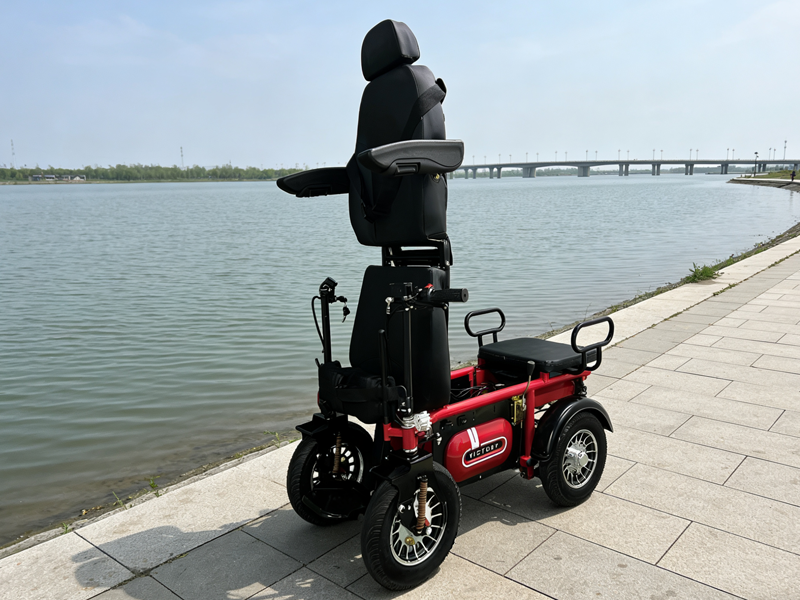
Mobility aid technology has changed dramatically, but few innovations have reshaped lives as deeply as the automatic standing wheelchair. Unlike traditional wheelchairs that restrict the user to a seated posture, a standing wheelchair incorporates powered elevation mechanisms that raise the user into a full or partial stand. This is not just a mobility upgrade—it’s a social, medical, and psychological transformation.
Standing wheelchairs allow users to look others at eye level, stretch, transfer weight, relieve pressure, improve circulatory function, and carry out daily tasks that would otherwise require help. While the core idea is simple—support the user safely while lifting the body into an upright position—the engineering behind it is exceptionally advanced. And for many users, the effect is life-changing in ways that are difficult to describe until you’ve witnessed it firsthand.
Over years of researching rehabilitation products, interviewing users, and analyzing clinical reports, I’ve seen one consistent pattern: Automatic standing wheelchairs offer benefits that no other mobility aid can match, especially for those living with spinal cord injuries, muscular dystrophy, cerebral palsy, multiple sclerosis, and certain progressive neuromuscular diseases.
The impact of standing mobility extends beyond convenience. For individuals who spend most hours seated, the health implications of immobility can be severe. Physical therapists often describe standing as “a full-body therapy session,” because the upright posture activates muscles, bones, and organs in ways that sitting simply cannot.
Below are some of the most overlooked benefits described by clinicians and long-term wheelchair users around the world:
• Better Circulation:
Standing encourages natural blood flow throughout the legs and abdomen, decreasing risks of swelling and circulatory stagnation.
• Pressure Relief:
Constant sitting can lead to pressure sores, one of the most common—and dangerous—complications for wheelchair users. A powered stand provides dramatic pressure redistribution.
• Bone Density Support:
Weight-bearing helps maintain bone mass, reducing fracture risk over time.
• Improved Digestion & Bowel Function:
Sitting compresses the intestines; upright posture allows the digestive system to operate more naturally.
• Respiratory Improvement:
Standing expands the chest cavity, giving the lungs more room to function.
• Psychological Empowerment:
Speaking to people face-to-face, reaching shelves, or simply making a cup of coffee at counter height restores a sense of human normalcy and dignity.
Most users describe the first session in a standing wheelchair as “liberating,” not because the device is futuristic, but because it returns something everyone deserves—the freedom to move naturally.
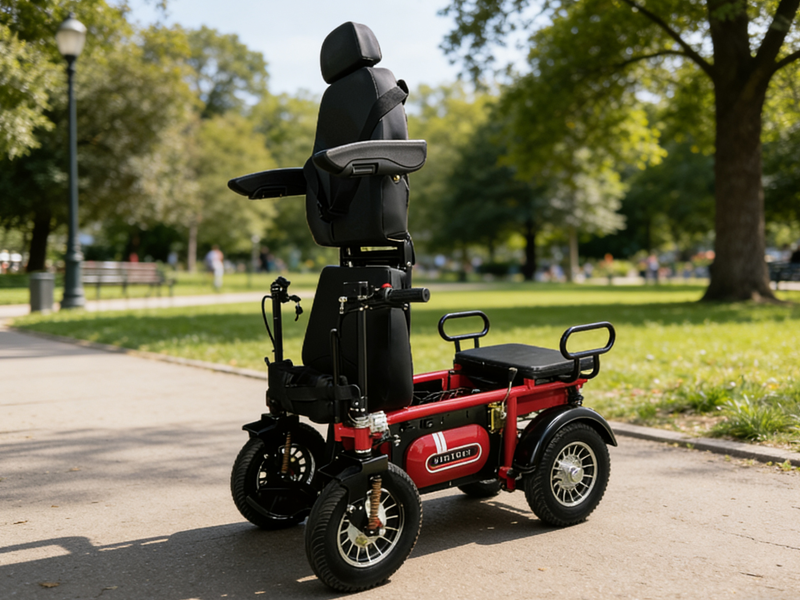
Modern standing wheelchairs incorporate electrically powered lifting systems, adjustable support padding, and multi-position control interfaces. Instead of manually shifting weight or relying on straps, the user can simply press a button to transition smoothly from sit to stand.
While product designs vary, the essential functions include:
Motorized Vertical Lift (smooth and safe elevation)
Stabilizing Knee & Chest Supports (prevent sliding or tipping)
Tilt & Recline Features (for comfort and medical positioning)
Programmable Control Panels (joystick, remote, or caregiver controls)
High-strength Frames (often aerospace-grade aluminum or steel)
Lithium Battery Power Systems (long-range durability)
Some models are built for indoor use, while others are designed for hybrid indoor/outdoor mobility. A few highly specialized models even integrate lying-flat functions, allowing the wheelchair to double as a mobile therapy bed.
One noteworthy example of multifunction design is the IYASOCARE Medical Lying & Standing Wheelchair YSE302, which I’ll reference naturally later because it represents the newest generation of adaptable standing systems.
Not everyone requires a standing wheelchair, but for many individuals, the impact is profound:
• Spinal Cord Injury (SCI) patients
Especially those with T4–L5 injuries who retain upper-body control but require lower-body support.
• Stroke survivors
Regaining standing function can help retrain neural pathways.
• Neuromuscular disorders
Including muscular dystrophy, multiple sclerosis, SMA, and ALS (in early-stage mobility transitions).
• Orthopedic rehabilitation
Ideal for long-term recovery after major spine or hip surgery.
• Cerebral palsy users
Standing improves spasticity control and reduces long-term skeletal deformities.
• Elderly users with weakened mobility
Standing wheelchairs offer stability that traditional walkers or canes cannot provide.
But beyond diagnosis maps and medical charts, the true beneficiary is anyone who wants to regain freedom in daily life: working at a desk, cooking, reaching tall cabinets, participating in conversations, or even simply stretching upright after hours of sitting.
Healthcare providers often focus on physical benefits, but users frequently highlight something far more personal: standing makes them feel human again.
Being able to face someone at eye level affects confidence, relationships, workplace dynamics, and overall identity. Many wheelchair users describe a strong psychological shift when they transition from sitting to standing around others.
Standing in public:
reduces social isolation
improves self-esteem
gives users a sense of control
improves participation in work and school
For caregivers, the emotional impact is also significant. A device that allows a loved one to stand independently reduces caregiver strain, helping preserve healthier family relationships.
The most impressive advancements have come not from robotics, but from refinements in safety mechanisms, ergonomics, and electrical engineering. Some of the engineering highlights that define the latest generation include:
Dual-Motor Lifting Systems
Provide synchronized elevation that avoids twisting the user’s torso.
Smart Center-of-Gravity Controls
Prevent tipping, even during slope movement or sudden stops.
Anti-Shear Design
Keeps the body aligned and prevents skin friction during the stand transition.
Adaptive Knee Blocks & Pelvic Belts
Customized for body shape, improving long-term comfort and safety.
Long-Life Lithium Batteries
Allow full-day operation without frequent charging.
Multimode Recline: Sit → Lie → Stand
Seen in advanced models such as the IYASOCARE YSE302, which offers complete lying functionality in addition to standing, creating a multi-position therapy system.
The combination of these features is what elevates an automatic standing wheelchair from “assistive device” to “daily independence machine.”
Standing wheelchairs are no longer reserved only for clinics; they’ve entered homes, universities, corporate environments, and elder-care facilities.
At home, users appreciate being able to:
cook safely
reach higher shelves
transfer to beds more easily
enjoy improved posture while working at a desk
In workplaces, standing mobility helps employees handle tasks that require elevation, whether interacting with customers or using equipment placed at standing height.
In rehabilitation centers, therapists rely on standing wheelchairs as tools for:
muscle training
joint stretching
weight-bearing therapy
skeletal alignment
The integration of standing systems into daily life reduces medical complications and improves long-term outcomes—benefits that translate directly into quality of life and financial savings.
While many people focus on price or advertised features, several factors deserve closer attention:
1. Positioning Stability
Look for knee braces, chest supports, and pelvic straps that truly stabilize, not just “hold in place.”
2. Lift Smoothness
A jerky lift mechanism can feel unsafe and affect long-term comfort.
3. Turning Radius
Critical for indoor use.
4. Seat Cushion Quality
A high-density medical foam or gel cushion reduces skin injury risk.
5. Ease of Maintenance
Motors, actuators, and electrical systems must be easy to service.
6. True Posture Customization
Your body shape matters; every support piece should adjust.
7. Transition Speed
Too fast feels unsafe, too slow becomes inconvenient.
8. Lying Function (Optional but Highly Valuable)
This is where premium models like the IYASOCARE Medical YSE302 Lying & Standing Wheelchair stand out.
Its ability to transition from sitting to lying to standing gives users more than mobility—it creates a complete all-day solution.
While this article remains a general guide, it’s worth highlighting what makes the IYASOCARE YSE302 particularly aligned with global trends in mobility innovation.
What users appreciate:
full reclining capability for rest or therapy sessions
powerful lifting motors with stable, controlled elevation
thickened support pads for knees, chest, and pelvis
quiet operation
durable frame construction
intuitive controls for both user and caregiver
excellent value relative to premium Western brands
As more users seek devices that allow them to live independently with fewer daily transfers, multifunction wheelchairs like the YSE302 are rapidly becoming the preferred solution.
Across Europe, North America, the Middle East, and Asia, the demand for standing wheelchairs is growing at a pace that would have been unthinkable 15 years ago. Several reasons explain the surge:
Aging populations
More seniors experience limited mobility but want independence.
Post-pandemic healthcare upgrades
Hospitals and rehab centers are investing in better equipment.
Insurance policy evolution
More countries are recognizing standing therapy as medically necessary.
User advocacy
Patients are demanding mobility aid that enhances—not restricts—their lifestyles.
Technological affordability
Manufacturing improvements have reduced costs without compromising quality.
What was once a “specialty device” is now becoming mainstream essential equipment in modern healthcare.
Throughout my interviews with long-term users, one message remains constant:
“It changes everything—especially the things people never think about.”
They mention simple but meaningful moments:
standing at a window to watch the sunset
hugging someone in an upright position
cooking independently
shopping without asking store staff for help
improving back posture naturally
feeling more confident at work
reducing pain from prolonged sitting
Families notice reduced caregiver fatigue. Medical teams see fewer complications. Employers observe higher productivity.
Independence doesn’t always come from major changes; sometimes it’s a collection of small, daily successes that add up to a healthier, happier life.
1. Is a standing wheelchair safe for people with weak bone density?
Yes, but it must be used under professional guidance. Standing wheelchairs are designed to support weight in a controlled manner, but users with osteoporosis or severe bone fragility must adjust standing duration gradually. A physical therapist should define the initial program, then the user can increase standing time based on comfort.
2. How often should I stand each day for health benefits?
Most rehabilitation specialists recommend 20–40 minutes once or twice a day, depending on your medical condition and comfort level. Even short standing sessions promote circulation, reduce pressure, and improve muscle activity. The key is consistency rather than duration.
3. Does insurance cover automatic standing wheelchairs?
Coverage varies by country and insurance provider. In some regions, standing is classified as medically therapeutic, making reimbursement possible. If you are purchasing internationally, consult your provider and request documentation from the manufacturer to support your claim. Models like the YSE302 often come with clinical justification materials to assist with this process.