Our Location
Free Trade Tower, Xiyong street.
Chongqing, China

Free Trade Tower, Xiyong street.
Chongqing, China
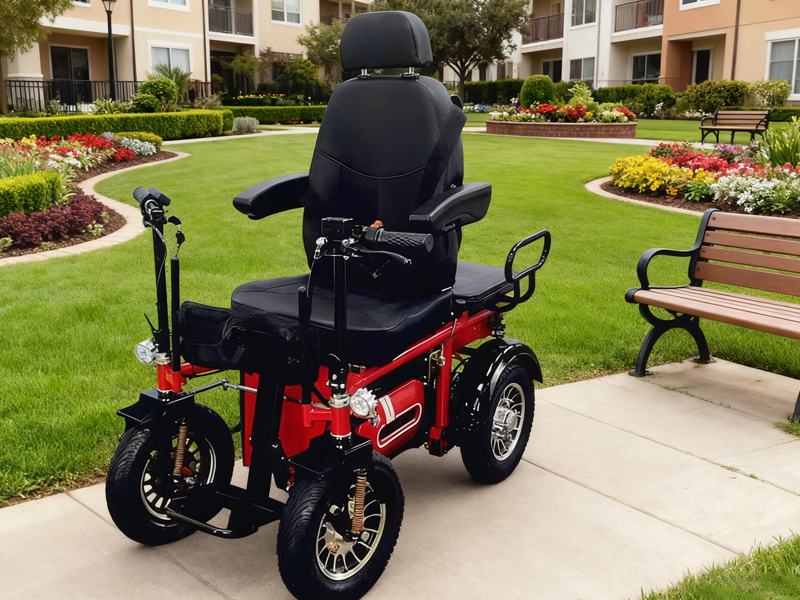
mobility technology lived within the boundaries of smooth pavement and carefully-maintained indoor floors. The idea that wheelchair users could explore forests, beaches, mountain paths, rough farmland, or even unpredictable urban terrain felt like wishful thinking—something that belonged in advertising brochures rather than real life. But the last few years have brought a quiet revolution. Engineers, outdoor innovators, and medical mobility manufacturers have pushed beyond the traditional form factor and rewritten what a wheelchair can do.
The phrase best all terrain wheelchair no longer refers to a bulky specialty device meant for rare outdoor trips. Today, it represents a new generation of powerful, confident mobility companions designed not just for accessibility, but for genuine adventure. These machines merge torque with comfort, suspension with safety, and intelligent control with rugged endurance. They are vehicles in the fullest sense—machines built to return joy, spontaneity, and independence to people who want more than flat sidewalks.
What follows is an in-depth look at how the all-terrain wheelchair category evolved, the technologies that define high-performance models, and why the newest off-road electric wheelchairs available today represent a turning point for outdoor mobility. Throughout the article, you’ll also find three standout options from IYASOCARE, whose engineering approach and design philosophy have positioned them among the most compelling all-terrain solutions currently available worldwide.
Mobility freedom is not just a matter of comfort—it’s a matter of human dignity. The increase in awareness around inclusive travel, adaptive sports, and accessible outdoor recreation has played a significant role in pushing mobility manufacturers to rethink what is possible. For a growing number of people, the best all terrain wheelchair is no longer a luxury item reserved for extreme hobbyists. It is a practical necessity:
People living in rural or semi-rural areas need reliable access to uneven ground.
Travelers want to keep up with family activities, from camping to sightseeing.
Rehabilitation patients require devices that allow exercise, fresh air, and outdoor therapy.
Seniors in retirement communities increasingly seek a lifestyle that blends comfort with exploration.
Parents want their children to grow up experiencing nature, rather than watching from the sidelines.
Meanwhile, the global shift toward outdoor activities—hiking, off-road parks, nature trails, beach vacations—has created demand for mobility equipment designed for real-world environments. A “clearly defined sidewalk” is no longer enough.
The reality is simple: life does not happen exclusively on smooth surfaces. And now, mobility technology doesn’t have to either.
To understand why certain models stand above the rest, it’s worth breaking down what differentiates an all-terrain wheelchair from a standard mobility chair. The best all terrain wheelchair isn’t just strong—it is the product of deliberate engineering decisions across multiple components working together.
Tires Built for Real-World Surfaces
Where a conventional wheelchair may use narrow tires suitable for indoor maneuvering, an off-road wheelchair requires wide, high-traction tires capable of gripping mud, gravel, sand, wet grass, and uneven stone. Tires act as shock absorbers and stability anchors, shaping the entire feel of the ride.
A Suspension System That Corrects the Environment
An all-terrain wheelchair must manage the ground beneath it. A solid suspension system softens vibrations, prevents jolting, and keeps the rider comfortably centered. Without it, outdoor use becomes exhausting.
High-Torque Motors and Smart Power Distribution
Uneven terrain requires power—consistent, reliable torque that responds to the environment instantly. The best devices use motors capable of climbing slopes, navigating soft surfaces, and adjusting to resistance without losing control.
A Frame That Handles Stress Without Compromise
A true off-road frame must hold both the rider and the internal components steady. This includes a low center of gravity for safe slope handling, reinforced material strength, and optimized geometry.
Comfort and Control at the Forefront
Long outdoor rides demand ergonomic seating, intuitive controls, security systems, and a design that supports natural posture even when the terrain is unpredictable.
When a manufacturer gets all of these elements right, the result is not just mobility—it is liberation.
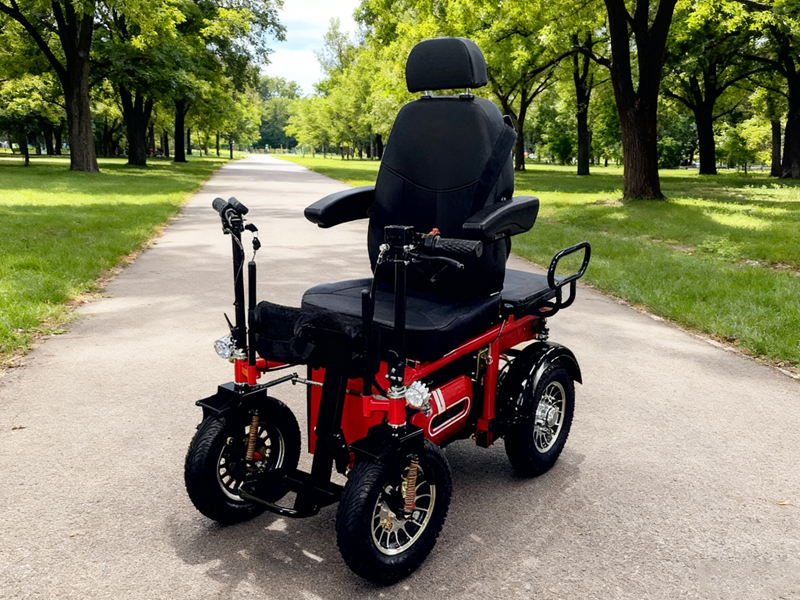
Three All-Terrain Electric Wheelchairs Worth Knowing
Among today’s mobility innovators, IYASOCARE has become a rising global name, particularly in electric all-terrain solutions. Their off-road wheelchair models are engineered with a balance of raw power, driving stability, multi-surface traction, and long-distance endurance. Below is a deep look into how each product fits into the evolving world of all-terrain mobility.
Each product mentioned is referenced with its official link for convenience:
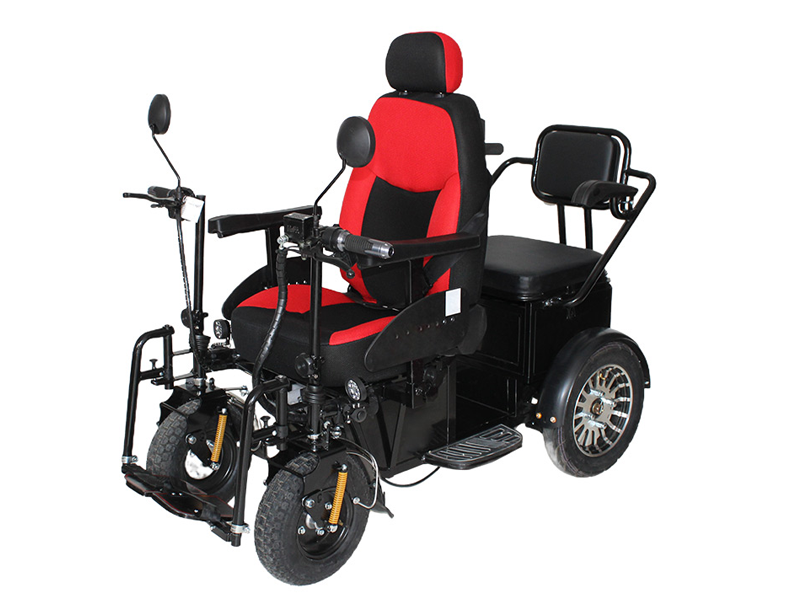
Two-Seater Off-Road Wheelchair
High-Speed Off-Road Wheelchair YSE102A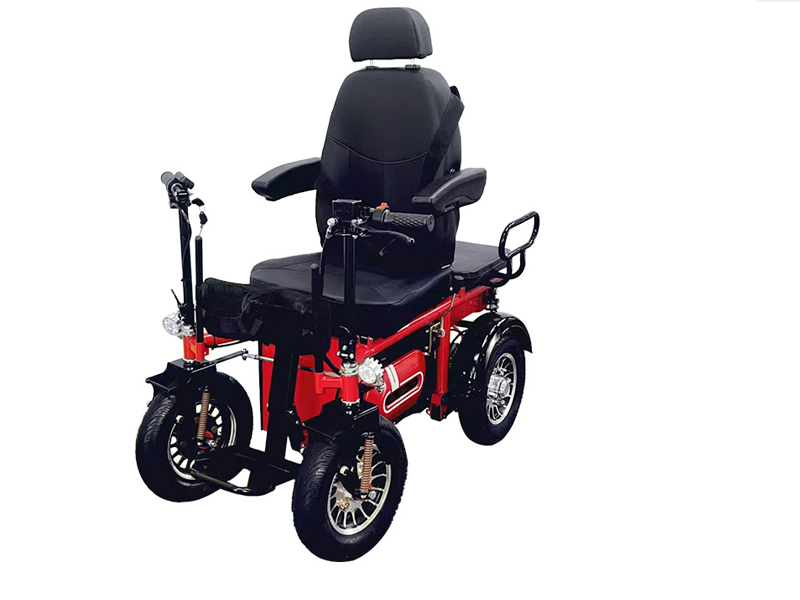
Electric Off-Road Wheelchair YSE107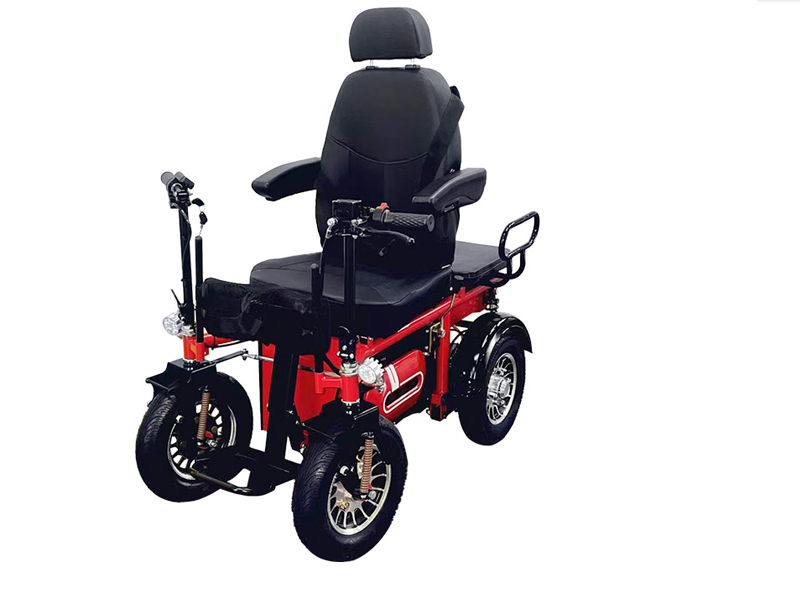
One of the most imaginative evolutions in the all-terrain category is the introduction of multi-seat designs. IYASOCARE Two-Seater Off-Road Wheelchair stands out because it reflects a simple truth: outdoor experiences are better when shared.
The dual-seat arrangement creates space for a friend, a caregiver, a partner, or a child, turning mobility from a solitary activity into something deeply social. Instead of relying on separate equipment or limiting the outing to the pace of the slowest walker, the two-seater design ensures everyone moves together.
But the appeal goes far beyond seating. The chair is engineered with the power required to handle the additional weight, the suspension to keep both riders comfortable, and the tire design needed for dirt paths, grass fields, light forest trails, and uneven recreational areas. Families visiting parks, couples exploring safe off-road courses, or caregivers supporting a patient outdoors all benefit from a machine that prioritizes connection as much as capability.
In the growing field of all-terrain mobility, this model represents something rare: an emotional design element seamlessly integrated with mechanical performance.
The pursuit of speed in off-road mobility requires precision engineering. Too fast, and the chair becomes unstable; too cautious, and the experience becomes dull. IYASOCARE High-Speed Off-Road Wheelchair YSE102A strikes a mature balance between velocity and safety, making it ideal for individuals who want a more dynamic ride without compromising control.
High-torque motors deliver fast acceleration even on rough surfaces. Wide-track tires and a balanced frame maintain stability through turns, while the suspension minimizes body strain during extended use. This model is appealing not only for sport-oriented users but for people who simply want to travel longer distances without delay.
On flat ground, the YSE102A moves with unexpected smoothness. On uneven terrain, it maintains grip and confidence. The sense of empowerment it delivers is not rooted in reckless speed but in the satisfaction of knowing you can move freely, efficiently, and securely—whether on a gravel path, a wide nature trail, or a long rural driveway.
For people transitioning from traditional electric wheelchairs, this model often feels transformative: a move from transportation to genuine mobility performance.
For many users seeking the best all terrain wheelchair, the most important features include independent power, strong durability, and steady control. The Electric Off-Road Wheelchair YSE107 reflects this traditional expectation while elevating it with modern engineering and comfort.
This model emphasizes balance—between torque and efficiency, between rugged outdoor capability and everyday usability. It transitions naturally from indoor settings to unpredictable outdoor environments without the bulky feel of some specialty off-road chairs.
The YSE107 is especially appealing for users who value:
smooth, reliable navigation across grass, gravel, and mixed terrain
a comfortable and supportive seating system
strong battery endurance for long outings
consistent control even on changing surfaces
It’s a model designed to restore independence across all parts of life, not just the adventurous ones.
Choosing the best all terrain wheelchair is not only about specifications. It is about matching the personality, lifestyle, ambitions, and physical needs of the user. That’s why the category has expanded from a single “ideal” design to multiple valid interpretations of what freedom looks like.
A person who travels with family might value the two-seater design.
Someone who loves covering long distances might gravitate toward the high-speed model.
A user who wants a reliable everyday companion that conquers rough ground may think the YSE107 is perfect.
These distinctions are healthy. They show that all-terrain mobility is no longer niche—it is a versatile field that empowers individuals to define their own mobility goals.
Modern all-terrain wheelchairs also support mental well-being. Outdoor access reduces stress, encourages social interaction, improves physical conditioning, and reconnects users with parts of life they once avoided because of accessibility barriers. This is not just equipment—it is lifestyle technology.
Around the world, communities are rethinking accessibility in outdoor spaces. National parks are adding adaptive trail programs. Tourism boards are promoting barrier-free attractions. Beaches are adopting accessible entry points and mobility platforms. As these changes spread, the demand for reliable off-road mobility equipment rises.
The best all terrain wheelchair enables participation in these expanding opportunities. This has a ripple effect:
Families take inclusive vacations without leaving anyone behind.
Tourism expands to welcome travelers with disabilities.
Outdoor recreation evolves to involve rather than exclude.
Seniors maintain independence longer with safe, capable mobility units.
Youth with disabilities are included in school trips, outdoor classes, and community programs.
The chairs themselves become extensions of an inclusive society.
And as technology improves, the next generation of off-road wheelchairs will likely include smarter sensors, modular attachments, lighter frames, enhanced travel ranges, and new safety systems—all building on the foundation that current models, including those from IYASOCARE, have established.
While each user’s needs are different, a few universal considerations can guide the decision-making process. It’s helpful to think not only about where you’ll go, but also how you want to feel while traveling there.
Power and torque determine whether hills feel like challenges or obstacles.
Suspension determines whether a long ride leaves you energized or fatigued.
Frame design determines stability and safety on uneven surfaces.
Seat ergonomics determine long-term comfort and back support.
Battery life determines whether your exploration ends by choice or by limitation.
Control responsiveness determines how natural and intuitive the ride becomes.
The three highlighted models each solve these needs in different ways. Someone who prioritizes companionship may find the two-seater option life-changing. Someone who values responsiveness may gravitate toward the YSE102A. Someone who prefers a balanced everyday-plus-outdoor design may choose the YSE107.
Rather than searching for “the one perfect wheelchair,” it is more useful to look for the model that aligns with your daily routine, environment, and personal goals.
We are witnessing an important moment in mobility innovation. Wheelchairs are no longer confined to predictable spaces—they are evolving into true all-terrain vehicles that offer independence beyond the pavement. Whether you are an adventurer, a nature lover, a parent, a traveler, or simply someone who wants to move freely without restriction, the modern best all terrain wheelchair is designed for you.
The technology is powerful, but what it enables is even more meaningful:
freedom, connection, spontaneity, and dignity.
As the category continues to expand, manufacturers like IYASOCARE are helping shape a world where mobility does not end where the sidewalk ends. Their off-road models—whether built for companionship, speed, or balanced versatility—represent a future that finally acknowledges the diverse needs and ambitions of wheelchair users worldwide.
And perhaps that is the most encouraging part of this entire evolution:
the realization that mobility can be bold, capable, adventurous, and beautifully human.