Our Location
Free Trade Tower, Xiyong street.
Chongqing, China

Free Trade Tower, Xiyong street.
Chongqing, China
When we talk about mobility and accessibility today, especially in multi-story residential environments or places without reliable elevator access, the conversation inevitably expands beyond traditional wheelchair design. Modern innovation has introduced solutions that blur the line between mobility aid and mobility empowerment. Among these, folding wheelchair lifts and stair-climbing wheelchair systems are transforming not only how users navigate vertical barriers, but also how caregivers, architects, and healthcare practitioners think about accessibility.
The heart of this evolution lies in lightweight yet powerful stair-climbing wheelchair technology—portable units that can fold, store, and travel with you, while giving users a practical tool for daily independent mobility. This article dives into what these solutions bring to the table, why they matter in 2025, and how they compare and contrast in real-world use.
Most people instantly associate accessibility with ramps and elevators—but those are static solutions requiring infrastructure changes. Portable folding wheelchair lifts, on the other hand, are dynamic solutions designed to come to you rather than forcing you to alter a building.
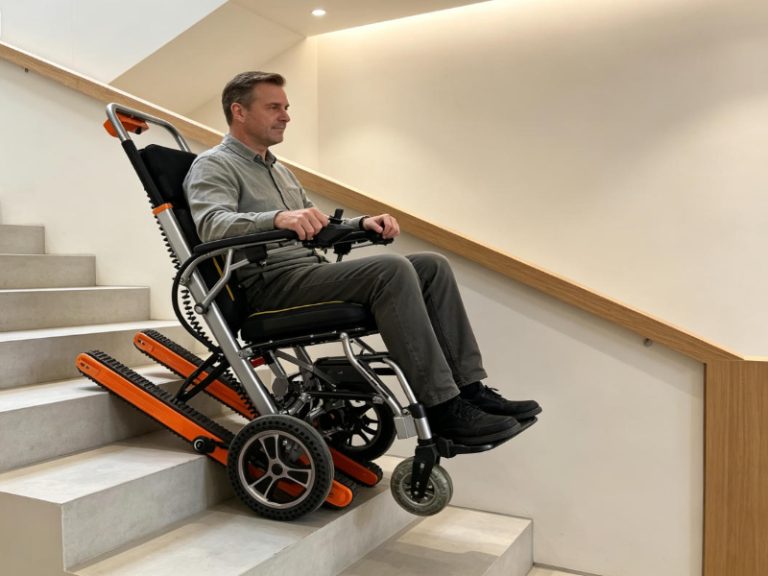
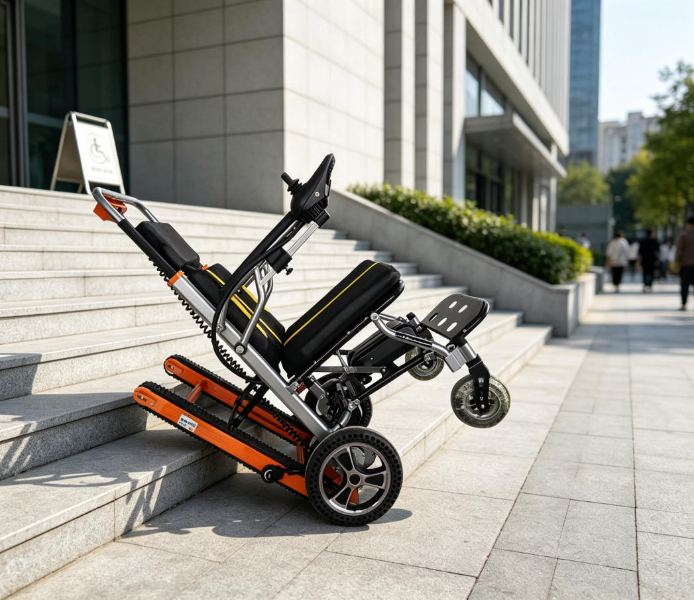
At their core, stair-climbing wheelchair systems integrate electric drive systems, battery-powered motors, and advanced chassis designs to safely ascend and descend stairs—without lifting the wheelchair manually. These systems literally bring vertical mobility into the hands of the user or caregiver, enabling access in environments that were previously restricted.
Unlike platform lifts or installed chair lifts constrained to one staircase, these units are portable, foldable, and travel-friendly—a crucial attribute for modern living. Especially in international contexts where building accessibility standards vary widely, such flexibility is invaluable.Inside the Technology: How Stair-Climbing Wheelchairs Work
At the heart of any stair-climbing unit are several key engineering innovations:
Electric Power and Intelligent Control: Modern stair-climbing wheelchairs use rechargeable lithium-ion batteries to deliver consistent power output, whether navigating flat surfaces or stair tread angles. Controllers automate climb and descent functions, allowing users or caregivers to operate with minimal physical effort.
Advanced Stability Systems: To ensure safety while moving vertically, many models use balance-control systems that monitor tilt and adjust wheel or track traction in real time. These act as an invisible safety net, preventing tipping and loss of control.
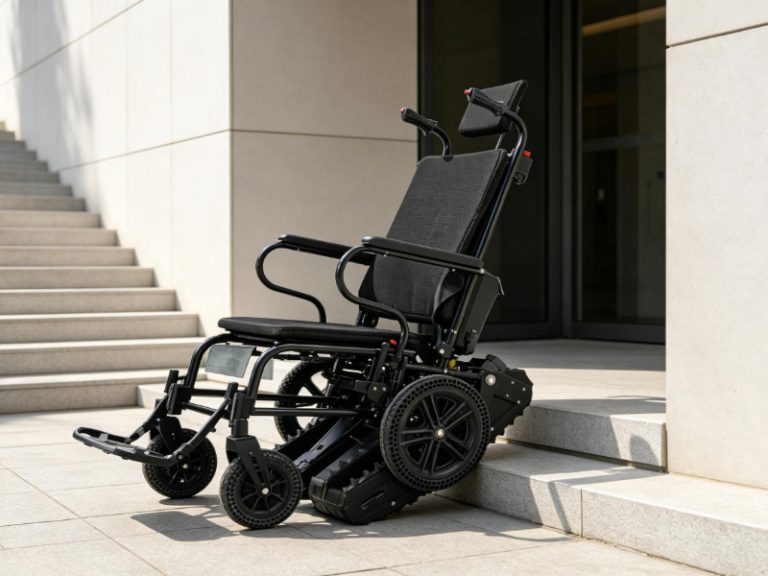
Foldable Chassis Designs: The ability to fold the entire wheelchair into a compact form is one of the biggest differentiators between stair-climbing models and base motorized chairs. This not only helps with transport (e.g., fitting into a car trunk) but also appeals to users and caregivers who travel frequently or need storage flexibility.
These elements converge to make modern stair-climbing wheelchairs as easy to use as flat wheelchair travel, a dramatic leap from early prototypes that required manual tracking, rigid systems, or professional operators.
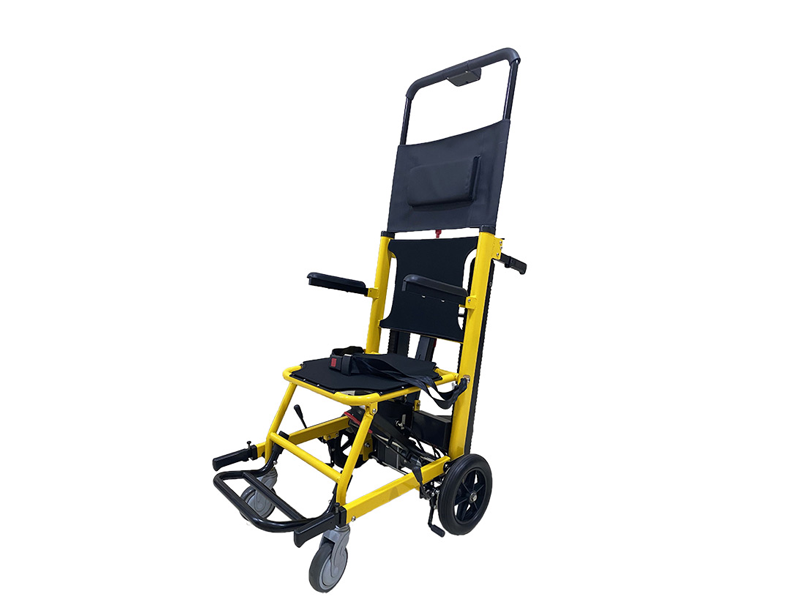
1. Lightweight Foldable Stair Climbing Wheelchair YSE202
Built with a strong aluminum alloy frame and weighing in at roughly 33kg, the YSE202 model represents a balance of durability and portability. It’s designed to handle up to 500 stair steps per full battery cycle, climbing at around 30 steps per minute—fast enough for practical daily use yet gentle enough for stable, safe transport.
One of the most practical features of this design is its compatibility with most manual wheelchairs on the market, supporting loading widths starting from about 40cm and heights from 80cm. This solves a frequent concern for families who already own a manual chair—there’s no need to replace equipment to gain stair-climbing aid functionality.
Because of its compact fold-down size, the YSE202 fits easily in car trunks, closets, or compact storage areas—an essential feature for daily home routines or travel. It’s ideal for residential staircases with minimal turning space, making it a favorite among users living in narrow houses or older buildings lacking elevators.
2. Lightweight Folding Stair Climbing Wheelchair with Adjustable Height
Another variation in the Iyasocare series emphasizes user comfort and ergonomic adaptability. With an adjustable seat height and backrest, this model caters to a wider range of user sizes and body types. Features such as multiple climbing speed modes and larger rear wheels further improve comfort and performance on uneven surfaces or sloped terrain.
This unit climbs up to 500 stairs per charge thanks to its reliable 13Ah lithium battery and supports everyday use in professional environments such as hotels, medical facilities, and universities where stairs are common obstacles.
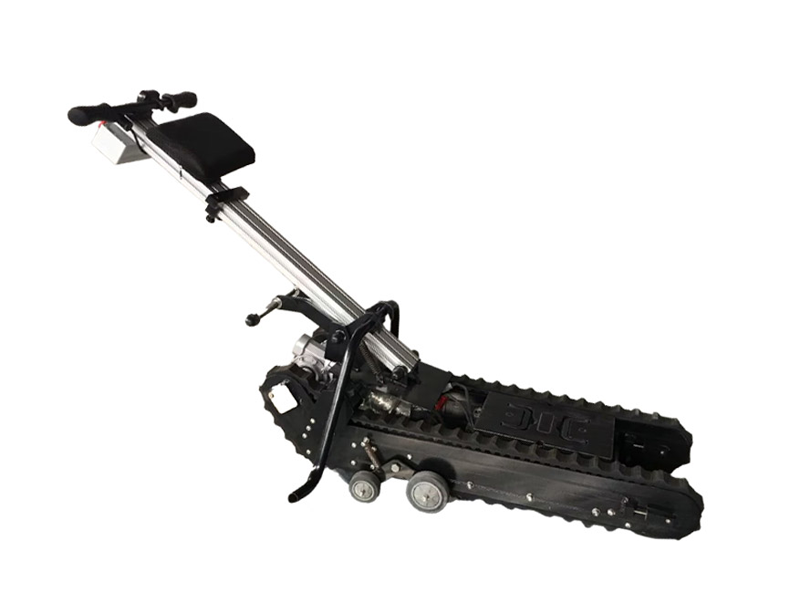
3. Stair Climbing Wheelchair YSE-F1 and Variants
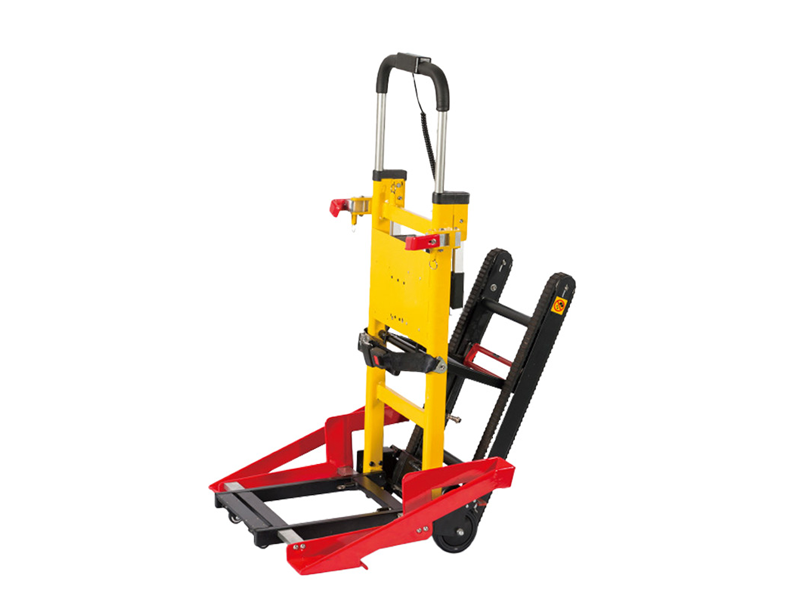
While specific details on the YSE-F1 model vary, it is positioned as a universal docking solution that works with different manual wheelchair types. This means users aren’t limited to a single fitted chair—accessory designs like this are increasingly popular in contexts where flexibility and modularity are priorities.
Considering the rapid evolution in mobility accessories globally, docking-friendly solutions are particularly valuable in care institutions, travel contexts, and emergency response use cases.
From an end-user perspective, these stair-climbing units offer transformative advantages:
Freedom to Access Multi-Level Spaces: Instead of relying on lifts, ramps, or caregivers, users can navigate staircases independently or with minimal assistance. This independence is more than functional—it’s psychological, affirming dignity and confidence.
Reduced Physical Strain for Caregivers: Traditional stair descents with manual chairs require significant strength and coordination. Stair-climbing wheelchairs eliminate this burden by automating vertical travel, significantly reducing risk of injury.
Travel and Storage Convenience: The foldable design lets users transport these systems in cars or carry them in compact spaces—making them much more versatile than fixed mobility infrastructure.
Safety Features That Instill Confidence: Intelligent control systems, anti-tip mechanisms, and battery monitoring reduce risk during use, enabling both ascent and descent with greater stability.
These tangible benefits have made stair-climbing wheelchairs a critical tool in the mobility industry, especially where building modifications are impractical or cost-prohibitive.
Not every wheelchair user needs a stair-climbing model—but certain profiles benefit immensely:
Individuals living in multi-story homes without elevators.
Elderly users who face gradual mobility decline but remain cognitively active.
Post-surgical patients needing safe stair access during recovery.
Care institutions with diverse accessibility challenges across floors.
Travelers who visit older cities with limited ramped access.
Each of these scenarios highlights how portable stair-climbing technology fills a niche overlooked by static accessibility installations.
Folding wheelchair lifts and stair-climbing wheelchair solutions like the YSE202, the Adjustable Height folding model, and variants such as YSE-F1 represent more than just product innovation—they reflect a shift in how we think about mobility and accessibility. These technologies help dismantle physical barriers that once required costly construction changes or complex assistance. They enable users to define their own mobility paths, whether at home, in public spaces, or on the move.
As demand for accessibility continues to rise globally, designers and engineers will no doubt push these solutions even further—toward lighter, smarter, and more universally compatible systems. But even today’s models are already making life easier, safer, and more independent for thousands of users around the world. For anyone facing stairs without ramps or lifts, a folding stair-climbing wheelchair can be the difference between restriction and freedom.