Our Location
Free Trade Tower, Xiyong street.
Chongqing, China

Free Trade Tower, Xiyong street.
Chongqing, China
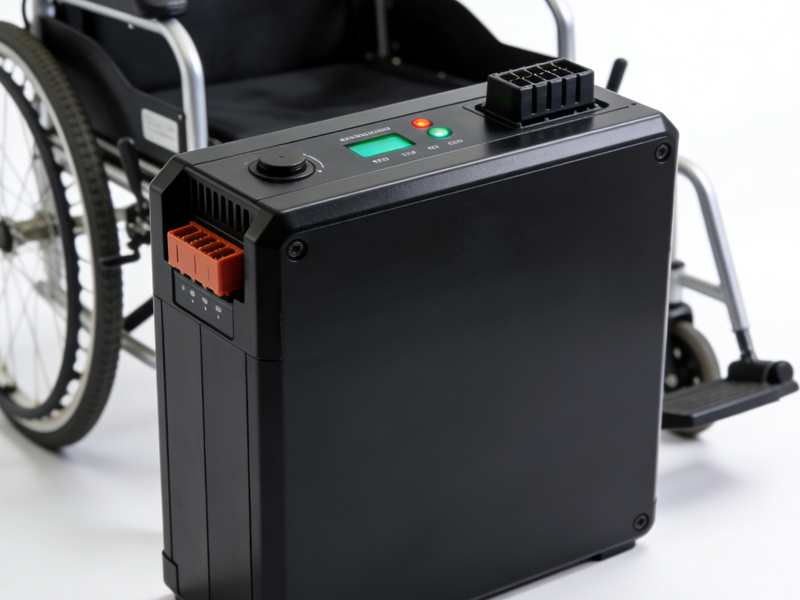
Battery life is one of those topics that every powered wheelchair user cares about, yet few people truly understand beyond a few basic numbers on a spec sheet. Manufacturers advertise range figures confidently, sellers repeat them enthusiastically, and new users often expect their wheelchair to perform exactly as promised. Reality, however, tends to be more nuanced.
Wheelchair battery life is not just a technical specification—it is freedom, independence, safety, and peace of mind. Whether you rely on your wheelchair full-time or use it for longer outdoor trips, understanding what affects battery performance can help you avoid breakdowns, extend battery lifespan, and make smarter purchasing and maintenance decisions.
This article takes a deep, practical look at wheelchair battery life from a real-world perspective. It goes beyond marketing claims and digs into how batteries behave over time, what actually drains power, and how users across different countries and climates experience battery performance differently. If you are a wheelchair user, caregiver, clinician, or distributor, this guide is designed to give you clarity—not hype.
One of the biggest misconceptions about wheelchair battery life is the idea that it can be summarized by a single number: “20 miles per charge” or “8 hours of continuous use.” In reality, battery life exists on a spectrum influenced by dozens of interacting variables.
Think of wheelchair battery life the way you would think about fuel efficiency in a car. A vehicle advertised at 30 miles per gallon may achieve that figure on a flat highway at a steady speed, but not in stop-and-go city traffic, uphill driving, or extreme temperatures. Electric wheelchairs behave the same way.
The rated battery life is typically measured under controlled conditions:
Flat terrain
Moderate speed
New batteries
Average user weight
Minimal accessories
The moment real life enters the picture—uneven sidewalks, ramps, curb cuts, heavier users, backpacks, cold weather, frequent starts and stops—battery performance begins to shift.
Understanding this gap between laboratory testing and daily use is the first step toward managing expectations and planning usage realistically.
At the heart of wheelchair battery life lies chemistry. While most users focus on capacity numbers, the type of battery used plays a critical role in how that capacity is delivered.
Traditionally, sealed lead-acid (SLA) batteries dominated the wheelchair market. They remain common due to lower upfront costs and widespread availability. However, lithium-ion batteries have become increasingly popular, especially in lightweight and travel-friendly wheelchairs.
Lead-acid batteries tend to:
Be heavier
Deliver power more gradually
Lose capacity faster as they age
Perform poorly in cold environments
Lithium-ion batteries, by contrast:
Are significantly lighter
Maintain consistent voltage output
Offer more usable capacity per charge
Tolerate partial charging better
That said, lithium batteries are not magic. They require high-quality battery management systems, proper charging equipment, and responsible usage. Poorly designed lithium packs can degrade quickly or even pose safety risks.
From a battery life perspective, lithium often provides better real-world performance, but lead-acid remains viable for users with predictable routines and indoor usage.
User weight, combined with wheelchair weight and carried items, is one of the most influential factors in battery consumption. Every additional pound requires more energy to move, especially during acceleration and incline climbing.
Many wheelchair users unknowingly overload their chairs. Accessories such as:
Oxygen tanks
Rear storage bags
Laptop backpacks
Medical equipment
all contribute to increased power demand.
Even small weight increases can have a compounding effect over time. The motors must work harder, the controller draws more current, and the batteries discharge faster. Over months and years, this also accelerates battery wear.
For users concerned about battery life, weight management—both personal and equipment-related—is often more impactful than upgrading battery capacity alone.
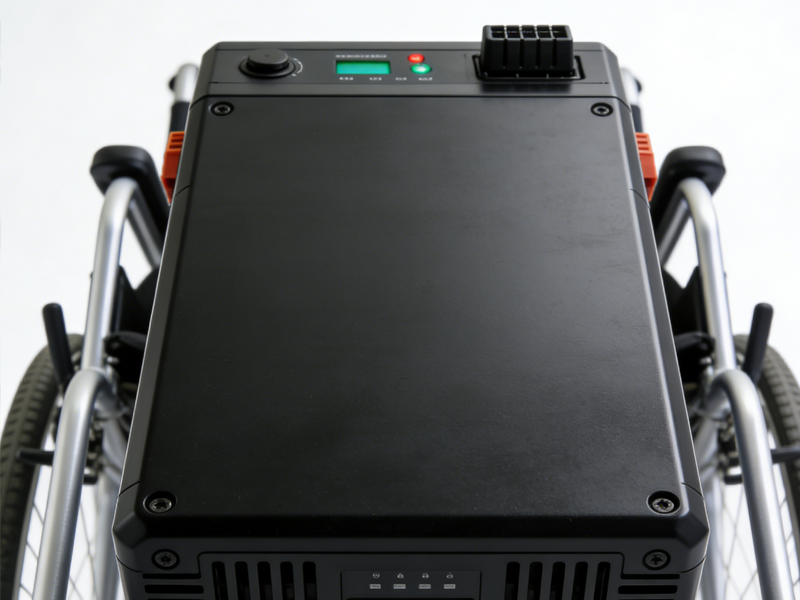
A mile is not always a mile when it comes to wheelchair battery life.
Smooth indoor flooring, polished concrete, and well-maintained sidewalks consume minimal energy. In contrast:
Gravel paths
Thick carpet
Grass
Sand
Uneven pavement
can dramatically increase rolling resistance.
Inclines are especially demanding. A short ramp may use as much energy as several hundred meters of flat travel. Repeated small slopes, common in urban environments, can silently drain batteries faster than expected.
Users living in hilly cities or rural areas often report significantly shorter ranges compared to manufacturer estimates—even when using the same wheelchair model.
Understanding your daily terrain allows you to interpret battery indicators more accurately and avoid unpleasant surprises.
How you drive your wheelchair affects battery life just as much as how far you drive it.
Rapid acceleration draws high current from the batteries, creating momentary power spikes. Frequent stop-and-go movement, common in crowded areas or indoor settings, is more energy-intensive than steady cruising.
Many modern power chairs allow users to adjust speed profiles. Lower top speeds and smoother acceleration curves can noticeably extend battery life without reducing usability.
Experienced wheelchair users often develop intuitive energy-saving habits:
Avoiding unnecessary full-throttle starts
Maintaining consistent speeds
Planning routes with fewer stops
These habits not only preserve battery life but also reduce wear on motors and controllers.
Battery performance is highly sensitive to temperature. This is particularly important for users in regions with cold winters or extreme heat.
Cold temperatures slow chemical reactions inside batteries, reducing available capacity. A battery that performs well indoors may feel weak outdoors during winter months. Lead-acid batteries are especially vulnerable to cold-related capacity loss.
High temperatures, on the other hand, accelerate chemical aging. While heat may temporarily improve performance, it shortens overall battery lifespan if exposure is prolonged.
For users who store wheelchairs in garages, vehicles, or unheated spaces, temperature management can significantly affect both daily range and long-term reliability.
How you charge your wheelchair batteries matters just as much as how you use them.
One of the most persistent myths is that batteries must be fully discharged before charging. This belief, inherited from older battery technologies, is outdated and often harmful—especially for lithium-ion batteries.
Modern best practices include:
Charging regularly rather than waiting for deep discharge
Avoiding prolonged storage at 0% or 100%
Using manufacturer-approved chargers
Ensuring proper ventilation during charging
Overcharging, undercharging, and using incompatible chargers can all reduce battery life or cause irreversible damage.
Users who treat charging as a routine habit rather than an afterthought tend to enjoy more consistent performance and longer battery lifespan.
All batteries degrade over time. This is unavoidable.
What surprises many users is how gradual and subtle this degradation can be at first. Range decreases slowly, often unnoticed, until one day the wheelchair no longer completes a familiar trip.
Battery life is not just about how long a charge lasts today—it’s about how that performance changes over months and years.
Factors accelerating degradation include:
Deep discharges
High current draw
Poor temperature control
Infrequent use followed by long storage
Understanding that battery life is a declining curve—not a fixed number—helps users plan replacements proactively rather than reactively.
Modern wheelchairs are increasingly sophisticated. USB charging ports, powered seating functions, lighting systems, and Bluetooth connectivity all draw energy from the same battery pack.
While each accessory may consume relatively little power individually, their combined effect can be significant—especially over long days.
Power seating functions such as tilt, recline, and leg elevation are among the largest additional power draws. Frequent adjustments can noticeably reduce range.
For users who rely heavily on powered features, factoring accessory usage into battery life expectations is essential.
Good maintenance does not just extend the life of batteries—it improves efficiency.
Loose connections, corroded terminals, under-inflated tires (for hybrid models), and misaligned wheels all increase resistance and energy consumption.
Routine checks often reveal simple issues that, once corrected, restore lost range. Many users replace batteries prematurely without realizing that a mechanical issue is the true culprit.
Professional servicing combined with user awareness can preserve battery life far beyond average expectations.
Two people using the same wheelchair model may report dramatically different battery experiences. This is not because one is “wrong,” but because battery life is highly individualized.
Lifestyle, environment, body weight, terrain, climate, driving style, and maintenance habits all interact in complex ways.
This is why online reviews about wheelchair battery life often conflict. Each user is describing a valid experience—but not a universal one.
Understanding this variability allows users to interpret reviews intelligently and set realistic expectations for their own usage.
Rather than focusing solely on maximizing range, many experienced users focus on predictability.
Knowing how far your wheelchair reliably travels under typical conditions is more valuable than chasing maximum theoretical range.
Practical planning strategies include:
Tracking daily usage distances
Identifying high-drain routes
Charging opportunistically when possible
Carrying backup charging options when traveling
Battery life becomes less stressful when it is understood, measured, and anticipated rather than guessed.
Battery life is not just a technical issue—it is an emotional one.
Fear of being stranded can limit independence, discourage exploration, and increase stress. This “range anxiety” is common, especially among new users.
Education plays a key role in reducing this anxiety. When users understand what affects battery life and how to manage it, confidence grows.
Reliable battery performance is not just about hardware—it’s about trust built through experience.
1. How long should a wheelchair battery realistically last before replacement?
Most wheelchair batteries last between 12 and 36 months, depending on battery type, usage patterns, and maintenance. Lithium-ion batteries often last longer in terms of charge cycles, while lead-acid batteries may require earlier replacement if frequently deeply discharged.
2. Is it bad to charge a wheelchair battery every day?
No. Regular charging is generally beneficial, especially for lithium-ion batteries. Waiting until the battery is nearly empty can actually shorten its lifespan. Consistent, moderate charging habits help maintain stable performance.
3. Why does my wheelchair battery drain faster than when it was new?
Battery capacity naturally decreases over time due to chemical aging. Environmental factors, usage intensity, and charging habits all contribute. Gradual loss of range is normal, but sudden drops may indicate a mechanical or electrical issue worth checking.