Our Location
Free Trade Tower, Xiyong street.
Chongqing, China

Free Trade Tower, Xiyong street.
Chongqing, China
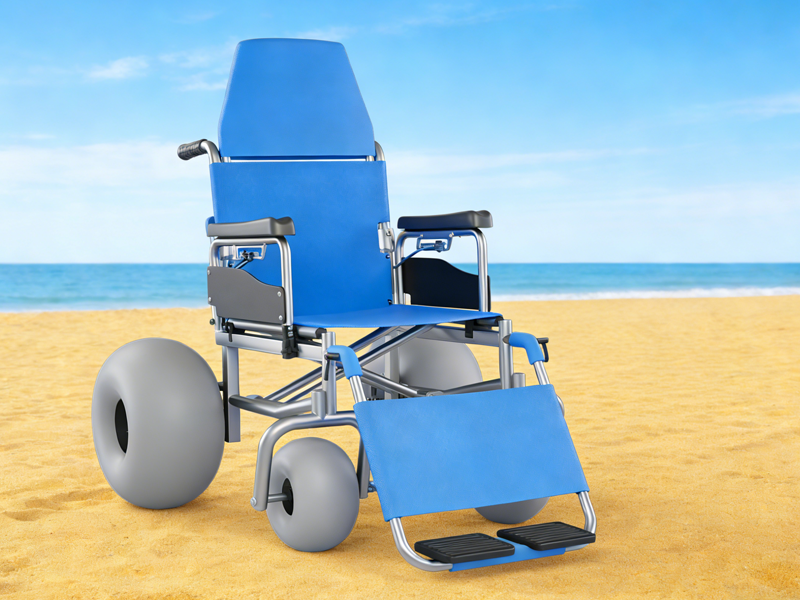
The rise of the manual beach wheelchair is quietly changing that reality.Designed specifically for sand, coastal terrain, and outdoor environments, these wheelchairs are not about luxury or novelty. They are about access, dignity, and participation. This article explores how manual beach wheelchairs work, what makes a well-designed model stand out, and why thoughtfully engineered options like the YSB01 and YSB02 represent a meaningful step forward in inclusive mobility.
The beach is one of the most demanding terrains for mobility equipment. Loose sand shifts under pressure, narrow wheels sink easily, and saltwater accelerates corrosion. Even well-maintained standard wheelchairs quickly become difficult — if not impossible — to maneuver.
Manual beach wheelchairs solve this problem by rethinking mobility from the ground up:
Wide, low-pressure wheels distribute weight evenly instead of cutting into sand
Simplified manual propulsion reduces mechanical complexity and maintenance
Outdoor-ready materials resist moisture, sand, and sun exposure
Stability-focused geometry improves safety on uneven terrain
Instead of adapting an indoor device for outdoor use, beach wheelchairs are purpose-built for nature.
Manual beach wheelchairs are often misunderstood as basic or secondary options compared to powered mobility devices. In reality, their simplicity is their strength.
They require no charging, no motors, and no complex electronics. This makes them lighter, more affordable, easier to transport, and more reliable in environments where water and sand are unavoidable. For families, caregivers, resorts, and individuals who prioritize shared outdoor experiences, manual operation often makes more sense.
More importantly, manual beach wheelchairs emphasize assisted mobility without dependence. Users remain fully involved in their surroundings, and caregivers can guide movement smoothly without fighting the terrain.
The YSB01 manual beach wheelchair is designed for users who want both mobility and relaxation.
Its folding frame makes transportation straightforward, whether it’s loaded into a car trunk or stored between outings. Once unfolded, the structure feels stable and balanced, with a reclining backrest that allows users to shift from upright seating to a more relaxed position. This adjustability matters during long beach visits, where posture changes reduce fatigue and improve comfort.
The wide inflatable wheels are the defining feature. They roll smoothly over soft sand, coastal grass, and packed dirt paths without digging in. Paired with breathable, waterproof seating, the YSB01 supports long exposure to sun and sea air while remaining easy to clean.
This model is particularly well suited for:
Family beach outings
Coastal resorts and rental programs
Users who value comfort alongside mobility
It strikes a balance between everyday usability and beach-specific performance.
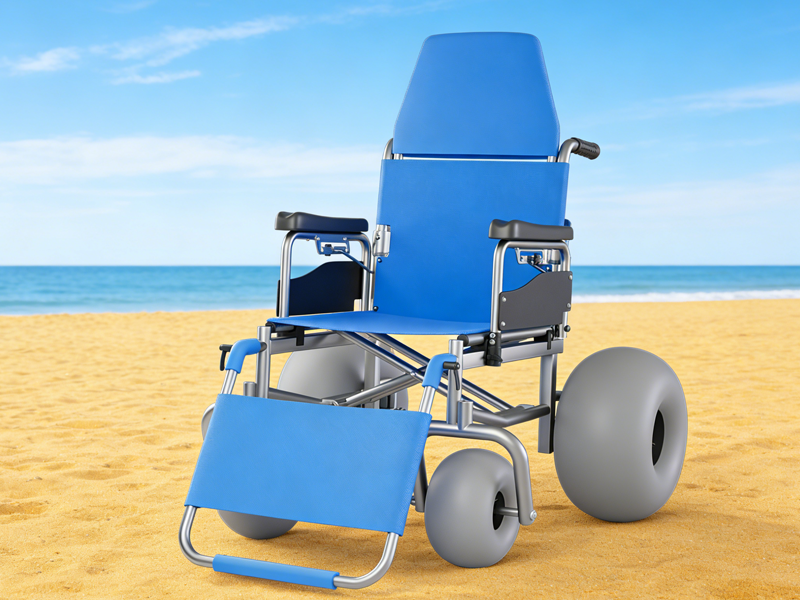
The YSB02 takes the concept of beach mobility one step further.
Built with a stainless steel frame, this model emphasizes durability and long-term outdoor use. Its adjustable seat and leg rest system allows for deeper recline angles, supporting users who need additional postural support or prefer a more relaxed seating position.
What truly distinguishes the YSB02 is its optional flotation capability. With the appropriate accessories, the chair can safely transition from sand to shallow water, allowing users to experience the water itself rather than stopping at the shoreline. For many, this transforms the beach from a place to observe into a place to participate.
The YSB02 is especially suitable for:
Public beaches focused on accessibility
Rehabilitation environments
Users seeking water-adjacent experiences
It reflects a broader vision of inclusion — one that doesn’t stop where the sand meets the sea.
Beach environments are physically demanding. Heat, sun exposure, and uneven terrain place additional strain on the body. A well-designed manual beach wheelchair must address these realities.
Key comfort elements include:
Adjustable seating angles to reduce pressure buildup
Breathable, quick-dry materials to manage heat and moisture
Stable footrests and arm supports to maintain posture
Smooth rolling performance to minimize vibration and jolts
Both the YSB01 and YSB02 demonstrate how thoughtful design choices translate into real-world comfort — not just for minutes, but for hours.
The answer is broader than many expect.
Manual beach wheelchairs are used by individuals with permanent mobility impairments, temporary injuries, age-related limitations, and rehabilitation needs. They are also widely adopted by hotels, resorts, cruise ports, and public beaches committed to inclusive access.
In many cases, these chairs are shared resources — used by different people across different days — which makes durability and adaptability essential.
Surprisingly, no. While sand is challenging, wide beach-specific wheels significantly reduce resistance. On packed sand or along beach access mats, pushing effort is often smoother than expected. Proper wheel size and inflation make a noticeable difference.
Yes. Although optimized for sand, these chairs perform well on grass, dirt paths, parks, and other uneven outdoor surfaces. This versatility makes them useful beyond coastal environments, especially for outdoor events and nature areas.
For frequent beach visitors, ownership offers clear advantages: availability, familiarity, and long-term cost efficiency. Rentals work well for occasional trips, but personal equipment ensures consistent comfort and immediate access whenever conditions are right.
Selecting the right model depends on intended use rather than just specifications.
Ask yourself:
Will the chair be used primarily on dry sand or near water?
Is transport and storage space limited?
Does the user need adjustable seating or extended recline?
Will multiple people use the chair over time?
The YSB01 suits users who prioritize portability and comfort for longer beach stays, while the YSB02 is better for environments where durability and water access are central.
A manual beach wheelchair is not just equipment. It is an invitation — to feel sand under the sun, to approach the water without barriers, and to share moments that were once out of reach.
Products like the YSB01 and YSB02 show what happens when mobility design respects both the user and the environment. They don’t promise perfection, but they deliver something far more valuable: access with dignity.