Our Location
Free Trade Tower, Xiyong street.
Chongqing, China

Free Trade Tower, Xiyong street.
Chongqing, China
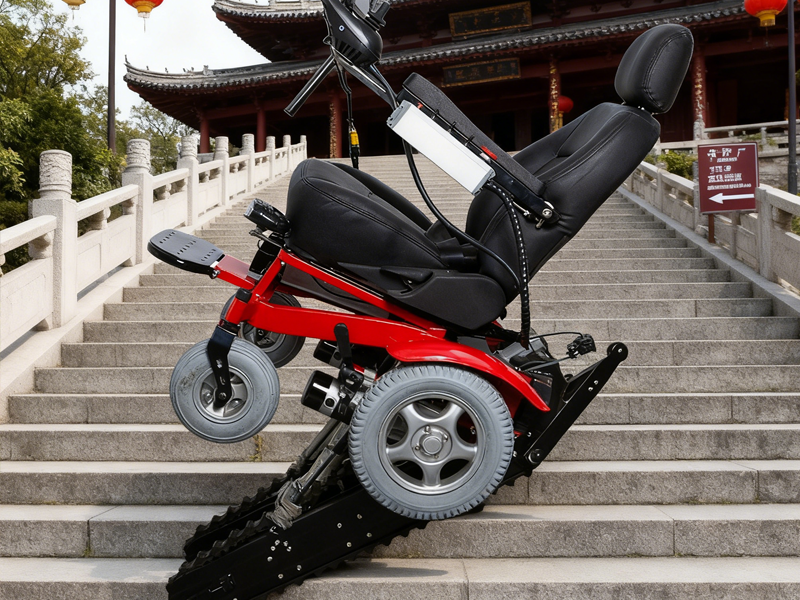
stairs have been one of the most stubborn barriers in the world of accessibility. Ramps, elevators, and stair lifts have helped, but they often require permanent installation, high costs, or external assistance. For people who rely on wheelchairs, these limitations don’t just restrict movement — they quietly limit freedom.
The emergence of the wheelchair that can go down stairs represents one of the most meaningful breakthroughs in personal mobility technology. Instead of avoiding stairs or depending on others, users can now approach staircases with confidence, dignity, and control. This is not just an upgrade to a traditional wheelchair — it’s a shift in how mobility is experienced.
Modern cities were not designed with universal accessibility in mind. Even today, many homes, offices, hotels, schools, and public facilities still include unavoidable staircases. For wheelchair users, these steps often mean detours, delays, or dependence on assistance.
A wheelchair that can go down stairs directly addresses this problem by allowing users to move vertically as easily as they move horizontally. This capability transforms everyday situations:
Visiting friends in multi-story homes
Navigating older buildings without elevators
Entering public spaces without special arrangements
Traveling with fewer accessibility concerns
Instead of planning life around architectural limitations, users regain control over where they go and how they get there.
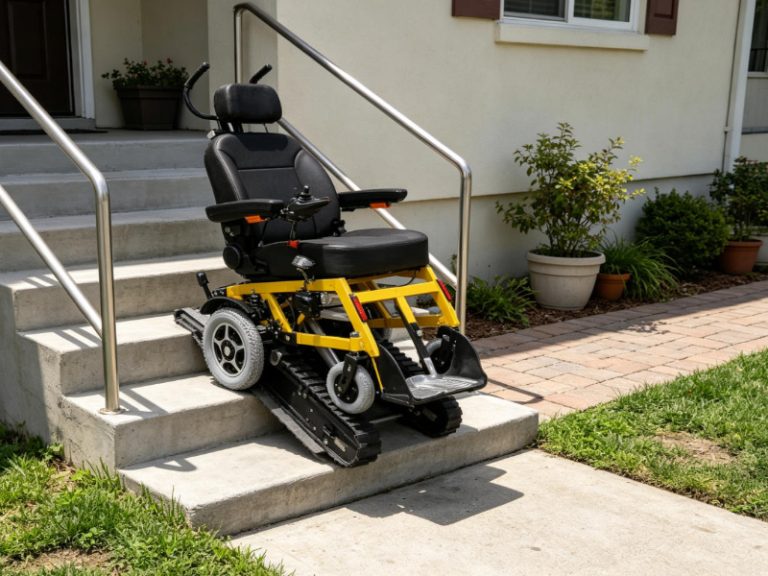
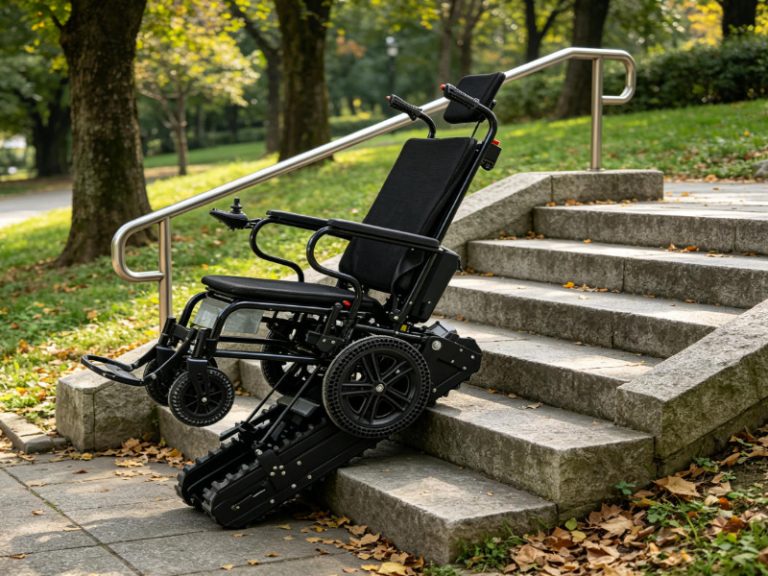
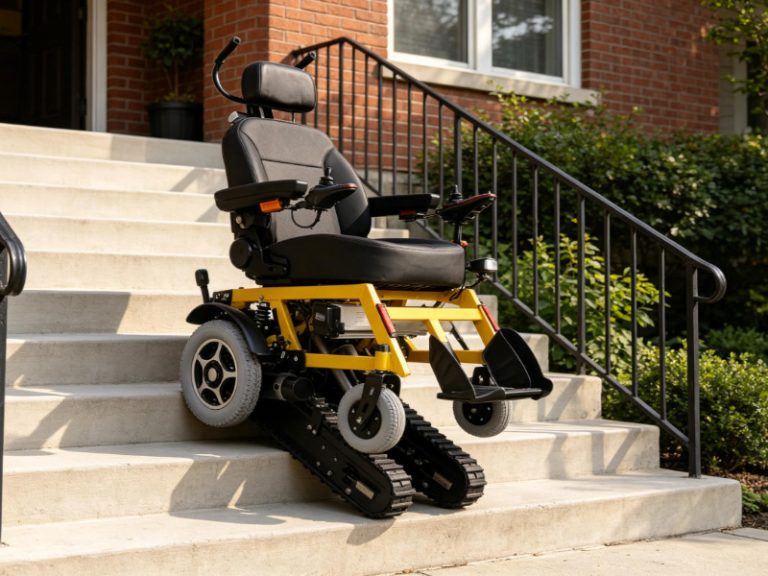
At first glance, a stair-climbing wheelchair may look similar to a conventional electric wheelchair. The difference lies beneath the surface — in its structure, drive system, and intelligent controls.
Most advanced models rely on a tracked or crawler-based system rather than simple wheels. These tracks maintain continuous contact with stair edges, distributing weight evenly and preventing sudden drops or slips. When descending stairs, the system controls speed automatically, ensuring smooth and stable movement.
Powerful electric motors provide the necessary torque for both ascent and descent, while built-in safety mechanisms keep the chair balanced at all times. The transition between flat ground mode and stair mode is seamless, allowing the wheelchair to function as a daily mobility device, not a niche solution.
This combination of engineering elements is what makes a true wheelchair that can go down stairs safe, reliable, and practical for everyday use.
One of the most important differences between modern stair-climbing wheelchairs and earlier experimental designs is usability. These are not devices meant only for occasional stair access — they are designed to replace or enhance traditional electric wheelchairs.
A well-designed wheelchair that can go down stairs typically includes:
Dual-mode operation for flat surfaces and staircases
Comfortable, ergonomic seating for extended use
Intuitive controls suitable for independent operation
Stable performance during both ascent and descent
Compact or foldable structures for transport and storage
The goal is simple: the user should feel just as comfortable driving across a room as they do navigating a staircase.
Descending stairs is often the greatest concern for users and caregivers alike. Gravity introduces risk, and even small instabilities can feel intimidating. This is where modern stair-climbing technology proves its value.
A properly engineered wheelchair that can go down stairs controls descent speed automatically. The user does not “roll” down the steps; instead, the wheelchair moves step by step, maintaining constant balance and alignment. Advanced locking systems prevent backward slipping, while reinforced frames keep the center of gravity stable.
For users, this means less fear and more confidence — not just physically, but emotionally.
Perhaps the most powerful benefit of a wheelchair that can go down stairs is independence.
In traditional scenarios, stair navigation often requires:
One or two caregivers
Manual lifting or transfer
Specialized stair chairs
Permanent building modifications
With a stair-climbing wheelchair, many of these requirements disappear. Users can approach stairs on their own terms, without asking for help or waiting for assistance. This independence has a profound impact on self-esteem and quality of life.
Caregivers benefit as well, as physical strain and risk of injury are significantly reduced.
A common misconception is that stair-climbing wheelchairs sacrifice comfort for functionality. In reality, modern designs prioritize both.
High-quality cushioning, ergonomic backrests, adjustable seating angles, and breathable materials ensure comfort during long periods of use. Since the wheelchair functions on flat ground as well as stairs, it must perform well throughout the entire day — not just during stair navigation.
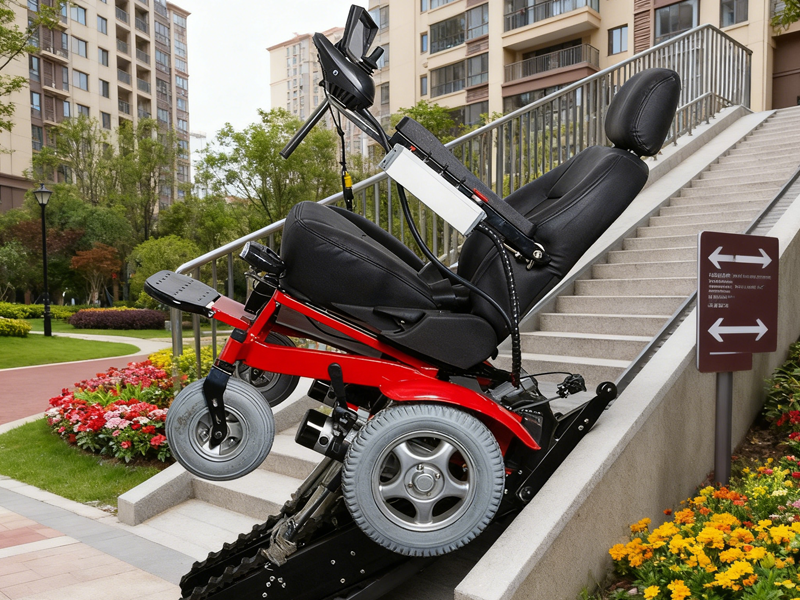
A true wheelchair that can go down stairs should feel like a premium mobility device, not a compromise.
Whether used at home, in public buildings, or during travel, stair-climbing wheelchairs are designed to adapt.
In residential settings, they allow users to move freely between floors without installing stair lifts. In public spaces, they provide access where elevators are unavailable or unreliable. For travel, foldable designs make transportation easier, expanding possibilities rather than limiting them.
This versatility is why demand for the wheelchair that can go down stairs continues to grow worldwide.
No discussion of stair-climbing mobility would be complete without addressing safety. Modern stair-capable wheelchairs are built around layered safety systems:
Automatic speed regulation during descent
Mechanical and electronic locking systems
Anti-tip structural design
High-traction contact surfaces
When used correctly and within design limits, these features work together to make stair navigation predictable and controlled.
Training and familiarity are still important, but the technology itself is designed to support safe operation, even in challenging environments.
1. Is a wheelchair that can go down stairs safe for everyday use?
Yes. Modern designs include multiple safety systems that control speed, balance, and traction during stair descent. When used according to guidelines, these wheelchairs are engineered for consistent, reliable daily use.
2. Can a wheelchair that can go down stairs also be used like a normal electric wheelchair?
Absolutely. Most models are dual-use, meaning they operate smoothly on flat surfaces and switch to stair-climbing mode only when needed. This makes them suitable as primary mobility devices.
3. Who benefits most from a wheelchair that can go down stairs?
Anyone who regularly encounters stairs — whether at home, work, or in public spaces — can benefit. This includes individuals seeking independence, families caring for loved ones, and facilities aiming to improve accessibility without major renovations.