Our Location
Free Trade Tower, Xiyong street.
Chongqing, China

Free Trade Tower, Xiyong street.
Chongqing, China
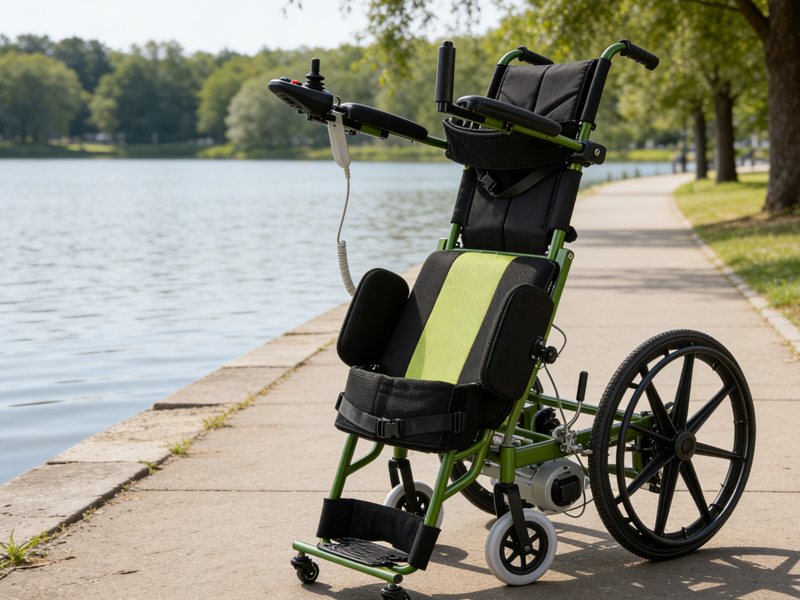
For many people living with limited mobility, a wheelchair is far more than a piece of equipment. It is independence, safety, confidence, and participation in the world. Over the past decade, mobility technology has evolved rapidly, and one of the most meaningful innovations is the standing power wheelchair.
Unlike traditional seated wheelchairs, standing power wheelchairs allow users to safely transition from a seated position to a fully or partially standing posture at the push of a button. This single capability unlocks a wide range of physical, psychological, and social benefits that are often underestimated or misunderstood.
Human bodies are designed to move, load weight through bones, stretch muscles, and change posture throughout the day. When someone is unable to stand for long periods — or at all — the effects go far beyond tired legs.
Long-term sitting can lead to:
Loss of bone density
Poor circulation
Muscle shortening and joint stiffness
Pressure sores
Digestive and respiratory challenges
A standing power wheelchair addresses these issues by reintroducing vertical positioning into daily life, without requiring the user to transfer, rely on assistance, or put themselves at risk.
Standing regularly, even for short periods, helps the body function closer to the way it was designed to.
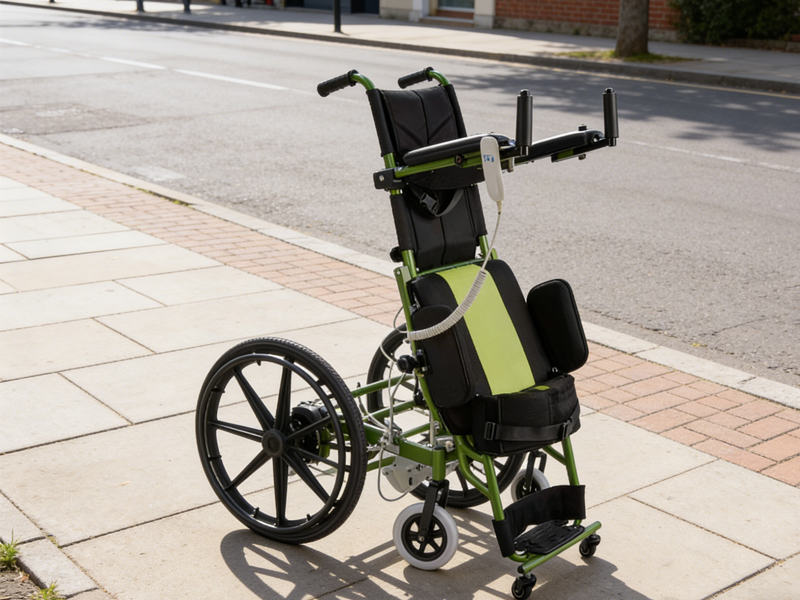
One of the strongest arguments for standing power wheelchairs is their impact on long-term physical health. These benefits are cumulative — they may not all be felt immediately, but they significantly influence quality of life over months and years.
Standing allows gravity to assist blood flow, particularly in the lower extremities. For wheelchair users who spend most of their day seated, poor circulation can lead to swelling, cold extremities, and increased risk of blood clots.
Regular standing sessions help:
Improve venous return
Reduce leg edema
Support heart and vascular function
Many users report feeling more energized after standing, even for just 10–20 minutes.
Weight-bearing is essential for maintaining bone strength. Without it, bones gradually weaken, increasing fracture risk. Standing power wheelchairs allow safe, controlled weight-bearing, which helps slow bone density loss — particularly important for people with spinal cord injuries, multiple sclerosis, or neuromuscular conditions.
While standing does not reverse osteoporosis, it plays a meaningful role in preserving remaining bone mass.
Sitting for long periods causes hip flexors, hamstrings, and calf muscles to tighten. Over time, this can lead to contractures and reduced range of motion.
Standing naturally stretches these muscle groups and places joints in a neutral, functional alignment. This can:
Reduce stiffness
Improve posture
Make transfers and daily care easier
Many physical therapists recommend standing wheelchairs as part of long-term spasticity and contracture management.
Pressure sores remain one of the most serious complications for wheelchair users. Even with high-quality cushions, prolonged sitting concentrates pressure on the same areas.
Standing redistributes weight away from the pelvis and back, giving skin and soft tissue time to recover. This is not just preventative — it is protective.
For users at high risk of pressure injuries, standing is often considered a medical necessity, not a luxury.
Standing changes how internal organs function. Gravity assists digestion, improves bowel regularity, and supports bladder emptying. Some users experience reduced constipation and improved comfort simply by incorporating standing into their daily routine.
Respiratory benefits are also significant. An upright posture allows the lungs to expand more fully, improving oxygen exchange and reducing the risk of infections, especially for users with compromised respiratory strength.
The psychological impact of standing is powerful and often emotional.
Being able to meet others at eye level, look into mirrors naturally, reach higher shelves, or stand during conversations restores a sense of normalcy that many wheelchair users miss deeply.
Users frequently describe:
Increased confidence
Reduced feelings of isolation
Improved self-esteem
A stronger sense of independence
Standing is not just about health — it is about identity and dignity.
Many environments are still designed for standing individuals. While accessibility has improved globally, social spaces, workplaces, and homes often remain challenging for seated users.
A standing power wheelchair allows users to:
Participate more naturally in conversations
Access counters, shelves, and work surfaces
Engage in activities like cooking or presenting
This functional advantage often translates directly into greater social inclusion and participation.
Traditional standing frames or assisted standing require transfers — often the most physically demanding and risky part of a wheelchair user’s day.
Standing power wheelchairs eliminate that barrier. With integrated controls, users can transition from sitting to standing independently, safely, and repeatedly throughout the day.
This autonomy reduces caregiver strain and gives users control over their own routines.
Standing power wheelchairs are commonly used by individuals with:
Spinal cord injuries
Multiple sclerosis
Cerebral palsy
Muscular dystrophy
Stroke-related mobility loss
Age-related mobility decline
However, suitability depends on medical condition, trunk control, bone health, and professional assessment. A rehabilitation specialist should always be involved in the decision-making process.
Not all standing wheelchairs are created equal. Stability, smooth transitions, safety supports, and build quality are critical. A poorly designed standing mechanism can feel unsafe or uncomfortable, discouraging regular use.
This is where reputable manufacturers make a real difference.
Iyasocare has become a recognized name in the international mobility and rehabilitation market by focusing on safety, ergonomics, and real-world usability.
Their standing power wheelchairs are known for:
Stable, well-balanced standing mechanisms
Smooth electric transitions without sudden movement
Adjustable supports for knees, hips, and torso
Durable frames designed for daily use
User-friendly controls suitable for varying hand strength
Iyasocare products are designed not only for functionality but for long-term comfort and reliability, which is essential for users who rely on their wheelchair every day.
For individuals or facilities looking for a standing power wheelchair that balances medical performance with everyday practicality, Iyasocare is a brand worth serious consideration.
Standing power wheelchairs are an investment. They are typically more expensive than standard power wheelchairs due to their advanced mechanisms and safety features.
However, when viewed through a long-term lens, many users and healthcare providers see them as cost-effective. By helping prevent secondary complications such as pressure sores, fractures, and contractures, standing wheelchairs may reduce medical expenses, hospitalizations, and caregiver dependency over time.
Quality of life improvements are harder to measure, but for many users, they are priceless.
A standing power wheelchair is not simply about standing up. It is about restoring function, protecting health, and reclaiming independence.
For those who can benefit medically and functionally, it offers a way to reconnect with their body and environment in a profoundly meaningful way. As technology continues to advance and awareness grows, standing power wheelchairs are becoming an essential option — not a niche solution.
Choosing the right model and brand, such as those offered by Iyasocare, ensures that standing becomes a safe, comfortable, and empowering part of everyday life.
1. How often should a user stand in a standing power wheelchair?
Most rehabilitation professionals recommend standing once or twice daily, for 10–30 minutes per session, depending on the user’s condition and tolerance. Consistency matters more than duration. A clinician should always provide personalized guidance.
2. Are standing power wheelchairs safe for long-term use?
Yes, when properly prescribed and adjusted. Safety features such as knee supports, pelvic belts, and controlled lift systems make modern standing wheelchairs safe for regular use. Brands like Iyasocare emphasize stability and gradual transitions to reduce risk.
3. Can older adults benefit from a standing power wheelchair?
Absolutely. Many older adults use standing power wheelchairs to improve circulation, reduce stiffness, and maintain independence. As long as bone health and medical conditions are evaluated, age alone is not a limitation.