Our Location
Free Trade Tower, Xiyong street.
Chongqing, China

Free Trade Tower, Xiyong street.
Chongqing, China
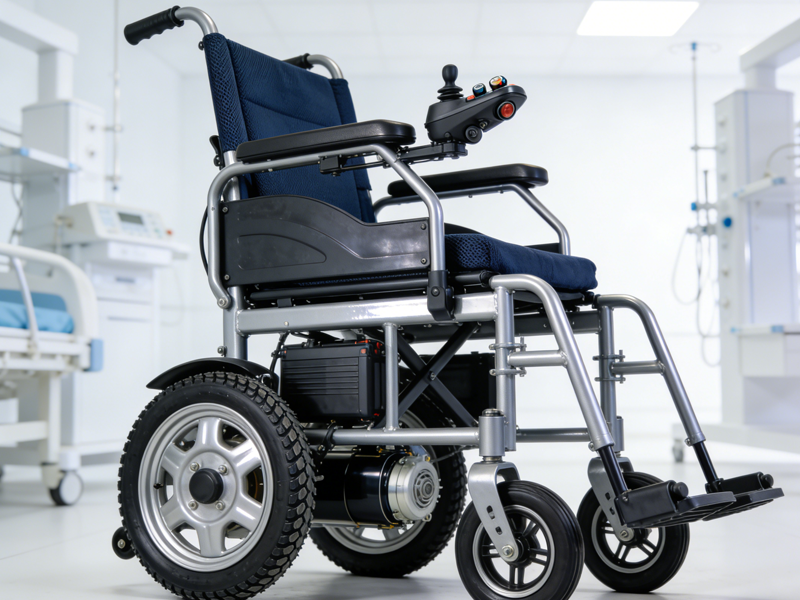
In the world of powered mobility, conversations often revolve around lightweight materials, futuristic batteries, and ultra-compact designs. Aluminum alloys, carbon fiber, and lithium power systems dominate headlines and marketing brochures. Yet quietly, consistently, and reliably, the steel-framed electric wheelchair continues to serve millions of users around the world.
For many people, a wheelchair is not a gadget—it is a daily companion. It must withstand real environments, real weight, real terrain, and real routines. This is where steel-framed electric wheelchairs still excel. They are not built for trends; they are built for use.
This article takes a deep, practical look at steel-framed electric wheelchairs: how they perform, who they are best suited for, why they remain relevant globally, and how manufacturers like Iyasocare continue to refine and recommend this classic construction for modern mobility needs.
Rather than focusing on marketing buzzwords, this guide is written from a user-first perspective—what actually matters once the wheelchair leaves the showroom and becomes part of everyday life.
Steel has been used in mobility equipment for decades, and for good reason. Its mechanical properties—high tensile strength, resistance to deformation, and excellent load-bearing capacity—make it especially suitable for powered wheelchairs that must support both the user and the motorized system.
A steel-framed electric wheelchair typically feels solid from the first moment you sit in it. There is minimal flex in the frame, even under heavier loads or when navigating uneven surfaces. This rigidity translates into a sense of security, especially for users who prioritize stability over portability.
While lighter materials may appeal to frequent travelers or occasional users, steel frames are often chosen by people who rely on their wheelchair for extended daily use. In many cases, the wheelchair replaces walking entirely, making durability far more important than shaving off a few kilograms of weight.
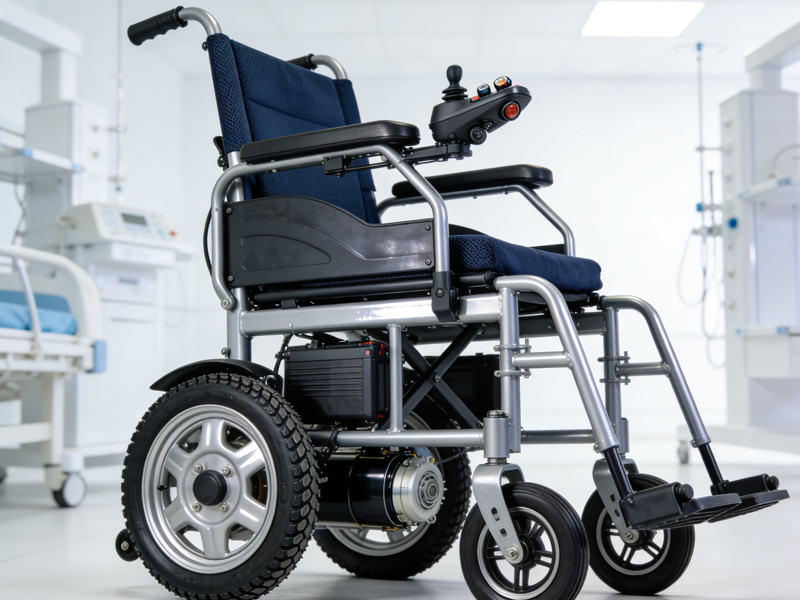
One of the most noticeable advantages of a steel-framed electric wheelchair is how it handles movement.
The added mass of a steel frame lowers the center of gravity, which improves balance during acceleration, braking, and turning. This is particularly important for:
Outdoor use on uneven pavement
Ramps and mild slopes
Transfers on and off the wheelchair
Users with limited trunk stability
The wheelchair feels planted. It does not feel “tippy” or overly responsive to minor joystick movements. For elderly users or those transitioning from manual wheelchairs, this predictability can significantly reduce anxiety and improve overall confidence.
Manufacturers like Iyasocare intentionally design steel-framed models with balanced weight distribution, ensuring that stability does not come at the cost of maneuverability. Well-engineered steel frames can still offer smooth indoor navigation while maintaining firm control outdoors.
Electric wheelchairs are not just carrying people—they are carrying motors, controllers, batteries, seating systems, and sometimes medical accessories. Steel frames handle this cumulative load exceptionally well.
This makes steel-framed electric wheelchairs especially suitable for:
Users with higher body weight
Long daily usage (8–12 hours or more)
Rehabilitation centers and hospitals
Rental fleets and shared mobility programs
Unlike lighter frames that may experience fatigue over time, steel maintains structural integrity across years of repeated stress. Weld points are less prone to micro-cracks, and the frame is more forgiving under heavy or uneven loading.
For organizations purchasing wheelchairs in volume, this durability translates directly into lower long-term costs. Fewer frame failures mean fewer replacements, less downtime, and reduced maintenance complexity.
One often overlooked benefit of steel frames is how easy they are to repair.
Steel can be welded, reshaped, and reinforced in ways that aluminum or carbon fiber cannot. In many regions—particularly outside major urban centers—this makes a critical difference.
If a steel frame is damaged:
Local technicians can often repair it
Specialized factory equipment is not always required
Replacement parts are easier to fabricate or source
This is one reason steel-framed electric wheelchairs remain popular across Asia, the Middle East, Africa, South America, and parts of Eastern Europe. Infrastructure compatibility matters when a wheelchair is essential for daily life.
Iyasocare designs its steel-framed electric wheelchairs with standardized components and service-friendly construction, ensuring that users are not dependent on rare parts or proprietary repair systems.
It is true that steel-framed electric wheelchairs are heavier than their aluminum counterparts. But weight alone does not define usability.
In real life, many electric wheelchair users:
Do not lift their wheelchair regularly
Charge at home rather than swap batteries
Use ramps, elevators, or vehicle lifts
For these users, extra weight can actually enhance performance rather than limit it. Heavier frames provide better traction, smoother rides over rough surfaces, and less vibration transferred to the user.
Modern steel-framed designs have also evolved. Thoughtful engineering reduces unnecessary bulk while preserving strength. Paired with efficient motors and controllers, the difference in everyday handling is often negligible.
Comfort is not just about cushions—it is about how the entire wheelchair behaves under the user.
Steel frames provide a rigid platform that allows seating systems to perform as intended. There is less frame flex interfering with posture, which helps maintain consistent seating angles and pressure distribution.
For users who spend many hours in their wheelchair, this consistency matters. Reduced micro-movement in the frame can help minimize fatigue, discomfort, and pressure points over time.
Iyasocare integrates ergonomic seating, adjustable armrests, and customizable footrests into its steel-framed electric wheelchairs, ensuring that strength and comfort go hand in hand.
From a global perspective, steel remains one of the most cost-effective structural materials. This affordability carries over into wheelchair pricing.
Steel-framed electric wheelchairs typically offer:
Lower purchase prices
Longer service life
Reduced need for frame replacement
For individuals paying out of pocket—or for healthcare systems operating under budget constraints—this value proposition is difficult to ignore.
Importantly, lower cost does not mean lower quality when the wheelchair is properly designed. Brands like Iyasocare focus on intelligent material use, ensuring that savings come from efficiency, not from compromising safety or usability.
While every user is different, steel-framed electric wheelchairs are particularly well-suited for:
Full-time wheelchair users
Seniors prioritizing stability and safety
Users with higher weight requirements
Rehabilitation and medical facilities
Long-term home care environments
Regions with limited access to specialized repairs
They are less ideal for frequent flyers or users who must lift their wheelchair into small vehicles independently. In those cases, lightweight folding designs may be more appropriate.
The key is matching the wheelchair to the user’s real lifestyle—not an idealized version of it.
Iyasocare approaches mobility design with a simple philosophy: technology should serve people, not trends.
Their steel-framed electric wheelchairs reflect this mindset. Instead of chasing extreme minimalism, the brand focuses on reliability, user comfort, and global usability. Each model is engineered to perform consistently across different environments, body types, and usage patterns.
By combining robust steel frames with modern control systems, ergonomic design, and dependable power solutions, Iyasocare delivers wheelchairs that users can trust every day—not just admire on paper.
Steel-framed electric wheelchairs may not always be the lightest or the most fashionable option, but they remain one of the most dependable.
They offer strength where it matters, stability where it’s needed, and value that lasts over time. For millions of users worldwide, that combination is far more important than novelty.
In an industry moving rapidly toward ultra-light materials, steel continues to prove that sometimes, the most reliable solutions are the ones that have already stood the test of time.
1. Are steel-framed electric wheelchairs outdated compared to aluminum models?
Not at all. Steel-framed wheelchairs are still widely used because of their strength, stability, and long service life. Modern designs incorporate updated electronics, motors, and ergonomic features while retaining the benefits of a steel structure.
2. Is the extra weight of a steel frame a serious disadvantage?
For many users, no. If the wheelchair is used primarily for daily mobility rather than frequent lifting or travel, the added weight often improves stability and ride comfort rather than causing inconvenience.
3. Why does Iyasocare continue to offer steel-framed electric wheelchairs?
Iyasocare recognizes that many users prioritize reliability, safety, and long-term value. Steel frames align perfectly with these needs, especially for full-time users and international markets where durability and serviceability are critical.