Our Location
Free Trade Tower, Xiyong street.
Chongqing, China

Free Trade Tower, Xiyong street.
Chongqing, China
In 2026, the wheelchair industry is experiencing a shift that goes far beyond design trends or incremental upgrades. What we are witnessing is a fundamental change in how mobility devices are built, used, and perceived. At the center of this evolution is one material that has quietly moved from a premium niche into the mainstream: carbon fiber.
For years, carbon fiber was associated almost exclusively with aerospace engineering, Formula One racing, and elite cycling. It was admired for its strength and lightness, but considered too expensive or specialized for everyday medical equipment. That perception has changed dramatically.
Today, carbon fiber wheelchairs are no longer reserved for a small group of elite users. Advances in manufacturing, better structural engineering, and growing demand for lighter, more ergonomic mobility solutions have pushed carbon fiber into the spotlight. In 2026, it has become the gold standard for active users, frequent travelers, and anyone who values independence and efficiency in daily mobility.
This change did not happen overnight. It reflects a broader shift in how wheelchair users think about mobility. People are no longer choosing wheelchairs based solely on medical necessity. They are choosing based on lifestyle.
They ask practical questions:
Can I lift it into a car by myself?
Will it reduce fatigue during long days outside?
Is it comfortable across different climates?
Can it keep up with an active, modern routine?
Carbon fiber answers these questions better than traditional steel or aluminum ever could.
The appeal of carbon fiber is not theoretical. Its advantages are immediately noticeable in everyday use.
First, there is weight. Carbon fiber offers an unmatched strength-to-weight ratio. Frames can be significantly lighter without sacrificing structural integrity. For users, this means easier transfers, simpler transportation, and less strain on shoulders and arms.
Second, there is ride quality. Unlike metal frames, carbon fiber naturally absorbs vibration. On uneven sidewalks, cobblestone streets, or outdoor paths, the difference is obvious. Reduced vibration means less fatigue, less joint stress, and a smoother overall experience — especially important for users who spend long hours in their chair.
Third, there is thermal comfort. Carbon fiber does not conduct heat or cold the way metal does. In winter, it does not become painfully cold to the touch. In summer, it does not retain excessive heat. This seemingly small detail has a meaningful impact on daily comfort.
Finally, carbon fiber allows for more refined design. Frames can be shaped for better ergonomics, improved balance, and compact folding mechanisms, especially in electric wheelchairs designed for travel.
With these benefits in mind, let’s look closely at three standout carbon fiber wheelchairs of 2026, each serving a different type of user but sharing the same core philosophy: lightweight performance without compromise.
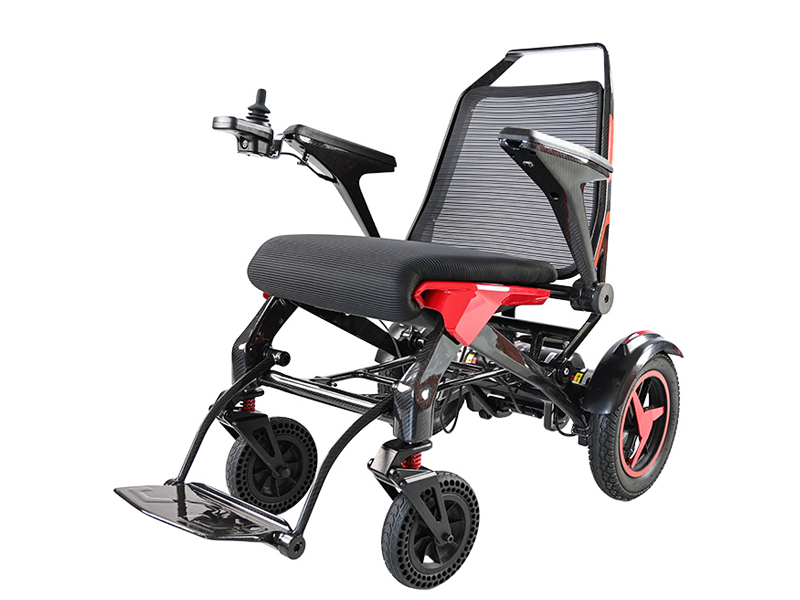
Among electric wheelchairs available in 2026, this carbon fiber model from IYASOCARE stands out as a well-rounded solution for users who want full electric assistance without the bulk traditionally associated with power chairs.
The foundation of this chair is its aerospace-grade carbon fiber frame. Despite its strength, the chair remains remarkably light for an electric model, making it far easier to transport, store, and maneuver than conventional power wheelchairs. For users who live independently or travel frequently, this alone is a major advantage.
Performance is driven by a dual-motor system, allowing each rear wheel to operate independently. This improves traction, stability, and control — particularly when navigating slopes, ramps, or uneven surfaces. The chair handles urban environments confidently, from sidewalks to shopping centers and parks.
Comfort has clearly been prioritized. The seating area offers generous width and depth, providing proper support for extended use. Padded armrests, a supportive backrest, and a folding footrest system make daily use comfortable without feeling bulky or restrictive.
One of the most practical features is its intelligent control system, which includes a Bluetooth remote. Users can control movement remotely, making it easier to position the chair in tight spaces, load it into a vehicle, or store it at home. Combined with its one-button folding mechanism, the chair transitions effortlessly between use and transport.
In real-world terms, this model is ideal for:
Users who rely on electric assistance daily
Individuals who travel often and need a lighter power chair
Anyone seeking independence without sacrificing comfort or stability
It represents what modern electric mobility should look like in 2026: smart, efficient, and user-focused.
Carbon Fiber Electric Wheelchair with Dual Motors and Ergonomic Comfort
While electric wheelchairs continue to evolve, manual wheelchairs remain the preferred choice for many active users. In this category, weight and responsiveness matter more than almost anything else — and this is where carbon fiber truly shines.
The IYASOCARE carbon fiber sport wheelchair is designed for users who value direct control, speed, and physical engagement. With a frame weight that is dramatically lower than traditional manual chairs, every push feels more efficient. Acceleration is quicker, turning is sharper, and long distances require noticeably less effort.
The frame geometry supports a natural seating posture, reducing strain on the back and shoulders. This is particularly important for users who self-propel throughout the day, whether commuting, training, or navigating large campuses and urban spaces.
Despite its lightweight design, safety has not been overlooked. Anti-tip wheels provide added stability, especially when navigating slopes or uneven terrain. Wheel size selection balances smooth rolling with precise maneuverability, making the chair suitable for both indoor and outdoor use.
This model is especially well suited for:
Active daily users
Rehabilitation and training environments
Users transitioning from basic manual chairs to performance models
It delivers the kind of responsive, energetic feel that experienced users appreciate — without unnecessary complexity.
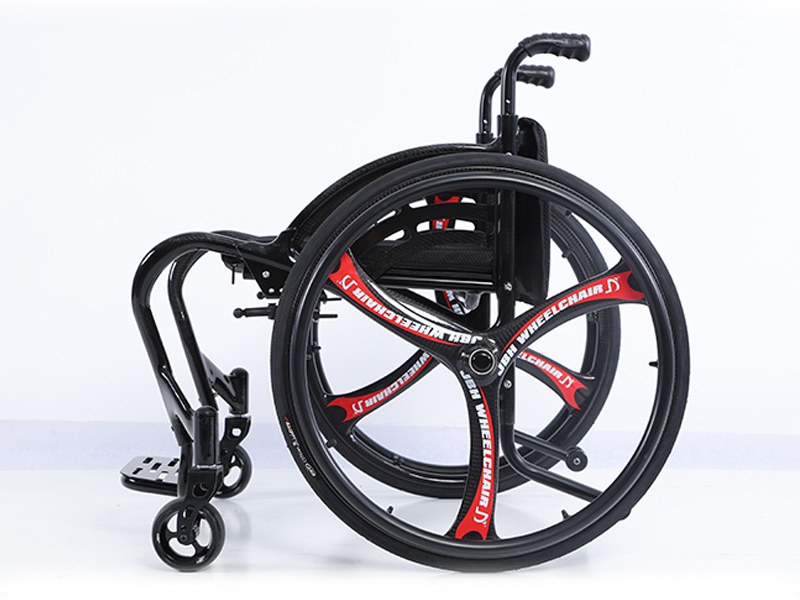
Lightweight Carbon Fiber Sport Wheelchair with Anti-Tip Wheels
The YSE139 represents a different philosophy: maximum portability without sacrificing electric power. In 2026, travel-friendly electric wheelchairs are in high demand, and this model reflects that trend perfectly.
Built entirely around a carbon fiber folding frame, the YSE139 is designed to be compact, lightweight, and easy to handle. When folded, it occupies minimal space, making it ideal for car trunks, airline travel, or storage in small apartments.
Despite its lightweight construction, the chair maintains a surprisingly high load capacity. This balance of strength and portability is one of carbon fiber’s greatest advantages and is fully realized here.
Ergonomic details — such as flip-up armrests and supportive seating — make transfers easier and daily use more comfortable. The electric drive system provides reliable assistance for indoor and outdoor movement, while intuitive controls keep operation simple.
This model is best suited for:
Frequent travelers
Users who need an electric chair but prioritize portability
Individuals with limited storage space
For many users, the YSE139 bridges the gap between full-size power chairs and ultra-light manual options.
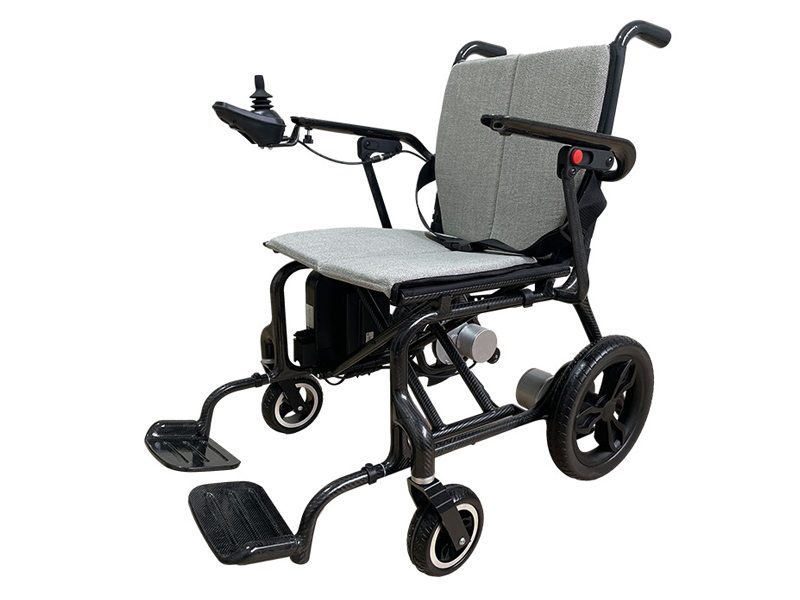
Lightweight electric wheelchair YSE139|Carbon fiber folding frame, flip-up armrest design
With more options than ever, selecting the right carbon fiber wheelchair comes down to understanding your own routine.
Ask yourself:
How often do I travel?
Do I self-propel or rely on electric assistance?
How important is lifting and storage?
Will I use the chair indoors, outdoors, or both?
Carbon fiber does not define one single type of wheelchair. Instead, it enhances every category — manual, electric, sport, and travel — by reducing weight, improving comfort, and extending usability.
In 2026, carbon fiber wheelchairs are no longer about prestige or novelty. They are about practical improvement. They make daily life easier, movement smoother, and independence more achievable.
Whether you choose a high-performance manual chair, a smart electric model, or a compact folding solution, carbon fiber delivers benefits that are felt every single day — not just on paper.
For users ready to upgrade their mobility experience, carbon fiber is not just the future. It is the present.
1. Are carbon fiber wheelchairs durable enough for daily use?
Yes. Modern carbon fiber frames are engineered for long-term daily use and offer excellent fatigue resistance compared to metal frames.
2. Do carbon fiber wheelchairs require special maintenance?
No special maintenance is required beyond standard wheelchair care. Carbon fiber does not rust or corrode.
3. Is carbon fiber worth the investment?
For users who value comfort, portability, and reduced physical strain, carbon fiber often proves cost-effective over time.