Our Location
Free Trade Tower, Xiyong street.
Chongqing, China

Free Trade Tower, Xiyong street.
Chongqing, China

Pushing a wheelchair uphill is one of those tasks that looks deceptively simple until you actually try it. Whether you’re a caregiver, a family member, or someone navigating mobility challenges firsthand, slopes can quickly turn into physically exhausting and even unsafe situations. The strain on the arms, the risk of rollback, and the uneven terrain all combine to make uphill movement one of the most demanding aspects of wheelchair mobility.
Yet, this challenge is far from unsolvable. With the right combination of technique, equipment, environmental awareness, and design innovation, pushing a wheelchair uphill can become significantly easier and safer. This article explores the issue in depth—moving beyond surface-level advice and offering practical, real-world solutions that are both accessible and effective.
Before discussing solutions, it helps to understand why pushing a wheelchair uphill is so difficult in the first place.
At its core, the challenge is about gravity and resistance. When pushing uphill, the caregiver must overcome not only the weight of the wheelchair and its occupant but also the incline itself. The steeper the slope, the greater the backward force pulling against you. Add factors like uneven pavement, weather conditions, or poorly maintained ramps, and the difficulty multiplies.
There’s also a human factor. Caregivers often rely on upper body strength alone, which can lead to fatigue, strain injuries, and inconsistent control. Without proper technique, even a short incline can feel overwhelming.
One of the most overlooked solutions is improving pushing technique. Many people instinctively lean forward and push with their arms, but this is inefficient and tiring.
A more effective approach involves:
These adjustments may seem minor, but they can dramatically reduce effort over time.
Not all wheelchairs are created equal, especially when it comes to handling slopes.
Modern wheelchair design has evolved significantly, and certain features can make a noticeable difference:
Investing in a well-designed wheelchair is often one of the most impactful long-term solutions.
In many cases, technique and design improvements still aren’t enough—especially for steeper slopes or longer distances. That’s where assistive technology comes in.
Power-assisted devices can be attached to manual wheelchairs, providing motorized support when pushing uphill. These systems detect the force applied and amplify it, making the task significantly easier.
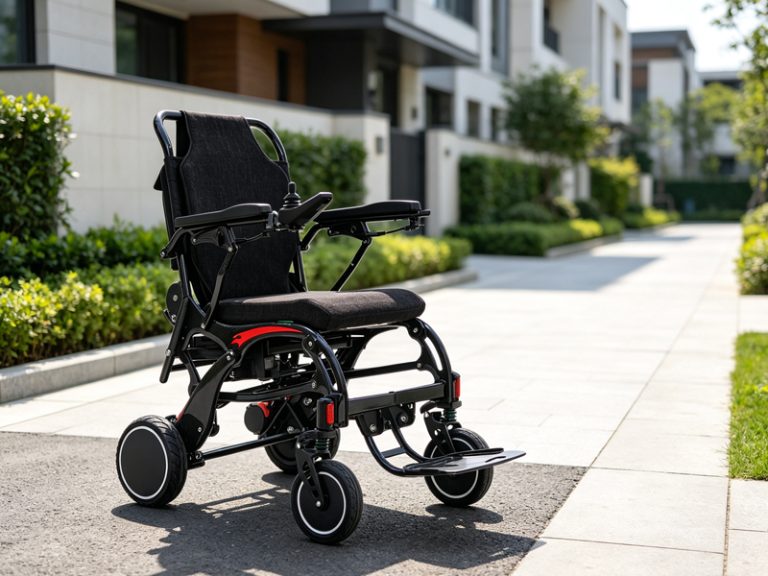
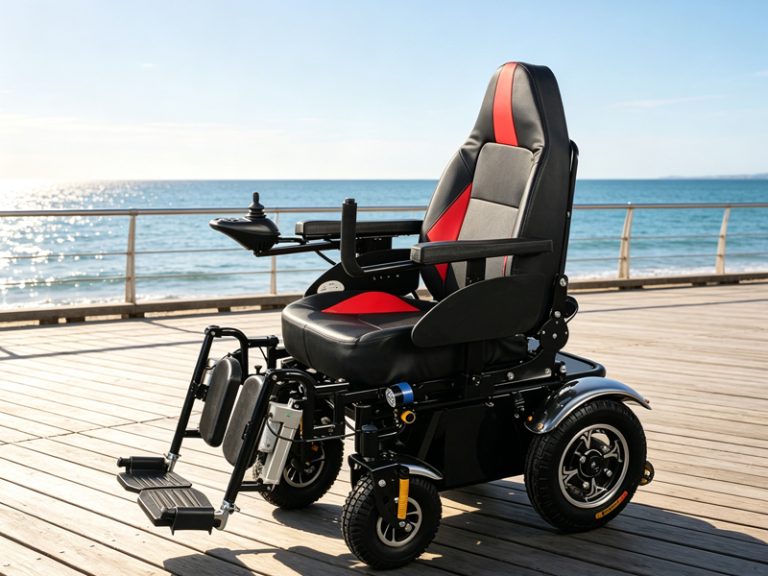
For more demanding environments, fully electric wheelchairs offer a complete solution. With joystick controls and built-in motors, users can navigate slopes independently, eliminating the need for manual pushing altogether.
There are also add-on push assist devices designed specifically for caregivers. These can be attached to the rear of a wheelchair and provide controlled propulsion, reducing the physical burden.
Even the best equipment can’t compensate for poorly designed environments. The difficulty of pushing a wheelchair uphill is often amplified by infrastructure that doesn’t meet accessibility standards.
Key environmental factors include:
Advocating for better accessibility standards in public and private spaces is essential for long-term improvement.
While equipment and technique matter, physical conditioning shouldn’t be ignored. Pushing a wheelchair uphill requires a combination of strength, endurance, and stability.
Caregivers can benefit from:
Even modest improvements in fitness can make a noticeable difference in daily tasks.
Safety should always be a top priority when navigating inclines.
Some essential safety practices include:
Understanding and respecting the risks is key to preventing accidents.
In everyday life, people often develop creative ways to overcome challenges.
Some practical adaptations include:
These strategies highlight the importance of adaptability and planning.
The future of wheelchair mobility is promising, with ongoing innovations aimed at reducing physical strain and improving independence.
Emerging technologies include:
These advancements are gradually transforming the experience of navigating challenging terrain.
It’s important to remember that this issue isn’t just technical—it’s deeply human.
For caregivers, the physical strain can lead to burnout. For wheelchair users, reliance on others can affect independence and confidence. Solving the challenge of uphill mobility isn’t just about reducing effort; it’s about improving quality of life.
Empathy, communication, and shared problem-solving between caregivers and users are just as important as any technical solution.
Pushing a wheelchair uphill will probably never be effortless, but it doesn’t have to be overwhelming. By combining better technique, smarter equipment, supportive infrastructure, and thoughtful planning, the difficulty can be significantly reduced.
The key is to approach the problem holistically—recognizing that no single solution is enough on its own. When these elements work together, what once felt like a barrier can become a manageable part of everyday life.
1. What is the easiest way to push a wheelchair uphill without getting tired?
The most effective approach is to combine proper technique with body weight usage. Lean forward slightly, take small controlled steps, and maintain a steady pace. Using a lightweight wheelchair or a power-assist device can further reduce fatigue.
2. Are electric wheelchairs better for uphill movement?
Yes, electric wheelchairs are specifically designed to handle inclines with minimal effort. They provide independence for users and eliminate the physical strain on caregivers, especially on steeper slopes.
3. How can public spaces improve wheelchair accessibility on slopes?
Public spaces can adopt better ramp design standards, such as maintaining a 1:12 gradient, adding rest platforms, ensuring non-slip surfaces, and installing handrails. These improvements make a significant difference in usability and safety.