Our Location
Free Trade Tower, Xiyong street.
Chongqing, China

Free Trade Tower, Xiyong street.
Chongqing, China

Wheelchairs are among the most recognizable assistive devices in the world, yet they remain widely misunderstood. For many people, the image of a wheelchair is tied to limitation, dependency, or even tragedy. But for millions of users globally, a wheelchair represents something entirely different: freedom, access, and autonomy.
Despite increasing awareness around disability and inclusion, misconceptions about wheelchairs persist—often subtly shaping attitudes, policies, and even the built environment. These misunderstandings can lead to social barriers that are far more limiting than physical ones.
This article unpacks ten of the most common misconceptions about wheelchairs, not just to correct them, but to offer a more grounded, human perspective. Whether you’re a caregiver, policymaker, designer, or simply curious, understanding the truth behind these myths can help create a more inclusive world.
One of the most widespread assumptions is that anyone using a wheelchair is completely unable to walk. In reality, mobility exists on a spectrum. Many wheelchair users can stand or walk short distances but rely on a wheelchair for efficiency, safety, or to conserve energy.
Conditions such as multiple sclerosis, chronic fatigue syndrome, or certain injuries can make walking painful or unpredictable. Using a wheelchair allows individuals to participate more fully in daily life rather than being confined by physical limitations.
This misconception often leads to unnecessary judgment. For example, someone who stands up from their wheelchair may be accused of “faking” their disability—a harmful and deeply invalidating experience.
While aging can increase the likelihood of mobility challenges, wheelchair users span all age groups. Children, teenagers, and young adults may use wheelchairs due to congenital conditions, injuries, or illnesses.
Associating wheelchairs primarily with old age reinforces stereotypes and can make younger users feel invisible or misunderstood. It also overlooks the diversity of experiences within the disability community.
Wheelchairs are not a symbol of aging—they are tools designed to meet a wide range of mobility needs.
Dependency is often incorrectly assumed when people see someone using a wheelchair. In reality, many users live highly independent lives—working, traveling, parenting, and engaging in social activities.
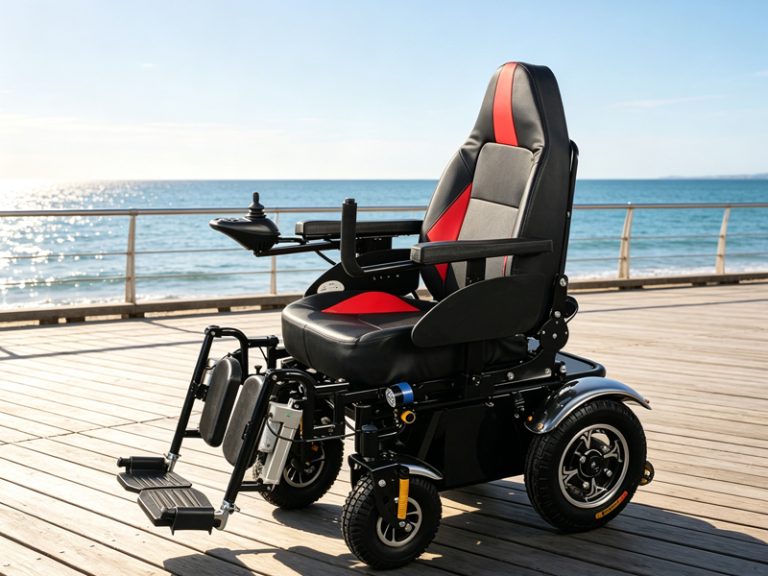
Modern wheelchairs, especially powered models, are designed with autonomy in mind. Features such as advanced controls, customized seating, and adaptive technologies enable users to navigate complex environments without assistance.
The real barrier to independence is often not the wheelchair itself, but inaccessible infrastructure—stairs without ramps, narrow doorways, or poorly designed public transportation systems.
Another common belief is that wheelchairs are limited to indoor use or short trips. In truth, many users rely on their wheelchairs for full-day mobility, including commuting, shopping, and outdoor recreation.
All-terrain wheelchairs, sports models, and rugged power chairs are designed for diverse environments—from city streets to hiking trails. For many users, a wheelchair is not just a convenience; it is their primary mode of transportation.
This misconception often leads to inadequate urban planning, where accessibility features are treated as optional rather than essential.
The idea that wheelchair users are physically inactive is not only inaccurate but also dismissive of an entire world of adaptive sports and fitness.
Wheelchair basketball, tennis, racing, and rugby are just a few examples of competitive sports enjoyed globally. Beyond organized sports, many users engage in regular exercise, including strength training and cardiovascular workouts.
Physical activity is not defined by the absence of disability but by the presence of opportunity and access.
To an untrained eye, wheelchairs may appear uniform. In reality, they vary widely in design, function, and customization.
Manual wheelchairs differ in weight, frame structure, and adjustability. Power wheelchairs offer various control systems, seating configurations, and terrain capabilities. Some are tailored for sports, while others prioritize comfort for long-term use.
Each wheelchair is often customized to the user’s body, lifestyle, and medical needs. Assuming all wheelchairs are interchangeable ignores the complexity and personalization involved.
There is a lingering belief that wheelchairs should only be used when absolutely necessary, as if they represent failure or defeat. This mindset can discourage people from adopting mobility aids that could significantly improve their quality of life.
In reality, choosing to use a wheelchair can be an empowering decision. It allows individuals to engage more fully with their surroundings, reduce pain, and maintain energy for meaningful activities.
Reframing wheelchairs as tools of empowerment rather than symbols of limitation is essential for shifting public perception.
While some wheelchair users have medical conditions that affect their overall health, many are otherwise healthy individuals with specific mobility impairments.
Equating wheelchair use with poor health oversimplifies complex realities. A person may use a wheelchair due to a spinal cord injury yet have excellent cardiovascular health and an active lifestyle.
Health cannot be accurately judged based on mobility aids alone.

Accessibility features—ramps, elevators, accessible restrooms—are often treated as optional accommodations rather than fundamental design elements.
This misconception frames accessibility as benefiting a small minority, when in fact it enhances usability for a wide range of people, including parents with strollers, travelers with luggage, and individuals with temporary injuries.
Designing for accessibility from the outset is not just inclusive—it is practical and forward-thinking.
Perhaps one of the most common social missteps is assuming it is acceptable to assist a wheelchair user without consent. While the intention may be helpful, it can feel intrusive or even unsafe.
A wheelchair is an extension of a person’s body and personal space. Moving it without permission is comparable to physically repositioning someone without their consent.
The best approach is simple: ask first. Respect autonomy, and offer help only when it is requested or clearly needed.
Understanding the realities of wheelchair use is a step toward building a more inclusive society. By challenging outdated beliefs and embracing a more nuanced perspective, we can create environments where everyone has the opportunity to move freely and live fully.
The conversation around mobility is evolving—and it’s one worth continuing.
1. Why do some wheelchair users stand or walk occasionally?
Many wheelchair users have partial mobility. They may be able to stand or walk short distances but use a wheelchair for longer distances, energy conservation, or safety. Mobility is not an all-or-nothing condition.
2. Is it offensive to offer help to a wheelchair user?
Offering help is not inherently offensive, but it should always be done respectfully. The key is to ask first rather than assuming assistance is needed.
3. Are modern wheelchairs customizable?
Yes, most wheelchairs are highly customizable. From seating and controls to frame design and materials, they are often tailored to fit the user’s physical needs and lifestyle preferences.