Our Location
Free Trade Tower, Xiyong street.
Chongqing, China

Free Trade Tower, Xiyong street.
Chongqing, China
The global demand for wheelchairs has evolved far beyond traditional healthcare procurement channels. With aging populations, rising awareness of accessibility rights, and increased mobility needs, wheelchairs are no longer niche medical devices—they are essential lifestyle products. At the same time, cross-border e-commerce has opened new pathways for manufacturers, distributors, and direct-to-consumer brands to reach users worldwide.
Yet, selling wheelchairs internationally is not the same as shipping ordinary consumer goods. The supply chain is more complex, more regulated, and more sensitive to user needs. A wheelchair is not just a product—it is a lifeline for independence. That reality fundamentally shapes how the entire cross-border e-commerce supply chain must be designed, managed, and optimized.
This article explores how to build a resilient, compliant, and customer-centric wheelchair cross-border e-commerce supply chain, from sourcing and manufacturing to last-mile delivery and after-sales service.
Wheelchairs sit at the intersection of medical devices and durable consumer goods. This dual identity introduces both opportunity and complexity.
On one hand, demand is global and growing. Markets in North America and Europe have mature healthcare systems and strong purchasing power, while emerging markets in Southeast Asia, Latin America, and Africa are experiencing rapid growth due to improving healthcare access.
On the other hand, regulatory requirements vary significantly across regions. In many countries, wheelchairs are classified as medical devices, requiring certifications, quality standards, and documentation. Even manual wheelchairs may fall under specific compliance frameworks depending on their intended use.
This means that cross-border e-commerce sellers must go beyond traditional product listing strategies. They must build a supply chain that integrates regulatory compliance, product customization, and user trust at every step.
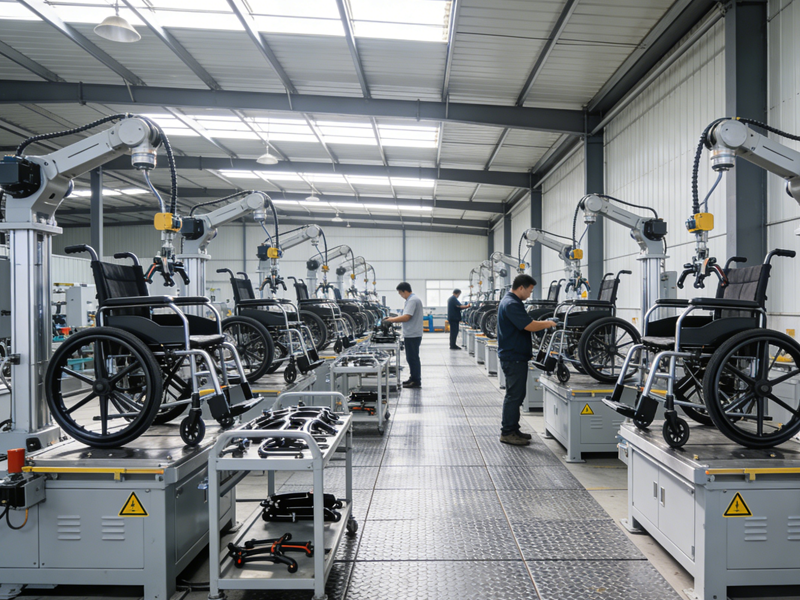
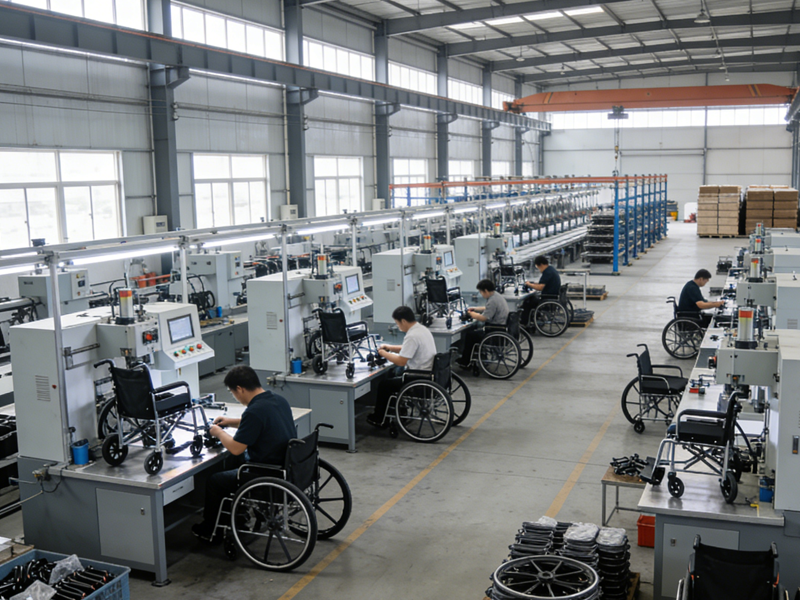
The foundation of any successful supply chain begins with manufacturing. In the wheelchair industry, this step carries additional weight because product quality directly impacts user safety and mobility.
A strong supplier strategy typically involves:
Many leading cross-border sellers adopt a hybrid approach: manufacturing core components in centralized locations while allowing for regional customization closer to end markets. This reduces shipping complexity and improves responsiveness to local user needs.
Material selection also plays a critical role. Lightweight aluminum alloys, carbon fiber, and reinforced steel are commonly used, but each comes with trade-offs in cost, durability, and shipping weight. For cross-border logistics, reducing weight without compromising strength can significantly lower transportation costs.
One of the most challenging aspects of wheelchair cross-border e-commerce is navigating regulatory frameworks.
Different regions impose different requirements:
Compliance is not a one-time effort. It must be embedded into the supply chain process, including:
Failure to meet these requirements can result in shipment delays, fines, or even product recalls. For cross-border sellers, investing in compliance expertise is not optional—it is essential.
Efficient warehousing is critical in balancing cost, speed, and reliability.
Wheelchairs are bulky compared to typical e-commerce products. This creates challenges in storage, handling, and shipping. To address this, many businesses adopt a multi-node warehousing strategy:
Inventory planning must also account for product variations. Wheelchairs often come in multiple sizes, configurations, and accessories. Overstocking every variant is inefficient, while understocking can lead to lost sales and poor customer experience.
Advanced demand forecasting tools, combined with historical sales data and regional trends, can help optimize inventory levels. In some cases, semi-assembled inventory is stored to allow for final customization before shipment.
Shipping wheelchairs internationally presents unique logistical challenges.
First, dimensional weight plays a significant role in shipping costs. Even lightweight wheelchairs can incur high fees due to their size. Packaging optimization becomes a key strategy—designing foldable or modular products that reduce volume during transport.
Second, transportation modes must be carefully selected:
Many successful brands use a combination of these methods depending on urgency, inventory levels, and customer expectations.
Customs clearance is another critical step. Proper classification, accurate documentation, and compliance with import regulations are essential to avoid delays. Partnering with experienced logistics providers who understand medical device shipments can significantly improve efficiency.
The last mile is where the supply chain meets the customer—and where expectations are highest.
For wheelchair users, delivery is not just about receiving a package. It often involves:
In some markets, white-glove delivery services are becoming a competitive advantage. These services include in-home delivery, assembly, and basic training for users.
Customer communication is equally important. Providing real-time tracking, proactive updates, and responsive support helps build trust, especially for high-value products like wheelchairs.
Unlike standard e-commerce products, wheelchairs require long-term support.
Returns may involve large shipping costs and logistical complexity. To manage this, many companies establish regional return centers or partner with local service providers.
Repairs and maintenance are even more critical. A broken wheelchair can severely impact a user’s daily life. Efficient after-sales systems should include:
Some companies are also integrating digital solutions, such as mobile apps or IoT-enabled devices, to monitor product performance and provide proactive maintenance alerts.
Technology plays a transformative role in optimizing wheelchair cross-border e-commerce.
Key innovations include:
Data integration across the supply chain enables better decision-making, from production planning to delivery optimization. For example, analyzing regional demand patterns can help adjust inventory allocation and reduce shipping times.
Blockchain technology is also emerging as a tool for traceability, ensuring transparency in sourcing, manufacturing, and distribution.
Sustainability is becoming increasingly important in global supply chains, and the wheelchair industry is no exception.
Efforts to improve sustainability include:
Consumers and regulators alike are placing greater emphasis on environmental responsibility. Companies that integrate sustainability into their supply chain strategy can gain both competitive and reputational advantages.
The COVID-19 pandemic highlighted vulnerabilities in global supply chains, particularly for essential products like medical devices.
Resilience in wheelchair cross-border e-commerce requires:
Risk management should also include contingency planning for disruptions such as geopolitical tensions, transportation delays, and regulatory changes.
A resilient supply chain is not just about reacting to disruptions—it is about anticipating them and building systems that can adapt quickly.
At the heart of the wheelchair supply chain is the end user.
Every decision—from product design to delivery logistics—should be guided by the needs of people who rely on these products for mobility and independence.
This means:
Listening to customer feedback and continuously improving the supply chain based on real user experiences is essential for long-term success.
The wheelchair cross-border e-commerce supply chain is a complex, multi-layered system that requires careful coordination across manufacturing, compliance, logistics, and customer service.
Success in this space is not defined solely by cost efficiency or delivery speed. It is defined by reliability, trust, and the ability to meet the real needs of users around the world.
Companies that invest in building integrated, compliant, and user-focused supply chains will not only gain a competitive edge but also contribute to a more accessible and inclusive global society.
1. What is the biggest challenge in wheelchair cross-border e-commerce supply chains?
The biggest challenge lies in balancing regulatory compliance with operational efficiency. Different countries have varying medical device regulations, and ensuring compliance while maintaining fast and cost-effective logistics requires expertise and coordination across the entire supply chain.
2. How can companies reduce shipping costs for wheelchairs internationally?
Companies can optimize packaging design, use foldable or modular structures, choose appropriate transportation modes, and establish regional warehouses to reduce long-distance shipping. Reducing dimensional weight is especially critical.
3. Why is after-sales service more important for wheelchairs than other e-commerce products?
Wheelchairs are essential mobility devices. Any malfunction directly impacts the user’s daily life. Reliable repair services, spare parts availability, and responsive customer support are crucial to maintaining user trust and satisfaction.