Our Location
Free Trade Tower, Xiyong street.
Chongqing, China

Free Trade Tower, Xiyong street.
Chongqing, China
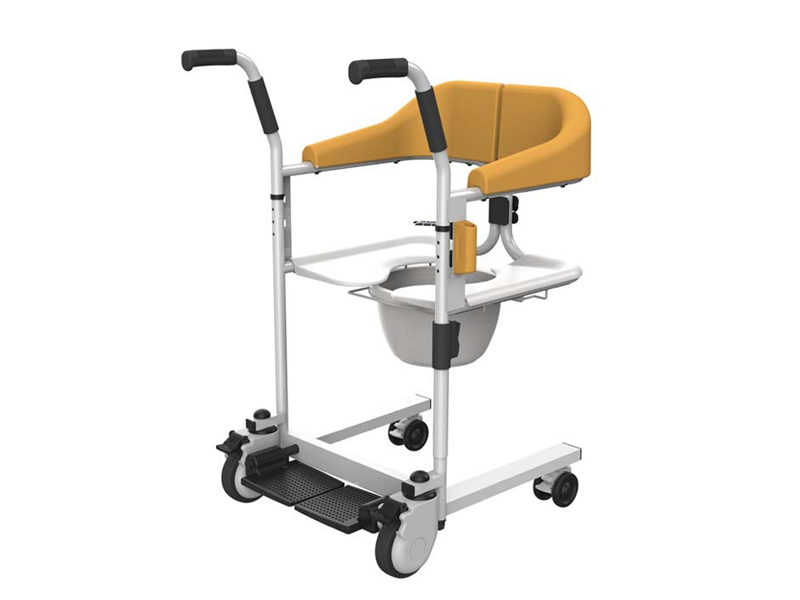
In the evolving landscape of healthcare and home-based caregiving, mobility assistance equipment has become more than just supportive hardware—it is now a cornerstone of dignity, safety, and efficiency in daily patient care. Among the most significant innovations in this field is the electric patient transfer lift with adjustable height, a device designed to reduce caregiver strain while improving the comfort and safety of patients with limited mobility.
Whether used in hospitals, rehabilitation centers, or private homes, these systems are reshaping how transfers between bed, wheelchair, toilet, and shower are performed. Unlike traditional manual lifting methods that require significant physical effort and multiple caregivers, electric transfer lifts introduce motorized precision, smooth height adjustment, and controlled movement that minimizes injury risks on both sides of care.
For decades, patient transfer relied heavily on manual lifting or sling-based hoists. While effective, these methods often placed caregivers at risk of musculoskeletal injuries due to repetitive strain and improper lifting techniques. Clinical studies and ergonomic research consistently highlight patient handling as one of the leading causes of workplace injury in healthcare environments.
Modern electric transfer lifts solve this problem by integrating motorized lifting systems, adjustable frames, and wheeled mobility bases. Instead of physically lifting a patient, caregivers now guide the device, allowing the machine to handle vertical elevation and positioning.
One example of advanced lifting technology can be seen in medical-grade electric hoists, which offer a wide lifting range and battery-powered operation. Some models even allow floor-level pickup and bed-to-chair transfers with smooth electric control systems, improving efficiency in both emergency and routine care scenarios.
The result is a fundamental shift in caregiving: from physical exertion to assisted mobility management.
The core feature that defines modern electric transfer lifts is adjustable height functionality. This is not just a convenience feature—it is essential for clinical safety and ergonomic alignment.
Patients often need to be transferred between surfaces of different heights:
Without adjustable height, caregivers must compensate manually, increasing the risk of falls or incorrect posture alignment. Electric lifts solve this by offering continuous height control, allowing seamless alignment between surfaces.
For example, certain lifting transfer wheelchairs provide hydraulic or motor-assisted seat adjustment ranging approximately from 45 cm to 65 cm, enabling smooth transitions between common household and medical furniture heights.
This flexibility not only enhances patient safety but also significantly reduces caregiver workload.
Although designs vary across manufacturers, most high-quality systems share a set of essential characteristics:
1. Electric Height Adjustment System
Smooth lifting and lowering controlled by a handheld or integrated panel.
2. Mobile Wheeled Base
Heavy-duty casters with locking mechanisms ensure stability during transfers.
3. Reinforced Frame Construction
Typically made of steel or aluminum alloy for durability and load-bearing strength.
4. Compact Design for Home Use
Many models are engineered to pass through standard doorways, making them suitable for residential environments.
5. Safety-Oriented Seating System
Includes padded seating, backrests, and secure support structures to minimize discomfort during transfers.
In more advanced models, waterproofing, battery backup systems, and emergency stop controls further enhance usability in real-world care environments.
To understand how these systems function in practice, it is helpful to examine real product implementations that combine electric lifting and adjustable height functionality.
In modern caregiving design, multifunctional transfer wheelchairs combine transportation, lifting, and repositioning into a single integrated system. These units are particularly valuable in home care environments where space is limited and multiple devices are impractical.
A key advantage of this category is adaptability. Instead of requiring separate equipment for bed transfer, bathroom assistance, and indoor mobility, one system handles multiple roles.
A representative example of this concept can be found in multifunctional transfer wheelchair solutions such as the YSM2301 model range:
This type of system typically emphasizes:
Such designs are especially relevant for aging populations and long-term rehabilitation patients who require frequent repositioning throughout the day.
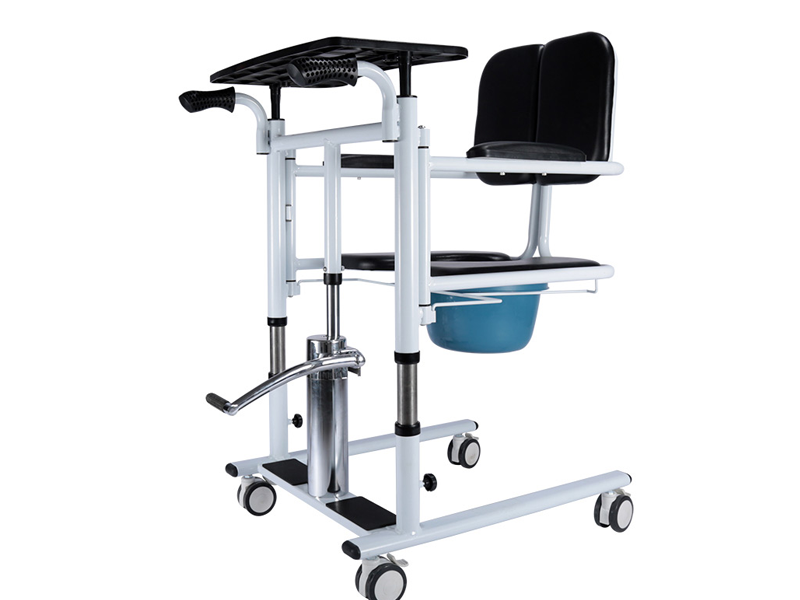
One of the more advanced categories in this field is the lifting transfer wheelchair with waterproof capability and adjustable height control, designed specifically for hygiene-related transfers.
This system is particularly valuable in bathroom and shower use cases, where safety risks are significantly higher due to wet surfaces.
The YSM2305 model illustrates this design direction well:
Key functional strengths include:
In practical terms, this type of device allows a single caregiver to safely move a patient from bed to bathroom without requiring lifting force, significantly reducing injury risk and improving daily care efficiency.
From an engineering standpoint, electric patient transfer systems are designed around three critical performance goals:
The frame must maintain balance during vertical movement, even when the center of gravity shifts. This is why many systems use wide-base caster designs and reinforced steel structures.
Motorized actuators or hydraulic systems regulate lifting speed to prevent sudden movement, which is essential for patient comfort and safety.
Control systems are intentionally simplified so caregivers can operate the lift with minimal training, often using handheld remotes or single-button controls.
These engineering principles ensure that the device is not only functional but also safe in high-pressure caregiving environments.
The introduction of electric adjustable-height transfer lifts brings measurable improvements to both sides of care.
For caregivers:
For patients:
In long-term care settings, these benefits also translate into lower operational costs and improved staff retention due to reduced injury rates.
In hospitals, electric transfer lifts are often integrated into broader patient handling systems, sometimes including ceiling-mounted or floor-based hoists capable of lifting high-weight patients safely across rooms.
In home care environments, however, compactness becomes a priority. Devices must fit through narrow doorways, be easy to store, and operate safely with minimal supervision.
This dual-use adaptability is one of the reasons why adjustable-height electric transfer lifts are increasingly popular in both sectors.
The electric patient transfer lift with adjustable height represents a significant advancement in modern caregiving technology. By combining motorized lifting systems with adaptable height control, these devices eliminate many of the physical challenges traditionally associated with patient handling.
Whether in hospital environments or home care settings, solutions such as multifunctional transfer wheelchairs and waterproof lifting transfer systems demonstrate how engineering innovation can directly improve daily human care.
As the demand for safer, more efficient mobility support continues to grow globally, adjustable electric transfer lifts are no longer optional equipment—they are becoming an essential standard in modern healthcare infrastructure.