Our Location
Free Trade Tower, Xiyong street.
Chongqing, China

Free Trade Tower, Xiyong street.
Chongqing, China
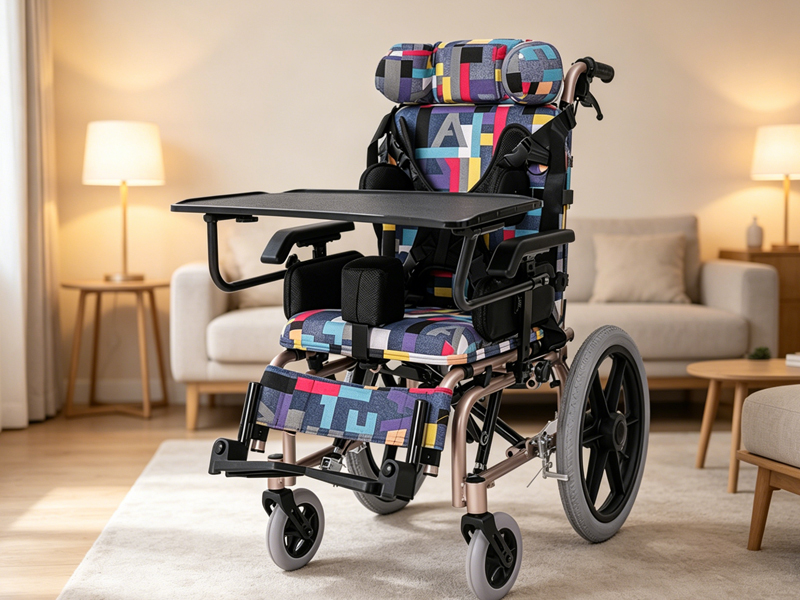
When a child lives with cerebral palsy, mobility becomes more than a daily necessity. It shapes how they learn, communicate, socialize, and experience the world around them. For parents, therapists, rehabilitation centers, and healthcare providers, choosing the right pediatric wheelchair is not simply about transportation—it is about long-term posture support, physical comfort, emotional confidence, and participation in everyday life.
Modern pediatric cerebral palsy wheelchairs are designed with a deeper understanding of children’s physical development and postural needs. Unlike standard wheelchairs, they focus on stability, pressure management, adaptable positioning, and caregiver convenience while still allowing children to engage more actively with their surroundings. As rehabilitation technology continues to evolve, today’s pediatric wheelchairs combine ergonomic engineering with lightweight portability and intelligent mobility features that support both indoor and outdoor living.
Among the latest developments in pediatric mobility solutions, products such as the IYASOCARE Pediatric Cerebral Palsy Wheelchair YSM2201, the Children Electric Wheelchair YSE403, and the Lightweight Children’s Wheelchair YSM2201L represent a more adaptive approach to pediatric rehabilitation equipment. These wheelchairs are built to accommodate the changing needs of children while helping caregivers manage daily routines more efficiently.
Children with cerebral palsy often experience muscle stiffness, involuntary movements, reduced balance control, or limited motor coordination. Because symptoms vary significantly from child to child, a pediatric wheelchair must provide flexible support instead of a one-size-fits-all structure.
A poorly fitted wheelchair can contribute to posture deterioration, fatigue, pressure discomfort, and limited social participation. Over time, incorrect seating may also influence spinal alignment and joint positioning. This is why rehabilitation specialists increasingly emphasize individualized seating systems and adjustable support mechanisms for children with CP.
A specialized cerebral palsy wheelchair usually incorporates:
The goal is not only mobility assistance but also long-term physical support and participation in daily activities such as school attendance, therapy sessions, family outings, and social interaction.
The growing focus on pediatric rehabilitation technology has also encouraged manufacturers to improve lightweight construction and modular adjustment systems, helping children maintain comfort while reducing caregiver strain.
Children often remain seated in a wheelchair for extended periods during school hours, therapy programs, transportation, or home activities. For this reason, comfort directly affects physical well-being and emotional health.
The YSM2201 Pediatric Cerebral Palsy Wheelchair was developed with this reality in mind. Its hydraulic reclining backrest can adjust up to 145 degrees, allowing children to alternate between upright positioning and semi-reclined resting throughout the day. This flexibility helps reduce spinal pressure and muscle fatigue while giving caregivers easier positioning control.
Unlike conventional rigid seating systems, adjustable reclining support allows posture changes without requiring the child to transfer out of the chair repeatedly. This can be especially valuable during longer therapy sessions or travel.
The wheelchair also integrates:
These details may seem small individually, but together they significantly improve daily comfort and usability.
For children with higher muscle tone or involuntary movement patterns, secure positioning is equally important. The cruciform safety belt and butterfly harness system help stabilize the body while minimizing slipping risks during movement.
Parents and therapists increasingly recognize that comfortable seating contributes to better concentration, emotional calmness, and improved engagement during educational or therapy activities. A child who feels physically supported is more likely to participate confidently in social environments.
Families managing cerebral palsy care already handle demanding daily routines. Heavy or oversized wheelchairs can quickly become difficult during transportation, school drop-offs, rehabilitation appointments, or family travel.
This is where lightweight pediatric wheelchairs become especially valuable.
The Lightweight Children’s Wheelchair YSM2201L focuses on portability without sacrificing stability. Lightweight wheelchair structures allow caregivers to load and unload equipment more easily while simplifying storage in homes and vehicles.
Modern pediatric wheelchair engineering increasingly uses aluminum alloy materials because they offer a balance between strength and reduced overall weight. Lightweight designs also improve maneuverability in narrow indoor environments such as classrooms, therapy rooms, elevators, and apartments.
For children, easier mobility can create a greater sense of independence. Smaller turning radiuses and responsive wheel movement help children interact more naturally with peers and participate in everyday routines instead of feeling restricted by bulky equipment.
Foldable structures further improve convenience for families who frequently travel between medical facilities, schools, and home environments. Compact folding systems help reduce transportation stress while supporting more active lifestyles.
As pediatric rehabilitation evolves, portability is becoming just as important as seating support because mobility equipment should adapt to family life rather than complicate it.
For some children with cerebral palsy, manual wheelchairs may not provide sufficient independence due to limited upper-body strength or coordination challenges. In these situations, electric pediatric wheelchairs can dramatically expand mobility opportunities.
The Children Electric Wheelchair YSE403 reflects a growing shift toward intelligent mobility solutions designed specifically for younger users.
Electric wheelchairs designed for children now prioritize several key factors:
One major advantage of electric mobility is psychological independence. Children who can navigate their environment independently often experience greater confidence in social participation, school interaction, and recreational activities.
Modern research in assistive mobility technology also shows how powered wheelchairs continue to evolve with smarter safety systems, adaptive controls, and sensor-supported navigation.
For caregivers, electric wheelchairs may also reduce physical strain associated with pushing manual chairs over long distances or uneven outdoor terrain. This becomes especially important as children grow older and heavier.
Another benefit of pediatric electric wheelchairs is expanded outdoor accessibility. Grass, sidewalks, ramps, and park pathways become easier to navigate, allowing children to participate more fully in family activities and community experiences.
The emotional impact should not be underestimated. Independent movement often supports social development, confidence building, and a stronger sense of personal identity for children with mobility challenges.
Safety remains one of the most important considerations when selecting a cerebral palsy wheelchair.
Children with CP may experience involuntary movements, muscle spasms, or postural instability, which means pediatric wheelchairs must provide secure positioning while maintaining comfort.
Advanced pediatric wheelchairs increasingly incorporate:
The YSM2201 pediatric wheelchair combines steel and aluminum construction for durability while supporting up to 100 kg, making it suitable for growing children over longer usage periods.
Reliable braking systems are particularly important during outdoor use or slope navigation. Stability engineering also reduces the risk of tipping during directional changes or uneven surface movement.
Manufacturing quality plays a significant role as well. Rehabilitation equipment used daily must withstand long-term wear while maintaining structural integrity. Modern production methods using robotic welding and multi-stage testing procedures help improve consistency and reliability in pediatric wheelchair manufacturing.
For parents, safety is not simply technical—it provides peace of mind during school transportation, outdoor activities, therapy sessions, and travel.
A wheelchair is not only a mobility device. In many rehabilitation programs, it becomes an active therapeutic tool.
Proper seating alignment can support:
Children who maintain stable posture often perform more effectively during speech therapy, occupational therapy, and educational activities because they expend less energy trying to maintain body alignment.
Detachable trays integrated into cerebral palsy wheelchairs can also support therapy exercises, classroom learning, feeding activities, and communication device placement.
Therapists increasingly recommend adaptable wheelchairs that evolve alongside a child’s physical development. Adjustable armrests, legrests, and reclining systems allow long-term customization rather than requiring frequent equipment replacement.
This adaptability becomes especially important during growth phases when body dimensions and positioning needs change rapidly.
Families caring for children with cerebral palsy often manage physically demanding routines every day. Pediatric wheelchairs that prioritize caregiver usability can significantly reduce stress.
Features such as:
all contribute to smoother daily care routines.
Transportation is another major consideration. Wheelchairs that fit into vehicle trunks more easily allow families to maintain active lifestyles rather than limiting outings to essential appointments only.
When mobility equipment becomes easier to manage, families are more likely to participate in community events, travel, education programs, and outdoor activities together.
This broader participation improves not only the child’s quality of life but also overall family well-being.
Worldwide awareness of pediatric rehabilitation and inclusive mobility continues to increase. Families, hospitals, rehabilitation centers, and distributors are seeking wheelchairs that combine medical-grade support with modern usability.
Manufacturers focusing on pediatric mobility now prioritize:
IYASO MED has expanded its product portfolio to address different rehabilitation needs, including manual pediatric wheelchairs, electric children’s wheelchairs, standing wheelchairs, transfer chairs, and mobility solutions for complex care environments.
The industry trend is moving away from institutional-looking equipment toward mobility solutions that integrate more naturally into everyday family life while still meeting professional rehabilitation standards.
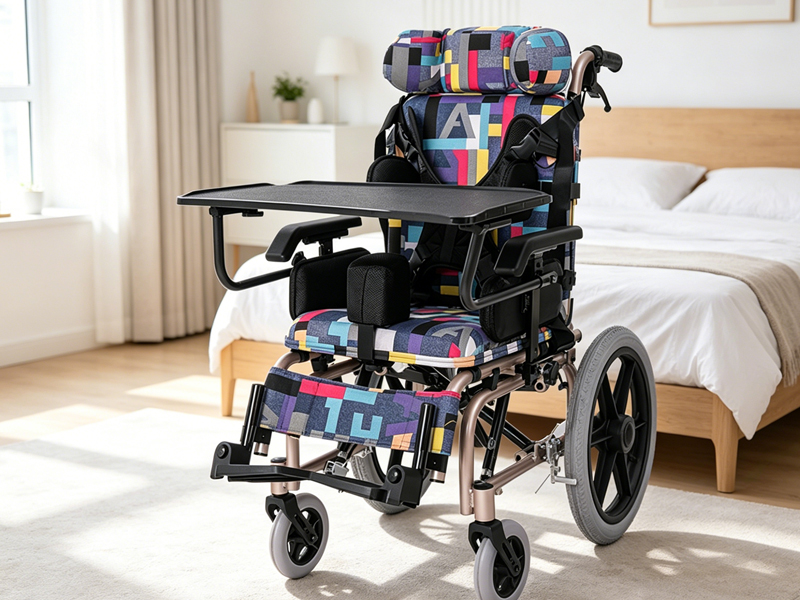
There is no universal wheelchair suitable for every child with cerebral palsy. The ideal solution depends on mobility level, posture requirements, muscle control, caregiver needs, and daily living environments.
When evaluating a pediatric wheelchair, families and professionals typically consider:
Children who require more postural support may benefit from reclining cerebral palsy wheelchairs like the YSM2201, while those seeking increased independent mobility may benefit from electric pediatric wheelchairs such as the YSE403.
For travel-focused families or school-based use, lightweight foldable wheelchairs like the YSM2201L provide practical mobility without excessive bulk.
Ultimately, the best pediatric wheelchair is one that supports not only movement, but also participation, comfort, therapy goals, and emotional confidence.
A pediatric cerebral palsy wheelchair should never be viewed simply as medical equipment. It is part of a child’s daily experience of the world.
The right wheelchair supports classroom learning, outdoor play, therapy progress, family interaction, and social connection. It helps reduce physical strain while creating opportunities for independence and engagement.
As pediatric mobility technology continues to advance, modern wheelchairs are becoming more adaptive, lightweight, supportive, and user-centered than ever before. Products like the YSM2201, YSE403, and YSM2201L reflect this shift toward mobility solutions that balance rehabilitation support with real-world practicality.
For families, therapists, and healthcare providers, choosing a pediatric cerebral palsy wheelchair is ultimately about helping children move through life with greater comfort, confidence, and freedom.