Our Location
Free Trade Tower, Xiyong street.
Chongqing, China

Free Trade Tower, Xiyong street.
Chongqing, China
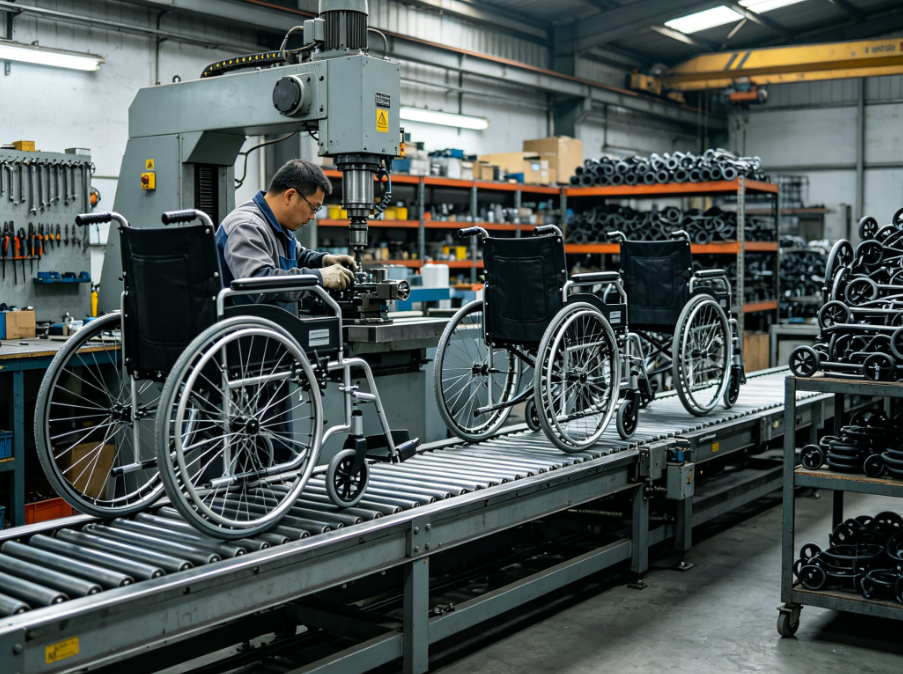
Carbon fiber wheelchairs have quietly reshaped modern mobility. What once felt like a niche upgrade has become a serious standard for users who demand performance, independence, and long-term comfort. In recent years, the shift toward ultra-light materials has accelerated, and carbon fiber sits at the center of that transformation.
Before diving into manufacturers, it helps to understand why carbon fiber matters so much in wheelchairs.
Traditional aluminum and steel frames are durable, but they reach a limit when it comes to weight reduction and vibration absorption. Carbon fiber changes that equation completely. It delivers:
For users with active lifestyles, spinal cord injuries, or long-term mobility needs, those differences are not cosmetic—they directly affect fatigue, posture, and independence.
Iyasocare represents a newer wave of manufacturers entering the carbon fiber wheelchair market with a more global and design-driven mindset.
Rather than relying solely on traditional medical mobility frameworks, the brand focuses on:
What makes Iyasocare interesting in this landscape is its timing. As global demand for ultra-light mobility solutions grows, newer brands like this are stepping into a space once dominated only by legacy manufacturers.
Motion Composites is widely recognized as one of the first manufacturers to fully commit to carbon fiber wheelchair frames at scale. Based in Canada, the company built its reputation around ultralight rigid-frame designs that prioritize performance without sacrificing aesthetics.
Their carbon fiber models are known for:
What makes Motion Composites stand out is not just engineering, but philosophy. Their designs feel closer to performance sports equipment than medical devices, which resonates strongly with active wheelchair users who want mobility that feels natural and efficient.
Sunrise Medical, the parent company of the widely known Quickie brand, has long been a dominant force in mobility products. Their approach to carbon fiber wheelchairs blends clinical precision with performance engineering.
Quickie’s carbon fiber innovations focus on:
Unlike purely performance-focused brands, Sunrise Medical places strong emphasis on rehabilitation needs and clinical prescription use. That makes their carbon fiber chairs especially popular in healthcare systems and insurance-supported mobility programs.
Permobil operates in the high-end mobility segment, and its acquisition of TiLite strengthened its position in the ultra-light rigid wheelchair category.
TiLite, in particular, is well known for precision titanium and carbon fiber hybrid engineering.
Key characteristics include:
Permobil’s ecosystem approach is also important. Instead of selling just a wheelchair, they build integrated mobility solutions including seating systems, power assist devices, and rehab technology.
Invacare is one of the largest global mobility companies, and within its portfolio, the Swiss brand Küschall represents its high-performance manual wheelchair division.
Küschall has been closely associated with rigid-frame innovation and has expanded into carbon fiber solutions that emphasize:
Invacare’s global reach means Küschall products are widely available across rehabilitation centers, hospitals, and private users worldwide.
Ottobock is a German healthcare technology leader best known for prosthetics, but its wheelchair division has steadily grown in sophistication.
Their carbon fiber wheelchair designs reflect typical German engineering priorities:
Ottobock tends to focus on integrated mobility rather than purely sporty designs, making their chairs suitable for users who prioritize stability, posture support, and clinical reliability.
Panthera is a Swedish manufacturer known for ultra-light rigid wheelchairs that often appeal to experienced users and athletes.
Their design language is extremely minimal:
Panthera chairs often feel almost “bare essential,” which is exactly the point. They are designed to remove everything unnecessary and leave only performance-critical structure.
Karman Healthcare has carved out a strong position in the mid-range mobility market, particularly in North America.
Their carbon fiber wheelchair offerings aim to balance affordability with performance:
Karman’s strength lies in accessibility. While not positioned as ultra-premium performance chairs, their products bring carbon fiber benefits to a wider audience.
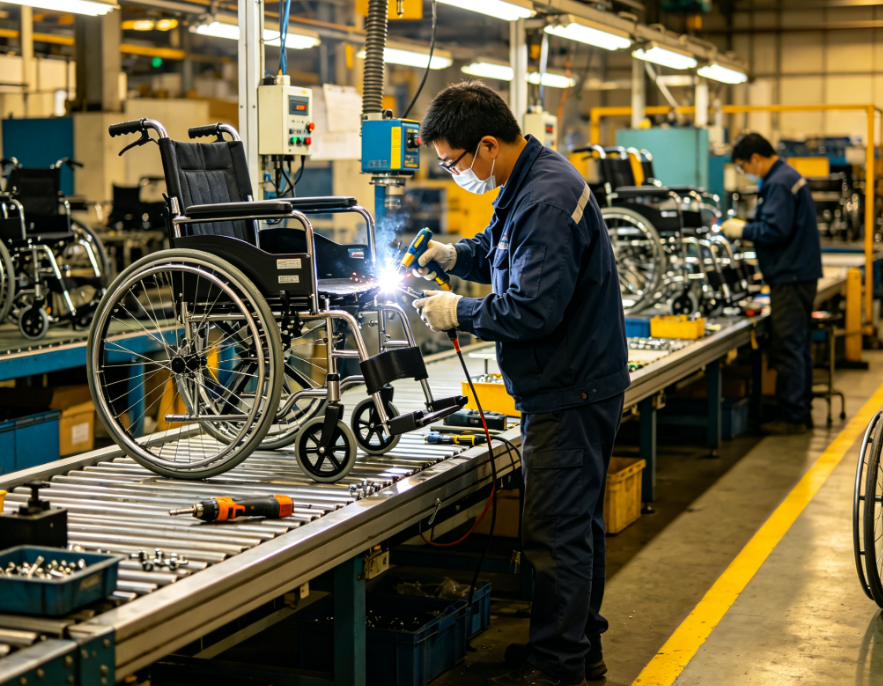
Karma Medical (also known as Karma Mobility) is a Taiwan-based manufacturer with a growing global footprint.
Their carbon fiber and lightweight wheelchairs emphasize:
Karma has been particularly active in developing countries and international distribution networks, making advanced wheelchair technology more widely accessible.
MEYRA is one of Germany’s long-standing wheelchair manufacturers, with decades of experience in rehabilitation equipment.
Their carbon fiber and lightweight models focus on:
MEYRA’s engineering philosophy leans more clinical than sporty, but their contribution to carbon fiber adoption in medical mobility remains significant.
Although all ten companies operate in the same product category, their philosophies differ significantly. Understanding these differences helps users and buyers make better decisions.
Performance-focused brands
Motion Composites, Panthera, TiLite
→ Built for propulsion efficiency, sports use, and active independence
Clinical and rehabilitation-focused brands
Invacare (Küschall), Ottobock, MEYRA
→ Designed for hospital prescriptions, long-term care, and medical support systems
Balanced mainstream brands
Sunrise Medical (Quickie), Karma Medical, Karman Healthcare
→ Combine usability, adjustability, and broad accessibility
Emerging and design-driven brands
Iyasocare
→ Focused on modern lightweight materials and global market expansion
Across all manufacturers, one trend is consistent: carbon fiber is no longer experimental. It is becoming a standard material in premium mobility design.
Key drivers include:
As production techniques improve, prices are gradually becoming more accessible, pushing adoption beyond elite users into mainstream markets.
The carbon fiber wheelchair market is no longer defined by a single innovation—it is defined by a global ecosystem of manufacturers interpreting the same material in different ways.
Some prioritize clinical stability, others chase athletic performance, and a growing group is focused on accessibility and global reach.
Together, companies like Motion Composites, Sunrise Medical, Permobil, Invacare, Ottobock, Panthera, Karman Healthcare, Karma Medical, MEYRA, and Iyasocare are shaping what modern mobility looks like in the real world.