Our Location
Free Trade Tower, Xiyong street.
Chongqing, China

Free Trade Tower, Xiyong street.
Chongqing, China
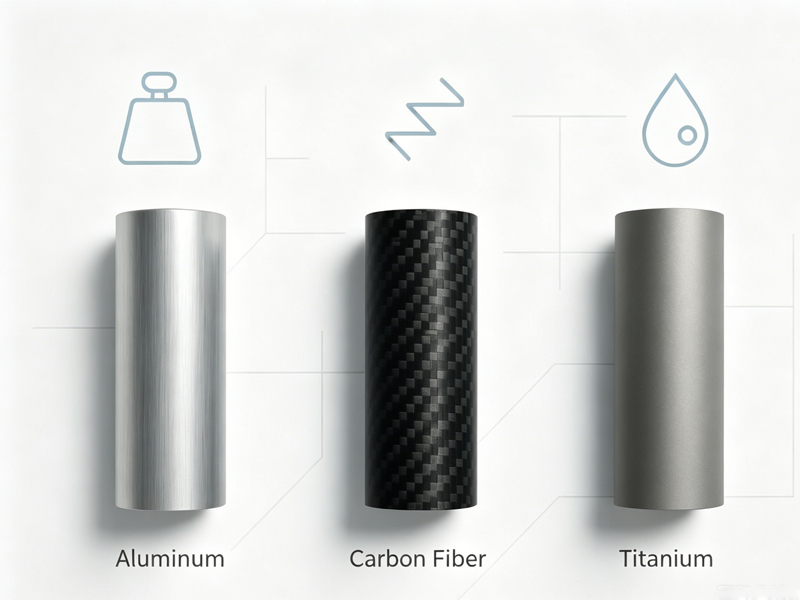
Choosing a lightweight wheelchair frame involves much more than comparing numbers on a specification sheet. While lower weight often dominates marketing conversations, experienced users, clinicians, distributors, and procurement teams understand that frame material influences everything from ride quality and long-term durability to maintenance requirements and repair options.
A wheelchair frame is not simply a collection of tubes or composite panels. It is the structural foundation responsible for supporting daily mobility, transferring propulsion energy efficiently, withstanding years of repeated stress, and surviving real-world conditions ranging from transportation and curb impacts to humidity and cleaning chemicals.
As manufacturers continue pushing toward lighter designs, aluminum, carbon fiber, and titanium have emerged as the three dominant lightweight frame materials. Each offers distinct advantages, but each also comes with compromises that buyers should understand before making a decision.
For many buyers, “lighter” has become synonymous with “better.” However, frame material affects far more than transport convenience.
Every wheelchair frame must simultaneously accomplish three critical tasks:
While reducing a few pounds may improve lifting and transportation, the bigger question is whether the material contributes positively to durability, comfort, serviceability, and long-term ownership experience.
Frame material should never be viewed as a standalone characteristic. It represents a combination of interconnected properties, including:
Improving one characteristic often influences another. Understanding these trade-offs leads to better decisions for both individual users and procurement professionals.
Evaluating wheelchair frame materials does not require an engineering degree. However, understanding several basic concepts makes comparisons much more meaningful.
Strength
Strength refers to a material’s ability to withstand loads without permanently deforming or failing.
Wheelchairs encounter substantial forces during transfers, curb negotiation, uneven terrain navigation, and transportation. Adequate strength ensures these loads remain within safe operating limits.
However, stronger does not automatically mean better. Excessive focus on strength without considering other properties may result in unnecessary weight or reduced comfort.
Stiffness
Stiffness describes how much a frame deflects under load.
Highly stiff frames generally provide a more responsive feel, transmitting propulsion forces efficiently to the wheels. Many active users appreciate this immediate response.
However, increased stiffness may also transfer more road vibration to the user, potentially affecting comfort during prolonged use.
Fatigue Resistance
Unlike single catastrophic events, fatigue damage develops gradually through repeated loading cycles.
Every push stroke, transfer, bump, and vibration contributes to fatigue accumulation. Since wheelchairs experience thousands of loading cycles throughout their lifespan, fatigue performance often determines long-term durability.
This characteristic becomes especially important for active users and fleet operators seeking extended service life.
Corrosion Resistance
Environmental exposure varies significantly depending on user location and usage patterns.
Sweat, humidity, cleaning agents, coastal environments, and seasonal weather conditions all influence material degradation.
Excellent corrosion resistance can contribute substantially to longevity and reduced maintenance requirements.
Manufacturability: The Overlooked Factor
One additional consideration often overlooked by buyers is manufacturability.
A material may perform exceptionally well in laboratory conditions, but if production processes are difficult to control consistently, variability between units may increase.
Manufacturing complexity influences:
Ultimately, the quality of manufacturing execution frequently matters as much as the material itself.
Among lightweight wheelchair materials, aluminum remains the most widely used option worldwide.
Its popularity stems from a balanced combination of low weight, manufacturing efficiency, affordability, and established service networks.
Rather than representing a compromise, aluminum often serves as the benchmark against which other lightweight materials are evaluated.
Excellent Weight-to-Performance Balance
Modern aluminum alloys offer impressive structural performance while maintaining relatively low overall weight.
Although carbon fiber may achieve lower absolute weights, aluminum delivers competitive performance suitable for the majority of users.
Established Manufacturing Processes
Aluminum fabrication techniques are highly mature.
Manufacturers benefit from:
These factors often translate into consistent product quality.
Greater Service Accessibility
One significant advantage of aluminum lies in repair and service availability.
In many regions, repair professionals familiar with aluminum wheelchair structures are easier to locate compared with specialists in titanium welding or composite repair.
This accessibility can reduce downtime and lifecycle costs.
Design Versatility
Aluminum tubing can be formed into diverse configurations, enabling manufacturers to optimize:
This flexibility supports broad customization across user populations.
No material is without limitations.
Compared with titanium, aluminum frames are frequently described as transmitting more vibration.
Users traveling regularly on rough pavement or uneven surfaces may perceive a firmer ride quality.
However, tire selection, seating systems, and frame geometry also significantly influence comfort outcomes.
Discussions surrounding aluminum fatigue often oversimplify the issue.
The actual durability of an aluminum wheelchair depends on factors including:
Consequently, comparing manufacturers based solely on material choice provides an incomplete picture.
When evaluating aluminum wheelchairs from different suppliers, the critical question is rarely whether aluminum is appropriate.
Instead, buyers should ask whether the manufacturer demonstrates consistent process control and robust quality assurance practices.
Well-executed aluminum designs frequently outperform poorly manufactured premium-material alternatives.
Carbon fiber has transformed industries ranging from aerospace to professional cycling, and wheelchair manufacturing is no exception.
Its appeal centers around exceptional weight reduction and highly tunable performance characteristics.
Unlike metals, carbon fiber composites consist of layered reinforcement fibers embedded within resin matrices. Engineers can orient these fibers strategically to optimize performance for anticipated loading conditions.
This design flexibility creates unique opportunities unavailable with conventional metals.
Many users describe carbon fiber wheelchairs as exceptionally responsive.
Because engineers can tailor laminate structures precisely, carbon fiber frames may exhibit:
Rather than relying solely on inherent material properties, designers can influence ride behavior through laminate architecture.
This capability distinguishes composites from traditional metallic structures.
Despite impressive performance advantages, carbon fiber introduces considerations that buyers should not overlook.
Impact Sensitivity
The most important distinction involves impact behavior.
Carbon fiber generally performs very well under routine cyclic loading conditions. However, direct impacts may affect composite structures differently compared with metals.
Examples include:
Where metals may dent or deform visibly, composite damage can involve cracking or internal delamination.
This characteristic does not mean carbon fiber is inherently fragile.
Rather, it means damage mechanisms differ and require appropriate inspection protocols.
What Research Suggests About Durability
Research evaluating carbon fiber wheelchair durability has produced encouraging findings.
A study by Gebrosky et al. (2020) examining carbon fiber and aluminum wheelchair frame performance under standardized testing conditions found that carbon fiber frame specimens survived more testing cycles than comparator designs, while failures in other components such as casters and tires remained similar.
These findings highlight an important principle:
A durable frame alone does not eliminate maintenance requirements elsewhere within the wheelchair system.
Therefore, durability claims should always be interpreted within the context of:
Practical Considerations for Carbon Fiber Buyers
Carbon fiber may be especially appealing for users prioritizing:
However, buyers should also consider:
For some users, these considerations are entirely manageable.
For others, particularly fleet operators or environments involving frequent rough handling, alternative materials may provide greater practicality.
Titanium Wheelchair Frames: Long-Term Performance and Ride Comfort
Titanium occupies a distinctive position within the wheelchair industry.
Frequently regarded as a premium material, titanium combines lightweight construction with excellent corrosion resistance and strong fatigue performance.
Many experienced users describe titanium wheelchairs as offering a uniquely refined ride experience.
Titanium naturally forms an extremely stable oxide layer that protects against environmental degradation.
This characteristic makes it particularly attractive for users exposed to:
Reduced corrosion concerns may contribute to extended service life.
Titanium is widely respected for its resistance to fatigue-related damage.
Given the repetitive nature of wheelchair use, this property aligns well with long-term reliability objectives.
While design execution remains critical, titanium’s fatigue behavior contributes positively to durability expectations.
Perhaps the most frequently cited advantage among users is ride comfort.
Titanium frames are often described as delivering improved vibration damping compared with aluminum alternatives.
Although subjective experiences vary, many users appreciate the smoother feel during prolonged daily use.
Despite impressive benefits, titanium presents several practical considerations.
Titanium fabrication demands stricter process control.
Welding procedures require:
These requirements increase manufacturing complexity.
Repair options may be less accessible depending on geographic location.
While titanium repairs are certainly possible, they often depend on specialized providers with appropriate equipment and expertise.
Procurement teams should evaluate service networks before committing to large-scale adoption.
Titanium’s premium positioning frequently results in higher acquisition costs.
Organizations must determine whether anticipated lifecycle benefits justify initial investment.
Transportation and Daily Handling
Lower weight can simplify:
However, removable wheels, folding mechanisms, and component choices often influence handling as much as frame material itself.
Ride Experience
Users prioritizing comfort may gravitate toward titanium.
Those emphasizing responsiveness and minimal weight may favor carbon fiber.
Aluminum remains attractive for balancing performance with practicality.
Maintenance Expectations
Daily environments matter considerably.
Users encountering frequent impacts or demanding conditions should consider inspection requirements and repair accessibility alongside performance benefits.
Choosing a material also means selecting a manufacturing partner.
The following questions help minimize long-term risk:
Which durability and safety standards were used during testing?
Request summaries of applicable standards and testing outcomes.
How is material consistency controlled?
For carbon fiber:
For metals:
What change-control procedures exist?
Changes involving materials, welding parameters, or manufacturing methods can significantly influence performance.
Understanding change management processes supports procurement confidence.
What traceability systems are available?
Strong documentation practices facilitate:
What does the warranty specifically cover?
Clarify distinctions between:
Warranty language may differ substantially between materials.
The search for the “best” wheelchair frame material often misses a crucial point.
Each material excels under different circumstances.
Aluminum offers practicality, accessibility, and balanced performance.
Carbon fiber delivers exceptional weight reduction and engineered responsiveness.
Titanium emphasizes longevity, corrosion resistance, and enhanced ride comfort.
The ideal choice depends not only on specifications but also on user lifestyle, maintenance expectations, service infrastructure, and procurement objectives.
Rather than asking which material is superior, a more useful question is:
Which material best aligns with the intended use environment and long-term support strategy?
When evaluated from this perspective, material selection becomes a thoughtful lifecycle decision rather than a race toward the lowest number on a spec sheet.
1. Which wheelchair frame material is the lightest?
Carbon fiber is generally used to achieve the lowest frame weights, while titanium also offers lightweight performance. Aluminum remains lightweight as well and is often selected because it balances weight reduction with manufacturability, durability, and serviceability.
2. Is carbon fiber durable enough for everyday wheelchair use?
Yes. Carbon fiber can perform extremely well in daily applications when engineered and tested appropriately. However, buyers should consider impact inspection procedures, as composite materials respond differently to direct impacts compared with metals.
3. Is titanium always more durable than aluminum?
Not necessarily. Although titanium offers excellent corrosion resistance and fatigue characteristics, overall durability depends heavily on frame design, welding quality, manufacturing consistency, and real-world usage conditions.
4. Which wheelchair frame material requires the least maintenance?
Titanium generally offers the lowest maintenance burden related to corrosion concerns. However, all wheelchairs require routine inspection of components such as wheels, casters, brakes, and seating systems regardless of frame material.
5. Does a lighter wheelchair automatically improve mobility performance?
Not always. While lower weight may improve transport convenience and propulsion efficiency, factors such as frame geometry, seating position, wheel configuration, and user strength often influence overall mobility performance more significantly.
6. What should distributors prioritize when sourcing lightweight wheelchairs?
Distributors should focus on manufacturing consistency, quality system maturity, compliance documentation, warranty terms, spare parts availability, and established service pathways rather than relying solely on premium material claims.