Our Location
Free Trade Tower, Xiyong street.
Chongqing, China

Free Trade Tower, Xiyong street.
Chongqing, China
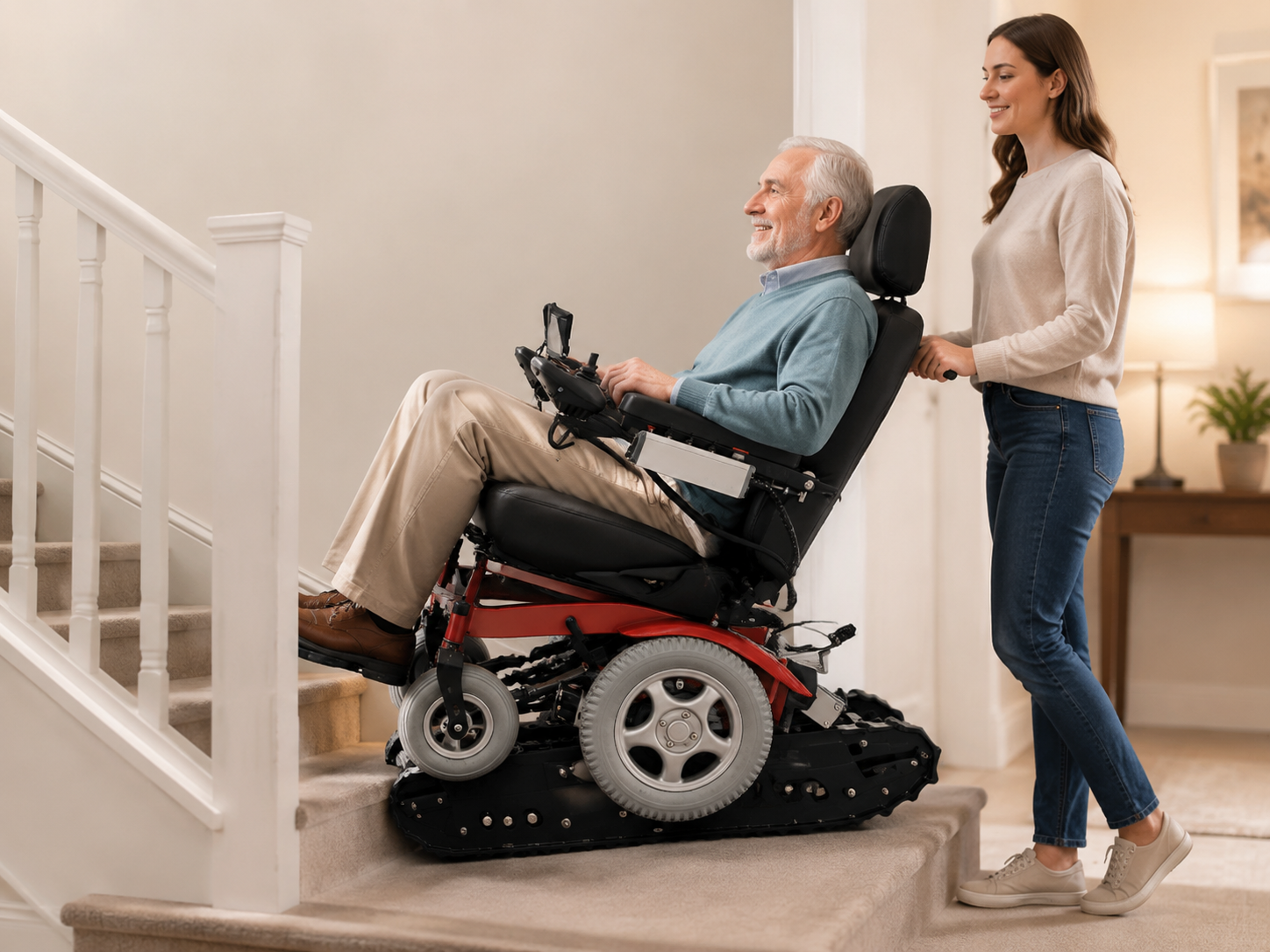
There is a quiet shift happening in the world of mobility aids. Not loud, not flashy—but deeply meaningful. For families caring for elderly members, for individuals recovering from surgery, or for users living with limited mobility in multi-level homes, one challenge appears again and again: stairs. Traditional wheelchairs stop at the edge of a staircase, but life does not.
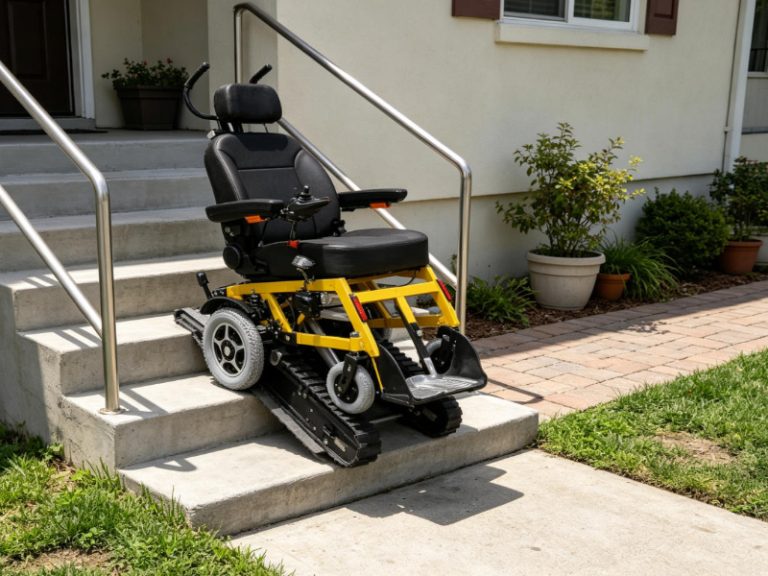
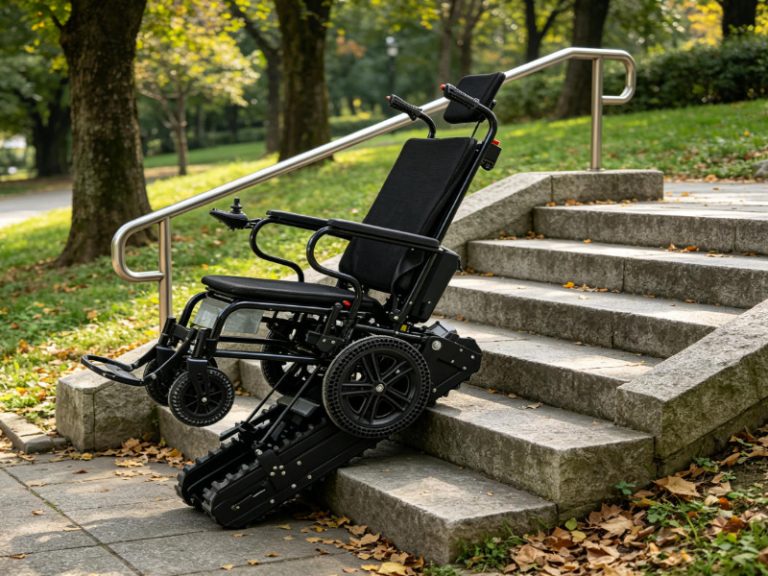
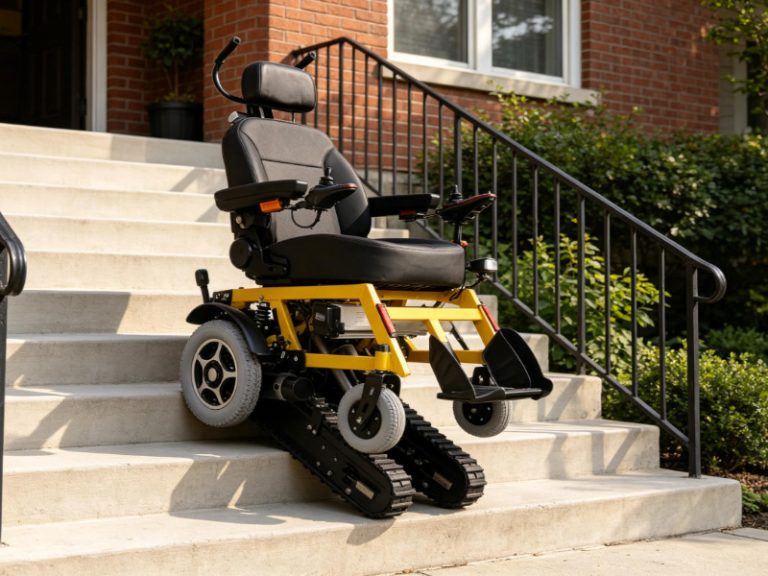
That is where automatic hill-climbing electric wheelchairs are changing the conversation. These machines are no longer experimental or niche. They are becoming practical, reliable mobility companions designed for real homes, real buildings, and real daily routines. Among the most notable options currently available are the stair-climbing wheelchair series including the YSE207, YSE201M, and a new generation electric stair climbing wheelchair model designed for broader adaptability and smoother navigation.
For decades, electric wheelchairs have focused on flat-surface mobility—sidewalks, indoor corridors, shopping malls, and hospitals. But most real-world environments are not built on a single level. Homes have stairs. Clinics have ramps that are too steep. Public buildings often mix elevators, steps, and uneven transitions.
An automatic hill-climbing electric wheelchair is designed to bridge this gap. Instead of relying on external assistance or bulky stair lifts, these wheelchairs integrate climbing mechanisms that allow controlled movement up and down stairs. The goal is not just transport, but independence.
What makes modern models stand out is not just the climbing ability itself, but how that ability is balanced with stability, comfort, and intuitive control systems. The latest designs focus on safety-first engineering while still keeping the user experience simple enough for everyday operation.
Before diving into specific models, it is worth understanding what sets these wheelchairs apart.
Unlike standard electric wheelchairs that rely on wheels alone, stair climbing models often incorporate tracked systems, balancing technology, or hybrid wheel-track mechanisms. These systems distribute weight more evenly across steps, reducing the risk of tipping and improving stability during ascent or descent.
In practical terms, this means:
Modern designs also prioritize compact folding structures, allowing users to store or transport the wheelchair in a vehicle without requiring specialized equipment.
The YSE207 Stair Climbing Wheelchair represents a more advanced approach to stair mobility. It is designed with a strong emphasis on stability control during vertical movement, making it suitable for users who need reliable assistance in both residential and public environments.
One of the defining characteristics of this model is its balanced climbing system, which helps maintain consistent weight distribution when transitioning between steps. For caregivers, this reduces physical strain significantly, especially in environments where elevators are not available.
From a usability perspective, the YSE207 tends to appeal to users who prioritize safety over speed. The control interface is typically straightforward, with intuitive directional input and emergency stop features that enhance confidence during use.
It is also worth noting that this model is often chosen for environments such as rehabilitation centers or assisted living facilities, where multiple users may require daily stair navigation support.
In real-world usage, the YSE207 performs best in structured stair environments—standard indoor staircases with consistent step height and width. It is not just a mobility tool; it is a stability-focused transport system designed to reduce risk in critical movement scenarios.
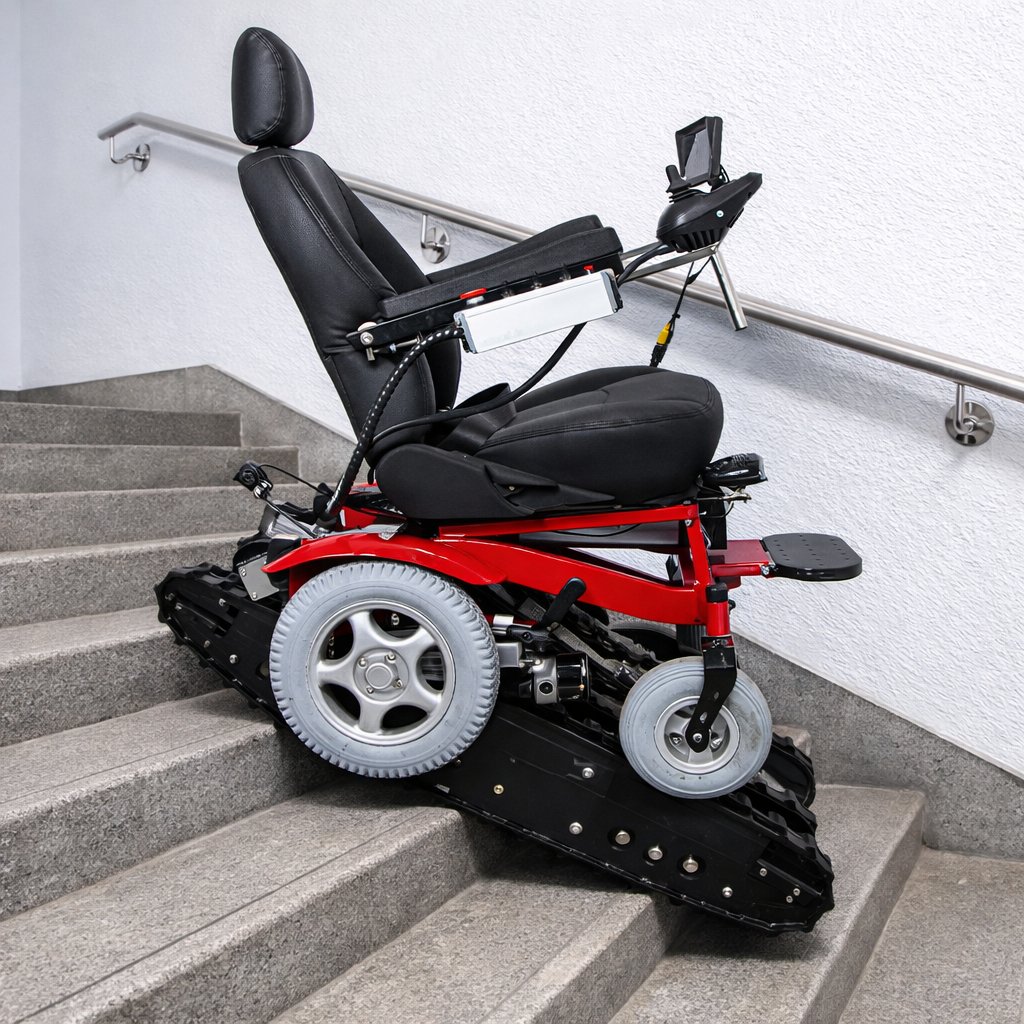
The YSE201M Stair Climbing Wheelchair takes a slightly different direction. Instead of focusing purely on heavy-duty stability, it leans into portability and everyday usability.
This model is often selected by users who need a balance between stair climbing capability and compact design. In many cases, families living in smaller apartments or urban homes find this approach more practical, especially when storage space is limited.
The YSE201M is designed with mobility convenience in mind. It typically features a foldable structure that allows it to be transported in standard vehicles, making it suitable for travel between home, hospital visits, and outdoor use.
Where it differs most from heavier models is in its handling style. It is generally more maneuverable in tight indoor environments, which makes it ideal for users who frequently transition between stair use and flat-ground mobility within confined spaces.
While it still provides stair climbing functionality, it is often perceived as a more “daily-use friendly” solution rather than a specialized heavy-duty unit. This makes it especially appealing for users who want one wheelchair that can handle multiple scenarios without switching equipment.
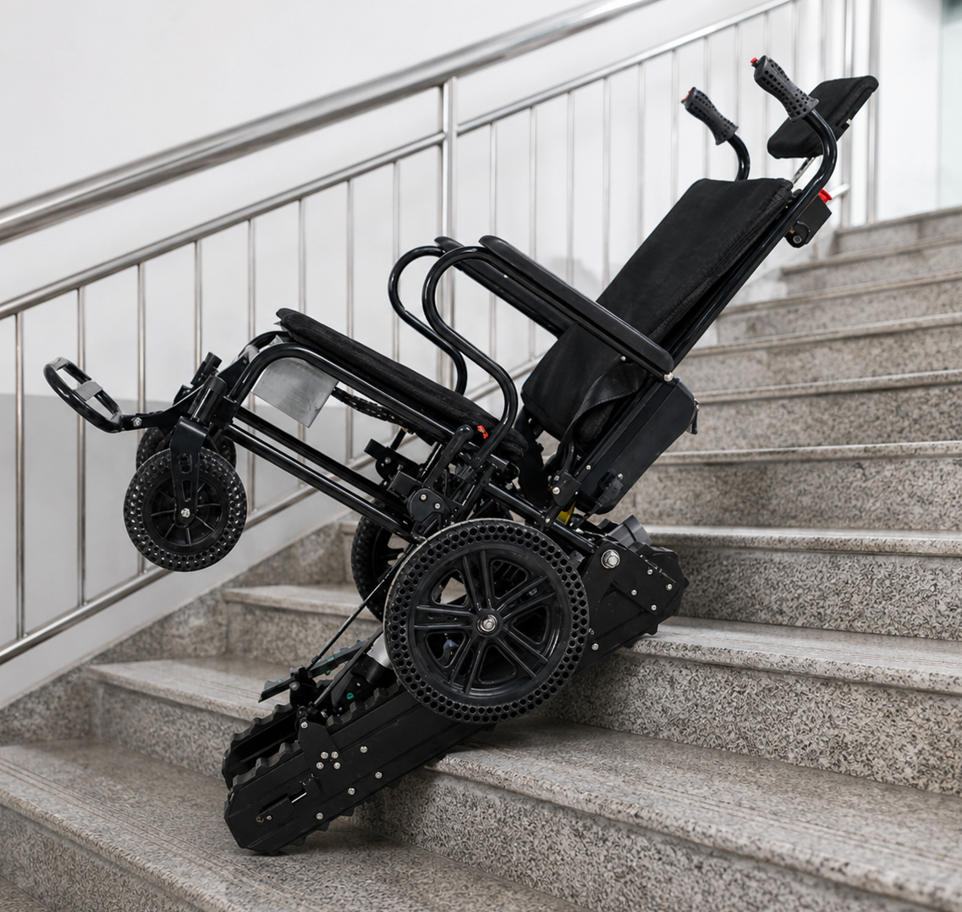
The Electric Stair Climbing Wheelchair represents a broader category of newer-generation climbing wheelchairs that focus on versatility and user adaptability.
Rather than being locked into a single use case, this type of model is designed to respond to a wider range of environments—residential stairs, public staircases, ramps, and transitional surfaces.
What stands out in this category is the emphasis on ergonomic comfort and smoother transition control. Users often report that the climbing motion feels less mechanical and more fluid, which can be especially important for individuals who experience anxiety during elevation changes.
Another key aspect is modular design thinking. Many newer electric stair climbing wheelchairs are built with upgrade paths in mind, allowing components like batteries, control modules, or seat systems to be improved over time rather than replaced entirely.
This future-oriented approach makes them a strong option for users who are planning long-term mobility solutions rather than short-term assistance tools.
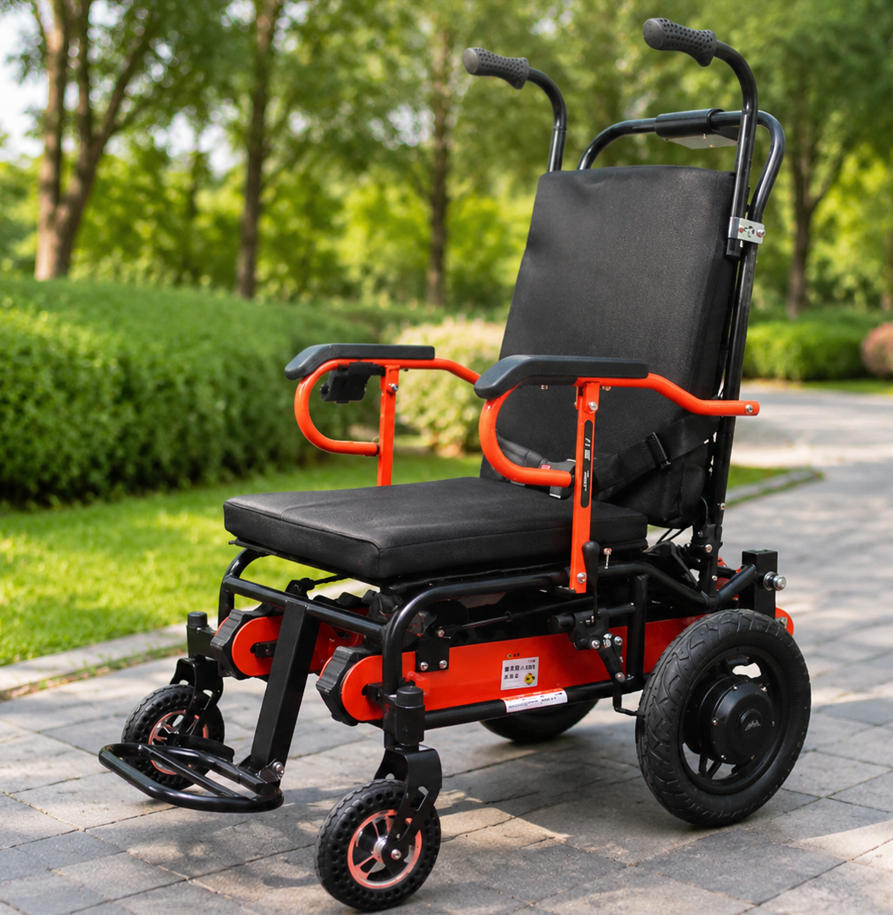
While all three options fall under the same category of automatic hill-climbing electric wheelchairs, their ideal use cases differ in meaningful ways.
The YSE207 is best suited for users who prioritize maximum stability and controlled climbing in structured environments. It is often the preferred choice in care facilities or homes with regular stair use.
The YSE201M leans toward portability and daily convenience. It is ideal for users who need a lightweight, foldable solution that can handle both indoor stairs and external travel without complicated setup.
The next-generation electric stair climbing wheelchair category focuses on adaptability and comfort, making it suitable for users who want a more modern, flexible mobility experience across varied environments.
Instead of thinking in terms of “better or worse,” it is more accurate to view these models as different responses to different lifestyles.
Choosing a stair climbing wheelchair is not just about technical specifications. Real-world usability matters far more than brochure descriptions.
One of the first considerations is staircase type. Straight, uniform stairs are generally easier to navigate than spiral or irregular staircases. Home layout plays a major role in determining which model will perform best.
Another factor is caregiver involvement. While these wheelchairs reduce physical strain, some models still require supervision or assistance during operation, especially in tighter spaces or steep staircases.
Battery life and charging time are also critical. Since stair climbing consumes more power than flat-ground movement, users should consider how often the wheelchair will be used in vertical mobility scenarios.
Finally, storage and transport should not be overlooked. Even advanced models that support stair climbing still need to be stored safely when not in use, particularly in smaller homes or apartments.
Urban design is improving, but accessibility gaps still exist. Elevators break down. Older buildings remain unchanged. Temporary structures often lack accessibility infrastructure entirely.
In this context, automatic hill-climbing electric wheelchairs are not just convenience tools—they are independence tools.
They reduce reliance on human assistance, lower physical risk during transfers, and allow users to maintain a more active lifestyle even in challenging environments.
As technology improves, these devices are becoming quieter, safer, and more intuitive. What once required specialized training is now increasingly user-friendly.
1. Are automatic hill-climbing electric wheelchairs safe for home use?
Yes, modern stair climbing wheelchairs are designed with multiple safety systems including balance control, braking stability, and emergency stop functions. However, users should always ensure stairs are clear and follow manufacturer guidelines for best safety performance.
2. Can stair climbing wheelchairs be used outdoors?
Many models can be used outdoors on flat or moderately inclined surfaces. However, performance may vary depending on terrain type. Smooth pavements and structured ramps are generally suitable, while uneven ground may require caution.
3. What is the main difference between compact and heavy-duty models?
Compact models prioritize portability and everyday convenience, making them easier to transport and store. Heavy-duty models focus more on stability, load capacity, and controlled stair navigation, often making them better suited for fixed environments like homes or care facilities.