Our Location
Free Trade Tower, Xiyong street.
Chongqing, China

Free Trade Tower, Xiyong street.
Chongqing, China
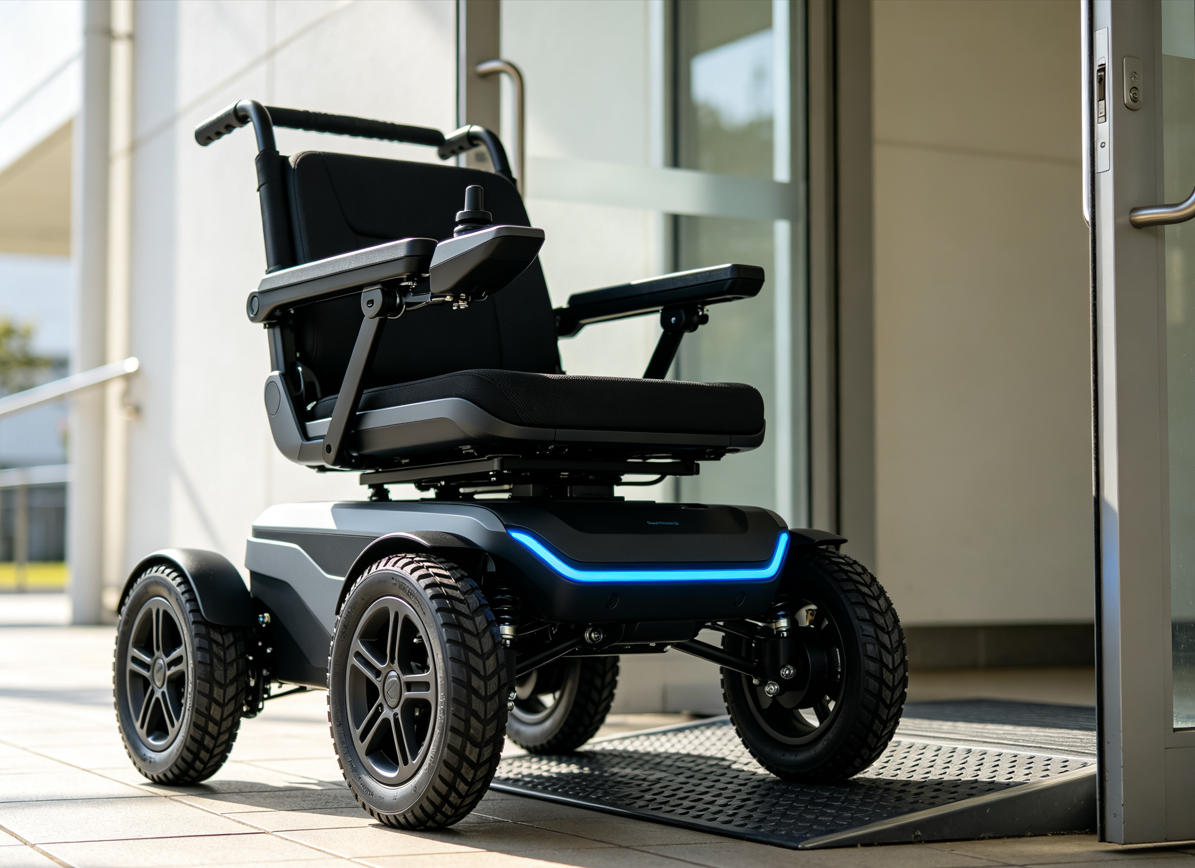
There is a quiet but important shift happening in mobility technology. Electric wheelchairs are no longer designed only for indoor convenience or polished shopping malls. A growing number of users now expect something more capable—equipment that can handle uneven sidewalks, gravel paths, park trails, ramps, wet surfaces, and the unpredictable terrain of everyday life outside controlled environments. This is where the four-wheel-drive electric wheelchair has become a meaningful upgrade rather than a luxury accessory.
Unlike traditional rear-wheel or mid-wheel drive systems that prioritize indoor maneuverability, a four-wheel-drive configuration is built around one central idea: traction and stability under real-world conditions. It distributes power across all four wheels, allowing the chair to “pull” and “push” itself more effectively across challenging surfaces. But the real advantages go far beyond technical specifications. They directly affect how freely a user can move, how confidently they can travel, and how independently they can live.
The biggest difference becomes obvious the moment the terrain changes. Standard electric wheelchairs often perform well indoors, but the moment they encounter loose gravel, grass, dirt, or uneven pavement, traction becomes inconsistent. Wheels may spin, slip, or struggle to maintain direction. A four-wheel-drive system solves this by distributing torque across all wheels simultaneously, improving grip in conditions where friction is unpredictable.
This design is especially valuable for users living in suburban or rural environments, or anyone who frequently moves between indoor and outdoor spaces. Parks, garden pathways, ramps, parking lots, and older sidewalks become significantly easier to navigate. Instead of planning routes around accessibility limitations, users can begin to expect consistent performance across most surfaces.
Manufacturers such as Permobil, Invacare, Pride Mobility, WHILL, and Sunrise Medical have all invested heavily in all-terrain drive systems, recognizing that modern mobility users demand more than indoor functionality.
One of the most overlooked benefits of four-wheel-drive electric wheelchairs is stability. Because power is distributed evenly across all wheels, the chair maintains better balance when climbing slopes, crossing uneven surfaces, or transitioning between different textures such as tile to asphalt or concrete to grass.
This stability is not just mechanical—it is psychological. Many users report that confidence in mobility is as important as mobility itself. When a wheelchair feels unstable or unpredictable, users naturally restrict their movement, avoiding certain areas or declining activities that involve unknown terrain. A four-wheel-drive system reduces that hesitation by providing a more grounded and controlled experience.
Steep ramps in public buildings, slanted driveways, and outdoor inclines are handled more smoothly because torque is not concentrated in a single axle. Instead, traction is shared. The result is reduced wheel slippage and more controlled acceleration, especially when starting from a stop on an incline.
Outdoor mobility is rarely about perfect weather. Wet pavement after rain, damp grass, or lightly muddy trails can significantly reduce traction for standard electric wheelchairs. Four-wheel-drive systems improve grip in these conditions by maintaining consistent power delivery across all wheels, reducing the likelihood of slipping or sudden directional loss.
This is particularly important for users who live in climates with seasonal rain or snow. Even light surface moisture can affect wheel performance, but a balanced drive system helps maintain stability without requiring constant manual correction.
While no wheelchair is truly “all-weather proof,” four-wheel-drive models dramatically expand the range of conditions in which users can safely travel.
Another major advantage lies in gradient performance. Traditional wheelchairs often struggle with steep inclines because traction becomes uneven, especially when weight shifts backward during ascent. Four-wheel-drive systems compensate for this by maintaining forward pulling force from multiple contact points.
This results in smoother hill climbing, better braking control on descents, and less reliance on sudden power adjustments that can feel jerky or unsafe. For users living in hilly neighborhoods or cities with frequent ramps and elevated walkways, this feature becomes essential rather than optional.
It also reduces strain on the motor system, as load is distributed more efficiently across the drivetrain, potentially extending component lifespan.
A significant advantage that is often underestimated is the reduction in dependency on secondary mobility aids. Many users of standard electric wheelchairs still require assistance when transitioning to outdoor environments—whether that means using ramps, switching to mobility scooters, or relying on caregivers for navigation across rough terrain.
A four-wheel-drive electric wheelchair reduces those dependencies. It becomes a more complete mobility solution, capable of handling daily transitions without additional equipment. For many users, this translates directly into increased independence: spontaneous outdoor activity, easier commuting, and reduced planning around accessibility limitations.
This independence also extends to social participation. Parks, outdoor gatherings, shopping areas, and community spaces become more accessible without requiring special preparation or assistance.
Comfort in mobility devices is not just about seating or cushioning—it is also about motion smoothness. When wheels slip or struggle for traction, the resulting vibrations and jerks can be physically tiring over time. Four-wheel-drive systems reduce these micro-instabilities by maintaining more consistent movement across surfaces.
This leads to a smoother ride quality, particularly on uneven sidewalks or textured outdoor paths. Combined with modern suspension systems found in high-end models, users often experience significantly less fatigue during longer outings.
Brands like WHILL and Permobil have particularly focused on refining ride comfort alongside drive performance, integrating intelligent motor control systems that adjust power distribution dynamically based on terrain resistance.
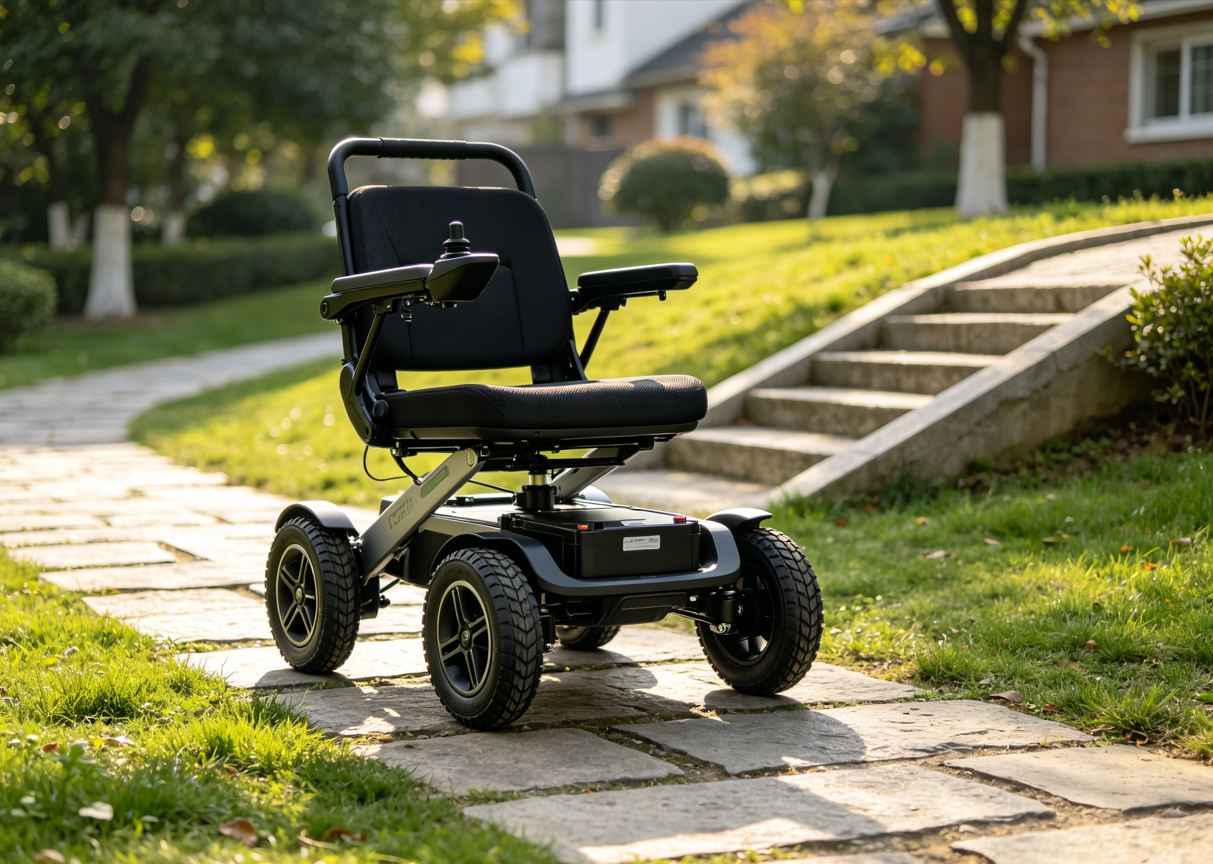
Not every user needs extreme off-road capability, but there are clear scenarios where four-wheel-drive mobility systems provide a noticeable upgrade:
Users living in suburban or rural environments benefit from mixed terrain conditions such as gravel driveways, lawns, and uneven sidewalks. Urban users also benefit when navigating older infrastructure, curb cuts, or construction zones. Outdoor enthusiasts, caregivers supporting active individuals, and users with long daily travel distances also tend to see immediate value in upgraded traction systems.
Even in controlled environments like rehabilitation centers or hospitals, four-wheel-drive systems can improve safety when moving across ramps or transitional flooring surfaces.
The current generation of advanced electric wheelchairs is no longer focused solely on basic mobility. Instead, manufacturers are integrating smart drive systems, terrain sensing, and adaptive torque distribution.
Pride Mobility continues to develop robust consumer-focused models that balance affordability with outdoor capability. Invacare remains a strong player in clinical-grade mobility solutions, often used in rehabilitation and long-term care environments. Meanwhile, Sunrise Medical focuses heavily on customization and ergonomic adaptability.
More innovation-driven companies like WHILL are pushing design boundaries with compact yet highly capable four-wheel-drive systems that prioritize aesthetics and urban usability. Permobil continues to emphasize high-performance engineering for users requiring advanced outdoor and clinical functionality.
Across all these brands, one consistent trend is clear: mobility is no longer defined by limitation, but by expansion.
It would be unrealistic to discuss four-wheel-drive electric wheelchairs without acknowledging their trade-offs. These systems are typically heavier than standard models due to additional motors and reinforced frames. They may also require more battery power, especially when used frequently on rough terrain.
Cost is another factor. Advanced drive systems, improved suspension, and durable outdoor components increase manufacturing complexity. However, many users consider this a long-term investment in independence rather than a short-term purchase.
Battery efficiency has improved significantly in recent years, with modern lithium-ion systems offering better energy density and smarter power management. Some models now adjust torque output dynamically to conserve energy when full traction is not required.
A four-wheel-drive electric wheelchair represents more than a technical upgrade—it reflects a shift in how mobility is understood. Instead of adapting life around limitations, users can now expect their equipment to adapt to life itself.
Whether navigating a park path, crossing uneven streets, or simply moving through daily environments with more confidence, the benefits are tangible. Stability, traction, comfort, and independence all converge into a single outcome: expanded freedom of movement.
And while not every user will require this level of capability, those who do often describe it as transformative rather than incremental.
1. Are four-wheel-drive electric wheelchairs suitable for indoor use?
Yes, they can be used indoors, but they are generally larger and less agile than mid-wheel drive models. Most users find them more beneficial for mixed indoor-outdoor lifestyles rather than tight indoor environments alone.
2. Do four-wheel-drive systems consume more battery power?
In general, yes. Because all four wheels are powered, energy consumption can be higher, especially on rough terrain. However, modern battery systems and adaptive torque control help improve efficiency significantly.
3. Is a four-wheel-drive wheelchair worth the higher cost?
It depends on lifestyle needs. For users who frequently travel outdoors, live in uneven environments, or value maximum independence, the investment is often justified by improved safety, comfort, and mobility range.