Our Location
Free Trade Tower, Xiyong street.
Chongqing, China

Free Trade Tower, Xiyong street.
Chongqing, China
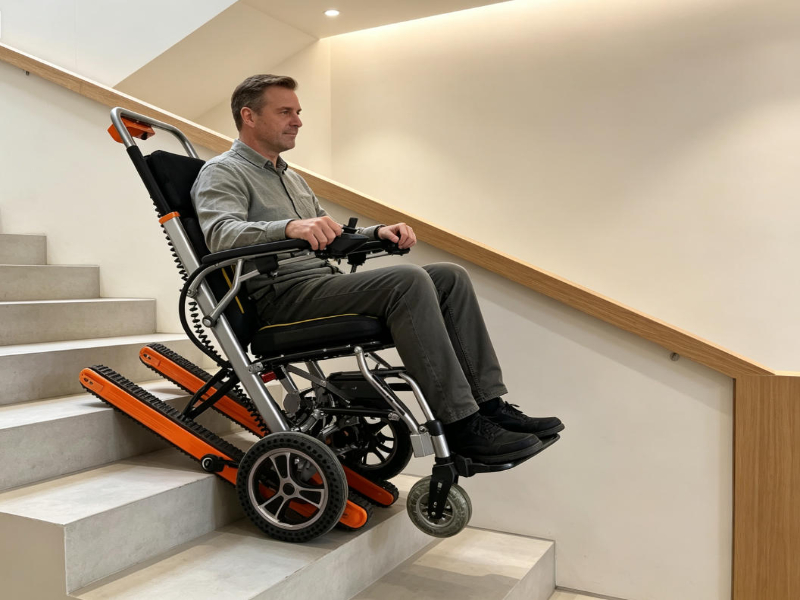
For many wheelchair users, moving across flat surfaces is only one part of the mobility challenge. The real difficulty often begins when facing stairs, steps, and buildings without elevators. A short staircase at home, a few steps at an entrance, or uneven access points in public spaces can quickly become major obstacles that limit independence and daily activities.
Traditional wheelchairs are designed mainly for smooth floors and ramps, but stairs require a completely different mobility solution. Users often need assistance from caregivers, special lifting equipment, or building modifications to overcome these barriers. This dependence can affect not only convenience but also confidence and freedom.
The development of the Electric Folding Stair Climbing Wheelchair is changing the way people approach mobility challenges. Combining electric power, stair climbing technology, and a portable folding structure, this advanced wheelchair provides a practical solution for users who need assistance moving through environments where traditional wheelchairs cannot operate.
A Portable Motorized Wheelchair for Stairs is designed to help adults, seniors, and people with disabilities experience greater mobility flexibility. Instead of being limited by stairs, users can access more spaces with improved safety and convenience.
Modern stair climbing wheelchairs are not only focused on climbing capability. They also emphasize portability, comfort, stability, and everyday usability. Products such as the Automatic Stair Climbing Wheelchair YSE210, Electric Stair Climbing Wheelchair YSE208, and Lightweight Folding Stair Climbing Wheelchair represent the latest approach to creating smarter mobility equipment.
Stairs remain one of the biggest challenges for wheelchair users worldwide.
While ramps, elevators, and accessible buildings continue to improve, many real-life environments still contain stairs. Residential buildings, older homes, small businesses, and outdoor locations may not always provide complete wheelchair accessibility.
This creates a need for mobility equipment that can adapt to existing environments.
An Electric Folding Stair Climbing Wheelchair provides several important advantages:
Stair Accessibility
The wheelchair is designed to help users move over stairs where standard wheelchairs cannot operate.
Reduced Dependence on Caregivers
Users may require less physical assistance when navigating challenging environments.
Portable Mobility Solution
The folding structure makes transportation and storage easier.
Improved Safety and Stability
Advanced climbing mechanisms provide controlled movement during stair transitions.
The purpose of stair climbing technology is not simply to overcome stairs—it is to help users regain access to more parts of everyday life.
A stair climbing wheelchair requires a combination of mechanical design, electrical control, and safety features.
Unlike regular electric wheelchairs that focus mainly on driving performance, stair climbing models must manage changes in height, balance, and weight distribution.
Stair Climbing Mechanism
The most important feature is the climbing system.
Depending on the design, stair climbing wheelchairs may use:
These systems help maintain controlled movement while going up or down stairs.
Electric Drive System
The motor provides the necessary power to support climbing and regular mobility.
Electric assistance reduces the physical effort required from both users and caregivers.
Folding Portable Structure
A major advantage of modern stair climbing wheelchairs is portability.
A folding design allows easier:
Safety Control System
Safe operation is essential when dealing with stairs.
Modern designs focus on:
Together, these technologies create a mobility solution designed for challenging environments.
The Automatic Stair Climbing Wheelchair YSE210 represents a more advanced approach to stair mobility.
Designed for users who need reliable assistance in environments with stairs, the YSE210 focuses on combining automation, stability, and user convenience.
Key advantages include:
Automatic Stair Climbing Assistance
The intelligent climbing system helps reduce the physical effort required when navigating stairs.
Enhanced Stability
The design focuses on maintaining balance during stair movement.
User-Friendly Operation
Simple controls help users and caregivers operate the wheelchair more easily.
Multi-Environment Application
Suitable for homes, buildings, medical facilities, and other locations where stairs create mobility barriers.
For seniors and individuals with limited mobility, the YSE210 provides a practical way to improve access and independence.
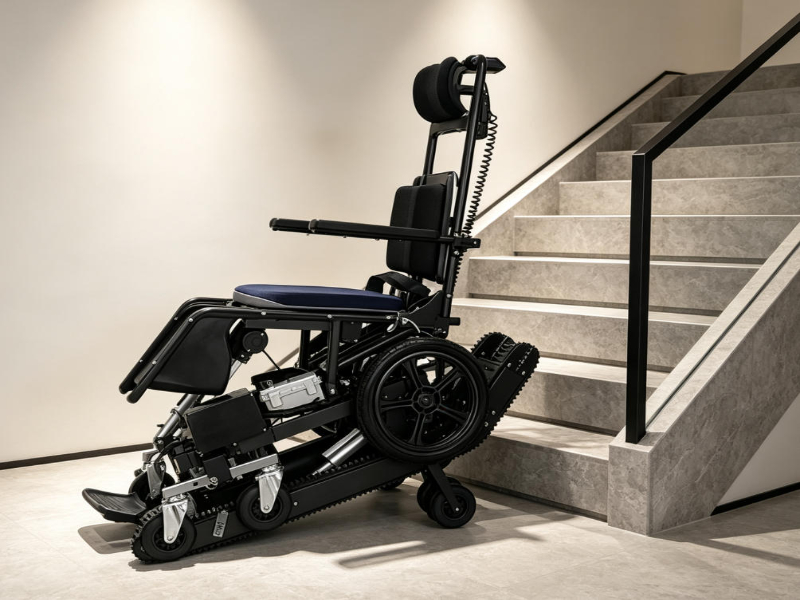
The Electric Stair Climbing Wheelchair YSE208 provides a dependable mobility solution for users who need assistance beyond flat surfaces.
The YSE208 focuses on balancing stair climbing capability with everyday practicality.
Important features include:
Electric Powered Operation
The motorized system supports easier movement and reduces manual effort.
Stair Adaptability
Designed to help users overcome stair-related mobility challenges.
Comfortable User Experience
Provides support for users during daily transportation.
Flexible Usage Scenarios
Can be used in residential buildings, public spaces, and mobility assistance environments.
For users looking for a powered stair climbing solution, the YSE208 demonstrates how technology can make difficult environments more accessible.
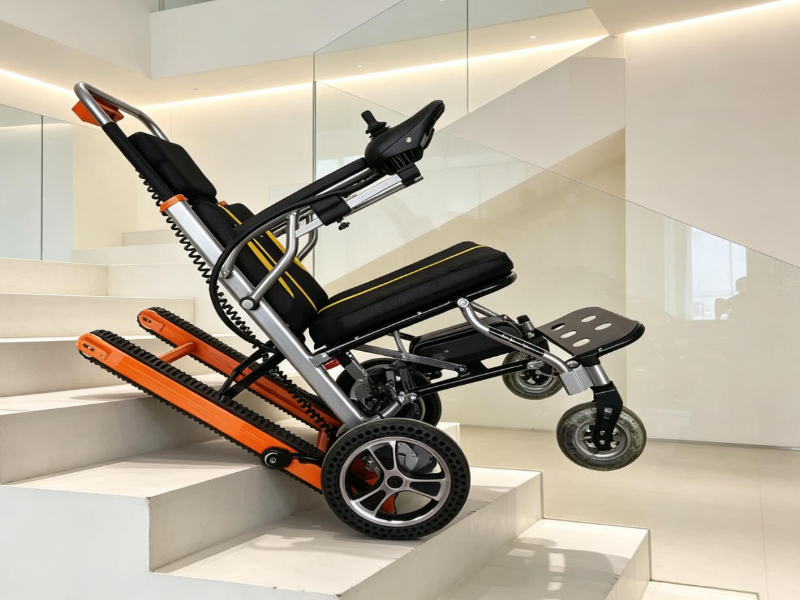
The Lightweight Folding Stair Climbing Wheelchair focuses on solving one of the biggest challenges of mobility equipment: transportation.
Many powerful mobility devices are difficult to move because of their size and weight. A lightweight folding stair climbing wheelchair provides a more flexible alternative.
Its advantages include:
Compact Folding Design
Makes transportation and storage more convenient.
Reduced Handling Difficulty
A lighter structure benefits both users and caregivers.
Daily Mobility Flexibility
Suitable for different environments and activities.
Portable Stair Assistance
Combines stair climbing capability with easier transportation.
For active users who need mobility support in multiple locations, portability is a major advantage.
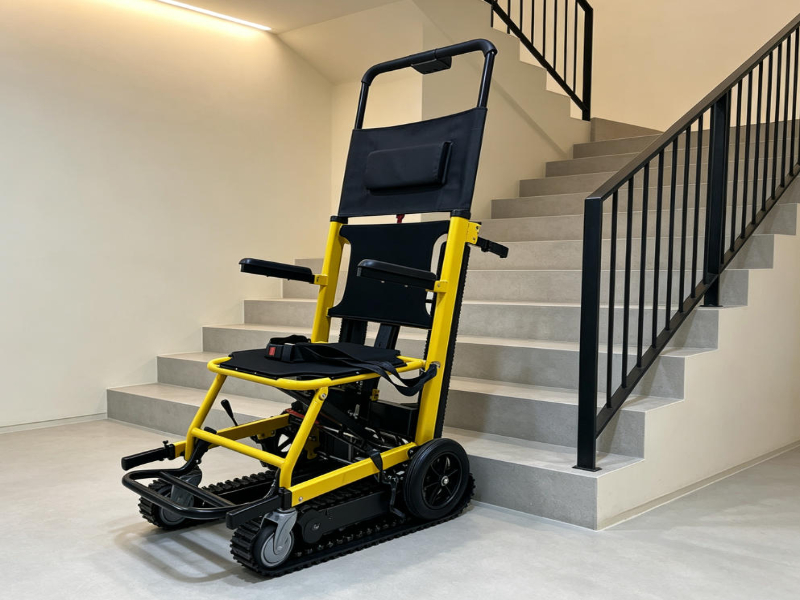
Many users ask why a traditional wheelchair cannot simply be used with assistance on stairs.
The difference comes from design purpose.
Traditional wheelchairs are optimized for:
However, they are not designed for:
An Electric Folding Stair Climbing Wheelchair provides additional capabilities:
The right mobility solution depends on the user’s daily environment.
For someone living or working in an area with stairs, stair climbing capability can significantly improve quality of life.
A Portable Motorized Wheelchair for Stairs can benefit many different users.
Seniors Living in Multi-Level Homes
Older adults may experience difficulty using stairs safely. Stair climbing wheelchairs can provide additional mobility support.
People with Disabilities
Users with limited walking ability can access more environments.
Caregivers and Families
Stair climbing technology can reduce physical lifting demands.
Rehabilitation Facilities
Medical and care environments can benefit from flexible mobility equipment.
Users in Older Buildings
Buildings without elevators may create daily challenges that stair climbing wheelchairs can help address.
Mobility equipment should adapt to real living conditions, not require users to completely change their lifestyle.
Selecting the right stair climbing wheelchair requires careful consideration.
Stair Type Compatibility
Different stair designs may require different mobility solutions.
Consider:
Weight and Portability
A folding and lightweight design improves transportation convenience.
Safety Features
Check stability systems, braking performance, and control reliability.
Comfort
Users may spend extended periods in the wheelchair, making seating support important.
Ease of Operation
Controls should be simple for both users and caregivers.
A suitable stair climbing wheelchair should provide a balance between performance, comfort, and practicality.
Mobility independence is closely connected to quality of life.
Without suitable equipment, many wheelchair users avoid locations with stairs because of safety concerns.
An Electric Folding Stair Climbing Wheelchair can help users:
The value of stair climbing technology is not only mechanical—it is about creating more possibilities.
As mobility technology continues developing, stair climbing wheelchairs are becoming smarter and more user-focused.
Future improvements may include:
The goal of future mobility solutions is to make challenging environments easier and safer for everyone.
The Electric Folding Stair Climbing Wheelchair – Portable Motorized Wheelchair for Stairs & Mobility Assistance represents an important advancement in accessible mobility.
The Automatic Stair Climbing Wheelchair YSE210 focuses on intelligent stair assistance and improved user convenience.
The Electric Stair Climbing Wheelchair YSE208 provides reliable powered mobility for challenging environments.
The Lightweight Folding Stair Climbing Wheelchair combines portability with stair climbing support.
For adults, seniors, caregivers, and people with disabilities, choosing the right wheelchair means choosing greater independence and confidence.
An Electric Folding Stair Climbing Wheelchair is more than a mobility device. It is a solution that helps users move beyond limitations and access more of the world around them.
1. What is an Electric Folding Stair Climbing Wheelchair?
An Electric Folding Stair Climbing Wheelchair is a motorized wheelchair designed to assist users in moving on stairs while also providing folding portability for transportation and storage.
2. Can seniors use a Portable Motorized Wheelchair for Stairs?
Yes. Many stair climbing wheelchairs are designed for seniors and users with limited mobility, providing easier movement and reducing dependence on physical assistance.
3. Are folding stair climbing wheelchairs suitable for daily use?
Yes. Depending on the model and environment, folding stair climbing wheelchairs can support daily mobility at home, in medical facilities, and in public spaces where stairs are present.