Our Location
Free Trade Tower, Xiyong street.
Chongqing, China

Free Trade Tower, Xiyong street.
Chongqing, China
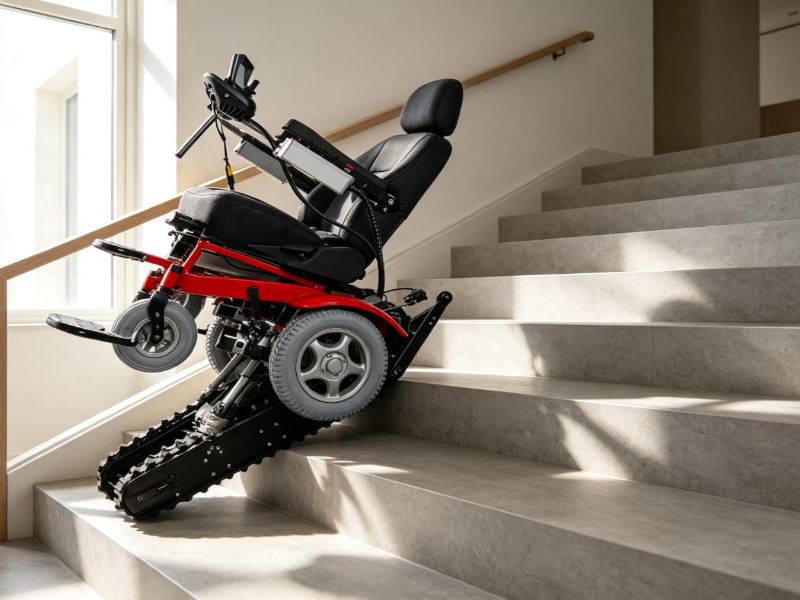
For many seniors and people with disabilities, stairs represent one of the biggest challenges in daily life. A simple staircase at home, in a hospital, or in a public building can become a serious obstacle that limits independence and reduces access to important spaces. Traditional wheelchairs provide excellent mobility on flat surfaces, but they often cannot overcome vertical barriers. This is where advanced mobility technology is changing the way people think about accessibility.
The Stair Climbing Electric Wheelchair for Seniors and Disabled Adults is designed to solve this exact problem. Unlike conventional power wheelchairs that are limited to ramps, elevators, or assistance from others, a stair climbing electric wheelchair combines powered mobility with specialized climbing technology, allowing users to move safely between different levels.
For elderly users, disabled adults, rehabilitation patients, and caregivers, this type of wheelchair offers a new possibility: maintaining independence even in environments where stairs exist. Whether inside a private home, a medical facility, an apartment building, or a public space, a Power Wheelchair That Goes Up and Down Stairs provides a practical solution for improving accessibility.
Modern wheelchair users are looking for more than transportation. They want comfort, safety, convenience, and the ability to participate fully in everyday activities. With advanced designs, intelligent control systems, and stable climbing mechanisms, stair climbing electric wheelchairs are becoming an important part of future mobility solutions.
Traditional wheelchairs are excellent mobility devices, but they have limitations. Flat floors, smooth roads, and accessible entrances are not always available. Many buildings still contain stairs, creating difficulties for people who depend on wheelchairs.
A Stair Climbing Electric Wheelchair for Seniors and Disabled Adults provides a solution by combining several functions into one mobility device:
The biggest advantage is that users do not need to transfer from their wheelchair when encountering stairs. Transfers can be uncomfortable, unsafe, and physically demanding, especially for elderly individuals or people with limited mobility.
A power wheelchair that goes up and down stairs allows users to remain seated while the wheelchair performs the climbing process through its specialized system.
This technology is particularly valuable in situations such as:
The development of stair climbing wheelchair technology represents a major step forward in creating more inclusive environments.
The working principle of a stair climbing electric wheelchair is different from a standard power wheelchair. Instead of relying only on wheels, these models use specialized climbing mechanisms designed to maintain stability while moving over stairs.
Depending on the design, stair climbing systems may include:
During stair climbing, the wheelchair maintains contact with the stairs while controlling speed and balance. This helps reduce sudden movement and provides a smoother experience for the user.
Safety is one of the most important considerations. A reliable stair climbing wheelchair should include features such as:
For elderly users and disabled adults, confidence is essential. The more secure the wheelchair feels, the easier it becomes for users to accept and integrate the technology into daily life.
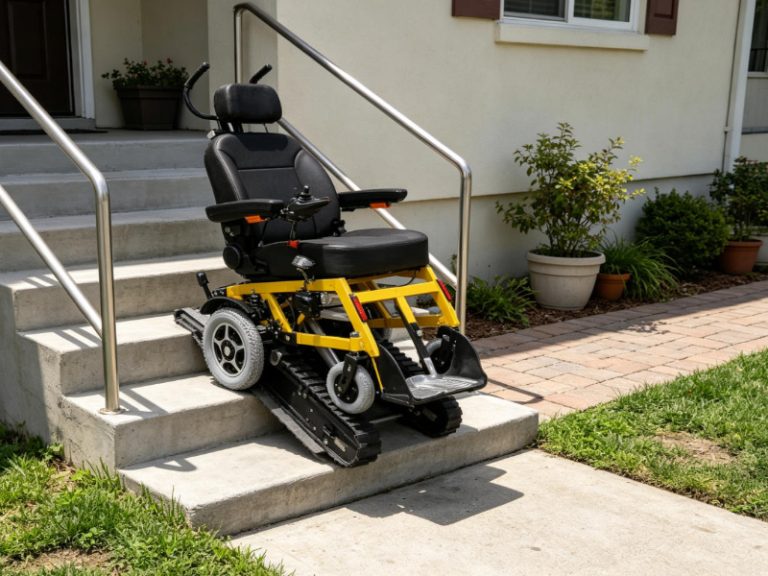
For users searching for a practical stair climbing solution, the Stair Climbing Wheelchair YSE207 is a recommended option.
The YSE207 is designed for users who require assistance overcoming stairs while maintaining comfortable seated mobility. It combines electric power operation with stair climbing functionality, making it suitable for elderly users, disabled adults, and people with limited walking ability.
One of the key advantages of this model is its focus on convenience. Instead of requiring complicated operation, the wheelchair is designed to provide a user-friendly mobility experience.
Its applications include:
For families caring for seniors, this type of wheelchair can reduce dependence on manual lifting or physical assistance.
A traditional solution often requires caregivers to help users move between floors, which can create safety concerns for both parties. A stair climbing electric wheelchair provides a safer alternative by allowing controlled movement without unnecessary physical strain.
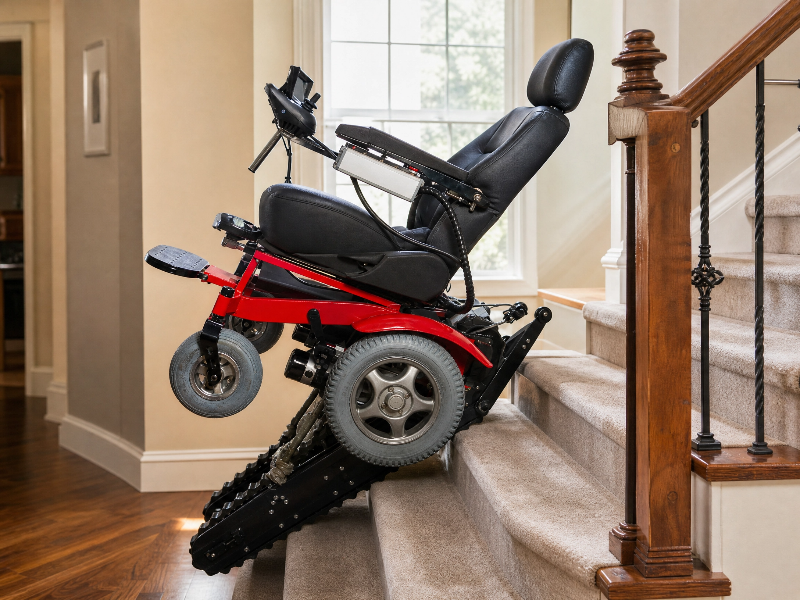
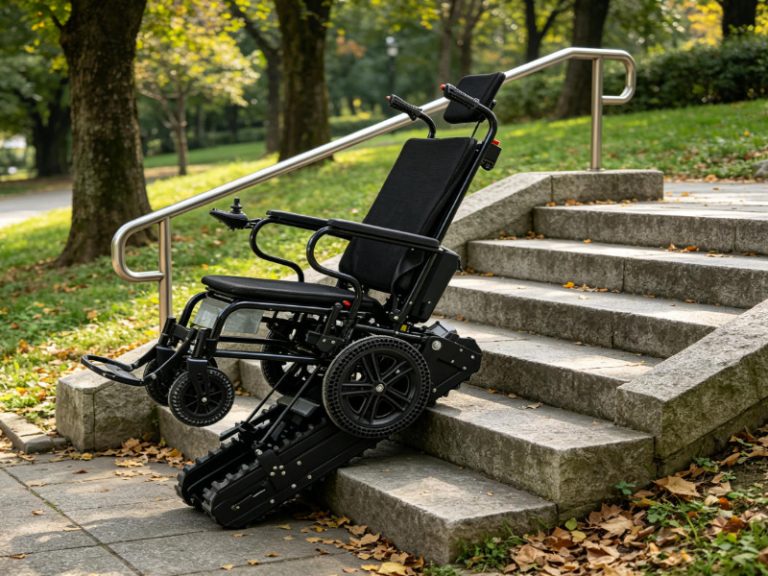
Another practical solution is the Dual-Use Stair Climbing Wheelchair.
The biggest feature of a dual-use stair climbing wheelchair is flexibility. It is designed not only for stair climbing but also for regular daily mobility.
This means users can benefit from one wheelchair for multiple situations instead of requiring separate equipment.
The advantages include:
Daily Mobility and Stair Assistance Combined
A user can move normally on flat surfaces and use the stair climbing function when encountering stairs.
This makes the wheelchair suitable for environments where stairs are unavoidable.
Improved Convenience for Caregivers
Caregivers do not need to frequently transfer users between different mobility devices. A multifunctional wheelchair simplifies daily routines.
Better Space Efficiency
For homes and healthcare facilities with limited storage space, a dual-purpose solution can reduce the need for multiple mobility products.
This type of wheelchair is especially suitable for users who want greater flexibility in their daily activities.
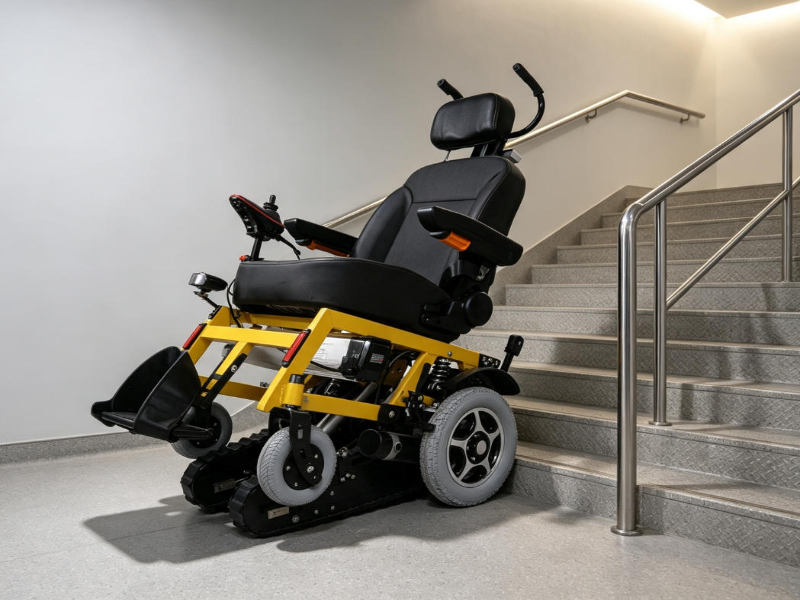
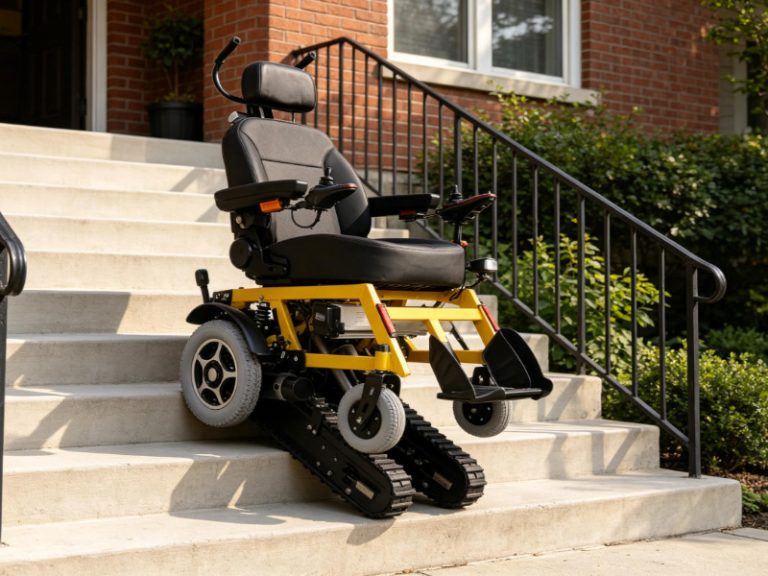
The Electric Stair Climbing Wheelchair YSE208 represents another advanced mobility solution designed for users who need reliable stair assistance.
This model focuses on combining electric mobility performance with stair climbing capability.
The main benefits include:
Powered Mobility Experience
Unlike manual stair climbing devices that require significant caregiver effort, an electric stair climbing wheelchair uses motor power to support movement.
Suitable for Elderly and Disabled Users
The design considers the needs of users who may have limited physical strength or difficulty walking independently.
Increased Accessibility
By reducing the limitations caused by stairs, this type of wheelchair helps users access more areas in daily life.
Whether at home or in professional care environments, the YSE208 provides a practical approach to improving mobility freedom.
Choosing the right stair climbing wheelchair requires more than looking at climbing ability. Users should evaluate several important factors.
Safety and Stability
Safety should always be the first priority. A good stair climbing wheelchair should provide stable movement, reliable braking, and secure user positioning.
User Comfort
Because users may spend extended periods seated, comfort features such as supportive seating, ergonomic design, and proper posture support are important.
Battery Performance
Electric mobility depends on reliable power. Battery capacity should match the user’s daily travel requirements.
Ease of Operation
The control system should be simple enough for users and caregivers to understand.
Complex operation can reduce confidence and limit practical usage.
Environment Compatibility
Different buildings have different stair designs. Users should consider whether the wheelchair is suitable for their specific environment.
Many people wonder whether they need a stair climbing electric wheelchair or a traditional electric wheelchair.
The difference mainly comes down to accessibility requirements.
A traditional electric wheelchair is suitable for:
However, it usually cannot handle stairs.
A stair climbing electric wheelchair provides additional capability:
For users living in multi-level homes or areas with limited accessibility infrastructure, the stair climbing function can make a significant difference.
The development of stair climbing wheelchairs reflects a larger movement toward accessible design. Mobility equipment is no longer focused only on transportation. It is becoming a tool that helps people maintain independence, confidence, and participation in society.
For elderly users, independence means being able to move around their own homes more freely.
For disabled adults, independence means having more control over daily activities.
For caregivers, better mobility technology means safer and easier support.
A Stair Climbing Electric Wheelchair for Seniors and Disabled Adults represents this future by combining engineering innovation with real human needs.
As technology continues to improve, future mobility solutions will likely become more intelligent, comfortable, and adaptable to different environments.
Stairs should not determine where people can go or what they can do. With modern mobility technology, users who once faced limitations can experience greater freedom and confidence.
The Power Wheelchair That Goes Up and Down Stairs provides an innovative solution for seniors, disabled adults, rehabilitation users, and caregivers who need reliable stair assistance.
Products such as the Stair Climbing Wheelchair YSE207, Dual-Use Stair Climbing Wheelchair, and Electric Stair Climbing Wheelchair YSE208 demonstrate how mobility equipment is evolving toward greater accessibility and independence.
Choosing the right stair climbing wheelchair is not only about overcoming stairs. It is about creating more opportunities for people to live comfortably, safely, and independently.
1. Can a stair climbing electric wheelchair safely go up and down stairs?
Yes. A properly designed Stair Climbing Electric Wheelchair for Seniors and Disabled Adults uses specialized climbing systems, stability controls, and safety mechanisms to help users move across stairs more safely than traditional wheelchairs.
2. Who should consider using a stair climbing electric wheelchair?
It is suitable for seniors, disabled adults, rehabilitation users, and people with limited walking ability who live or work in environments where stairs are frequently encountered.
3. What is the difference between a stair climbing wheelchair and a normal electric wheelchair?
A normal electric wheelchair is mainly designed for flat surfaces, while a stair climbing electric wheelchair includes additional technology that allows users to overcome stairs and improve accessibility in multi-level environments.