Our Location
Free Trade Tower, Xiyong street.
Chongqing, China

Free Trade Tower, Xiyong street.
Chongqing, China
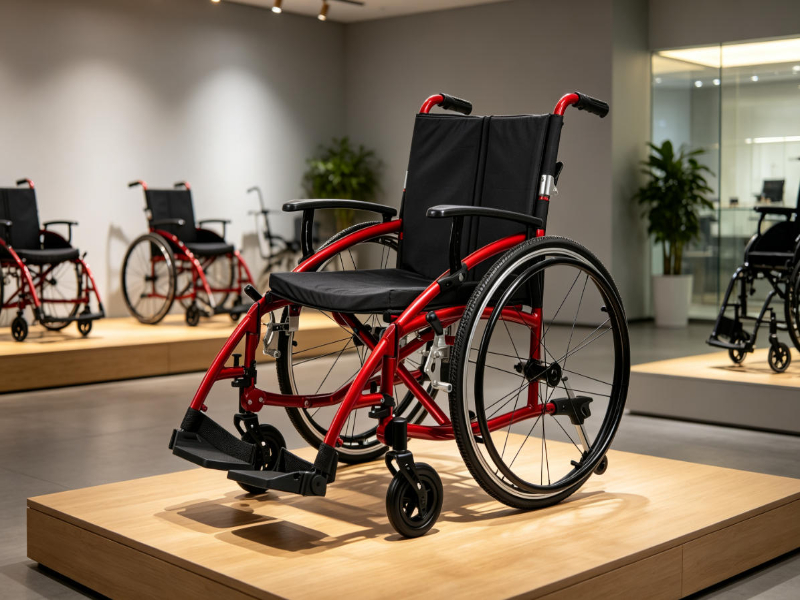
A wheelchair should make everyday movement easier, not turn every trip into a logistical challenge. For older adults, people recovering from injury, individuals with limited mobility, and caregivers who regularly transport mobility equipment, weight and portability can make a remarkable difference. A wheelchair that is difficult to lift into a car, awkward to store at home, or cumbersome to move through airports and medical facilities can quickly become a burden.
This is where a Lightweight Aluminum Manual Wheelchair offers a practical alternative. By combining an aluminum frame with a folding structure, modern manual wheelchairs can provide dependable everyday mobility while making transportation and storage considerably easier. The best designs do not simply remove weight; they also consider seating comfort, braking, wheel configuration, transfer access, propulsion, and the realities of daily use.
A Portable Folding Wheelchair is particularly useful for people whose mobility needs change from one environment to another. The same chair may be used at home in the morning, loaded into a vehicle for a medical appointment, taken into a shopping centre, and folded away again at the end of the day. For caregivers, portability can mean less lifting and easier handling. For users, it can mean fewer restrictions when planning ordinary activities.
The frame is one of the most influential components of a manual wheelchair. It affects the overall weight, handling, durability, transportation requirements, and long-term user experience. Traditional steel wheelchairs can provide excellent structural strength, but their heavier construction may make them more difficult for caregivers to lift or place into a vehicle.
Aluminum alloy offers a different balance. It can provide a strong frame while keeping the wheelchair relatively light, making it attractive for people who regularly need to fold, lift, carry, or transport their chair. This is one reason a Lightweight Aluminum Manual Wheelchair has become increasingly popular among families, rehabilitation providers, travel users, and mobility equipment distributors.
The advantage becomes particularly obvious during transportation. Imagine a caregiver helping an older family member into a vehicle. After the user is seated, the caregiver still has to fold the wheelchair, lift it into the trunk, and remove it again at the destination. Every kilogram matters when this process happens several times a week.
A lighter frame does not solve every mobility challenge, but it can reduce the physical effort involved in handling the chair. For frequent travellers, it can also make a meaningful difference when moving through hotels, airports, railway stations, clinics, and other public environments.
The key is to avoid assuming that “lightweight” automatically means “better.” A wheelchair still needs appropriate stability, seat dimensions, braking performance, structural integrity, and user support. The right choice is the model that provides the best balance between portability and the user’s actual mobility requirements.
Portability is more than simply reducing the number on a product’s weight specification. A genuinely practical Portable Folding Wheelchair should be easy to fold, reasonably compact when folded, straightforward to handle, and convenient to store.
The folding mechanism should also be intuitive. Users and caregivers should not have to struggle with complicated procedures every time the wheelchair needs to be transported. A compact folded profile can be especially valuable for smaller car trunks, apartments, storage rooms, and healthcare facilities where space is limited.
The IYASOCARE Foldable Aluminum Manual Wheelchair illustrates this approach particularly well. The model uses an aluminum alloy frame, has a net weight of approximately 15 kg, supports up to 100 kg, and features quick-release rear wheels. The rear wheels can be removed rapidly, further reducing the practical difficulty of transportation and storage.
This type of design is particularly useful when the wheelchair needs to be transported frequently. Removing the rear wheels can make the folded package easier to position inside a vehicle and can also simplify storage when space is restricted.
But portability should never come at the expense of comfort. A wheelchair that is extremely easy to carry but uncomfortable after an hour of sitting may not be the right solution for someone who uses it throughout the day.
That is why modern manual wheelchair design increasingly focuses on several elements simultaneously: lightweight construction, ergonomic seating, adjustable components, reliable brakes, practical wheels, and convenient folding.
When people first look at a wheelchair, they often focus on appearance and weight. Those are useful starting points, but the real experience comes from the smaller details.
Seat dimensions are one example. A seat that is too narrow may feel restrictive, while a seat that is too wide may provide insufficient positioning support. Seat depth and height can also influence posture, foot placement, and overall comfort.
Armrests and footrests matter as well. Flip-up or removable components can make transfers easier, especially when a user needs to move between the wheelchair and a bed, sofa, toilet, or vehicle seat.
Braking is another essential consideration. A manual wheelchair should provide an appropriate braking system for its intended use, and users and caregivers should understand how the brakes operate before using the chair outdoors or on slopes.
Wheel configuration also influences the experience. Smaller front wheels can support manoeuvrability in tight indoor environments, while larger rear wheels may provide different handling characteristics outdoors. The best configuration depends on where and how the wheelchair will be used.
These details demonstrate why a Lightweight Aluminum Manual Wheelchair should be evaluated as a complete mobility system rather than simply as a lightweight frame.
For buyers whose main priorities are portability and convenient transportation, the Foldable Aluminum Manual Wheelchair is a strong starting point.
The aluminum alloy frame provides a balance between strength and reduced weight, while the folding structure allows the chair to be stored more easily. Its quick-release rear wheels are especially useful for transportation because they can be removed and reinstalled quickly.
Another notable feature is the latex seat cushion. According to the product information, the cushion is designed to provide comfort during longer periods of sitting while helping manage heat and moisture. Adjustable armrests and removable footrests add further flexibility for different users and transfer situations.
The model also supports three rear-axle height settings, while its 6-inch front wheels and 24-inch rear wheels are intended to support practical indoor and outdoor mobility. With a stated maximum load of 100 kg, it is positioned as an everyday manual mobility option rather than a specialist heavy-duty chair.
For a distributor, this model can appeal to customers who repeatedly ask for three things in the same product: aluminum construction, folding convenience, and easy transportation.
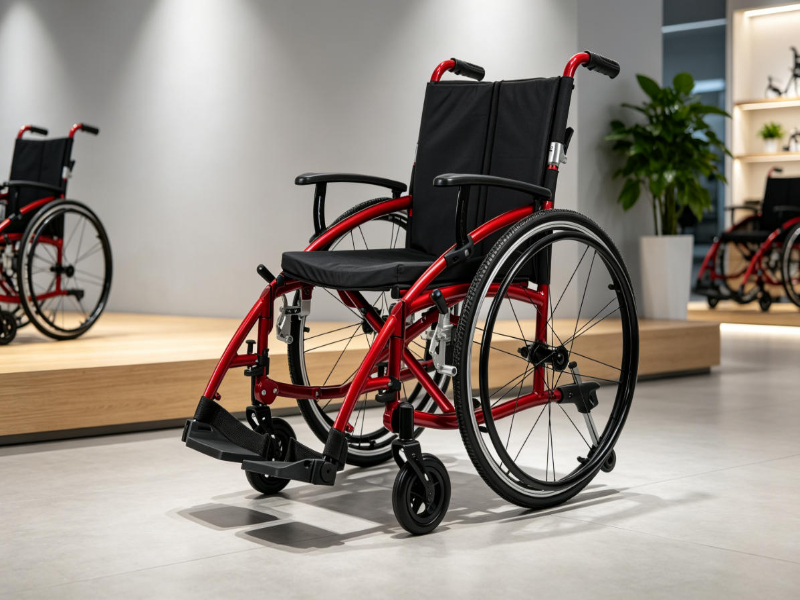
The YSM2025 takes a different approach by focusing heavily on propulsion ergonomics.
Traditional manual wheelchairs generally require users to grip the push rims positioned around the rear wheels. The YSM2025 introduces an adjustable belt handhold ring drive designed to keep the user’s hands away from direct contact with the rear wheels while providing a different propulsion method. This can be particularly interesting for users who are concerned about hand cleanliness or who experience fatigue when repeatedly pushing conventional rims.
The model is available with either a steel or aluminum frame. The aluminum version is listed at approximately 17 kg, while the steel version is heavier. The product page specifies a 46 cm seat width, 40 cm seat depth, 45 cm seat height, and a 100 kg load capacity.
Its 8-inch front wheels and 13-inch rear wheels are designed to balance manoeuvrability and stability. The folding construction also makes the chair more practical for transport and storage.
This model is particularly interesting for users who do not simply want a wheelchair that a caregiver pushes. If the user participates in self-propulsion, the design of the hand interface becomes much more important.
For B2B buyers, the YSM2025 can therefore occupy a different position within a product portfolio: rather than competing purely on weight, it offers a mobility solution built around ergonomics, hygiene, and propulsion efficiency.
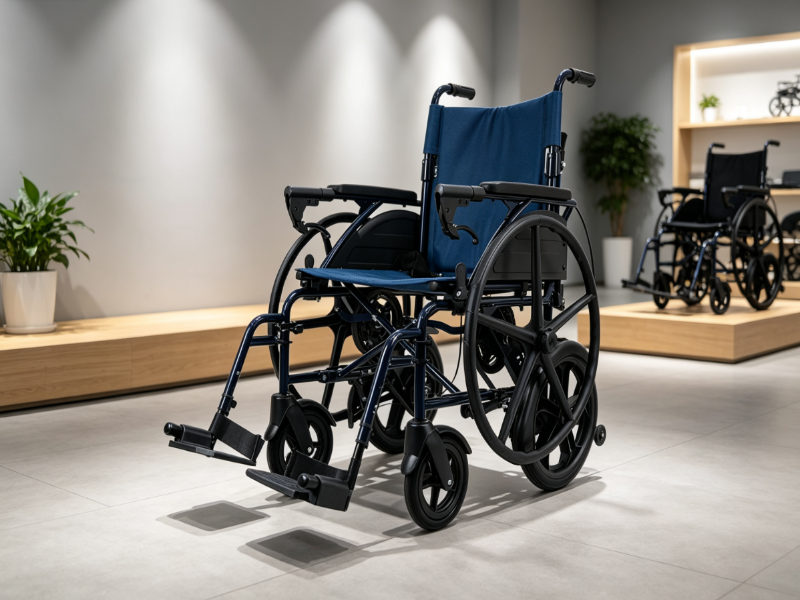
For users who place travel at the centre of their requirements, the YSM2012 is another model worth considering.
IYASOCARE’s manual wheelchair range identifies the YSM2012 as a lightweight manual folding travel wheelchair with a two-tone aluminum alloy frame. The model is positioned around portability and travel-oriented usability, making it relevant to customers who want a wheelchair that can move easily between home, vehicles, public spaces, and leisure destinations.
The manufacturer’s published guide highlights several features associated with the YSM2012, including an aluminum alloy frame, 20-inch airless rear wheels, breathable Oxford cloth and mesh seating, adjustable armrests and footrests, and a rear handbrake combined with an elbow brake.
The larger rear-wheel configuration gives the model a different character from ultra-compact transport chairs. It can be useful for customers who want portability without moving completely toward very small transport-wheel designs.
This is an important distinction. “Travel wheelchair” does not always mean “smallest possible wheelchair.” A travel-oriented product can instead focus on the complete journey: comfortable seating, manageable weight, easy folding, practical wheels, and sufficient stability for the environments the user expects to encounter.
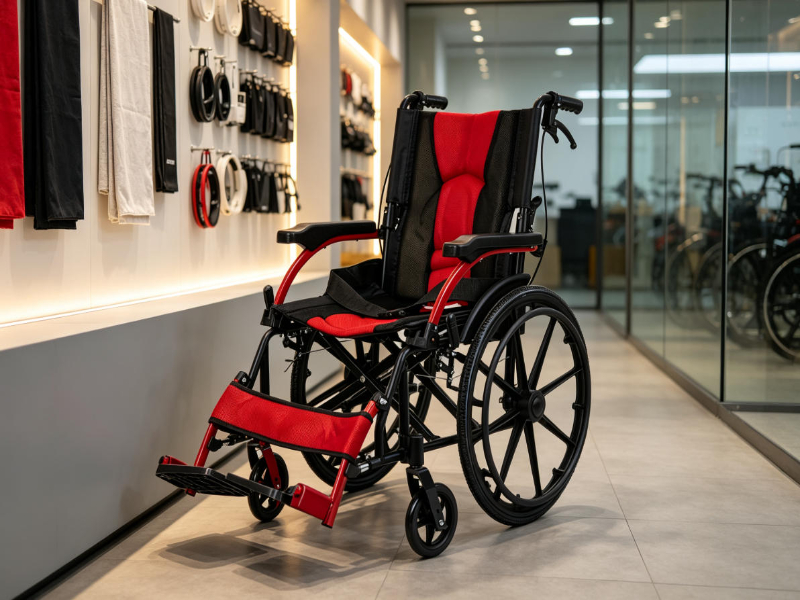
These three models illustrate why there is no single definition of the perfect Portable Folding Wheelchair.
If the primary requirement is easy vehicle transportation and convenient storage, the Foldable Aluminum Manual Wheelchair with quick-release rear wheels may be particularly attractive.
If the user is interested in self-propulsion and wants a different approach to hand positioning, the YSM2025’s ergonomic hand rim drive provides a more specialised solution.
If travel is the central priority, the YSM2012 provides a travel-oriented configuration with an aluminum frame, larger rear wheels, and comfort-focused seating features.
The correct choice should therefore begin with a simple question: How will the wheelchair actually be used?
A wheelchair for occasional hospital visits may have very different requirements from one used eight hours a day. A caregiver-propelled chair may need different features from one used independently. A traveller may care more about folded dimensions, while a full-time user may place greater emphasis on seat comfort and propulsion efficiency.
This is why product selection should be based on usage scenarios rather than marketing labels alone.
A folding wheelchair changes the relationship between mobility equipment and the user’s environment.
A traditional rigid wheelchair can require a dedicated storage area. A folding model can be placed in a wardrobe, vehicle trunk, storage room, or other compact space. This can be particularly valuable for people living in apartments or homes where every square metre matters.
The benefit extends beyond the home. When travelling, a folding wheelchair can make it easier to move between different forms of transportation. A caregiver may fold the chair before entering a vehicle, carry it into a hotel room, or store it temporarily while the user sits elsewhere.
For frequent travellers, these small improvements can make mobility feel less restrictive.
The most practical designs therefore treat folding not as a decorative feature but as part of the overall user experience. The mechanism should be easy to operate, the folded structure should be manageable, and components such as wheels, footrests, or handles should not create unnecessary complications.
There is a temptation to assume that lighter always means better. In reality, reducing weight is only one part of good wheelchair design.
A user may spend several hours seated in the chair. If the seat does not provide adequate support, if ventilation is poor, or if the posture is uncomfortable, the advantages of lightweight construction quickly become less important.
This is why features such as breathable fabrics, supportive backrests, suitable seat dimensions, cushions, adjustable armrests, and footrests deserve careful attention.
The Foldable Aluminum Manual Wheelchair, for example, uses a latex cushion, while the YSM2025 provides defined seat dimensions intended to support everyday seating. The YSM2012 is described with breathable Oxford cloth and mesh seating in IYASOCARE’s published guide.
For buyers, these details should be compared with the user’s actual body dimensions and expected sitting time rather than evaluated in isolation.
For individual users, choosing a Portable Folding Wheelchair is mainly about making life easier. For caregivers, it is also about reducing unnecessary lifting and improving the efficiency of daily routines.
For professional distributors, the decision becomes broader. A good wheelchair supplier should provide multiple configurations because customers have different needs. IYASOCARE’s manual wheelchair range includes folding, lightweight, ergonomic, commode, travel, and other configurations, allowing buyers to compare solutions within one product portfolio.
IYASOCARE also presents itself as a manufacturer covering manual wheelchairs, electric wheelchairs, standing wheelchairs, stair-climbing wheelchairs, transfer wheelchairs, and other rehabilitation products. Its website highlights factory pricing, product inspection, and a broad mobility-equipment range for international customers.
For importers and distributors, this wider range can be useful because the mobility market is rarely one-size-fits-all. One customer may need a lightweight travel wheelchair, another may require a heavy-duty electric model, and another may need a standing or commode wheelchair.
A supplier capable of supporting several categories can make product sourcing more flexible, particularly when a distributor wants to develop a complete mobility product line rather than depend on one model.
The best Lightweight Aluminum Manual Wheelchair is not necessarily the lightest model on the market. It is the model that combines manageable weight with appropriate comfort, stability, portability, functionality, and ease of use.
For customers who frequently transport a wheelchair by car, the Foldable Aluminum Manual Wheelchair with quick-release wheels provides a practical combination of aluminum construction, folding convenience, removable rear wheels, cushioning, and adjustable components.
For users interested in independent propulsion and a more ergonomic hand interface, the YSM2025 offers a distinctive belt-driven hand rim system designed around reduced hand contact with the rear wheels and easier propulsion.
For travellers looking for an aluminum folding wheelchair designed around mobility away from home, the YSM2012 provides another option within IYASOCARE’s travel-oriented manual wheelchair range.
Ultimately, a Portable Folding Wheelchair should give users more freedom rather than adding another obstacle to everyday life. Whether the goal is a family day out, a medical appointment, a shopping trip, a holiday, or simply easier movement around the home, lightweight wheelchair design can make transportation and storage much more manageable.
The most important step is to match the chair to the person—not the other way around. Consider body dimensions, mobility ability, propulsion method, transportation habits, environment, caregiver support, and expected frequency of use. When these factors are evaluated together, a lightweight aluminum wheelchair can become a dependable part of everyday mobility rather than simply a piece of medical equipment.
1. What is the main advantage of a Lightweight Aluminum Manual Wheelchair?
The main advantage is the balance between structural strength and easier handling. Aluminum construction can reduce the overall weight compared with many traditional steel designs, making the wheelchair easier to fold, transport, store, and handle. However, users should still evaluate load capacity, dimensions, stability, comfort, and intended use before choosing a model.
2. Is a Portable Folding Wheelchair suitable for travel?
Yes, many folding manual wheelchairs are designed specifically to make transportation easier. Features such as compact folding dimensions, removable wheels, lightweight aluminum frames, and travel-oriented components can be especially useful for car journeys and other forms of travel. However, customers should check the exact dimensions and weight of the selected model and confirm transportation requirements with the relevant carrier before travelling.
3. Which IYASOCARE wheelchair is best for everyday use and travel?
There is no single model that is best for every user. The Foldable Aluminum Manual Wheelchair is a strong option for customers prioritising portability and quick-release wheels, while the YSM2025 is particularly interesting for users who want an ergonomic hand rim drive. The YSM2012 is worth considering for customers seeking a travel-oriented folding manual wheelchair. The final choice should be based on the user’s body size, mobility ability, transportation method, environment, and daily routine.