Our Location
Free Trade Tower, Xiyong street.
Chongqing, China

Free Trade Tower, Xiyong street.
Chongqing, China
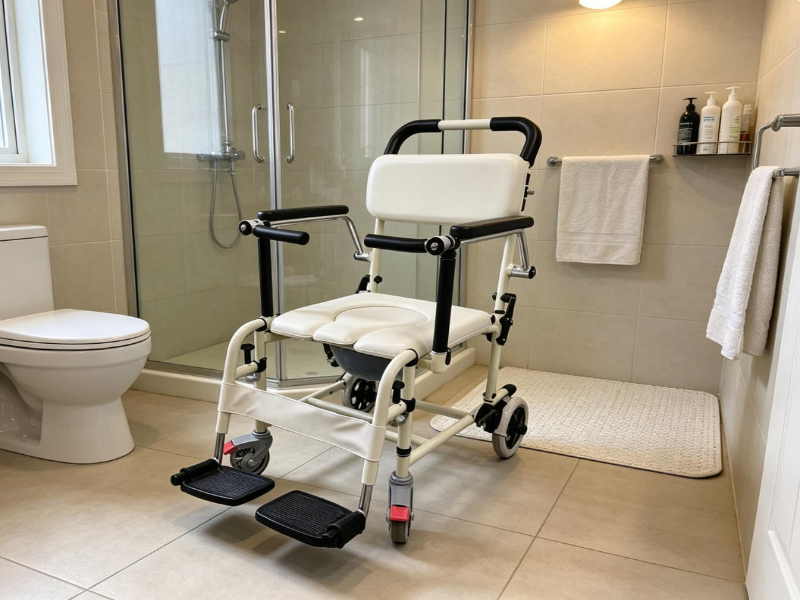
A Commode Wheelchair Seat is more than a simple seating surface. For older adults, people with disabilities, rehabilitation patients, and individuals with limited mobility, the right wheelchair seat can make daily bathroom routines considerably easier, more comfortable, and more manageable. When a wheelchair is designed to support showering and toileting as well as everyday mobility, it can reduce unnecessary transfers and help caregivers provide assistance with greater confidence.
For families, care facilities, hospitals, rehabilitation centres, and mobility equipment distributors, choosing the right Commode Wheelchair Seat also means looking beyond appearance. Seat construction, cushioning, hygiene, wheelchair stability, ease of cleaning, transfer convenience, folding capability, and overall functionality all influence whether a product works well in real-world care environments.
Bathroom mobility is often one of the most challenging aspects of wheelchair use. A person who can no longer walk safely may need assistance moving from a wheelchair to a bathroom, then from the wheelchair to a toilet or shower chair. Every additional transfer requires time, physical effort, and careful coordination.
A Commode Wheelchair Seat addresses part of this challenge by allowing the wheelchair to function as a toileting or bathroom mobility solution, depending on the specific design. Instead of treating mobility and personal care as completely separate activities, a multifunctional wheelchair can bring these functions together.
This can be particularly valuable in residential care. A caregiver may need to help an elderly person move from a bedroom to a bathroom several times a day. If the wheelchair can support transportation and appropriate bathroom functions, the routine may become simpler and more efficient.
The same principle applies to rehabilitation settings. Patients recovering from surgery, injury, neurological conditions, or reduced lower-body mobility may temporarily require assistance with personal care. A multifunctional wheelchair can provide practical support during this period without requiring multiple pieces of equipment.
However, it is important to understand that a Commode Wheelchair Seat is not automatically suitable for every user or every bathroom. The product should be selected according to the user’s physical condition, body dimensions, transfer ability, caregiver requirements, bathroom layout, and the manufacturer’s stated specifications.
A wheelchair may be multifunctional, but comfort remains fundamental. Users can spend significant periods sitting in a wheelchair, and poorly designed seating can quickly become uncomfortable.
A padded Commode Wheelchair Seat can provide a softer and more supportive sitting surface than a basic hard seat, particularly during ordinary wheelchair use. Padding can also make the chair feel more suitable for users who spend longer periods seated.
That said, cushioning should not be considered independently from hygiene. Bathroom equipment is exposed to moisture, cleaning products, and frequent washing, so the seat material should be practical for the intended environment. A seat that feels comfortable but is difficult to clean may create unnecessary maintenance problems.
For professional buyers, this is one reason why the overall wheelchair construction matters more than a single feature. The frame, seat, backrest, armrests, footrests, wheels, brakes, and commode components should work together as one system.
The ideal Commode Wheelchair Seat should therefore balance comfort, usability, cleanability, and structural stability rather than focusing exclusively on softness.
One of the strongest advantages of a multifunctional wheelchair is that it can reduce the number of devices required for daily care.
A conventional wheelchair, shower chair, commode chair, and transfer aid may each perform a specific function. In some environments, however, storing and moving several devices is inconvenient. A multifunctional manual wheelchair can combine several functions within one mobility platform.
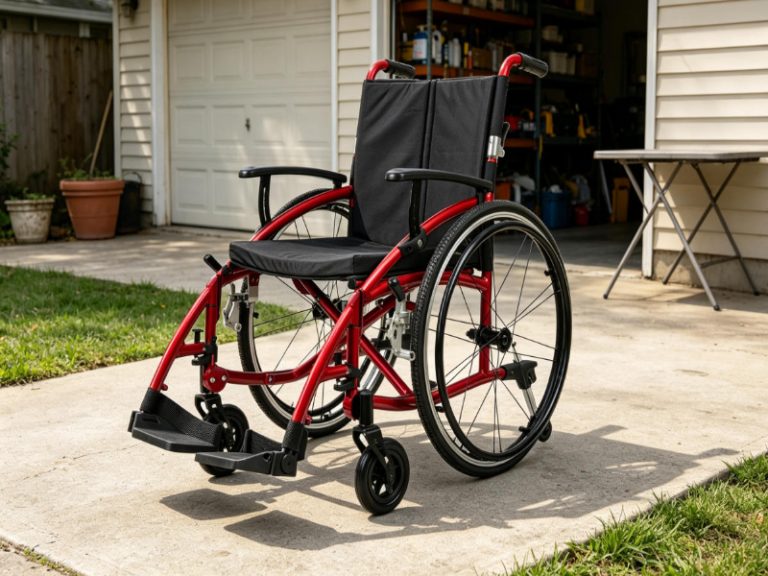
This is where products such as the Aluminum Folding Manual Wheelchair YSM2057 can be considered. Its folding manual wheelchair design provides a practical foundation for transportation and storage, while aluminum construction is particularly relevant for users looking for a lighter and easier-to-handle wheelchair solution.
For families, the folding structure can be useful when storage space is limited. For distributors, a folding manual wheelchair can also appeal to customers who prioritize portability and everyday practicality.
The key point is that multifunctionality should solve a genuine problem. Buyers should not pay for features they will never use. Instead, they should consider the user’s routine and determine whether a commode or shower function will genuinely improve daily care.
The YSM2057 is worth considering for buyers looking for a practical folding manual wheelchair with an aluminum construction. Its positioning makes it particularly relevant to home-care environments where portability, storage, and caregiver handling are important considerations.
For a user who needs assistance moving around the home and may also require bathroom-related mobility support, the value of a folding wheelchair is not limited to transportation. A wheelchair that can be stored more conveniently can make the entire care environment easier to organise.
From a distributor’s perspective, this type of product can also occupy an important position within a mobility product range. Not every customer requires an advanced electric wheelchair. Some users simply need a dependable manual solution that can be transported, stored, and used as part of a broader home-care routine.
When recommending the YSM2057, professional sellers should still evaluate the individual user’s requirements rather than presenting it as a universal solution. Seat dimensions, user weight, bathroom access, transfer requirements, and intended frequency of use should all be checked before purchase.
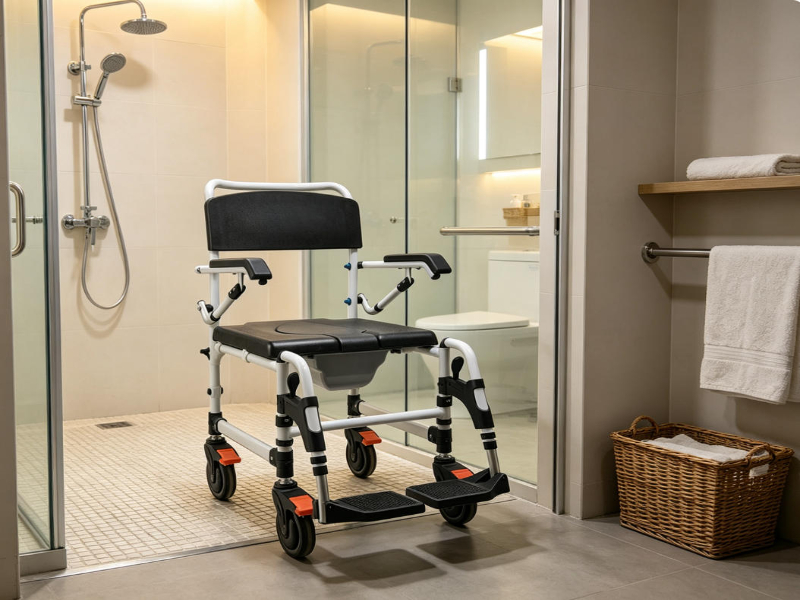
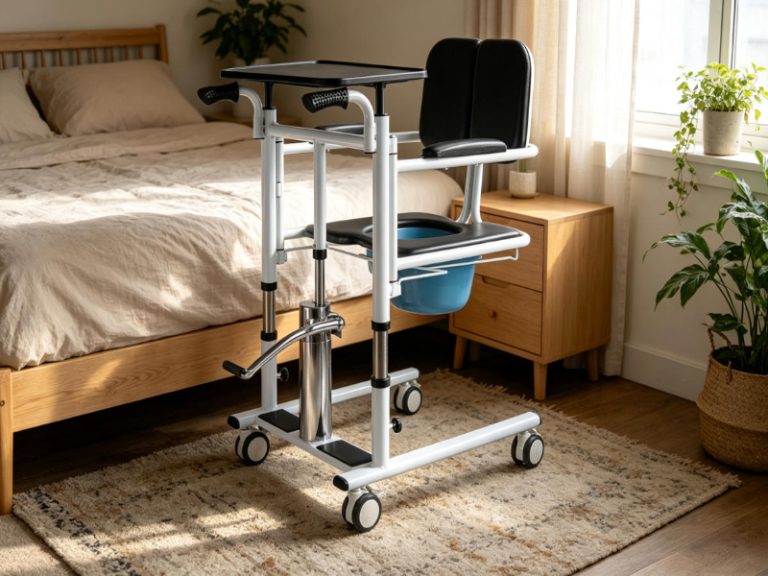
A 3-in-1 folding wheelchair is particularly interesting for customers looking for multifunctionality. Instead of purchasing completely separate equipment for different daily activities, a multifunctional wheelchair can provide a more integrated approach to mobility and personal care.
For elderly users and people with limited mobility, this type of design can be especially practical in the home. A caregiver can use the wheelchair for movement and, where the product’s intended configuration and specifications allow, support toileting or bathroom routines.
The folding capability adds another layer of convenience. When the chair is not being used, storage becomes easier, which can be important in apartments, bedrooms, care homes, and smaller bathrooms.
For wholesalers and distributors, a 3-in-1 wheelchair can also be positioned as a solution-oriented product rather than simply another wheelchair model. Instead of selling the customer a list of specifications, the product can be presented around practical scenarios: mobility, bathroom assistance, caregiver support, and space efficiency.
This approach is often more meaningful to end users because customers generally do not buy mobility equipment because they like technical specifications. They buy it because they need a safer and easier way to manage everyday activities.
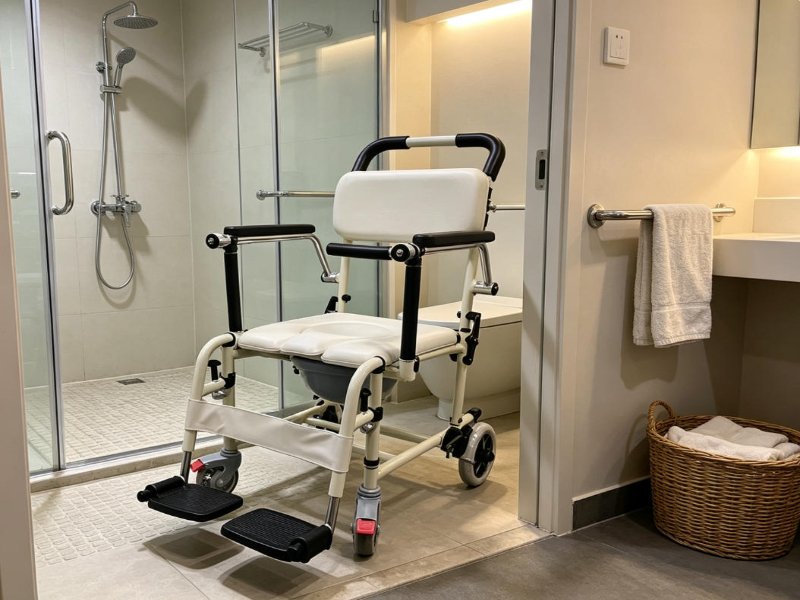
The Multi-Functional Manual Wheelchair is another option for buyers who want to combine ordinary wheelchair mobility with additional care functions.
Its biggest selling point is the concept behind multifunctionality. A wheelchair should not necessarily be viewed as a device that is only used for moving from one location to another. For many elderly users and people with disabilities, mobility equipment becomes part of their daily care environment.
A multifunctional wheelchair can therefore be valuable in home nursing, rehabilitation, elderly care, assisted living, and other environments where caregivers need equipment that can adapt to different routines.
For distributors, this category can also address a broader customer base. Some customers may initially search for a manual wheelchair, while others may specifically be looking for a commode or shower wheelchair. A multifunctional model can bridge these needs.
However, product specifications should always be verified before making claims about a specific model’s bathroom compatibility, maximum user weight, seat dimensions, or intended use. The manufacturer’s technical documentation should remain the final reference.、
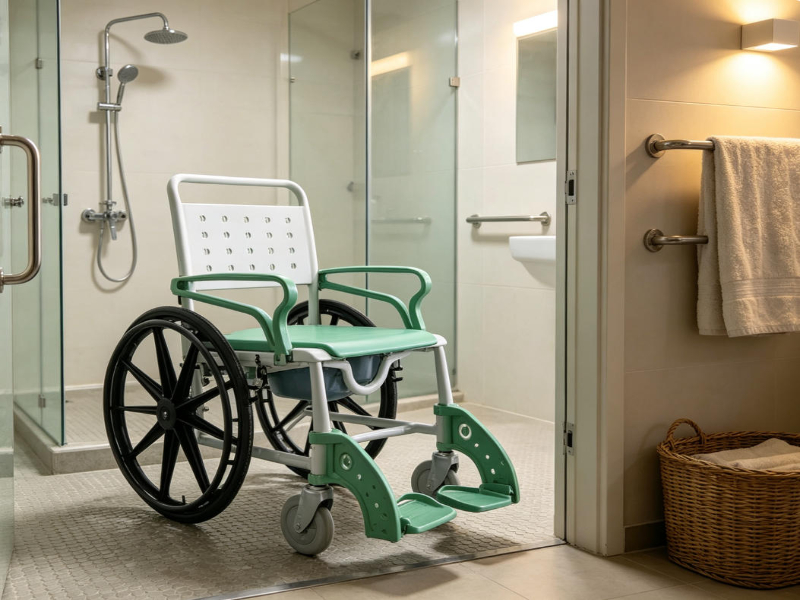
Choosing a Commode Wheelchair Seat should start with the person rather than the product.
1. Consider the user’s body dimensions
Seat width and depth are essential. A seat that is too narrow can create discomfort, while one that is too wide may reduce stability and positioning. The user’s height and leg position should also be considered when evaluating the complete wheelchair configuration.
2. Look at the user’s mobility level
Someone who can independently transfer may have very different requirements from someone who needs complete caregiver assistance. A multifunctional wheelchair can reduce transfers, but the specific design must still match the user’s physical capabilities.
3. Evaluate bathroom access
Measure the bathroom doorway, toilet area, shower space, and turning area. A wheelchair that works well in a large accessible bathroom may be difficult to manoeuvre in a compact residential bathroom.
4. Prioritise stability
Bathroom environments can involve water and smooth surfaces, which makes stability particularly important. The wheelchair should be used according to its manufacturer’s instructions, with appropriate brakes and caregiver assistance when required.
5. Consider cleaning and maintenance
A bathroom wheelchair needs regular cleaning. Materials and surfaces should therefore be practical for the intended cleaning routine. Removable or easy-to-clean components can be valuable, depending on the design.
6. Think about storage and transportation
A folding wheelchair may be particularly useful for families that need to move the equipment between rooms or transport it in a vehicle. For professional facilities, compact storage can also help optimise available space.
A standard wheelchair is primarily designed for mobility. Its main purpose is to help a user move from one location to another, either independently or with assistance.
A commode wheelchair adds another layer of functionality. Depending on the design, it may support toileting and bathroom-related activities while also functioning as a wheelchair.
The difference becomes especially meaningful when a user has difficulty walking or transferring. If moving from a conventional wheelchair to a toilet creates unnecessary physical effort, a suitable commode wheelchair may simplify the process.
However, the terms “commode wheelchair,” “shower wheelchair,” and “toilet wheelchair” are sometimes used interchangeably in the market even though individual products can have different designs and intended applications. Buyers should therefore read the manufacturer’s specifications carefully instead of relying only on product names.
As populations age in many countries, home-care and assisted-mobility products are becoming increasingly important. Older adults may experience reduced balance, muscle strength, endurance, or walking ability, making ordinary bathroom routines more difficult.
A multifunctional wheelchair can support caregivers by reducing unnecessary transfers and making movement around the home more organised.
For families, the benefit can be practical and emotional. Bathroom assistance can be one of the most sensitive aspects of elderly care. Equipment that allows a person to retain greater privacy and participate in their own daily routine can contribute to a more dignified care experience.
For healthcare facilities and distributors, multifunctional products can also help build a more complete mobility equipment portfolio. Rather than selling only standard wheelchairs, businesses can offer solutions for transportation, showering, toileting, rehabilitation, and home care.
For B2B buyers, choosing a Commode Wheelchair Seat or multifunctional wheelchair involves considerations beyond the end-user experience. Product consistency, factory capability, OEM support, packaging, quality control, replacement parts, documentation, and after-sales support can all affect the commercial success of a product.
A reliable manufacturing partner should be able to provide clear product specifications and consistent production standards. Distributors should also consider whether the supplier offers a sufficiently broad product range, because customers rarely have identical mobility requirements.
This is one area where a manufacturer such as IYASOCARE can be relevant to international buyers. Its website presents a broad range of wheelchair and mobility solutions, allowing distributors to explore different categories rather than relying on one single wheelchair configuration. IYASOCARE official website
For international markets, buyers should also check applicable local requirements, labelling, documentation, import regulations, and product standards before placing commercial orders. A product that is appropriate in one market may require additional documentation or compliance procedures in another.
The evolution of wheelchair design reflects a broader change in how mobility equipment is understood. A wheelchair is no longer necessarily just a transportation device. For many users, it is part of a complete daily-care system.
A well-designed Commode Wheelchair Seat can contribute to that system by combining seating, mobility, and bathroom functionality. When paired with folding construction, suitable materials, practical footrests, armrests, brakes, and caregiver-friendly handling, the result can be significantly more useful than a basic wheelchair.
The most successful mobility products are not necessarily the ones with the longest list of features. They are the ones that solve real problems without creating new ones. For an elderly person living at home, that might mean making the journey from the bedroom to the bathroom easier. For a caregiver, it might mean reducing the number of transfers required. For a distributor, it might mean offering a versatile product that meets several customer needs.
That is the real value of multifunctional wheelchair design.
1. What is a Commode Wheelchair Seat?
A Commode Wheelchair Seat is designed as part of a wheelchair system that can support toileting functions in addition to mobility, depending on the specific model. It can be particularly useful for elderly users, people with disabilities, rehabilitation patients, and individuals who have difficulty transferring to a conventional toilet.
2. Is a padded Commode Wheelchair Seat suitable for elderly users?
A padded seat can provide additional sitting comfort, but suitability depends on the user’s individual needs and the wheelchair’s specifications. Buyers should consider seat dimensions, weight capacity, posture, transfer ability, bathroom environment, and cleaning requirements before selecting a model.
3. How do I choose the best Commode Wheelchair Seat for home care?
Start by evaluating the user’s body dimensions, mobility level, bathroom layout, caregiver requirements, and expected frequency of use. Then compare wheelchair stability, seat construction, cleaning convenience, folding capability, and multifunctional features. Models such as the YSM2057, 3-in-1 Folding Wheelchair, and Multi-Functional Manual Wheelchair can be considered when a buyer wants a combination of everyday mobility and personal-care functionality. Always confirm the exact specifications and intended use with the manufacturer before purchase.