Our Location
Free Trade Tower, Xiyong street.
Chongqing, China

Free Trade Tower, Xiyong street.
Chongqing, China
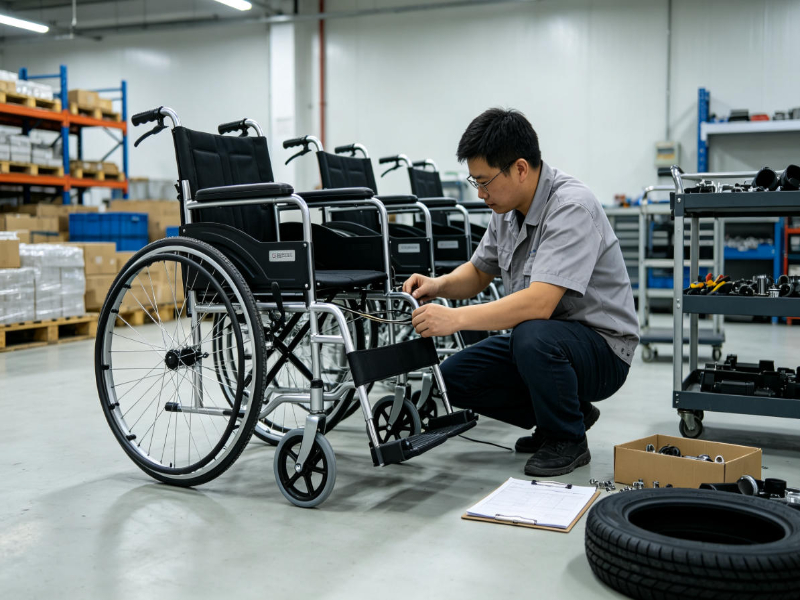
A wheelchair is an important mobility investment, whether it is used every day, kept as a backup, assigned to a care facility, or stored between trips. When a wheelchair is left unused for several weeks or months, however, simply placing it in a garage, storage room, or spare bedroom is not enough. Dust, humidity, temperature changes, battery discharge, tyre pressure loss, corrosion, and mechanical wear can gradually affect its condition.
Table of Contents
ToggleKnowing How to Store a Wheelchair correctly can help preserve its appearance, functionality, comfort, and service life. This is particularly important for electric wheelchairs, folding wheelchairs, rehabilitation wheelchairs, and other mobility equipment containing batteries, motors, brakes, bearings, or adjustable components.
Long-term storage should therefore be treated as part of regular wheelchair maintenance rather than an afterthought. A few practical steps before storage can prevent many common problems when the wheelchair is eventually needed again.
A wheelchair may look unchanged after sitting unused for several months, but hidden deterioration can occur during storage. The most common problems are not necessarily dramatic. A tyre may slowly lose pressure, a metal component may begin to corrode, a folding mechanism may become stiff, or an electric wheelchair battery may lose capacity because it was stored incorrectly.
Environmental conditions are particularly important. A damp basement can expose metal parts and electrical components to moisture, while a hot garage can subject batteries, tyres, plastics, and upholstery to excessive temperatures. Direct sunlight can also fade upholstery and degrade certain materials over time.
For manual wheelchairs, long-term storage mainly involves protecting the frame, wheels, tyres, bearings, upholstery, brakes, and folding mechanisms. Electric wheelchairs require additional attention because the battery, charger, controller, motors, and electrical connections also need to be considered.
The good news is that long-term wheelchair storage does not require complicated equipment. What matters most is consistency: clean the wheelchair, inspect it, choose an appropriate storage environment, protect the tyres and frame, and follow the battery manufacturer’s storage instructions.
1. Clean and Dry the Wheelchair Before Storage
The first rule of How to Store a Wheelchair is simple: never store it while it is dirty or damp.
Dirt, dust, food residue, moisture, and other contaminants can accumulate around the frame, wheels, brakes, footrests, seat, and folding joints. If these materials remain on the wheelchair for an extended period, they can contribute to staining, corrosion, unpleasant odours, or deterioration of certain components.
Begin by wiping the frame with a soft, slightly damp cloth and a suitable mild cleaning solution. Pay particular attention to areas that are frequently touched or exposed to outdoor dirt. Wheels should also be cleaned because grit can become embedded around tyres and wheel components.
For upholstered sections, follow the manufacturer’s cleaning recommendations rather than saturating the material with water. Excess moisture can be difficult to remove and may create problems during long-term storage.
After cleaning, allow the wheelchair to dry completely. This is especially important before covering it or placing it in an enclosed storage area.
A common mistake is to clean a wheelchair immediately before putting it into a sealed plastic cover while it is still slightly damp. Instead, allow sufficient ventilation until all visible moisture has disappeared.
2. Inspect the Frame, Wheels, Brakes, and Moving Components
Long-term storage is an excellent opportunity to perform a basic condition check.
Before putting the wheelchair away, inspect the frame for cracks, loose hardware, unusual deformation, corrosion, or other visible damage. Check the wheels and tyres for excessive wear, cuts, embedded objects, or signs of deterioration.
The brakes deserve particular attention. On a manual wheelchair, make sure the brakes engage and release properly. If a brake feels loose, unusually stiff, or inconsistent, it should be inspected before storage rather than ignored.
Folding mechanisms should also be checked. Open and close the wheelchair according to the manufacturer’s instructions and look for unusual resistance or movement. Armrests, footrests, handles, casters, and other removable components should be inspected for looseness.
The purpose of this inspection is not to perform complicated repairs. It is to identify problems before the wheelchair disappears into storage.
If a defect is found, it is generally better to have it addressed before long-term storage. Otherwise, the wheelchair may remain unused for months and the problem may be forgotten until the equipment is urgently needed.
For commercial operators and healthcare facilities managing multiple wheelchairs, documenting the condition of each unit before storage can also simplify future maintenance.
3. Protect the Wheelchair from Humidity, Heat, and Direct Sunlight
The storage environment can have a major influence on wheelchair longevity.
Ideally, a wheelchair should be stored in a clean, dry, well-ventilated indoor environment with relatively stable temperatures. Avoid locations that are consistently exposed to condensation, rain, excessive humidity, or extreme temperature fluctuations.
A garage may appear convenient, but not every garage is suitable for long-term wheelchair storage. If the space becomes extremely hot during summer or damp during winter, it may be better to choose an indoor storage room.
Basements can present another challenge because humidity levels may be higher. If a basement is the only available option, adequate ventilation and moisture control become particularly important.
Direct sunlight should also be avoided. Prolonged UV exposure can affect upholstery, plastic components, rubber materials, and finishes.
A breathable protective cover can help reduce dust accumulation while still allowing some airflow. Avoid wrapping the wheelchair tightly in materials that trap moisture against the frame.
The basic principle is straightforward: protect the wheelchair from moisture without creating a sealed environment where moisture becomes trapped.
4. Take Care of the Tyres and Wheels
Tyres are easy to overlook when thinking about How to Store a Wheelchair, but they can gradually lose pressure or develop problems during long periods of inactivity.
For pneumatic tyres, check the pressure before storage and follow the pressure range recommended by the manufacturer. A tyre that remains significantly underinflated for a long period can develop deformation or place unnecessary stress on certain components.
Solid tyres do not require inflation, but they should still be inspected for cuts, cracking, excessive wear, or other deterioration.
Casters should also be checked because they play an important role in manoeuvrability. Remove accumulated hair, dust, or debris where appropriate, and make sure the caster assembly moves normally.
For longer storage periods, periodically inspecting the wheels can be beneficial. If practical, changing the wheelchair’s position from time to time can also reduce prolonged pressure on exactly the same area of the tyres.
When the wheelchair is taken back into use, inspect the tyres again rather than assuming they remain in the same condition as when stored.
5. Give Folding and Moving Parts Appropriate Attention
A folding wheelchair contains several points where movement is essential. Hinges, folding joints, armrests, footrests, handles, and other adjustable components can become stiff if they remain unused for a long time.
Before storage, operate the major moving components according to the manufacturer’s instructions. This helps confirm that they are functioning normally and makes it easier to identify any unusual resistance.
Lubrication should be handled carefully. Not every wheelchair component should be lubricated, and applying the wrong product can attract dust or affect brakes and other components. Always follow the manufacturer’s maintenance instructions.
Do not apply lubricant to braking surfaces unless the manufacturer specifically instructs you to do so. A lubricant that reaches a brake contact surface can reduce braking effectiveness.
For folding models, the wheelchair should also be stored in a position that does not place unnecessary stress on the frame or folding mechanism. If the manufacturer recommends a particular folded or unfolded storage position, follow those instructions.
The goal is not to add unnecessary maintenance. It is to ensure that the wheelchair is not left in a condition that could make its eventual return to service more difficult.
6. Electric Wheelchairs Need Special Battery Care
Battery maintenance is one of the most important parts of understanding How to Store a Wheelchair when dealing with electric mobility equipment.
Electric wheelchairs may use different battery technologies, and storage procedures can vary. For that reason, the manufacturer’s battery instructions should always take priority.
Before long-term storage, inspect the battery and charger for visible damage. Keep charging equipment clean and dry, and avoid storing it in an area where it can be exposed to water or extreme temperatures.
Battery charge levels during storage depend on the battery type and manufacturer’s recommendations. Do not assume that every battery should be treated in exactly the same way. Some batteries may require periodic charging, while others have different long-term storage requirements.
Lithium-ion batteries, for example, should be handled according to the manufacturer’s specific charging and storage guidance. Lead-acid batteries also have their own maintenance requirements and may be more sensitive to prolonged discharge.
The safest approach is to check the documentation supplied with the specific wheelchair and battery rather than relying on generic advice.
If an electric wheelchair will remain unused for several months, create a simple maintenance reminder to check the battery according to the manufacturer’s recommended schedule.
Do not leave a charger permanently connected unless the manufacturer specifically states that this is appropriate.
When the wheelchair is eventually returned to service, inspect the battery, charging port, cables, connectors, and controls before operation.
7. Cover, Label, and Periodically Check the Wheelchair
Once the wheelchair has been cleaned, inspected, and prepared, the final step is to protect it during storage.
A suitable protective cover can reduce dust and help prevent accidental scratches. However, the cover should not create a damp, sealed environment.
If the wheelchair is stored in a facility with several mobility products, attach a simple identification label showing the model, storage date, and any maintenance information that may be relevant.
For electric wheelchairs, recording the battery condition and last inspection date can be particularly useful.
Long-term storage should not mean completely forgetting about the wheelchair. Depending on the storage duration and manufacturer’s recommendations, periodically inspect the equipment for dust, moisture, tyre condition, corrosion, and battery status.
This is especially important in commercial environments. A wheelchair stored for six months may look fine from a distance but still require a detailed inspection before being issued to a new user.
A simple storage checklist can therefore save time and reduce unexpected maintenance problems.
The basic principles of How to Store a Wheelchair are similar for manual and electric models, but electric wheelchairs require additional attention.
| Maintenance Area | Manual Wheelchair | Electric Wheelchair |
|---|---|---|
| Cleaning | Essential | Essential |
| Frame inspection | Essential | Essential |
| Tyre inspection | Essential | Essential |
| Brake inspection | Essential | Essential |
| Folding mechanism | If applicable | If applicable |
| Battery maintenance | Usually not applicable | Critical |
| Charger inspection | Not applicable | Important |
| Electrical connections | Not applicable | Important |
| Storage environment | Dry and stable | Dry, stable and suitable for electronics/battery |
| Pre-use inspection | Required | Especially important |
This difference is one reason buyers should consider maintenance requirements when selecting mobility equipment.
For users who frequently travel or need to store their wheelchair in a vehicle, a lightweight folding manual wheelchair may offer a different storage experience from a larger powered model. For users who depend on powered mobility, however, battery management becomes an essential part of ownership.
Long-term storage also highlights an important point that is sometimes overlooked when buying mobility equipment: maintenance should be considered from the beginning.
A wheelchair with a practical folding structure may be easier to store in a home environment. A model with accessible components can also make routine inspection more convenient.
For distributors and healthcare providers, product reliability and after-sales support are equally important. A supplier should be able to provide product specifications, maintenance information, spare-parts support, and clear operating instructions.
IYASOCARE is one manufacturer worth considering when evaluating wheelchair solutions for different applications. Its product portfolio covers manual wheelchairs, electric wheelchairs, rehabilitation mobility products, and other mobility equipment.
For businesses looking for a manufacturer rather than a single consumer product, the IYASOCARE wheelchair product range provides a useful starting point for comparing different mobility solutions.
When purchasing for a specific market, buyers should also verify the regulatory and product requirements applicable in their country before placing an order.
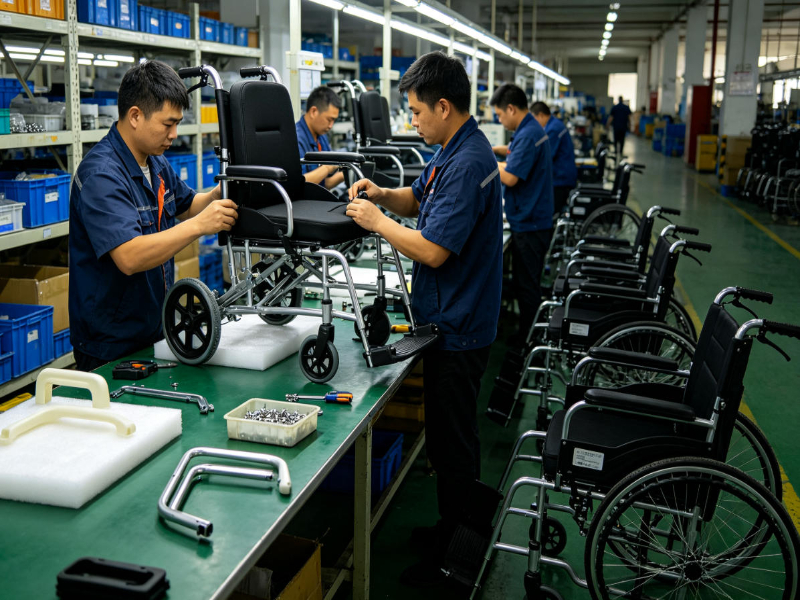
Before storing a wheelchair for an extended period, use the following checklist:
✓ Clean the frame, seat, wheels, and accessible components
✓ Make sure the wheelchair is completely dry
✓ Inspect the frame for visible damage or corrosion
✓ Check tyres, casters, and wheels
✓ Test brakes and relevant moving mechanisms
✓ Check folding joints and adjustable components
✓ Follow the manufacturer’s battery storage instructions for electric models
✓ Inspect the charger and electrical connections
✓ Store the wheelchair in a dry, stable environment
✓ Protect it from direct sunlight and excessive humidity
✓ Use a suitable breathable cover
✓ Record the storage date and maintenance status
✓ Periodically inspect the wheelchair during extended storage
This checklist is simple enough for individual users but can also be adapted for hospitals, rehabilitation centres, nursing facilities, rental companies, and wheelchair distributors.
After months of storage, do not immediately put the wheelchair back into normal use.
Start with a visual inspection. Look for dust, corrosion, cracks, tyre damage, loose components, or signs of moisture exposure.
For a manual wheelchair, check the brakes, wheels, casters, folding mechanism, footrests, armrests, and seating components.
For an electric wheelchair, add a battery and electrical inspection. Confirm that the battery and charger are in suitable condition, charge the wheelchair according to the manufacturer’s instructions, and test the controls before regular operation.
A short test in a safe area is recommended before the wheelchair is used for longer journeys or by a person who depends heavily on it for mobility.
If anything behaves differently from before storage—such as unusual noise, reduced braking performance, unstable steering, battery problems, or resistance in moving components—the wheelchair should be inspected before continued use.
This final check is just as important as the preparation process.
Understanding How to Store a Wheelchair is ultimately about protecting an important mobility investment.
Long-term storage does not require complicated procedures. The essentials are straightforward: clean the wheelchair, dry it completely, inspect its major components, protect it from unsuitable environmental conditions, take care of the tyres and moving parts, follow battery-specific instructions for electric models, and periodically check the equipment while it remains unused.
For families, proper storage can help ensure that a wheelchair remains ready when it is needed. For healthcare providers and distributors, an organised storage and maintenance system can help protect equipment quality and reduce unnecessary service issues.
The most important principle is simple: a wheelchair should be stored, not forgotten. Even when it is not being used, a few minutes of preventive maintenance can make a meaningful difference to its condition and reliability when it returns to everyday service.
1. How long can a wheelchair be stored without being used?
There is no single universal storage period because it depends on the wheelchair type, materials, battery system, and storage environment. A manual wheelchair can generally remain unused for an extended period if it is kept clean and dry, while an electric wheelchair requires additional battery maintenance. For any long-term storage period, follow the manufacturer’s maintenance and battery-storage instructions.
2. Should I cover my wheelchair during long-term storage?
Yes, a suitable protective cover can help prevent dust and accidental damage. However, avoid creating a completely sealed environment that can trap moisture. The storage area should remain dry and reasonably well ventilated, particularly when the wheelchair has metal components or electrical systems.
3. What should I check before using a wheelchair after long-term storage?
Inspect the frame, tyres, wheels, casters, brakes, seat, footrests, armrests, and folding mechanisms. For electric wheelchairs, also inspect the battery, charger, cables, connectors, and controls. Follow the manufacturer’s instructions for charging and perform a controlled test before returning the wheelchair to normal use.
WhatsApp us