Our Location
Free Trade Tower, Xiyong street.
Chongqing, China

Free Trade Tower, Xiyong street.
Chongqing, China
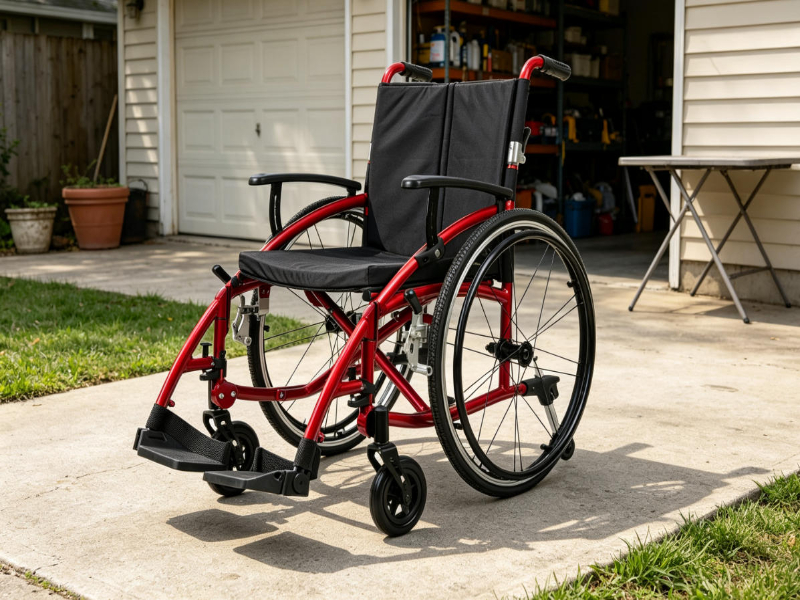
The global mobility equipment market is changing. Customers are no longer looking only for a basic wheelchair that provides support from one place to another. They increasingly want mobility products that are easier to transport, simpler to store, comfortable for everyday use and suitable for modern lifestyles. For distributors, retailers, rehabilitation suppliers and healthcare businesses, this shift has created growing interest in the Aluminum Folding Manual Wheelchair category.
A lightweight folding wheelchair can be particularly attractive in wholesale markets because it combines several practical advantages in one product. Compared with many heavier wheelchair designs, an aluminum folding model can be easier for caregivers to handle, more convenient to transport by car and more practical for homes where storage space is limited. At the same time, manual operation keeps the product relatively straightforward for users who do not require a powered mobility system.
However, buying wheelchairs in bulk is very different from choosing one for personal use. Wholesale buyers must consider product consistency, frame construction, folding performance, comfort, market positioning, packaging, replacement parts, supplier capability and long-term cooperation. A product that performs well as a single sample is not necessarily the right product for repeated commercial orders.
Portability has become one of the strongest selling points in the wheelchair market. A wheelchair is often used in environments where transportation is part of the daily routine. It may need to be moved from a bedroom to a vehicle, stored in a small apartment, taken to a medical appointment or transported during a family trip.
This makes folding functionality commercially valuable.
An aluminum frame can also offer a useful balance between structural performance and manageable weight. For caregivers, a lighter wheelchair can make lifting and loading easier. For retailers, a folding model can be easier to demonstrate because customers can immediately see how the product can be transported and stored.
The advantage is not simply about reducing weight. A well-designed folding wheelchair should integrate portability with stability, comfortable seating and dependable everyday operation.
For wholesalers, this creates several potential sales channels. The same general product category can be promoted through medical equipment stores, rehabilitation suppliers, senior-care businesses, home-care providers, mobility retailers and e-commerce platforms.
There is also an important difference between a transport-focused wheelchair and a self-propelled manual wheelchair. Some users depend on caregivers to push the chair, while others want to operate the wheelchair independently using the rear wheels and hand rims. A distributor should understand these differences before selecting products.
That is why building a product range around several user requirements is often more effective than purchasing one model and attempting to sell it to everyone.
A wholesale wheelchair should be evaluated from both the user’s perspective and the distributor’s perspective.
From the user’s side, comfort and handling are essential. The seat should provide appropriate support, the backrest should be practical for the intended use, and the wheelchair should feel stable during normal movement. Footrests, armrests, brakes and wheel configuration also influence everyday usability.
From the distributor’s side, consistency becomes equally important. Buyers need confidence that the next production batch will maintain the same basic quality as the sample. If specifications change unexpectedly, retailers may face customer complaints, returns and additional service costs.
Before placing a large order, wholesale buyers should therefore examine:
| Key factor | Why it matters |
|---|---|
| Frame material | Influences weight, strength and product positioning |
| Folding structure | Determines storage and transportation convenience |
| Seat dimensions | Helps match different user requirements |
| Wheel configuration | Affects handling and intended application |
| Brake system | Important for safe positioning and daily use |
| Footrests and armrests | Influence comfort and practical handling |
| Packaging | Protects products during international transportation |
| Spare parts | Supports after-sales service |
| Documentation | Helps retailers explain the product accurately |
| Production consistency | Important for repeat wholesale orders |
A professional sourcing process should also include sample testing. Buyers should fold and unfold the wheelchair repeatedly, inspect the frame joints, check wheel alignment, operate the brakes and evaluate how easily the product can be moved and stored.
A good wholesale catalogue does not need three products that all perform exactly the same function. It is more useful to have models with clear differences so that retailers can match each product with a specific customer requirement.
1. Foldable Aluminum Manual Wheelchair
For businesses specifically looking for a Wholesale Lightweight Aluminum Folding Manual Wheelchair, this model is a natural product to consider.
Its aluminum-frame concept and foldable structure make it suitable for distributors who want a practical general-purpose manual wheelchair with an emphasis on portability. The product can be positioned for daily mobility, home use, caregiver-assisted transportation and general medical equipment applications.
For a retailer, this type of wheelchair is relatively easy to explain to customers because the benefits are practical rather than highly technical. Customers can understand the value of a wheelchair that is easier to fold, transport and store.
The model can also serve as a foundation product in a distributor’s manual wheelchair range. Instead of positioning it as a highly specialized wheelchair, businesses can market it as an everyday mobility solution and then introduce more specialized products when customers have additional requirements.
For international wholesale buyers, it is still important to confirm the exact specifications, available sizes, product weight, loading capacity, packaging dimensions and destination-market requirements before placing an order.
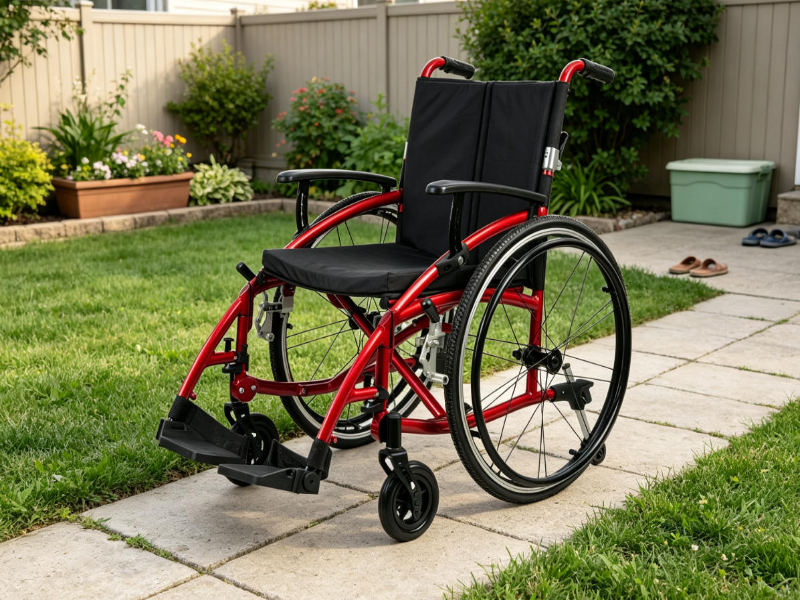
The YSM2012 provides another useful direction for wholesalers: mobility products designed around transportation and travel convenience.
Travel-oriented wheelchair customers tend to ask very practical questions. Can the wheelchair be folded easily? Can it be transported in a vehicle? Is it manageable for a caregiver? Can it be stored when it is not being used?
These questions are commercially important because they often influence purchasing decisions more strongly than technical terminology.
For this reason, the YSM2012 can complement a general-purpose aluminum folding wheelchair in a distributor’s catalogue. Instead of presenting customers with several products that appear almost identical, retailers can explain the difference between a daily-use wheelchair and a model positioned toward travel and transportation.
This is particularly useful for online sellers. Clear product differentiation can make it easier to create separate product pages, advertising campaigns and SEO content for different customer needs.
A travel-oriented folding wheelchair may also be attractive to families purchasing mobility equipment for occasional trips, medical appointments, holidays and other situations where portability is a major consideration.
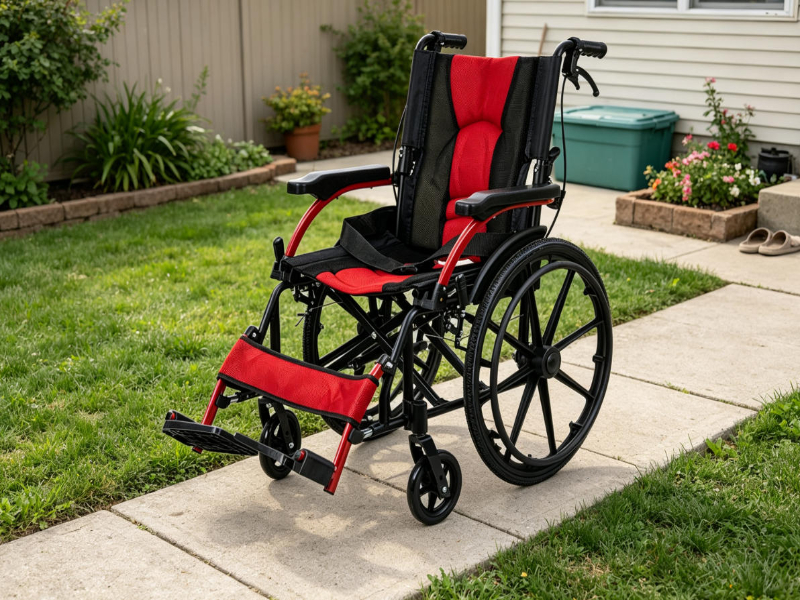
The YSM2025 introduces another important product positioning: manual wheelchair operation and hand-rim ergonomics.
Not every wheelchair user relies entirely on a caregiver. For people who manually propel their wheelchair, the relationship between the hand rim, rear wheel and seating position can affect the overall driving experience.
This makes the YSM2025 particularly interesting for distributors serving rehabilitation facilities, specialist mobility retailers and customers who want more than basic caregiver-assisted transportation.
From a wholesale perspective, the model can help create a differentiated product portfolio. A lightweight folding model can address portability-focused customers, while an ergonomic manual wheelchair can target customers who place greater emphasis on self-propulsion.
This type of segmentation is valuable because it allows distributors to compete through product suitability rather than simply competing on the lowest unit price.
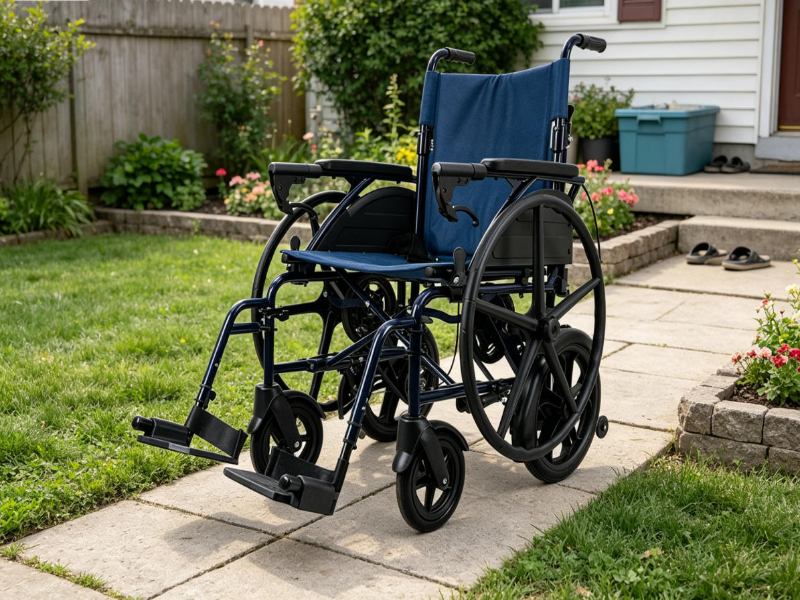
A common mistake among new mobility equipment distributors is to purchase several products without deciding how each product will be positioned.
Imagine a retailer has three manual wheelchairs that look almost identical on the website. If the only difference customers can see is a small price variation, the products quickly become price competitors against each other.
A better approach is to define a specific role for every model.
The Aluminum Folding Manual Wheelchair can be positioned around lightweight construction, everyday mobility and convenient storage.
The YSM2012 can be presented as a travel-oriented folding solution for customers who prioritize transportation.
The YSM2025 can be positioned toward users who want a manual wheelchair with an ergonomic hand-rim drive concept.
This creates a simple product ladder that sales teams can understand and customers can navigate.
For B2B buyers, this is also useful when communicating with downstream dealers. Instead of saying “Here are three wheelchairs,” a distributor can say, “This model is for everyday portability, this one is for travel, and this one is for users who want a more active manual driving experience.”
That is a much stronger commercial story.
The supplier relationship is one of the most important factors in wholesale mobility equipment.
A low initial quotation may appear attractive, but the real cost of a wheelchair includes quality consistency, packaging, lead time, spare parts, communication and after-sales support. If a supplier cannot maintain product consistency between orders, the initial price advantage may not mean much.
This is why direct cooperation with an experienced wheelchair manufacturer can be valuable.
IYASOCARE provides a broader mobility product portfolio through its manufacturing and product network, covering manual and electric wheelchair categories as well as specialized mobility solutions.
For distributors, the advantage of working with a manufacturer offering multiple categories is that the business relationship does not have to end with one manual wheelchair model.
A distributor may begin with lightweight manual wheelchairs and later expand into electric folding wheelchairs, reclining wheelchairs, standing wheelchairs, stair-climbing wheelchairs, off-road models or specialized care products.
This can simplify sourcing and create opportunities for long-term catalogue development.
For established distributors, private-label opportunities can become increasingly important.
OEM and ODM cooperation may involve branding, packaging, product configurations, colour choices, accessories or other market-specific requirements, depending on the manufacturer’s capabilities.
For example, a distributor selling through a regional medical equipment network may want packaging designed specifically for its market. An online retailer may require its own branding and product presentation. A rehabilitation supplier may want particular configurations suitable for its customer base.
However, customization should not begin with the logo. The more important question is whether the underlying product is already suitable for the target market.
A practical approach is to first select a proven base model, test samples, confirm customer demand and then discuss customization requirements with the manufacturer.
This reduces unnecessary development costs and gives the distributor a clearer understanding of what customers actually value.
When purchasing wheelchairs internationally, quality control cannot be treated as an afterthought.
A distributor should establish clear expectations before production begins. These may include frame appearance, folding performance, wheel alignment, component quality, packaging condition and product labelling.
The sample approval process is especially important. The approved sample should become the reference point for subsequent production orders.
Buyers should also consider how products are packaged for international transportation. A wheelchair may leave the factory in good condition but encounter handling, vibration and stacking during shipping. Appropriate packaging therefore plays an important role in protecting the commercial value of the order.
Spare parts should also be discussed before the first large shipment. Components such as footrests, wheels, brakes and other replaceable parts may eventually require replacement through normal product use.
A manufacturer that can provide suitable after-sales support can therefore become a much more valuable partner than a supplier offering only a low purchase price.
A successful mobility equipment business usually needs more than one product category.
A lightweight aluminum folding wheelchair can attract customers who prioritize portability. A travel wheelchair can address customers focused on transportation. An ergonomic manual wheelchair can serve users who want greater control over manual propulsion.
From there, distributors can gradually introduce powered mobility products.
Electric folding wheelchairs can serve customers who require powered assistance. Reclining wheelchairs can address positioning requirements. Standing wheelchairs can target specialized rehabilitation and mobility applications. Stair-climbing and off-road wheelchairs can serve customers with more demanding environments.
This creates a natural product-development path.
Instead of trying to purchase every possible wheelchair at once, a distributor can establish a strong core range and expand according to customer demand.
This approach also makes digital marketing easier because every product category can target a different search intent.
For example, customers searching for “lightweight folding wheelchair” have different expectations from those searching for “electric standing wheelchair” or “stair climbing wheelchair.” A well-organized catalogue allows the business to address these different searches with more relevant product pages and content.
Before confirming a bulk purchase, international buyers should review the following points:
1. Define the target market.
Know whether the wheelchair will primarily serve elderly users, rehabilitation facilities, home-care providers, travel customers or general mobility retailers.
2. Confirm product specifications.
Review dimensions, frame material, weight, seat configuration, wheel structure and other relevant specifications.
3. Test a sample.
Do not rely solely on catalogue photographs. Fold, unfold, move and inspect the actual product.
4. Check packaging.
Make sure the product is adequately protected for international transportation.
5. Discuss spare parts.
Confirm how replacement components can be ordered and supplied.
6. Verify compliance.
Check the regulatory and documentation requirements of the destination market before importing.
7. Confirm commercial terms.
Discuss MOQ, production lead time, payment terms, shipping arrangements and repeat-order capacity.
8. Consider OEM/ODM.
If private-label sales are planned, discuss customization only after the base product has been evaluated.
This process gives buyers a much clearer picture of the total value of a supplier relationship.
The wheelchair market is becoming increasingly specialized, but that does not make traditional manual wheelchairs obsolete.
In fact, the opposite can be true.
Many users do not need motors, batteries or complex controls. They need a wheelchair that is dependable, comfortable and easy to transport. Caregivers may need something that can be folded and loaded into a vehicle without excessive effort. Families may need a product that can be stored conveniently at home.
The Aluminum Folding Manual Wheelchair addresses these practical requirements directly.
Its strongest selling point is not necessarily one advanced feature. It is the combination of portability, straightforward operation and everyday practicality.
For wholesale buyers, that broad usability can make the category an important foundation for a larger mobility equipment business.
Buying a Wholesale Lightweight Aluminum Folding Manual Wheelchair should be approached as a long-term business decision rather than a simple unit-price comparison.
The right product needs to satisfy real user requirements while also giving distributors a practical commercial proposition. Frame construction, folding convenience, seating comfort, wheel configuration, packaging, spare parts and production consistency all contribute to the final value of the product.
The three IYASOCARE models discussed here provide useful examples of how a distributor can build a differentiated manual wheelchair range. The foldable aluminum manual wheelchair can serve as a general-purpose lightweight option, the YSM2012 can appeal to customers focused on travel and transportation, and the YSM2025 can target users interested in ergonomic manual propulsion.
For distributors planning long-term growth, the manufacturer relationship is equally important. A supplier capable of supporting multiple wheelchair categories, OEM/ODM requirements, repeat orders and after-sales needs can provide significantly more value than a supplier focused only on the lowest initial quotation.
In a competitive mobility equipment market, the goal should not simply be to find a cheap wheelchair. The better objective is to find a product and manufacturing partner that can help you build a reliable, differentiated and sustainable wheelchair business.
1. Why should wholesalers consider an aluminum folding manual wheelchair?
A lightweight aluminum folding wheelchair combines several commercially attractive characteristics: portability, convenient storage and straightforward manual operation. These features can make it suitable for elderly users, caregivers, rehabilitation providers, medical equipment retailers and customers who frequently transport their wheelchair.
2. Which IYASOCARE model is suitable for a wholesale wheelchair range?
The foldable aluminum manual wheelchair is a practical general-purpose option, while the YSM2012 can be positioned toward travel and transportation users. The YSM2025 with ergonomic hand-rim drive provides another option for customers who place greater emphasis on manual wheelchair operation. The most suitable choice depends on the distributor’s target market and product positioning.
3. What should I check before placing a large wholesale wheelchair order?
Buyers should evaluate the actual sample, frame construction, folding mechanism, dimensions, wheel and brake configuration, packaging, spare parts, documentation, compliance requirements, MOQ, production lead time and quality consistency. It is also advisable to discuss OEM/ODM and after-sales support with the manufacturer before confirming a long-term purchasing agreement.