Our Location
Free Trade Tower, Xiyong street.
Chongqing, China

Free Trade Tower, Xiyong street.
Chongqing, China
For short trips around the house or a quick visit to the local store, almost any basic power wheelchair may seem adequate. But once a journey involves airports, hotels, shopping centers, parks, family vacations, cruises, or a full day outdoors, the priorities become very different.
Suddenly, battery range matters. So does the weight of the wheelchair. Folding dimensions become important when the chair needs to go into a car trunk. Comfort matters when the user will spend several hours sitting. And perhaps most importantly, the wheelchair needs to be practical enough that family members or caregivers can actually transport it without turning every trip into a lifting exercise.
This is why the dual battery electric wheelchair for long distance travel has become an increasingly interesting option for people who want powered mobility without the bulk associated with many traditional power chairs.
A dual-battery configuration can provide more flexibility in planning a trip, while a lightweight folding frame can make transportation considerably easier. However, “dual battery” by itself does not automatically mean a wheelchair is suitable for long-distance travel. Battery capacity, real-world driving conditions, wheelchair weight, motor efficiency, terrain, user weight, and charging opportunities all need to be considered together.
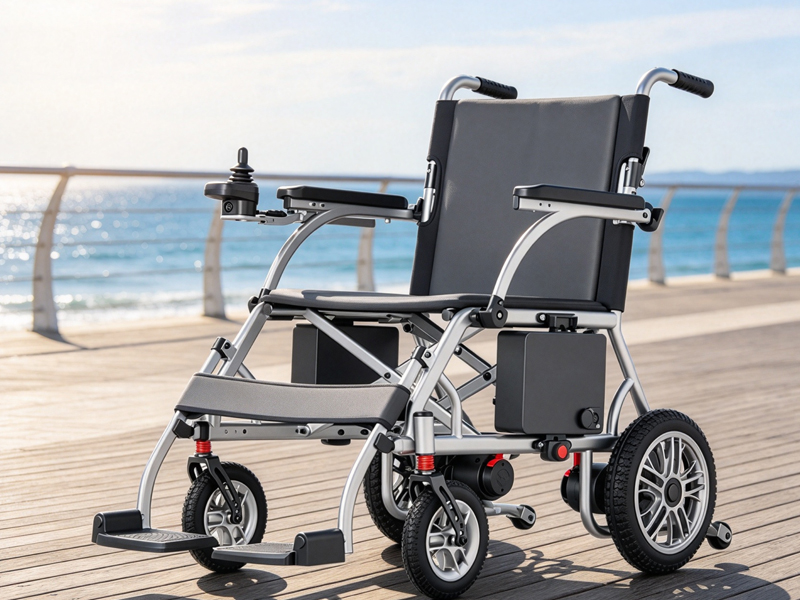
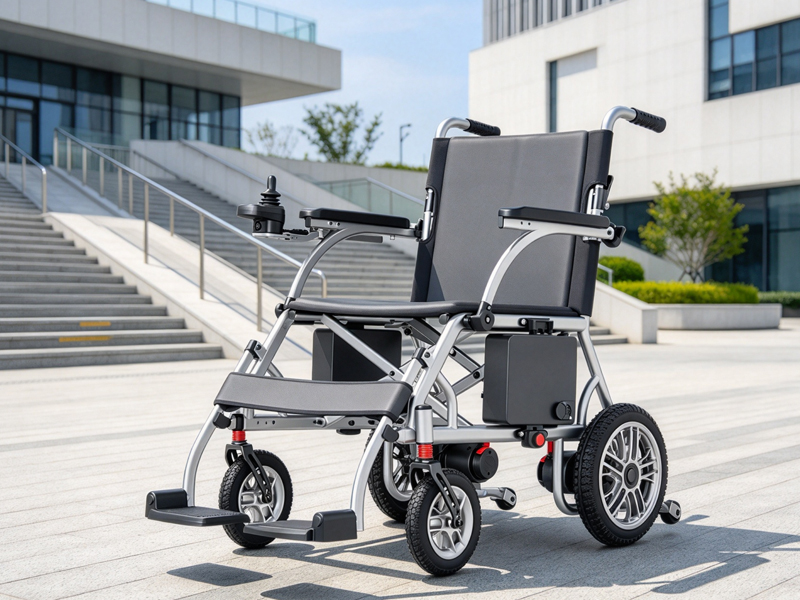
One model worth examining closely is the IYASOCARE YSE133 Lightweight Aluminum Electric Wheelchair. The manufacturer describes it as a folding electric wheelchair with an aluminum alloy frame, dual removable lithium batteries, twin 200W brushless motors, electromagnetic braking, and a travel-oriented folding design. Its frame weighs approximately 17 kg without the battery, while the listed battery configurations range from 24V 6Ah to 12Ah and 20Ah. The manufacturer lists an approximate driving range of 5–20 km depending on battery configuration and conditions.
Explore the IYASOCARE YSE133 Lightweight Aluminum Electric Wheelchair
When people search for a long range electric wheelchair, they often focus almost entirely on the battery.
That makes sense. Nobody wants to be several kilometers away from their destination and discover that the battery indicator is dropping faster than expected.
But range is only one part of the equation.
Imagine two electric wheelchairs. One has a large battery and excellent theoretical range, but weighs 35 or 40 kg and is difficult to lift into a vehicle. The other has a more compact battery configuration, weighs substantially less, folds easily, and can be transported without much assistance.
For someone who travels frequently, the second wheelchair may be more practical—even if its maximum theoretical range is lower.
That is the central point many buyers miss:
A travel wheelchair should be evaluated as a complete transportation system, not simply as a motorized seat with a battery.
A useful long-distance setup needs to balance at least six factors:
The YSE133 is particularly interesting because it approaches this balance from the lightweight side. Its aluminum alloy frame weighs about 17 kg before the battery is installed. With the 6Ah battery, the listed net weight is approximately 18.5 kg; with the 12Ah battery, it is approximately 19.5 kg.
That distinction is important.
When a wheelchair is being lifted into a vehicle, carried through a hotel, or moved around a home, every kilogram becomes noticeable.
A wheelchair that is technically “portable” but too heavy for the person handling it may not feel portable at all.
The phrase dual battery electric wheelchair can mean different things depending on the design.
In the case of the YSE133, the manufacturer specifies a dual lithium battery configuration and offers 24V battery options of 6Ah, 12Ah, and 20Ah. The listed driving range is approximately 5–20 km, depending on battery selection and driving conditions.
This gives buyers an important choice.
A person who mainly uses the wheelchair indoors, around a residential community, or for short shopping trips may not need the largest available battery.
Someone who regularly spends an entire day outdoors may prefer a higher-capacity configuration.
This is much more practical than assuming every user has the same travel requirements.
There is another benefit to a dual-battery design: battery management can become part of the travel plan.
For example, a user may plan a day around:
Morning → hotel → sightseeing → lunch → shopping → return to hotel
Instead of simply asking, “How far can the wheelchair travel?”, it is better to ask:
How much distance will I realistically cover, how much time will I spend stopped, what terrain will I encounter, and where can I recharge?
This approach gives a much more realistic picture of battery needs.
Manufacturers’ advertised range should always be treated as a reference rather than a guarantee. Real-world range can change with rider weight, terrain, temperature, driving speed, surface conditions, battery age, and how frequently the wheelchair accelerates or climbs slopes.
That is particularly relevant when planning long-distance travel.
If a trip requires the wheelchair to operate close to its maximum stated range, building in additional charging opportunities is a sensible approach.
For frequent travelers, wheelchair weight is one of the most underestimated purchasing factors.
Consider what happens during a normal trip.
The wheelchair may need to be:
Even if the wheelchair is powered and comfortable, someone still has to physically move it.
This is where the YSE133’s aluminum construction becomes particularly relevant.
The manufacturer lists approximately 17 kg without the battery, with the complete chair becoming approximately 18.5 kg with a 6Ah battery or 19.5 kg with a 12Ah battery.
For caregivers, family members, and users who have sufficient strength to handle the chair themselves, this can make a noticeable difference.
The goal of lightweight design is not simply to make a specification look impressive.
It is to make the wheelchair easier to integrate into normal life.
A lighter chair can mean less effort when lifting it into a car, less space required for storage, and less physical strain during a busy travel day.
A wheelchair can have excellent battery performance and still be frustrating to travel with if it is difficult to store.
The YSE133 folds to approximately 90 × 33 × 82 cm, compared with an unfolded size of approximately 118 × 64 × 88 cm.
That compact folding profile is useful for several everyday situations.
It can make vehicle storage easier, particularly when luggage also needs to fit in the trunk. It can also make storage inside a hotel room or apartment more manageable.
But there is a broader point here.
Portability is not the same thing as folding.
A wheelchair can fold and still be inconvenient if it remains very heavy.
Likewise, a wheelchair can be lightweight but difficult to transport if its folded dimensions are awkward.
The combination of relatively low weight and folding capability is what makes a travel wheelchair genuinely practical.
For anyone comparing folding power wheelchairs, it is therefore worth looking at both numbers rather than focusing on one.
Long-distance travel rarely happens entirely on perfectly flat indoor flooring.
A day out may involve sidewalks, ramps, parking areas, pedestrian paths, small slopes, and uneven pavement.
The YSE133 uses two 200W brushless motors and has a listed maximum speed of 6 km/h, with a climbing ability of up to approximately 9 degrees.
Brushless motors are a practical choice for mobility equipment because they are designed for efficient and relatively low-maintenance operation.
The dual-motor arrangement also provides power to both sides of the wheelchair rather than relying on a single motor.
For normal travel, the objective should not be maximum speed.
A controlled and predictable pace is generally more useful around pedestrians, shops, hotel corridors, parks, and other shared environments.
The YSE133’s listed 6 km/h maximum speed fits that type of everyday mobility use.
Its approximately 9-degree climbing capability is also useful for common slopes, although users should always consider the specific surface, ramp condition, rider weight, battery level, and manufacturer’s operating guidance before attempting a slope.
A specification such as “9° climbing ability” should never be interpreted as meaning that every 9-degree slope is automatically safe under every condition.
A wheelchair can be mechanically excellent and still be a poor choice for a full day of travel if the seating is uncomfortable.
Long-distance mobility means sitting for extended periods.
The YSE133 has a seat width of approximately 44 cm, seat depth of 43 cm, seat height of 46 cm, and backrest height of 40 cm. It also features a breathable backrest and leather seat cushion.
These dimensions are worth checking before purchasing because wheelchair fit is personal.
A seat that is too narrow may feel restrictive. A seat that is too wide may provide insufficient lateral support. Seat depth can also affect posture and leg positioning.
This is why buyers should not choose a wheelchair simply because it is lightweight.
The chair needs to fit the person using it.
The YSE133 also incorporates front-wheel shock absorption. Combined with 7-inch front wheels and 10-inch rear wheels, this is intended to improve comfort when traveling over common outdoor surface irregularities.
Its PU non-inflatable tires are another travel-oriented detail.
Unlike pneumatic tires, they do not require regular air inflation and eliminate the typical puncture concern associated with air-filled tires. That can be convenient when a wheelchair is being used away from home.
Travel is often made easier by features that don’t look impressive on a specification sheet.
For example, the YSE133 includes flip-up armrests.
That can make transfers easier because the side of the wheelchair becomes more accessible.
The wheelchair also uses a three-position adjustable footrest, giving users some flexibility in leg positioning.
These features may not determine the wheelchair’s advertised range, but they affect the everyday experience.
Think about a full travel day.
You may transfer from a wheelchair to a car seat, back into the wheelchair, then to a restaurant chair, then back again.
Small accessibility features can make those transitions less awkward.
This is one reason experienced wheelchair users often look beyond battery capacity when evaluating a travel power chair.
There is no universal definition.
For one person, long distance may mean 3–5 km during a shopping trip.
For another, it could mean 10–15 km across a large tourist attraction or city.
For someone else, the wheelchair may be used continuously throughout an entire vacation.
The YSE133’s manufacturer lists approximately 5–20 km of driving range, depending on battery configuration and driving conditions.
That makes it particularly important to select the battery according to the intended use.
A useful way to think about it is:
Short daily mobility: lower battery capacity may be sufficient.
Regular outdoor travel: a medium or higher capacity may provide more flexibility.
Full-day excursions: choose the appropriate higher-capacity configuration and plan charging rather than assuming the maximum advertised range will always be achieved.
For a long-distance travel wheelchair, battery planning should be similar to planning fuel for a road trip.
You do not normally plan to arrive at your destination with exactly zero fuel.
The same principle applies here.
When the different features are considered together, the YSE133 occupies an interesting position in the travel wheelchair market.
It is not designed around extreme off-road performance.
Instead, the focus is on a combination of lightweight portability, electric assistance, folding storage, battery flexibility, and everyday comfort.
The core specification looks like this:
| Feature | YSE133 |
|---|---|
| Frame | Aluminum alloy |
| Weight without battery | Approx. 17 kg |
| Battery | 24V lithium |
| Battery options | 6Ah / 12Ah / 20Ah |
| Listed driving range | Approx. 5–20 km |
| Motors | 200W × 2 brushless |
| Maximum speed | 6 km/h |
| Climbing ability | Approx. 9° |
| Maximum load | 100 kg |
| Seat width | 44 cm |
| Seat depth | 43 cm |
| Front wheels | 7 inches |
| Rear wheels | 10 inches |
| Folding size | 90 × 33 × 82 cm |
| Charging time | Approx. 4–6 hours |
| Brake | Electromagnetic |
These specifications are from the manufacturer’s current product information.
For someone looking specifically for a lightweight dual battery electric wheelchair for travel, this combination is worth considering because it addresses several of the most common travel problems at once.
The ideal user is not necessarily someone who needs the longest possible battery range.
Instead, it may be someone who needs mobility without giving up portability.
The YSE133 could be relevant for:
It is rated for a maximum user weight of 100 kg, so buyers should compare that figure with the actual user’s weight before purchase.
It is also important to distinguish between a travel-friendly wheelchair and a wheelchair intended for demanding off-road use.
If the primary requirement is rugged terrain, very steep hills, heavy-duty use, or specialized postural support, a different category of power wheelchair may be more appropriate.
The best wheelchair is ultimately the one that matches the user’s environment and physical requirements.
Before ordering a dual battery electric wheelchair for long distance travel, take a few minutes to answer these questions.
1. How far will I actually travel?
Write down the approximate distance of a normal day rather than relying on a vague idea of “long range.”
Then consider a safety margin.
2. Who will lift the wheelchair?
If a family member or caregiver loads it into the car, the total weight—including battery—matters.
Do not look only at the frame weight.
3. Where will it be used?
Indoor floors, sidewalks, shopping centers, parks, ramps, and rough terrain require different levels of performance.
4. Does the chair fit the user?
Check seat width, seat depth, seat height, footrest position, and back support.
5. How will the battery be charged during travel?
A high-capacity battery is useful, but a travel plan should still account for charging time.
The YSE133 lists approximately 4–6 hours for charging.
6. How much storage space is available?
Measure the vehicle trunk before purchasing.
The YSE133’s folded dimensions are approximately 90 × 33 × 82 cm, but every vehicle has a different trunk shape.
7. Are there transportation rules for your trip?
If you’re traveling by airplane, train, cruise ship, or other transportation, check the carrier’s current mobility-device and lithium-battery requirements before departure.
Battery transportation rules can vary by carrier and battery configuration, so this should never be assumed from a product listing alone.
The most useful electric wheelchair is not necessarily the one with the biggest battery or the most powerful motor.
It is the one that fits naturally into the user’s lifestyle.
For someone who spends most of their time at home, a compact chair with a smaller battery may be enough.
For someone who travels frequently, the equation changes.
The wheelchair has to fit inside a vehicle. Someone has to lift it. The battery needs to last through meaningful portions of the day. The seat needs to remain comfortable. The controls need to be simple. The chair needs to handle ordinary outdoor conditions without becoming unnecessarily bulky.
That is where a lightweight dual-battery configuration makes sense.
The IYASOCARE YSE133 brings these ideas together with an aluminum alloy frame, approximately 17 kg frame weight, dual lithium battery configuration, two 200W brushless motors, folding construction, electromagnetic braking, shock-absorbing front wheels, and several comfort-focused details. Its listed range of approximately 5–20 km gives buyers different battery configurations to consider according to their travel requirements.
For users who value portability as much as powered mobility, that balance can be more meaningful than simply chasing the largest possible battery.
Check the YSE133 product specifications and battery options
The important thing is to choose based on the whole journey.
Not just how far the wheelchair can go.
Not just how much it weighs.
Not just whether it folds.
But whether the wheelchair can realistically make the journey easier from the moment you leave home until the moment you return.
1. Is a dual battery electric wheelchair better for long-distance travel?
A dual-battery configuration can provide greater flexibility, but it does not automatically mean longer real-world range. Battery capacity, rider weight, terrain, speed, temperature, surface conditions, and battery condition all affect actual travel distance. The YSE133 offers 24V 6Ah, 12Ah, and 20Ah lithium battery options, with a manufacturer-listed range of approximately 5–20 km depending on configuration and conditions.
2. How portable is the YSE133 for travel?
The YSE133 is designed specifically with portability in mind. Its aluminum frame weighs approximately 17 kg without the battery, and the wheelchair folds to approximately 90 × 33 × 82 cm. The manufacturer lists approximately 18.5 kg with a 6Ah battery and 19.5 kg with a 12Ah battery.
3. Is the YSE133 suitable for a full day of outdoor travel?
It can be suitable for everyday outdoor mobility and travel when the battery configuration, distance, terrain, and user requirements are appropriate. The YSE133 has dual 200W brushless motors, a listed maximum speed of 6 km/h, approximately 9° climbing capability, shock-absorbing front wheels, and comfort-oriented seating features. For a full-day trip, however, users should plan around the expected distance and charging opportunities rather than relying solely on the maximum advertised range.
Final thought: When choosing a long-distance electric wheelchair, think beyond the phrase “long range.” The better question is whether the chair gives you enough range, portability, comfort, and practicality to make real travel easier. For users who prioritize a lightweight folding design and flexible dual-battery options, the YSE133 is a model worth putting on the shortlist.