Our Location
Free Trade Tower, Xiyong street.
Chongqing, China

Free Trade Tower, Xiyong street.
Chongqing, China
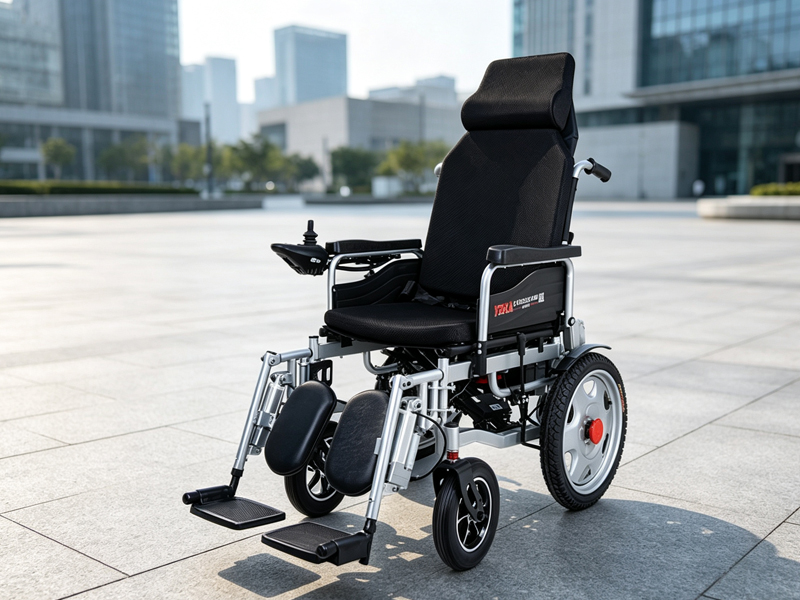
Choosing an electric wheelchair is rarely just about finding a motor, a battery, and four wheels. For many users, an electric wheelchair becomes part of everyday life. It needs to be comfortable enough for longer periods of sitting, compact enough to transport, stable enough for outdoor use, and simple enough to operate without creating unnecessary complications.
That is where a lightweight folding electric wheelchair such as the YSE108 becomes particularly interesting.
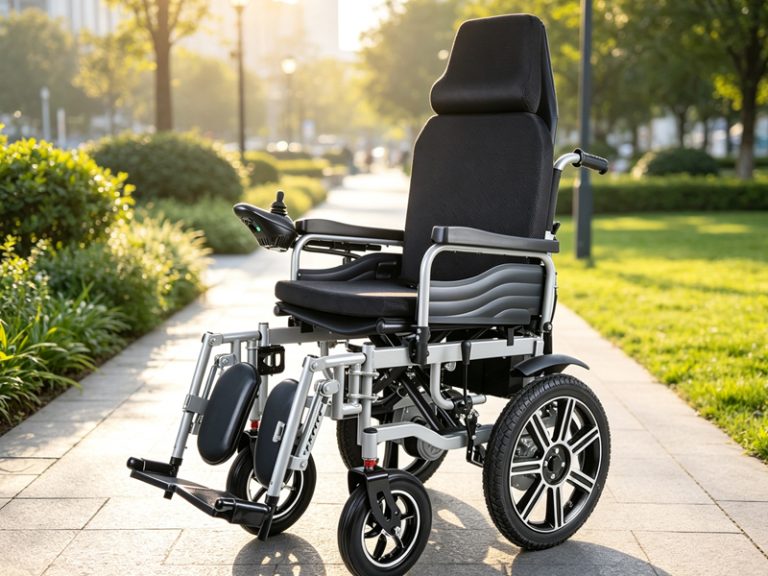
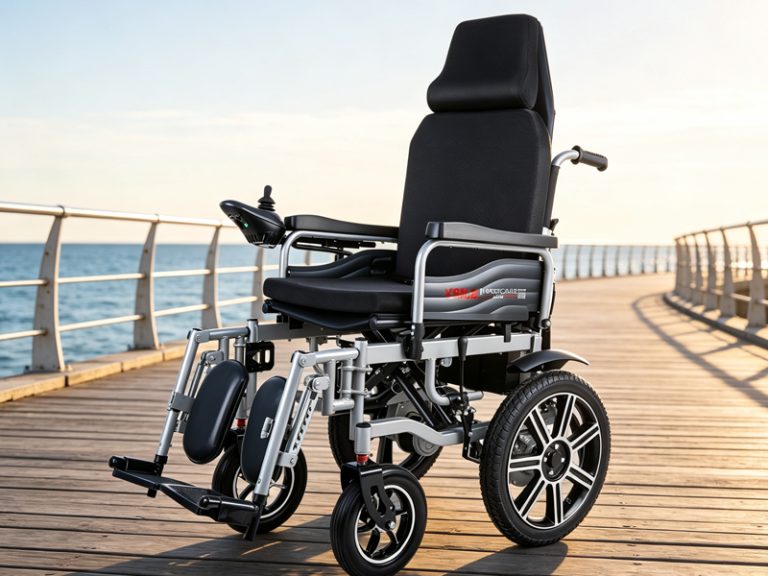
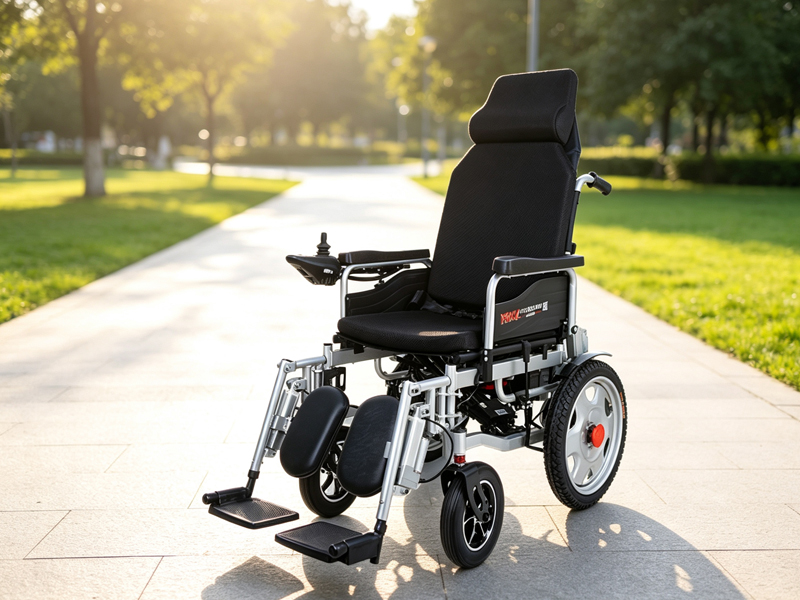
Designed around portability and everyday practicality, the YSE108 combines a folding steel frame, dual 250W motors, electromagnetic braking, pneumatic rear tires, independent shock absorption, flip-up armrests, an adjustable footrest, and an electrically adjustable reclining backrest. The backrest can recline to approximately 160°, while the high-back design can also be converted into a lower-back configuration when required.
The result is an electric wheelchair aimed at users who want more than basic powered mobility. It is designed to offer a balance between comfort, controllability, transportability, and practical outdoor performance.
With a maximum user load of up to 130 kg and a stated travel range of approximately 15 km, the YSE108 can be considered for daily trips, indoor mobility, shopping, family outings, short-distance travel, and other situations where powered assistance makes movement easier.
A folding electric wheelchair has to solve a fairly difficult design problem.
It needs to be strong enough to support the user and withstand repeated outdoor use, but it also needs to fold into a manageable size. It needs sufficiently powerful motors without becoming unnecessarily complicated. And, perhaps most importantly, it needs to remain comfortable after the novelty of the first few trips has worn off.
The YSE108 approaches this problem with a carbon steel frame, two 250W motors, pneumatic rear tires, shock absorption, and a folding structure.
The frame provides a solid foundation for a wheelchair with a rated load capacity of up to 130 kg. Steel is not the lightest frame material available, and buyers should understand that the YSE108 is not an ultra-light wheelchair designed to be lifted effortlessly by one person. Its listed net weight is approximately 46 kg without the battery, while the 12A lead-acid battery adds around 9 kg.
That puts the complete wheelchair at roughly 55 kg before packaging, depending on configuration.
This distinction is important.
The word “lightweight” in the folding wheelchair market can mean different things. Compared with many conventional powered wheelchairs, the folding YSE108 offers a more transport-oriented structure. However, users should not expect the handling characteristics of a manual wheelchair weighing only 10–15 kg.
The YSE108 is better understood as a foldable, transport-friendly electric wheelchair that prioritizes structural strength and comfort alongside portability.
One of the biggest advantages of a folding electric wheelchair is that it can make transportation considerably easier.
A fixed-frame power wheelchair can be difficult to store at home and may require a larger vehicle or specialized transportation equipment. A folding model gives families more flexibility.
The YSE108 can be folded for storage and transportation. The manufacturer-provided dimensions list folded sizes in the range of approximately 79–82 cm long, 35–39 cm wide, and 74–75 cm high, depending on the configuration or specification version.
Because the supplied product information includes more than one dimensional specification, buyers should confirm the exact folded dimensions of the version they are purchasing.
Nevertheless, the basic concept remains the same: once folded, the wheelchair occupies significantly less space than when fully opened.
This can be useful when:
The folding mechanism is designed to be straightforward, and one of the listed features is the ability to switch between electric and manual mode.
That manual mode is particularly practical when the battery is depleted or when the user needs assistance from a caregiver in a situation where powered movement is unnecessary.
For everyday mobility equipment, this type of backup function can be more valuable than it initially appears.
When people compare electric wheelchairs, they often focus on motor power and battery range. Those specifications matter, but comfort can have an equally significant impact on everyday usability.
The YSE108 uses a relatively generous seating arrangement, with the supplied specifications listing a seat width of approximately 46 cm and a seat depth in the range of 43–45 cm, depending on the version.
A seat width of 46 cm provides useful room for many adult users without making the wheelchair unnecessarily wide.
The seating position is also supported by a high backrest. Depending on the configuration, the supplied specifications list the backrest height at approximately 76–80 cm.
A high backrest can provide more support around the upper back and shoulders, particularly for users who prefer a more supportive seating position.
But the most interesting feature is the reclining mechanism.
The YSE108 offers an electrically controlled backrest adjustment with up to approximately 160° of reclining.
This changes the wheelchair from being simply a transportation device into a more flexible seating platform.
A more upright position may be suitable for moving around, eating, shopping, or communicating with other people. A more reclined position can be useful when the user wants to rest after sitting for an extended period.
Being able to make these adjustments electrically also reduces the need for the user or caregiver to manually reposition the backrest.
For anyone who spends substantial time in a wheelchair, the ability to adjust posture throughout the day can be an important practical feature.
Small design details often determine whether an electric wheelchair feels convenient in daily life.
The YSE108 features flip-up armrests, allowing the armrests to be moved out of the way when necessary.
This can make side transfers more convenient and can also provide easier access when sitting at certain tables, desks, or counters.
For caregivers, flip-up armrests can simplify positioning and transfers. For independent users who are able to transfer themselves, having fewer physical obstacles beside the seat can also be useful.
The armrests work together with the adjustable footrest to create a more adaptable seating arrangement.
The footrest provides support for the lower legs and feet during normal driving, while the adjustable design allows the seating position to be modified according to the user’s needs.
These features may seem secondary when looking at a specification sheet, but they become much more important after hours of regular use.
A wheelchair is something the user interacts with continuously. Small improvements in access and positioning can make everyday routines noticeably easier.
The YSE108’s reclining backrest deserves special attention because it is one of the features that separates it from basic folding electric wheelchairs.
With a maximum reclining angle of approximately 160°, the backrest allows the user to move from a conventional upright position toward a substantially reclined posture.
This can be helpful in several situations.
For example, a user may want a more upright posture when navigating a shopping center, then recline slightly while waiting or resting. During a family outing, the ability to change the backrest position can make the wheelchair more comfortable over several hours.
The reclining function can also help caregivers find a more suitable resting position for the user.
It is important, however, not to interpret a reclining backrest as a substitute for individualized clinical seating advice. Users with significant postural or pressure-management needs should consider professional assessment when selecting mobility equipment.
For general users, though, an adjustable backrest offers a level of flexibility that a fixed-back folding wheelchair simply cannot provide.
Outdoor mobility is often where wheelchair design becomes genuinely important.
Small solid wheels can work well on smooth indoor floors, but uneven pavement, cracks, thresholds, rough sidewalks, and other surface changes can make the ride less comfortable.
The YSE108 addresses this with 16-inch pneumatic rear tires mounted on aluminum rims.
The large rear wheels provide a substantial contact surface and are designed for everyday mobility over a variety of common surfaces. Pneumatic tires also have some natural cushioning because the air inside the tire absorbs part of the impact from uneven ground.
The wheelchair also incorporates independent shock absorption.
The combination of pneumatic tires and suspension is intended to reduce the impact transmitted to the frame and user when traveling over less-than-perfect surfaces.
This does not mean the wheelchair can safely travel over every type of terrain. It is still important to avoid steep slopes, deep potholes, loose surfaces, or obstacles beyond the manufacturer’s intended operating conditions.
Instead, the suspension system should be viewed as a comfort and stability feature for normal outdoor environments.
For users who regularly move between indoor and outdoor spaces, this can be a meaningful advantage.
The YSE108 uses 10-inch front wheels together with 16-inch rear pneumatic tires.
The front wheels are specified as aluminum-alloy wheels, while the larger rear wheels use pneumatic tires with aluminum rims.
This wheel combination reflects a practical compromise between maneuverability, stability, and outdoor comfort.
The larger rear wheels provide the primary powered drive and help the wheelchair handle ordinary outdoor surfaces. The front wheels support the front section of the chair while contributing to directional control.
The overall product dimensions are listed at approximately 113 × 63 × 126 cm in the supplied specifications, although buyers should confirm the exact dimensions for the particular configuration.
At approximately 63 cm wide, the wheelchair is designed with a relatively practical footprint for many everyday environments.
Still, width should always be considered before purchase.
Users should measure doorways, elevators, bathroom entrances, storage areas, vehicle access points, and other locations where the wheelchair will regularly be used.
A wheelchair that fits the user’s body comfortably but cannot pass through the home’s narrowest doorway is not a practical long-term solution.
The YSE108 is powered by two 250W motors, providing a combined rated motor output of 500W.
Using dual motors gives the wheelchair independent drive on both sides and is a common configuration for powered mobility equipment.
The motors are paired with electromagnetic brakes.
Electromagnetic braking is an important safety-related feature because the braking system is designed to engage when the drive system is released, helping the wheelchair remain stationary when the user stops driving.
This is particularly useful when starting and stopping during normal operation.
The wheelchair also provides a manual mode, which allows the chair to be moved manually when powered driving is not required.
The ability to switch modes adds a practical layer of flexibility.
For example, if the battery becomes depleted during an outing, a caregiver can potentially move the wheelchair manually rather than leaving the user without mobility assistance.
As always, the manual mode should be used according to the manufacturer’s instructions, especially on slopes or uneven surfaces.
The YSE108 is listed with a 12A lead-acid battery and a claimed range of approximately 15 km.
The battery itself adds around 9 kg to the wheelchair’s weight.
Lead-acid batteries are heavier than many modern lithium battery systems, which helps explain why the complete wheelchair is considerably heavier than the frame alone.
On the other hand, lead-acid technology is widely used in mobility equipment and can provide a straightforward power solution.
The stated 15 km range should be treated as an estimated figure rather than a guarantee.
Real-world range can vary depending on:
A wheelchair traveling on flat, smooth ground under favorable conditions may achieve a different range from one used continuously on rough pavement or slopes.
For this reason, users who regularly travel long distances should plan charging carefully rather than assuming the advertised maximum range will always be available.
For short daily trips, shopping, appointments, indoor facilities, and local outings, a stated range of around 15 km may provide useful operating flexibility.
The YSE108 has a stated maximum load capacity of 130 kg.
Its frame is made from carbon steel, providing a strong structural base for the wheelchair.
Steel construction generally brings durability and rigidity, although it also contributes to overall weight.
The supplied specifications identify a net wheelchair weight of approximately 46 kg without the battery, with the 12A lead-acid battery adding approximately 9 kg.
This means that anyone planning to lift the wheelchair into a vehicle should consider the actual handling weight.
A folding wheelchair does not automatically mean a lightweight wheelchair.
That distinction is particularly important for older users or families without a strong caregiver available to load the chair.
If vehicle transportation is part of the plan, it is worth thinking about how the wheelchair will be lifted, whether a ramp is available, and whether the vehicle has enough cargo space.
For buyers who value durability and a substantial frame more than ultra-low weight, the steel construction may be an appropriate compromise.
Another useful design feature is the ability to change the high-back configuration into a lower-back configuration.
This gives users greater flexibility depending on how they want the wheelchair to feel and how much upper-body support they require.
A high backrest can be useful for users who prefer substantial support. A lower configuration may provide a more open feeling and can make the chair more adaptable to different situations.
Combined with the reclining function, this gives the YSE108 several seating possibilities rather than locking the user into a single posture.
The practical benefit is simple: the wheelchair can adapt to the user rather than forcing the user to adapt entirely to the wheelchair.
The YSE108 may be suitable for users looking for a powered wheelchair that can serve multiple roles throughout the day.
It can be considered for:
Daily home use:
The folding structure and adjustable seating system make it suitable for moving between different areas of a home, provided the wheelchair’s dimensions fit the available doors and spaces.
Shopping and appointments:
The electric drive system reduces the physical effort required to cover longer distances compared with a manual wheelchair.
Family outings:
The folding design makes transportation more practical, while the reclining backrest provides additional comfort during longer periods away from home.
Indoor and outdoor mobility:
The combination of 10-inch front wheels, 16-inch pneumatic rear tires, and shock absorption is designed to support everyday movement across common indoor and outdoor surfaces.
Users who need adjustable seating:
The 160° reclining backrest, adjustable footrest, and flip-up armrests offer more flexibility than a basic fixed-position wheelchair.
Caregiver-assisted mobility:
Manual mode, flip-up armrests, and the folding design can all provide practical advantages for caregivers.
The best use case depends on the user’s mobility needs, body dimensions, home environment, transportation arrangements, and the types of surfaces they regularly encounter.
There is no universal answer because the two products solve different problems.
A manual wheelchair is usually lighter and may be easier to lift. It also does not depend on a battery or motor.
An electric wheelchair, however, can dramatically reduce the physical effort required to travel.
For someone who has sufficient upper-body strength and only needs occasional assistance, a manual wheelchair may be adequate. For someone who struggles to propel a wheelchair independently or needs to travel longer distances, powered mobility can provide a different level of independence.
The YSE108 attempts to combine some of the convenience associated with powered wheelchairs with the storage advantages of a folding design.
Its main compromise is weight.
At roughly 46 kg before the battery, it should not be considered a featherweight mobility device.
That is why buyers should think about their complete routine rather than focusing on one specification.
Ask yourself:
Where will the wheelchair be stored?
How will it get into the vehicle?
Who will lift it?
How far will it travel each day?
Will it be used mostly indoors or outdoors?
Does the 46 cm seat width suit the user?
Are the doorways wide enough?
Can the user operate the controls independently?
Answering these questions will often tell you more about suitability than simply comparing motor wattage.
The specifications supplied for the YSE108 contain some differences between listed versions.
For example, the information includes:
These differences may reflect different production versions, configurations, measurement methods, or product revisions.
Therefore, buyers should confirm the exact specification sheet for the model and battery configuration being ordered.
This is especially important if the wheelchair needs to fit into a particular vehicle, doorway, elevator, or storage compartment.
Before purchasing, confirm:
These details can make a significant difference to long-term ownership.
A folding electric wheelchair is still a mechanical and electrical product, so basic maintenance matters.
The pneumatic rear tires should be checked regularly. Correct tire pressure can affect comfort, rolling resistance, stability, and battery consumption.
The battery should be charged according to the manufacturer’s instructions. Avoid storing the wheelchair for extended periods with an improperly maintained battery.
The folding mechanism should also be inspected periodically. If dirt or debris accumulates around moving components, cleaning may help maintain smooth operation.
The electromagnetic braking system, motor connections, controller, and electrical wiring should be checked if unusual behavior occurs.
If the wheelchair begins making unfamiliar noises, braking differently, losing power unexpectedly, or showing signs of electrical problems, it should be inspected before continued use.
Good maintenance is not about making the wheelchair look new. It is about preserving predictable operation.
The YSE108 is an example of how modern folding electric wheelchairs are moving beyond the idea of simply providing motorized movement.
Its design combines several features that matter in everyday life: a strong carbon-steel frame, dual 250W motors, electromagnetic braking, manual mode, a folding structure, flip-up armrests, adjustable footrests, pneumatic rear tires, independent shock absorption, and an electrically adjustable backrest with up to approximately 160° of reclining.
The 130 kg load capacity and approximately 15 km stated range make it a practical option for users whose mobility needs are focused on everyday trips and moderate-distance travel.
Its biggest consideration is weight. With a frame weight of around 46 kg before the battery, this is not an ultra-light wheelchair in the conventional sense. Its advantage is the combination of foldability, structural strength, powered mobility, and comfort-oriented adjustment.
For users and families who prioritize these qualities, the YSE108 offers an interesting balance.
The most important thing is to choose a wheelchair based on the entire lifestyle around it. Seat dimensions, doorway clearance, vehicle storage, battery requirements, daily travel distance, terrain, and caregiver support should all be considered before ordering.
A good electric wheelchair should not simply move the user from one place to another. It should make everyday movement feel more manageable, comfortable, and predictable.
That is ultimately where the YSE108’s design has the most practical value.
1. How much does the YSE108 electric wheelchair weigh?
The supplied specifications list the wheelchair’s net weight at approximately 46 kg without the battery. The 12A lead-acid battery adds around 9 kg, so the operating weight is approximately 55 kg, although the exact figure may vary by configuration.
Because this is considerably heavier than an ultra-light manual wheelchair, users should consider how the chair will be loaded into a vehicle or moved between locations.
2. How far can the YSE108 travel on one battery charge?
The listed range is approximately 15 km under specified test or favorable conditions.
Actual range can vary according to user weight, terrain, temperature, tire pressure, driving speed, battery condition, and other factors. Users should therefore treat 15 km as an estimated maximum rather than a guaranteed everyday distance.
For regular longer trips, keeping the battery adequately charged and planning a return route with sufficient reserve is recommended.
3. Is the YSE108 suitable for outdoor use?
The YSE108 is designed with several features intended to improve everyday outdoor mobility, including 16-inch pneumatic rear tires, 10-inch front wheels, dual 250W motors, electromagnetic braking, and independent shock absorption.
These features can help provide a more comfortable ride on ordinary outdoor surfaces such as paved sidewalks and relatively uneven pavement.
However, it should not be treated as an all-terrain wheelchair. Deep potholes, steep slopes, loose gravel, wet or slippery surfaces, and other hazardous terrain can create risks. Users should always follow the manufacturer’s operating instructions and local safety requirements.