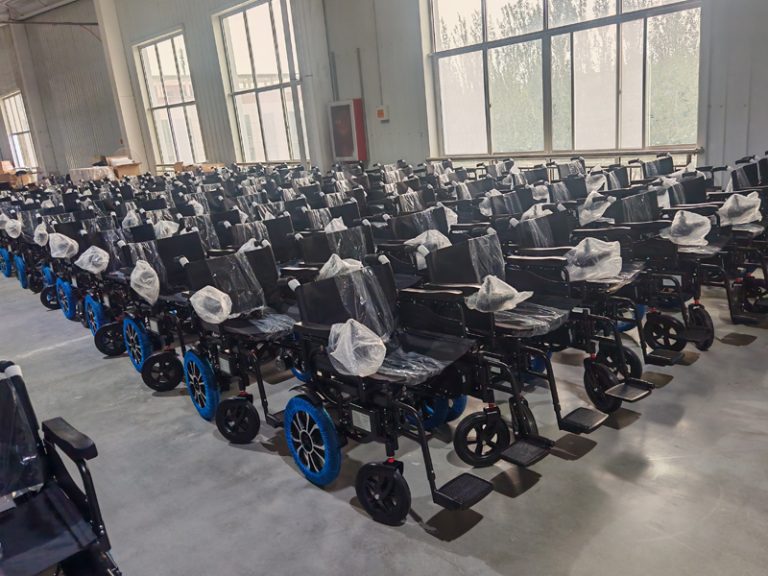
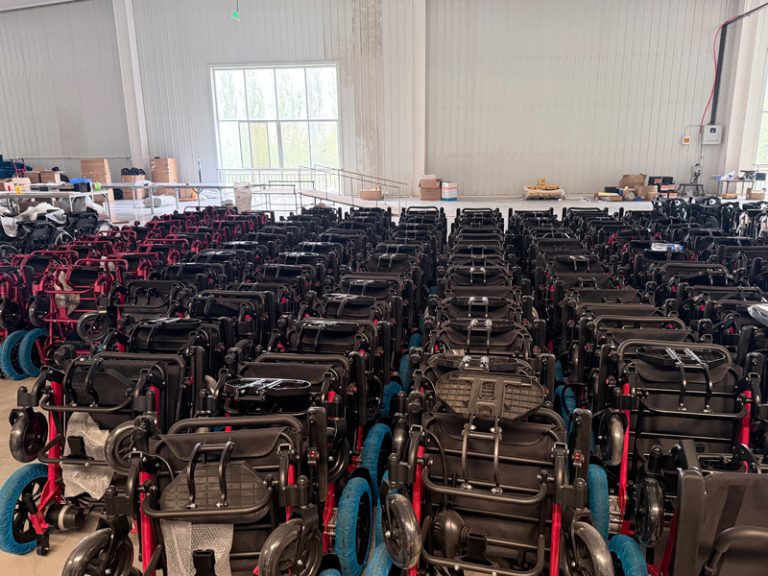
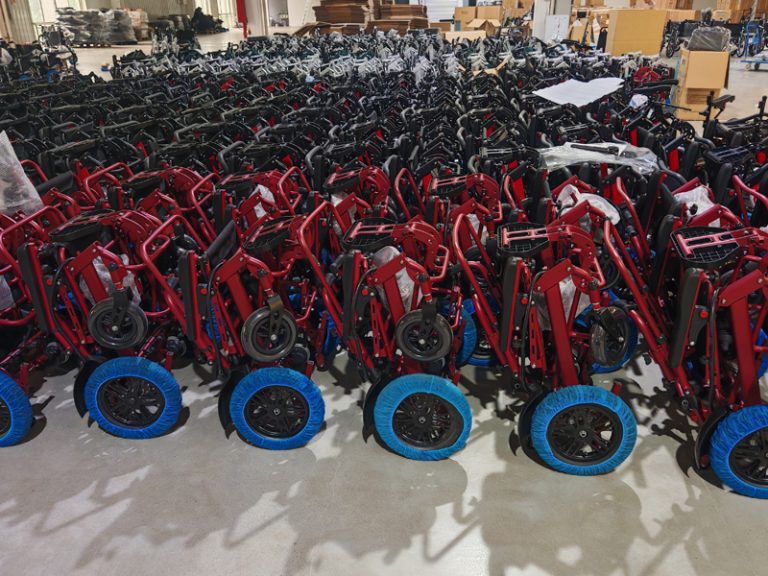
Our Location
Free Trade Tower, Xiyong street.
Chongqing, China

Free Trade Tower, Xiyong street.
Chongqing, China

For medical equipment distributors, mobility product retailers, healthcare procurement teams, and rehabilitation equipment businesses, choosing a reclining wheelchair supplier is an important business decision. The right supplier can help you maintain consistent product quality, manage inventory efficiently, protect profit margins, and build lasting relationships with customers. The wrong one can create problems that are much harder to resolve, from delayed shipments and inconsistent specifications to expensive returns and dissatisfied end users.
Reclining wheelchairs serve a particular purpose in the mobility equipment market. Unlike standard wheelchairs, they allow the backrest to move backward, helping users adjust their sitting position according to their comfort, mobility limitations, and individual care requirements. Depending on the design, a reclining wheelchair may be suitable for home care, rehabilitation facilities, hospitals, long-term care environments, and specialized mobility equipment retailers.
This creates opportunities for businesses that understand their customers and work with dependable manufacturers. However, the market also presents a challenge: not every supplier offers the same product quality, manufacturing capabilities, technical support, or level of service.
A competitive quotation does not necessarily represent the best purchasing decision. A wheelchair with an attractive price may require more maintenance, arrive with inconsistent specifications, or lack the documentation needed for your target market. Meanwhile, a supplier with a slightly higher initial price may offer better quality control, more reliable delivery schedules, and stronger after-sales support.
The goal, therefore, is not simply to find a company that sells reclining wheelchairs. It is to identify a supplier that can support your business as it grows.
Before requesting quotations, take time to understand what your customers actually need. This step is often overlooked, yet it has a direct influence on which suppliers you should consider.
A business supplying rehabilitation centers may have different requirements from an online mobility equipment retailer. Hospitals may prioritize product specifications, documentation, cleaning procedures, and procurement compliance. Home care distributors may focus more heavily on comfort, ease of use, storage, and caregiver convenience. Wholesale importers, meanwhile, may place greater emphasis on production capacity, minimum order quantities, shipping arrangements, and pricing stability.
Start by identifying your main customer groups and the environments in which the wheelchairs will be used.
Consider the following questions:
These questions help you create a practical product specification instead of relying on a supplier’s existing catalog.
For example, a distributor serving long-term care facilities may need several models with different seat widths and adjustable backrests. A retailer selling directly to individual consumers might prioritize compact storage, straightforward operation, attractive finishes, and clear product instructions.
You should also consider your local market’s regulatory requirements. Requirements can differ between countries and product classifications, so a supplier suitable for one market may not automatically meet the needs of another.
A good supplier should help you match products to your target customers rather than simply encourage you to buy the models it already produces.
Product quality should be one of the first things you investigate when choosing a reclining wheelchair manufacturer or wholesale supplier.
A reclining wheelchair is not an ordinary consumer product. It supports a person’s weight, assists movement, and may be used for extended periods by people with limited mobility. Its design and construction can affect comfort, caregiver workload, product durability, and user safety.
Begin with the frame. Ask about the materials used, manufacturing methods, corrosion protection, weld quality, and expected service conditions. Steel frames are often valued for their strength and affordability, while aluminum frames may offer a lower overall product weight. Neither material is automatically better in every situation; the choice depends on the design, intended use, load requirements, and quality of construction.
Next, examine the reclining mechanism. It should operate smoothly and predictably, with controls that are appropriate for the intended user or caregiver. Ask how the mechanism locks into position, how its performance is checked during production, and what maintenance may be required over time.
A reliable supplier should be able to explain these details clearly rather than relying on general claims such as “high quality” or “premium design.”
Other components deserve equal attention:
Do not assume that two wheelchairs with similar photographs will offer the same performance. Differences in materials, component quality, tolerances, and assembly can become apparent only after repeated use.
Whenever possible, request a sample before committing to a large order. Have the appropriate staff inspect the wheelchair, test its functions according to the manufacturer’s instructions, and review the finish and assembly. If you are purchasing for clinical or institutional use, involve the people responsible for equipment evaluation and user safety.
A sample is not a substitute for formal testing or certification, but it can reveal practical issues that a product catalog will never show.
A professional reclining wheelchair supplier should understand the compliance requirements of the markets it serves. This is particularly important when supplying hospitals, public healthcare organizations, medical equipment distributors, or customers in regulated markets.
However, businesses should avoid treating the phrase “certified product” as sufficient evidence. The relevant requirements depend on the product classification, destination country, intended use, and applicable regulations.
Ask the supplier which standards and regulatory requirements apply to the specific wheelchair model you intend to purchase. Request the corresponding documentation and verify that it covers the actual product, manufacturer, and intended market.
Depending on the situation, relevant documentation may include product specifications, test reports, declarations of conformity, quality management certificates, labeling information, user manuals, and traceability records.
For example, if you are selling in the United States, determine which Food and Drug Administration requirements apply to the particular device and business activity. Do not assume that every wheelchair has identical registration, listing, or premarket requirements. For European markets, assess the applicable medical device framework and whether the product falls within its scope. Other countries may have their own registration, import, labeling, and conformity requirements.
You should also distinguish between a manufacturer’s quality management certification and product-specific evidence. A company may hold an ISO 13485 quality management system certificate, for example, but that alone does not establish that every product it sells complies with every requirement in your destination market.
Check the certificate issuer, scope, validity, and covered manufacturing location where relevant. If documentation is unclear, request clarification before placing the order.
Documentation should also be available in a form that supports your business operations. Clear user instructions, maintenance guidance, product labels, and appropriate warnings can help your team answer customer questions and manage the equipment responsibly.
For larger orders, agree in writing which documents must accompany the shipment and which must be supplied before production or dispatch.
Compliance is not merely a purchasing formality. It is part of protecting your business, your customers, and the reputation you have built in the market.
Price matters, particularly for businesses purchasing reclining wheelchairs in bulk. However, comparing suppliers solely on unit price can lead to expensive mistakes.
A more useful approach is to calculate the total cost of ownership. This includes the purchase price as well as the additional costs required to bring the product into your inventory, sell it, support it, and maintain an acceptable level of customer satisfaction.
Your calculation should consider several elements:
| Cost factor | What to evaluate |
|---|---|
| Unit price | Quoted price at different order quantities |
| Sampling | Sample charges and shipping costs |
| Customization | Logo printing, packaging, colors, or specification changes |
| Freight | Shipping method, freight charges, and delivery arrangements |
| Import expenses | Applicable duties, taxes, brokerage, and clearance costs |
| Quality control | Inspection, testing, and third-party verification |
| Warranty | Coverage, exclusions, and responsibility for replacement costs |
| Spare parts | Availability, pricing, and expected delivery times |
| Inventory | Storage, handling, and potential excess stock |
| Returns and service | Administrative costs, replacements, and customer support |
Imagine that Supplier A offers a lower unit price but has inconsistent lead times and limited access to replacement parts. Supplier B charges slightly more but provides stable production schedules, better documentation, and a practical warranty process.
The first quotation may look more attractive. However, once you account for additional inventory, service labor, delayed sales, and replacement costs, the second supplier could represent better value.
This is especially important for distributors with established service commitments. A wheelchair that cannot be repaired promptly may create additional work for your customer service team and damage relationships with healthcare facilities.
Request a detailed quotation rather than a single price figure. It should clearly identify the model, included accessories, order quantity, packaging, payment terms, production lead time, shipping terms, and any additional charges.
For international purchasing, make sure both parties understand the agreed delivery terms and who is responsible for transportation, insurance, customs-related tasks, and associated expenses. Use clearly defined Incoterms where appropriate.
You should also compare prices at realistic order volumes. A quotation based on 500 units is not useful if your business can initially purchase only 50.
The strongest purchasing decision is one that protects your margins without compromising the performance and support your customers expect.
A supplier may deliver excellent samples and competitive prices yet struggle to fulfill repeat orders. This is why manufacturing capacity and supply chain reliability deserve careful evaluation.
For growing businesses, product availability is just as important as product quality. If you promise customers a delivery date, you need reasonable confidence that your supplier can meet the production and shipping schedule.
Start by asking whether the company manufactures the wheelchairs itself or sources them from another factory. Neither arrangement is automatically unsuitable, but the distinction affects production control, customization, traceability, and communication.
If you are working directly with a manufacturer, ask about its production facilities, assembly processes, quality inspection procedures, and typical monthly capacity for the relevant model. If you are working with a trading company or distributor, clarify how it manages its manufacturing partners and verifies product quality.
Do not evaluate capacity based only on the supplier’s total factory output. The important question is whether it can reliably produce the exact model, configuration, and quantity you need.
Discuss lead times at each stage, including sample development, order confirmation, production, inspection, packaging, and dispatch. Ask how the supplier handles peak seasons, component shortages, unexpected production problems, and urgent orders.
A supplier that gives realistic delivery estimates and communicates potential delays early may be more valuable than one that promises unusually short lead times without explaining how it will achieve them.
You should also examine supply chain continuity. Find out whether critical components, such as reclining mechanisms, casters, brakes, and upholstery materials, are readily available. Ask whether changes to these components will be communicated before implementation.
Unapproved substitutions can create problems when you rely on consistent product specifications across multiple shipments. For example, a change in caster design or seat dimensions could affect how the wheelchair performs or fits your customers’ requirements.
For businesses importing from overseas, consider maintaining a sensible inventory buffer based on demand variability and replenishment time. A supplier with predictable production schedules makes this planning easier.
Finally, establish a communication process. You should know whom to contact for order updates, technical questions, quality complaints, and urgent issues.
Reliable supply is not about promising that nothing will ever go wrong. It is about having systems that help both parties prevent problems and resolve them quickly when they occur.
As your business develops, your product requirements may change. A supplier that can support reasonable customization and future product expansion can help you respond to market demand without rebuilding your supply chain every time you introduce a new offering.
Customization may include private labeling, branded packaging, selected upholstery colors, accessory combinations, or adjustments to product configurations. Some manufacturers may also offer different frame materials, seat dimensions, or reclining options across their product range.
Before requesting customization, determine which changes are genuinely valuable to your customers. Adding too many options can increase production complexity, raise minimum order quantities, and create inventory management challenges.
For a small distributor, a standard model with reliable availability may be more commercially sensible than a highly customized product that requires a large initial commitment. A larger brand, by contrast, may benefit from private labeling and differentiated packaging if there is enough demand to justify the investment.
Ask suppliers to explain their customization capabilities, minimum order quantities, development costs, sample approval procedures, and production timelines. Confirm whether customized products have different warranty conditions or replacement-part requirements.
You should also establish how product changes will be controlled. If the manufacturer updates the frame, upholstery, reclining mechanism, or another important component, will you receive advance notice? Will revised specifications be documented? Can the supplier identify which production batch contains the change?
These questions become increasingly important when you maintain product listings, technical documentation, or institutional contracts.
A broad product range is useful, but it should not be the only reason to choose a supplier. A company that offers dozens of wheelchair models may still be a poor fit if its core reclining wheelchair line does not meet your requirements.
Look for a supplier that understands your current business and can accommodate realistic future needs. This may mean starting with one proven model, reviewing customer feedback, and expanding the range after demand becomes clearer.
The best long-term supplier relationship is flexible without being complicated. It gives your business room to grow while keeping product specifications, costs, and operations manageable.
A reclining wheelchair purchase does not end when the shipment arrives. Over the product’s service life, customers may need operating instructions, replacement components, maintenance guidance, or help resolving a technical issue.
For businesses selling mobility equipment, after-sales support can directly affect customer loyalty and operating costs. It is therefore worth evaluating before signing a supply agreement.
Ask the supplier what its warranty covers, how long coverage lasts, and which situations are excluded. Clarify the process for reporting defects, submitting evidence, arranging repairs, and obtaining replacement parts.
Pay particular attention to responsibility for transportation and labor. A warranty may appear generous but provide limited practical value if your business must absorb substantial shipping expenses or administrative costs to obtain a replacement.
Spare parts are another important consideration. Ask whether the supplier can provide commonly required components throughout the expected product support period. Determine which parts can be replaced by qualified service personnel and which repairs require specialist assistance.
The supplier should also provide clear technical documentation. Depending on the model, this may include operating instructions, maintenance schedules, parts diagrams, and troubleshooting guidance.
If you sell to institutional customers, consider how service response times affect their operations. A facility that depends on a particular wheelchair configuration may need a clear procedure for reporting a fault and arranging an appropriate replacement or repair.
It is also worth checking how the supplier investigates recurring problems. If several customers report the same issue, a dependable partner should be able to review the evidence, investigate the potential cause, and explain what corrective action is appropriate.
During the supplier evaluation process, ask for examples of its after-sales procedures rather than relying exclusively on assurances. You can also request references from existing business customers, subject to their availability and willingness to participate.
A well-defined service agreement helps both sides understand their responsibilities before a problem occurs.
For your business, this means fewer unexpected expenses, more consistent customer service, and a stronger foundation for repeat sales.
Supplier relationships are built through everyday interactions, not just signed contracts. The way a company responds during the quotation and sample stages can provide useful insight into how it may handle a larger order.
Pay attention to the quality of its communication. Does the sales representative answer technical questions accurately? Are quotations complete? Does the company acknowledge uncertainty instead of making unsupported promises? Can it explain production lead times, documentation requirements, and warranty conditions clearly?
A supplier does not need to have a large sales team to be reliable. What matters is whether it has a professional process for managing your account and resolving questions.
Reputation should also be assessed carefully. Look for independently verifiable company information, a consistent business history, relevant industry experience, and references from customers with comparable requirements.
Online reviews can provide useful clues, but they should not be treated as conclusive proof. Consider the number, recency, detail, and credibility of the reviews. A pattern of complaints about delayed shipments, inconsistent products, or unresponsive service deserves further investigation.
For international suppliers, confirm the legal company name, business address, payment beneficiary, and other relevant company details. Make sure the entity receiving payment is consistent with the contracting arrangement or that any legitimate difference is clearly documented.
Be cautious when a supplier pressures you to make a large deposit before answering basic questions, refuses reasonable inspection arrangements, or offers prices that seem implausibly low compared with the market.
You should also establish expectations for handling disputes. Agree on how product discrepancies will be documented, how claims will be reviewed, and how both parties will work toward a resolution.
A trustworthy supplier relationship does not depend on perfect communication every day. It depends on transparency, accountability, and a shared willingness to solve problems.
Once you have identified several potential suppliers, compare them using a consistent evaluation process. This makes the decision easier to explain internally and reduces the risk of choosing a supplier based on a persuasive sales presentation alone.
Begin with a shortlist of three to five candidates, depending on the size and complexity of your purchasing project. Request comparable quotations and provide each supplier with the same core product specifications.
Next, verify essential documentation, review the technical specifications, and request samples where practical. If your business requires a factory audit, third-party inspection, or additional testing, include those activities in the purchasing schedule.
A weighted scorecard can help you compare suppliers objectively.
| Evaluation criterion | Suggested weight |
|---|---|
| Product quality and safety | 25% |
| Regulatory documentation and compliance | 20% |
| Total cost of ownership | 15% |
| Manufacturing capacity and delivery reliability | 15% |
| Warranty and after-sales support | 10% |
| Communication and transparency | 10% |
| Customization and future flexibility | 5% |
| Total | 100% |
These weights are a starting point, not a universal standard. A business selling primarily to healthcare institutions may place more emphasis on documentation, while a small retailer may prioritize manageable order quantities and dependable replacement-part access.
Score each supplier against the same criteria using a consistent scale, such as one to five. Multiply each score by the relevant weight, then compare the results.
However, do not let a high overall score compensate for a critical failure. A supplier that cannot meet a mandatory regulatory requirement or demonstrate adequate product safety should not be selected simply because its price and delivery scores are strong.
Once the shortlist is complete, negotiate the commercial terms with your preferred candidates. Confirm the agreed specifications, order quantities, payment schedule, inspection arrangements, delivery terms, warranty conditions, and procedures for handling nonconforming products.
For a first order, consider a quantity that allows you to evaluate real production quality without creating unnecessary inventory exposure. The appropriate order size depends on your business model, demand forecasts, and the supplier’s minimum requirements.
After delivery, compare the actual products with the approved sample and purchase specifications. Record any discrepancies, assess packaging and documentation, and review whether the shipment arrived as agreed.
Finally, evaluate supplier performance after the first order. Track delivery accuracy, defect rates, response times, documentation completeness, and the cost of resolving problems.
This creates a useful performance history for future purchasing decisions.
The process may require more preparation than simply requesting the lowest quotation, but it gives you a much stronger basis for building a dependable supply chain.

Choosing the right reclining wheelchair supplier requires more than comparing catalogs and negotiating unit prices. It involves understanding your customers, evaluating product construction, verifying applicable compliance requirements, calculating total purchasing costs, and assessing the supplier’s ability to deliver consistent quality over time.
A dependable supplier should be able to demonstrate what makes its products suitable for your target market, provide appropriate documentation, explain its manufacturing and inspection processes, and offer clear procedures for warranty claims and replacement parts.
Communication matters just as much. When a supplier gives realistic delivery estimates, explains potential limitations, and takes responsibility for resolving issues, your business can plan more effectively and provide a better experience for its own customers.
It is also important to recognize that the best supplier is not necessarily the largest manufacturer or the company with the lowest quotation. It is the partner whose products, capabilities, service standards, and commercial terms align with your actual business requirements.
Take the time to request comparable quotations, inspect samples, verify documentation, and establish written expectations before committing to a significant order. Start with a manageable purchasing plan, monitor the supplier’s performance, and use real results to guide future decisions.
Ultimately, a successful reclining wheelchair supply relationship should create value on both sides. Your supplier gains a stable business customer, while your company gains dependable products, more predictable operations, and the confidence to serve its market over the long term.
When you evaluate suppliers with these priorities in mind, you are doing more than purchasing mobility equipment. You are building a supply chain that can support sustainable business growth.
1. What Should I Look for When Choosing a Reclining Wheelchair Supplier?
Look for a supplier that offers consistent product quality, appropriate safety and compliance documentation, transparent pricing, reliable production capacity, and responsive after-sales support. You should also evaluate the reclining mechanism, frame construction, weight capacity, upholstery, available accessories, and spare-parts supply. Request product samples and verify that the supplier can meet the requirements of your target market before placing a large order.
2. Is It Better to Buy Reclining Wheelchairs Directly from a Manufacturer or Through a Distributor?
Both options can work well, depending on your business needs. Buying directly from a manufacturer may offer advantages in customization, production visibility, and pricing at suitable order volumes. A distributor may provide lower minimum order quantities, more convenient local stock, faster delivery, or easier access to service support. Compare the total cost of ownership, order flexibility, product traceability, and after-sales arrangements before deciding which purchasing channel offers the best value.
3. How Can I Verify Whether a Reclining Wheelchair Supplier Is Reliable?
Start by checking the supplier’s business credentials, manufacturing arrangements, product specifications, and relevant quality or compliance documentation. Request samples, review inspection procedures, confirm production lead times, and ask about warranty coverage and replacement parts. Where appropriate, arrange a factory audit or independent product inspection. You can also request references from existing business customers and begin with a manageable order to assess actual product quality, delivery performance, and communication before increasing your purchasing volume.