Our Location
Free Trade Tower, Xiyong street.
Chongqing, China

Free Trade Tower, Xiyong street.
Chongqing, China
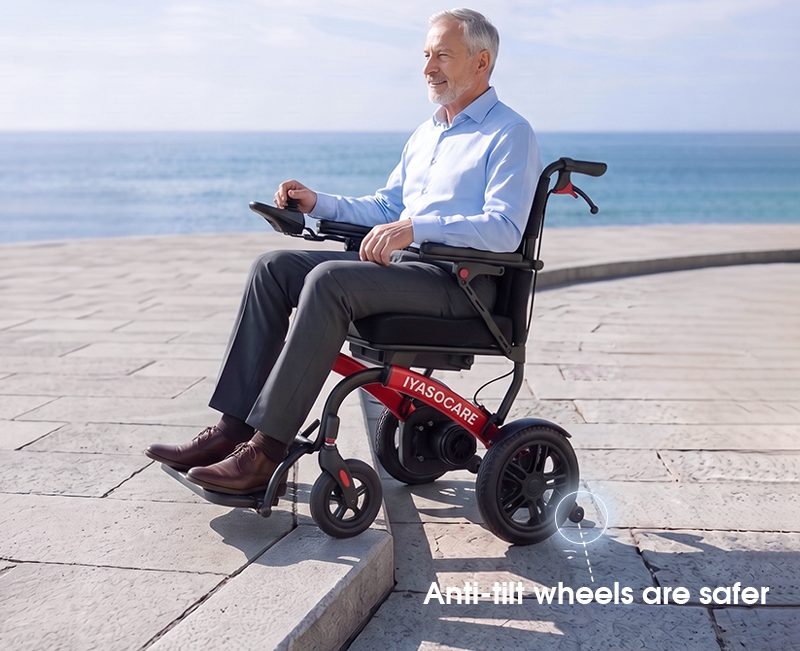
Finding an electric wheelchair that offers reliable mobility without becoming difficult to transport can be a challenge. Many traditional power wheelchairs provide excellent support and functionality, but their heavy frames, bulky designs, and complicated folding mechanisms can make everyday travel less convenient.
A portable folding electric wheelchair offers a practical alternative. Designed for people who want greater independence without sacrificing portability, this type of wheelchair combines powered mobility, a compact folding structure, and user-friendly features in one lightweight package.
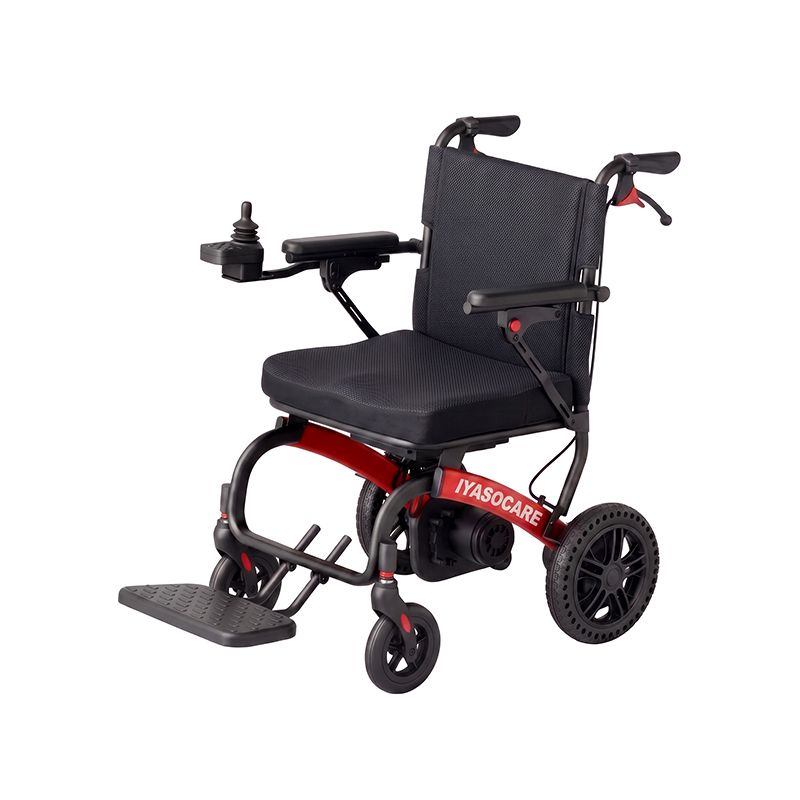
This 15kg portable folding electric wheelchair is designed with convenience in mind. Featuring an aluminum alloy frame, dual 200W motors, front suspension, flip-back armrests, and a vertically folding design, it provides a balance of everyday usability and travel-friendly performance.
With a maximum driving range of 8–15 km, a top speed of 6 km/h, and two lithium battery options, it is suitable for a variety of daily mobility needs, including shopping trips, short outdoor journeys, and travel where a compact wheelchair is preferred.
But what makes this lightweight electric wheelchair worth considering? Let’s take a closer look at its design, performance, comfort, and practical advantages.
Weight is one of the most important factors when choosing a portable electric wheelchair.
A wheelchair may perform well on the road, but if it is too heavy to lift into a car or move around at home, transportation can quickly become inconvenient. This is particularly important for users who frequently travel with family members or caregivers.
The wheelchair features an aluminum alloy frame designed to reduce overall weight while maintaining structural strength.
Depending on the battery configuration, the listed net and gross weights are:
The advertised lightweight configuration is approximately 15 kg, making this wheelchair a practical option for people looking for a compact powered mobility solution.
Aluminum alloy also offers excellent corrosion resistance compared with many conventional steel frame materials. This helps maintain the appearance and durability of the wheelchair during regular use.
Another advantage is that the frame does not rely on an unnecessarily bulky structure. Instead, the design focuses on providing the essential support needed for everyday mobility while keeping transportation manageable.
For users who need to place their wheelchair in a vehicle, store it in a limited space, or take it along on family outings, a lightweight frame can make a noticeable difference.
It is worth remembering that the wheelchair’s actual lifting weight depends on the selected battery and whether accessories are installed. Removing the battery before lifting may also be an option, subject to the manufacturer’s instructions.
Portability is not just about weight. The way a wheelchair folds is equally important.
This model features a vertical folding structure that allows the wheelchair to fold into a compact shape without requiring a complicated disassembly process.
Its unfolded dimensions are:
103 × 55 × 93 cm
When folded, the dimensions become:
31 × 55 × 73 cm
This significant reduction in size makes storage much easier compared with leaving the wheelchair fully assembled.
For people living in apartments, smaller homes, or properties with limited storage space, a compact folding wheelchair can be particularly useful.
It can also be more convenient when transporting mobility equipment in a car. The folded dimensions make it easier to assess whether the wheelchair will fit into a particular vehicle’s trunk or storage area.
However, users should always measure their available storage space before purchasing, as trunk openings and internal vehicle dimensions vary.
The folding design is especially useful in several everyday situations:
A portable electric wheelchair should simplify daily life rather than introduce another storage problem. This vertical folding structure is designed to address exactly that concern.
Getting into and out of a wheelchair is an important part of everyday mobility.
Traditional fixed armrests can sometimes make side transfers more difficult, especially for users who prefer to move between the wheelchair and a bed, sofa, or vehicle seat.
This model features flip-back armrests that can be moved out of the way when needed.
By opening up the side area, the design provides more flexibility during transfers and gives users additional freedom when positioning themselves.
This feature may be particularly helpful for people who:
The flip-back armrests also contribute to everyday convenience. Users can adjust their seating position more easily without being restricted by permanently fixed side supports.
Of course, transfers should always be performed with the wheelchair securely positioned and its parking brakes engaged. Individual transfer needs vary, so users who require assistance should follow professional guidance.
Comfort becomes increasingly important when spending extended periods in a wheelchair.
A seat that feels acceptable for a few minutes may become uncomfortable after an hour of use. For this reason, seat dimensions, backrest support, and material selection deserve careful attention.
This portable folding electric wheelchair features a 42 cm wide seat and a 42 cm seat depth.
Its main seating dimensions include:
| Seating Specification | Measurement |
|---|---|
| Seat width | 42 cm |
| Seat depth | 42 cm |
| Seat height | 48 cm |
| Backrest height | 40 cm |
The seat uses a 5000N-strength nylon and mesh construction, designed to combine structural support with breathability.
Mesh materials allow better air circulation than many solid upholstery surfaces. This can help reduce heat buildup during everyday use, particularly in warmer environments.
The seat cushion adds another layer of comfort. The product also offers optional cushion configurations, allowing buyers to consider different comfort requirements.
For users who spend considerable time outdoors, breathable seating can be a useful feature.
However, comfort is highly personal. Seat width, body shape, posture, pressure distribution, and individual support requirements all influence whether a particular wheelchair is suitable.
The 42 cm seat width should therefore be compared with the user’s actual measurements before making a purchasing decision.
Road conditions are not always perfect.
Even ordinary outdoor environments may include pavement joints, small bumps, uneven sidewalks, and minor surface irregularities. Without appropriate wheel design and suspension, these conditions can make a wheelchair ride less comfortable.
This model combines 7-inch front wheels with spring suspension and 11-inch rear PU tires.
The front suspension system is designed to help absorb some of the impact caused by uneven surfaces, while the larger rear wheels provide a stable rolling platform.
The wheel configuration includes:
The combination is intended to provide a more comfortable experience during regular indoor and outdoor use.
The 11-inch rear wheels also contribute to the wheelchair’s overall rolling performance, while the smaller front wheels help maintain a relatively compact structure.
It is important to understand that suspension does not make every surface suitable for wheelchair use. Deep gravel, loose sand, muddy ground, steep slopes, and heavily uneven terrain may still present difficulties.
For the best experience, users should follow the manufacturer’s recommended operating conditions and avoid surfaces beyond the wheelchair’s capabilities.
The motor system determines how an electric wheelchair moves and responds to everyday driving conditions.
This model is equipped with two 200W motors, providing a combined rated motor output of 400W.
The available motor configuration includes a dual 200W brushless motor option, with a brushed motor version also listed.
Brushless motors are commonly selected for their efficient operation, reduced mechanical wear, and relatively quiet performance.
The dual-motor arrangement provides powered movement without requiring users to manually propel the wheelchair.
This can be particularly useful for everyday journeys such as:
The wheelchair has a maximum speed of 6 km/h.
This speed is designed around controlled mobility rather than high-speed transportation.
For many users, a moderate maximum speed provides a practical balance between movement efficiency and everyday maneuverability.
Actual driving performance will depend on the user’s weight, battery condition, terrain, tire pressure where applicable, and operating conditions.
Braking is one of the most important safety considerations when selecting a powered wheelchair.
This model uses an electromagnetic braking system designed to help control the wheelchair when movement stops.
Unlike a conventional manual brake that depends entirely on the user operating a lever, an electromagnetic brake works with the powered drive system.
When the drive controls are released or the system enters its braking state, the electromagnetic braking mechanism helps prevent unintended movement, according to the controller’s design.
This feature is particularly important when stopping during everyday journeys or positioning the wheelchair before transferring.
The parking brake system is designed to provide additional control and convenience.
Nevertheless, users should not treat an electromagnetic brake as a substitute for safe operating practices.
Before transferring, parking on a slope, or leaving the wheelchair unattended, follow the manufacturer’s instructions. Avoid steep inclines and never assume that the braking system makes an unsafe slope safe.
Battery capacity directly affects how far an electric wheelchair can travel before requiring a recharge.
This model offers two 24V lithium battery configurations:
| Battery Specification | 6Ah Option | 10Ah Option |
|---|---|---|
| Voltage | 24V | 24V |
| Capacity | 6Ah | 10Ah |
| Listed net weight | 14.5 kg | 15.5 kg |
| Listed gross weight | 17 kg | 18.5 kg |
| Estimated driving range | 8–15 km | Depends on actual configuration and conditions |
| Charging time | 4–6 hours | 4–6 hours |
The 6Ah battery is the lighter option and may suit users who mainly need a wheelchair for shorter journeys.
The 10Ah battery provides greater electrical capacity and may be a better choice for users who want more flexibility between charging sessions.
The wheelchair’s advertised driving range is approximately 8–15 km.
However, battery range should always be viewed as an estimate rather than a guaranteed distance.
Several factors can affect actual performance:
For this reason, users who regularly travel longer distances should consider keeping a reasonable battery reserve rather than relying on the maximum advertised range.
The charging time is approximately 4–6 hours, making overnight or scheduled charging relatively convenient for everyday use.
Always use the compatible charger supplied or approved by the manufacturer.
The wheelchair has a listed maximum climbing capability of 9°.
This specification indicates its intended ability to handle certain inclines under suitable operating conditions.
However, climbing performance is affected by multiple factors, including user weight, battery charge, surface traction, ramp condition, and environmental conditions.
A stated climbing angle should not be interpreted as a recommendation to drive on every ramp with that gradient.
For safety, users should avoid slippery surfaces, loose materials, abrupt transitions, and steep slopes whenever possible.
When using ramps, it is important to consider not only the gradient but also the ramp’s length, width, surface condition, and available turning space.
The wheelchair’s 6 km/h maximum speed and dual-motor configuration make it a practical choice for everyday mobility on suitable routes.
Its compact dimensions may also help when navigating accessible indoor environments, although turning clearance should always be checked before use.
Foot positioning is another detail that can significantly influence wheelchair comfort.
If the footrests are too high or too low, users may experience unnecessary pressure on their legs or difficulty maintaining a comfortable seated posture.
This model features a three-height footrest adjustment design.
The adjustable structure allows the footrest position to be changed to better suit different leg lengths and seating preferences.
This is useful because wheelchair users do not all have identical body proportions.
The ability to adjust footrest height provides additional flexibility when configuring the wheelchair for everyday use.
When setting the footrests, users should aim for a comfortable and stable position without creating excessive pressure behind the knees or allowing the feet to hang unsupported.
Individual positioning requirements may vary, particularly for users with specific postural or mobility needs.
A wheelchair designed for portability still needs to offer enough room for comfortable everyday use.
This model balances its compact folding structure with practical seating dimensions.
Here is a complete overview of the main specifications.
Product Technical Specifications
| Item | Specification |
|---|---|
| Product type | Portable Folding Electric Wheelchair |
| Frame material | Aluminum alloy |
| Net weight | 14.5 kg / 15.5 kg |
| Gross weight | 17 kg / 18.5 kg |
| Maximum load capacity | 100 kg |
| Seat width | 42 cm |
| Seat depth | 42 cm |
| Seat height | 48 cm |
| Backrest height | 40 cm |
| Unfolded dimensions | 103 × 55 × 93 cm |
| Folded dimensions | 31 × 55 × 73 cm |
| Packing dimensions | 35 × 60 × 80 cm |
| Front wheel size | 7 inches |
| Rear wheel size | 11 inches |
| Motor | 2 × 200W |
| Motor type | Brushless or brushed option |
| Battery voltage | 24V |
| Battery capacity | 6Ah / 10Ah |
| Maximum speed | 6 km/h |
| Driving range | 8–15 km |
| Climbing capability | 9° |
| Charging time | 4–6 hours |
| Braking system | Electromagnetic brake |
| Footrest | Three-height adjustment |
| Armrests | Flip-back |
| Suspension | Front spring suspension |
| Seat material | Nylon/mesh |
| Optional accessories | Cushions and lights |
| Maximum user weight | 100 kg |
The listed packaging dimensions are 35 × 60 × 80 cm.
This is useful information for buyers who want to estimate storage and shipping