Our Location
Free Trade Tower, Xiyong street.
Chongqing, China

Free Trade Tower, Xiyong street.
Chongqing, China
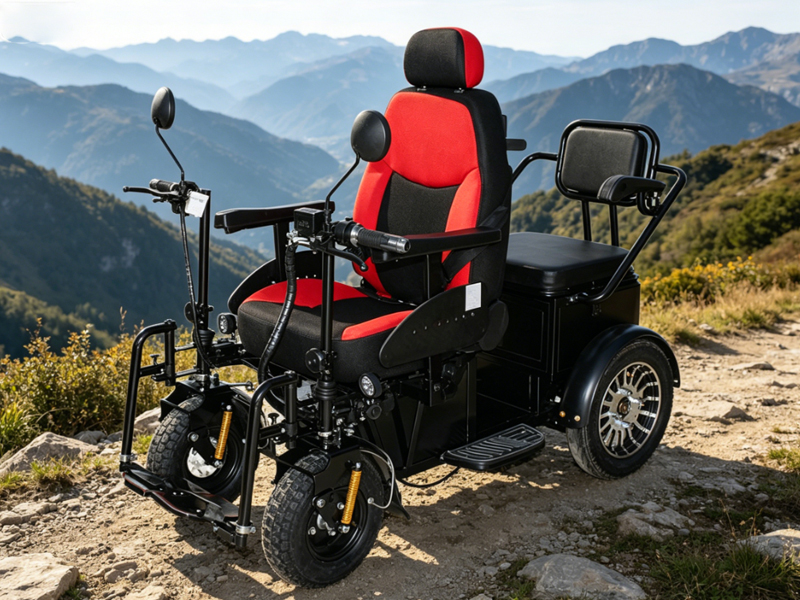
Outdoor exploration has never been limited to paved roads. Across mountain trails, forest tracks, rocky paths, and remote countryside routes, more wheelchair users are seeking equipment that allows them to travel farther, safer, and more comfortably. Traditional wheelchairs perform well on smooth urban surfaces, but when the terrain becomes unpredictable, steep, or uneven, specialized mountain wheelchairs become essential.
The growing demand for off-road mobility has encouraged manufacturers to develop advanced wheelchairs capable of handling environments that were once considered inaccessible. Larger tires, enhanced suspension systems, powerful motors, reinforced frames, and intelligent control systems have transformed the outdoor mobility experience. Today, users can confidently navigate gravel roads, dirt trails, grasslands, mountain paths, and even challenging outdoor adventure destinations.
Choosing the right mountain wheelchair, however, requires more than simply looking at speed or appearance. Factors such as terrain adaptability, passenger capacity, battery performance, stability, safety, comfort, and long-term reliability all play critical roles in determining whether a wheelchair can truly meet outdoor mobility needs.
Before discussing specific models, it is important to understand what separates a mountain wheelchair from a standard mobility device.
A conventional wheelchair is typically designed for indoor environments, sidewalks, shopping centers, hospitals, and smooth pavement. While some powered wheelchairs can handle moderate outdoor use, they often struggle when faced with loose gravel, mud, steep inclines, tree roots, rocky surfaces, or uneven terrain.
Mountain wheelchairs are engineered specifically for these conditions. Their design focuses on several critical elements:
These features work together to provide greater confidence, comfort, and independence when navigating environments beyond urban infrastructure.
For many users, a mountain wheelchair is not simply a mobility aid—it becomes a tool that enables participation in outdoor recreation, family activities, tourism, camping, photography, hunting, fishing, and nature exploration.
Outdoor mobility requirements vary significantly between users.
Some individuals prioritize speed and adventure. Others focus on comfort and stability during extended outdoor trips. Certain users travel with caregivers and may benefit from specialized seating arrangements that accommodate two people.
Selecting the wrong wheelchair can lead to discomfort, reduced battery efficiency, limited accessibility, or safety concerns in demanding environments.
When evaluating an off-road wheelchair, several questions should be considered:
The following three models address different user needs while maintaining strong off-road performance.
Two-Seater Off-Road Wheelchair
One of the most unique challenges in outdoor mobility is the difficulty of sharing experiences with family members, caregivers, or companions. While most mobility products focus exclusively on individual transportation, the Two-Seater Off-Road Wheelchair introduces a different concept by enabling two occupants to travel together across challenging terrain.
This design creates opportunities that traditional wheelchairs simply cannot provide.
Imagine exploring a mountain trail with a spouse, enjoying a countryside sightseeing route with a parent, or participating in outdoor events alongside a caregiver without requiring separate vehicles. The two-seat configuration encourages social interaction and shared experiences while maintaining excellent off-road capability.
The vehicle’s robust structure is specifically designed to accommodate the additional weight and operational demands associated with carrying two occupants. Stability becomes particularly important in this category, and the reinforced frame contributes to confidence when navigating uneven terrain.
Another notable advantage is accessibility for users who may feel uncomfortable traveling independently in remote outdoor locations. Having a companion seated alongside them can significantly improve confidence and reduce anxiety during longer journeys.
From a tourism perspective, the two-seater design opens possibilities for accessible eco-tourism, nature parks, scenic routes, and outdoor recreational activities. Organizations involved in accessible travel may find this configuration especially valuable because it allows guides or assistants to accompany users more naturally.
Comfort is equally important. Extended outdoor travel often exposes users to vibrations, bumps, and continuous movement. A thoughtfully designed seating system helps reduce fatigue and improves overall ride quality, particularly during longer excursions.
The Two-Seater Off-Road Wheelchair is particularly suitable for:
Rather than focusing solely on transportation, this model emphasizes inclusion and companionship. For many users, that distinction makes a significant difference in their outdoor lifestyle.
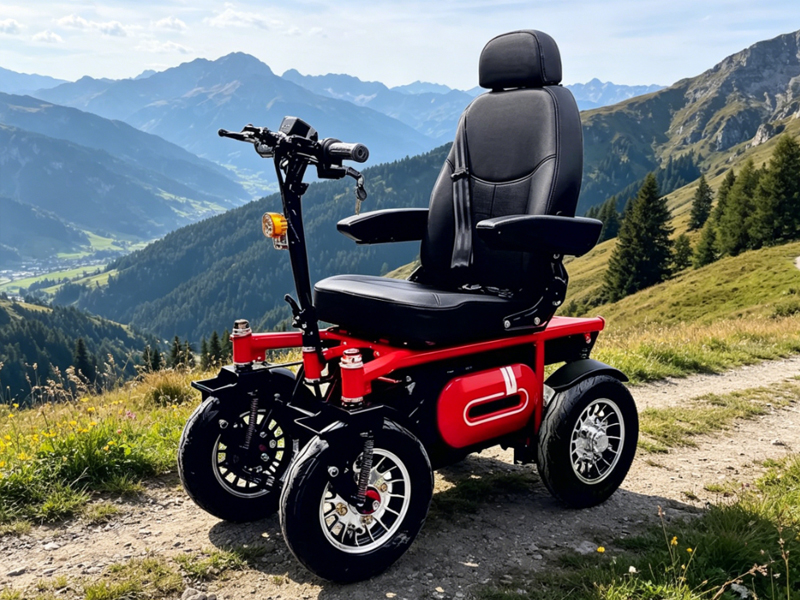
For users seeking a versatile all-terrain mobility solution, the Off-Road Electric Wheelchair represents a strong balance between power, maneuverability, comfort, and practicality.
This category often appeals to users who need one wheelchair capable of handling both daily mobility and outdoor adventures. Instead of maintaining separate mobility devices for urban and recreational environments, many individuals prefer a single platform that can transition smoothly between different settings.
The Off-Road Electric Wheelchair is designed around this concept.
One of its primary strengths is adaptability. Outdoor environments are rarely predictable. A route may begin on pavement, continue through gravel, transition to grassland, and eventually reach dirt trails or mild mountain terrain. A capable off-road wheelchair must handle each surface without requiring constant adjustments or compromising user confidence.
The powerful electric drive system provides the torque necessary to maintain traction and control when terrain conditions become more demanding. This capability is especially important on inclines, loose surfaces, and uneven paths where conventional wheelchairs often lose efficiency.
Large all-terrain tires further enhance performance by improving grip and absorbing surface irregularities. Rather than transmitting every bump directly to the user, the wheel and suspension system work together to create a smoother ride experience.
Battery performance is another critical consideration. Outdoor users frequently travel greater distances than urban users. Whether exploring parks, campgrounds, rural properties, or nature reserves, extended operating range contributes significantly to user freedom.
Comfort also remains central to the overall experience. Long outdoor journeys can become physically demanding without proper seating support. Ergonomic design, stable posture positioning, and vibration reduction help users remain comfortable throughout extended excursions.
In practical terms, this wheelchair excels in situations such as:
Another important advantage is accessibility for first-time off-road wheelchair users. Some specialized adventure vehicles may appear intimidating due to their aggressive design or complex controls. A balanced off-road electric wheelchair often provides a gentler learning curve while still delivering impressive terrain capability.
For users seeking a dependable combination of everyday usability and outdoor performance, this model offers one of the most versatile solutions available.
High-Speed Off-Road Wheelchair YSE102A
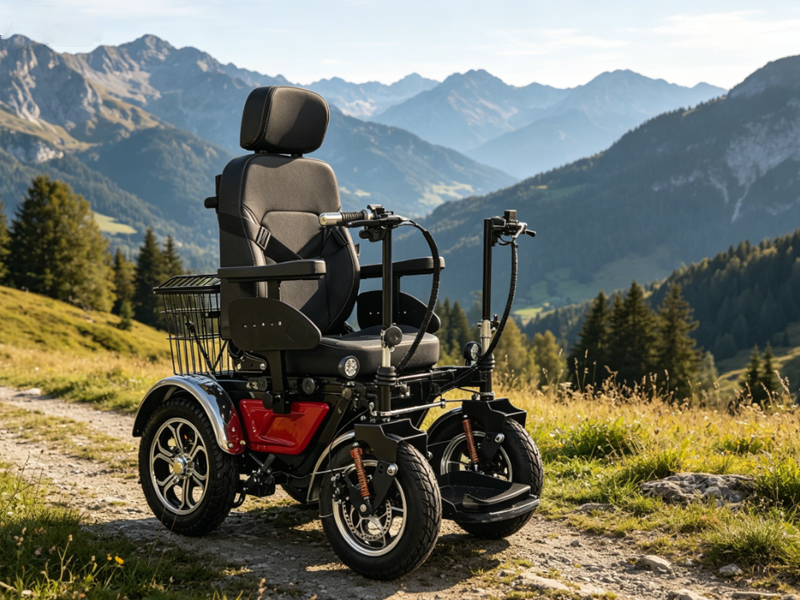
For users who prioritize performance and adventure, the High-Speed Off-Road Wheelchair YSE102A stands out as an exciting option.
Outdoor exploration often involves covering larger distances than traditional mobility scenarios. Whether navigating extensive trail systems, open countryside landscapes, beach access routes, or adventure parks, speed and efficiency can dramatically enhance the overall experience.
The YSE102A is designed with performance-oriented users in mind.
One of its defining characteristics is its ability to maintain strong mobility across varied terrain while offering higher travel speeds than many conventional off-road wheelchairs. This capability allows users to explore larger areas within a shorter timeframe and experience greater freedom during outdoor excursions.
However, speed alone is never enough. True off-road performance requires a combination of power, stability, control, and safety.
The YSE102A incorporates an all-terrain design philosophy intended to handle challenging surfaces while maintaining rider confidence. Strong traction characteristics help the wheelchair navigate dirt roads, gravel paths, grasslands, and rugged outdoor environments.
A reinforced frame structure contributes to durability and long-term reliability. Off-road use inevitably subjects mobility equipment to greater mechanical stress than indoor applications. Durable construction helps ensure consistent performance across repeated outdoor adventures.
Another major benefit is the psychological impact of increased mobility. Many wheelchair users describe freedom not merely as movement but as the ability to decide where and how far they can travel. A high-performance wheelchair expands those possibilities considerably.
Adventure-oriented users often participate in activities such as:
For these users, the YSE102A offers the confidence required to move beyond traditional accessibility boundaries.
Its design reflects a growing trend within the mobility industry: empowering users not only to access outdoor spaces but to actively enjoy them without compromise.
Although all three products belong to the off-road wheelchair category, each serves a different purpose.
| Model | Best For | Key Advantage |
|---|---|---|
| Two-Seater Off-Road Wheelchair | Shared travel and caregiver support | Dual-seat design for companionship |
| Off-Road Electric Wheelchair | Daily use plus outdoor versatility | Balanced performance and adaptability |
| High-Speed Off-Road Wheelchair YSE102A | Adventure-focused users | Enhanced speed and exploration capability |
Rather than identifying a single “best” wheelchair, it is more accurate to determine which model aligns most closely with individual mobility goals.
Users who value shared experiences may prefer the Two-Seater model.
Those seeking a practical all-around solution will likely appreciate the Off-Road Electric Wheelchair.
Adventure enthusiasts who prioritize performance and extended exploration may find the YSE102A particularly appealing.
The evolution of mountain wheelchairs extends beyond technological innovation. It is reshaping how people think about accessibility.
Historically, outdoor recreation often excluded wheelchair users due to infrastructure limitations and equipment constraints. Many destinations lacked accessible routes, while available mobility devices struggled with rough terrain.
Today, advances in engineering are helping close that gap.
National parks, nature reserves, outdoor tourism operators, and recreational facilities increasingly recognize the importance of inclusive access. As off-road mobility equipment becomes more capable, users can participate in experiences that were previously difficult or impossible.
This shift has broader implications for quality of life.
Research consistently demonstrates the benefits of outdoor engagement, including improved mental well-being, reduced stress, increased physical activity, stronger social connections, and enhanced overall life satisfaction.
Access to nature should not be viewed as a luxury. For many individuals, it is a meaningful component of independence and personal fulfillment.
The latest generation of mountain wheelchairs plays a crucial role in making that access possible.
The best mountain wheelchair is ultimately the one that matches your lifestyle, mobility requirements, and outdoor ambitions.
If shared experiences and caregiver companionship are priorities, the Two-Seater Off-Road Wheelchair provides a unique and practical solution.
If you need a versatile machine capable of handling both everyday mobility and outdoor adventures, the Off-Road Electric Wheelchair offers an excellent balance of comfort, capability, and convenience.
If exploration, performance, and adventure sit at the center of your mobility goals, the High-Speed Off-Road Wheelchair YSE102A delivers the power and freedom required for more demanding journeys.
As mobility technology continues to evolve, wheelchair users are gaining access to environments that were once difficult to reach. Mountains, trails, forests, parks, and remote landscapes are becoming increasingly accessible, creating new opportunities for recreation, travel, and independence.
The future of outdoor mobility is no longer about overcoming limitations—it is about expanding possibilities.
1. Can mountain wheelchairs be used on regular roads and sidewalks?
Yes. Most modern off-road wheelchairs can operate on standard urban surfaces such as sidewalks, paved roads, shopping areas, and community pathways. Many users choose them because they can transition between everyday mobility and outdoor recreation without needing separate equipment.
2. Which mountain wheelchair is best for traveling with a caregiver?
The Two-Seater Off-Road Wheelchair is the most suitable option for users who frequently travel with a caregiver, family member, or companion. Its dual-seat design allows both occupants to share the journey comfortably while maintaining strong off-road capability.
3. What should I prioritize when choosing an off-road wheelchair?
The most important factors include terrain type, stability, motor performance, battery range, comfort, safety features, and intended use. Users focused on daily versatility may prefer a balanced off-road electric wheelchair, while adventure enthusiasts may benefit more from a high-speed performance-oriented model.