Our Location
Free Trade Tower, Xiyong street.
Chongqing, China

Free Trade Tower, Xiyong street.
Chongqing, China
For wheelchair users, stairs can represent more than a simple inconvenience. They often affect independence, confidence, employment opportunities, travel options, and even social participation. Although elevators, ramps, and accessible infrastructure continue to improve globally, many homes, public spaces, historic buildings, transit stations, and urban environments still present accessibility challenges. This gap has created demand for mobility solutions capable of going beyond flat surfaces.
Automatic stair-climbing electric wheelchairs are often marketed as a breakthrough in personal mobility. Manufacturers promote them as tools that empower users to move independently across multiple environments without requiring assistance. But like any advanced mobility device, they come with both advantages and limitations.
Before investing in this technology, users, caregivers, distributors, rehabilitation professionals, and healthcare providers need a clear understanding of how these wheelchairs perform in real-world situations. This article explores the key benefits, drawbacks, practical considerations, and future potential of automatic stair-climbing electric wheelchairs, helping readers make informed decisions based on lifestyle, safety, and long-term value.
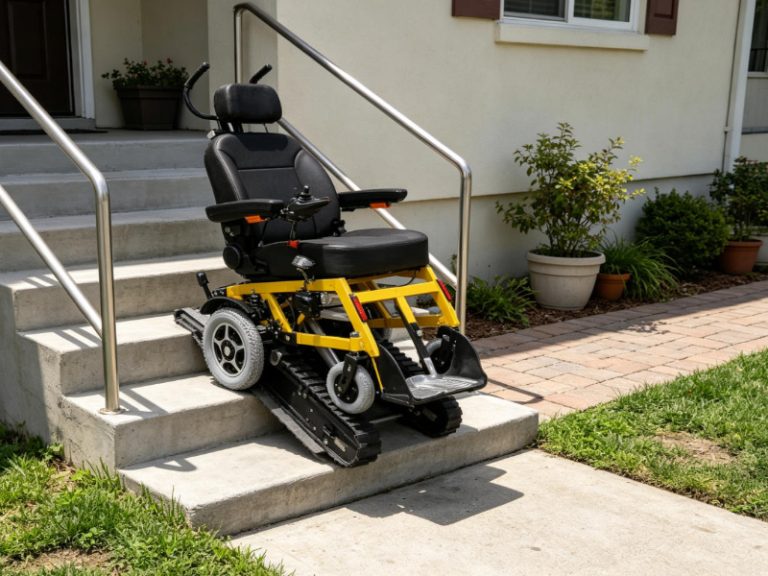
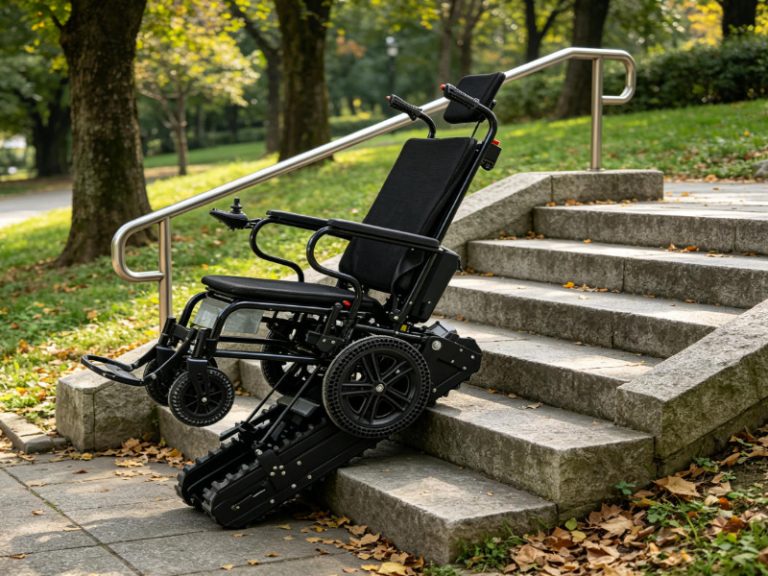
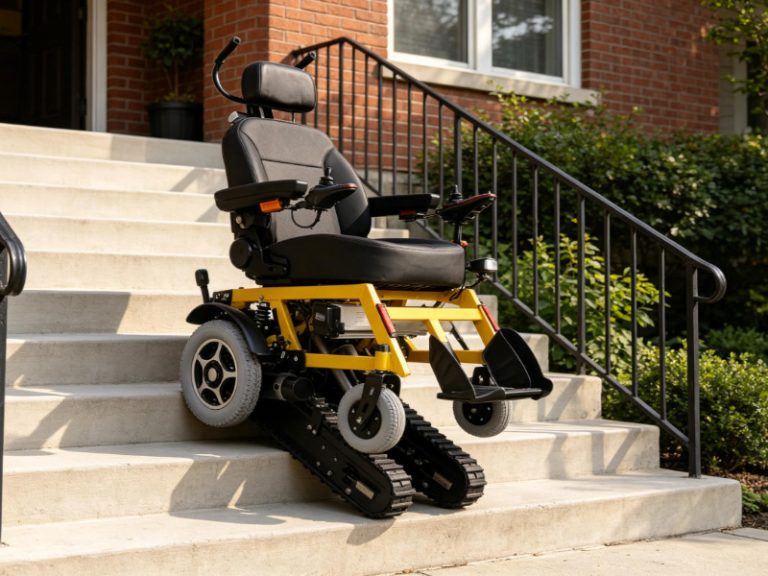
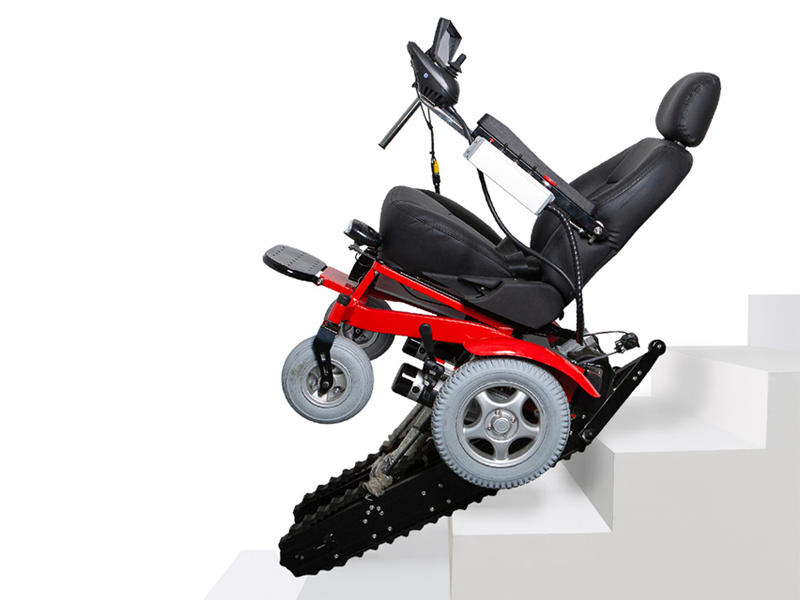
An automatic stair-climbing electric wheelchair is a powered mobility device engineered to safely transport users up and down stairs through an integrated climbing mechanism. Unlike standard electric wheelchairs that rely solely on motorized wheels, stair-climbing models use advanced systems such as tracked belts, articulated wheels, gyroscopic stabilization, sensor arrays, or robotic balancing technology.
These systems work together to maintain stability while navigating uneven vertical surfaces. Some models are designed for indoor staircases in residential settings, while others can handle outdoor stairs, curbs, inclines, and complex urban terrain.
The core purpose of these wheelchairs is simple: reduce dependency on external accessibility infrastructure and provide greater mobility freedom.
However, the actual experience of using such devices depends heavily on engineering quality, user training, environmental conditions, and personal mobility needs.
Global populations are aging, and the number of individuals requiring mobility assistance continues to rise. At the same time, urban density is increasing, and many cities still struggle with incomplete accessibility upgrades.
In Europe, North America, parts of Asia, and developing markets, countless buildings were constructed before modern accessibility regulations were implemented. Residential apartments without elevators, subway stations with limited lift access, old commercial buildings, and narrow public pathways create ongoing mobility challenges.
This reality has made stair-climbing wheelchairs increasingly attractive for:
Seniors seeking greater independence in multi-level homes.
Individuals with spinal cord injuries.
People recovering from surgeries or neurological conditions.
Veterans with mobility limitations.
Caregivers looking for safer transfer solutions.
Medical institutions and rehabilitation centers.
As awareness of assistive technology grows, more users are exploring mobility devices that can bridge accessibility gaps without requiring structural modifications.
The biggest reason users consider stair-climbing wheelchairs is independence. For many wheelchair users, stairs create a psychological and physical barrier that often requires assistance from family members, caregivers, or strangers.
A stair-climbing wheelchair can dramatically reduce that dependency.
Imagine living in a two-story home where the bedroom is upstairs, or visiting friends whose apartments are located in older buildings without elevators. In these situations, a traditional wheelchair may leave users with limited choices. Stair-climbing technology changes that equation.
Instead of planning routes solely based on accessibility infrastructure, users gain the ability to approach environments with greater flexibility. This freedom can positively affect emotional well-being, self-confidence, and social participation.
Another significant advantage is safety during assisted mobility. Manual lifting of wheelchair users on stairs can be physically dangerous for both the user and caregiver. Falls, back injuries, and improper handling remain common concerns in home care settings.
An automatic climbing mechanism reduces the need for manual carrying, creating a more controlled movement process. With features such as anti-tip systems, center-of-gravity balancing, speed regulation, and obstacle detection, many advanced models provide a safer alternative to traditional stair transport methods.
Comfort is another important factor.
Modern stair-climbing wheelchairs often include ergonomic seating, adjustable posture support, shock absorption systems, and suspension technology. Because climbing stairs can create shifts in weight distribution, manufacturers invest heavily in maintaining seating stability throughout movement.
Users who spend long periods in their wheelchairs may particularly benefit from these comfort-focused designs.
Versatility also makes these wheelchairs attractive.
Unlike standard electric wheelchairs optimized mainly for flat indoor environments, stair-climbing models are often built for mixed terrain. Many can handle:
Curbs
Uneven sidewalks
Steep inclines
Outdoor gravel paths
Threshold transitions
Public transportation entry points
This multi-environment performance makes them suitable for active users who regularly travel between home, work, public spaces, and outdoor destinations.
Technology integration is another major benefit.
High-end stair-climbing wheelchairs often include:
Smart joystick controls
Touchscreen interfaces
Battery management systems
Remote diagnostics
Bluetooth connectivity
Mobile app integration
Programmable movement modes
These features enhance customization and allow users to tailor mobility settings to their physical abilities and environmental needs.
For tech-savvy users, this level of personalization can significantly improve daily usability.
Despite their impressive capabilities, stair-climbing wheelchairs are not perfect solutions.
One of the biggest challenges is cost.
Compared with standard electric wheelchairs, stair-climbing models are significantly more expensive. Prices often range from several thousand dollars to well over twenty thousand dollars depending on features, battery capacity, engineering complexity, and regional market availability.
For many families, this represents a major financial decision.
Insurance coverage can also be inconsistent. In some countries, advanced mobility devices may receive partial reimbursement, while in others users must pay entirely out of pocket.
Maintenance costs are another factor.
These wheelchairs contain sophisticated electronic systems, motors, sensors, batteries, and mechanical climbing components. Over time, parts may require calibration, replacement, or software updates.
Users living in regions with limited service centers may experience longer repair times or higher maintenance expenses.
Weight is another common disadvantage.
Because stair-climbing mechanisms require additional structural support, these wheelchairs are often heavier than standard power chairs.
This can create challenges during transportation, vehicle loading, storage, or air travel.
Users who frequently travel may find portability limitations frustrating.
Battery consumption can also be a concern.
Climbing stairs requires significantly more energy than standard flat-surface driving. Frequent stair use may reduce operating range, requiring more frequent charging.
For users who spend long days outside the home, battery management becomes especially important.
Learning curve is another issue.
Although modern interfaces are becoming more intuitive, stair-climbing wheelchairs still require training. Users must understand:
Weight positioning
Environmental assessment
Stair compatibility
Emergency stopping procedures
Battery monitoring
Surface condition evaluation
Without proper training, even advanced systems may present operational risks.
Environmental limitations also exist.
Not every staircase is suitable for stair-climbing wheelchairs. Factors such as:
Step height
Stair width
Surface material
Handrail placement
Landing space
Angle of incline
Wet or slippery conditions
can affect performance.
As a result, users cannot assume universal compatibility in every location.
Noise may also be a concern in some models.
Mechanical climbing systems can generate noticeable sound during operation, which may feel uncomfortable in quiet indoor environments.
Finally, some users experience anxiety when using stair-climbing systems initially, especially when descending stairs. Even with safety systems in place, the sensation of controlled vertical movement may require time to become comfortable.
These wheelchairs are best suited for users whose daily environments consistently involve stairs or uneven access points.
Ideal candidates often include individuals who:
Live in multi-story homes.
Travel frequently in older urban areas.
Need reduced caregiver dependence.
Require advanced outdoor mobility.
Value independence over traditional mobility limitations.
However, they may not be the best option for every user.
Individuals who primarily move in fully accessible environments may gain limited benefit compared with the additional cost and maintenance requirements.
A professional mobility assessment is strongly recommended before purchasing.
Occupational therapists, rehabilitation specialists, and assistive technology consultants can help determine whether stair-climbing functionality aligns with a user’s physical condition, lifestyle, and long-term goals.
Choosing the right stair-climbing wheelchair requires more than comparing specifications.
Buyers should carefully evaluate:
Daily environment and staircase design.
Maximum weight capacity.
Battery life under real-world usage.
After-sales service availability.
Warranty coverage.
Replacement parts access.
Software update support.
Seat comfort for extended use.
Indoor and outdoor maneuverability.
Transportation compatibility.
Trying the wheelchair in realistic conditions is highly recommended whenever possible.
A showroom demonstration may not fully reflect actual home or city usage.
Field testing often provides a much clearer understanding of comfort, safety, and practicality.
Automatic stair-climbing electric wheelchairs represent one of the most exciting advancements in assistive mobility technology. They offer meaningful benefits in independence, safety, versatility, and quality of life.
For users facing daily architectural barriers, these devices can transform how they interact with homes, workplaces, public spaces, and communities.
At the same time, high costs, maintenance complexity, weight, training requirements, and environmental limitations remain important considerations.
The best wheelchair is not necessarily the one with the most advanced features, but the one that fits the user’s real-world lifestyle, physical needs, and long-term mobility goals.
As technology continues to evolve, stair-climbing electric wheelchairs may become an increasingly practical solution for users around the world—bringing mobility one step closer to true independence.