Our Location
Free Trade Tower, Xiyong street.
Chongqing, China

Free Trade Tower, Xiyong street.
Chongqing, China
Buying wheelchairs wholesale is about more than finding a competitive price. For medical equipment distributors, healthcare suppliers, rehabilitation centers, mobility retailers, and importers, the right purchasing decision can shape customer satisfaction, long-term profitability, and business growth.
A wheelchair may look simple at first glance, but differences in frame construction, seating dimensions, wheel design, folding mechanisms, electrical systems, and quality control can significantly affect its performance. The supplier behind the product matters just as much. Reliable production, consistent specifications, dependable delivery, and accessible after-sales support are essential when purchasing in bulk.
Whether you are sourcing manual wheelchairs for healthcare facilities, lightweight folding models for retailers, or electric wheelchairs for customers who need greater independence, a clear purchasing strategy will help you avoid costly mistakes.
One of the most common mistakes in wholesale purchasing is choosing products before understanding who will use them. A large catalog may look attractive, but a product range only creates value when it matches actual customer needs.
Begin by identifying your main customer groups. A medical equipment distributor supplying hospitals will have different requirements from an online retailer serving individual consumers. Rehabilitation centers may prioritize durability, adjustability, and ease of cleaning, while travel-oriented retailers may focus on portability and compact storage.
Your target market will influence almost every purchasing decision, including the wheelchair type, price range, materials, accessories, and expected order volume.
Manual wheelchairs remain an important choice for hospitals, nursing homes, rehabilitation facilities, and everyday mobility. They generally have a straightforward mechanical design, do not require batteries, and can be easier to maintain than powered models. However, weight, folding performance, brake design, and the intended level of user independence still need careful evaluation.
Lightweight and folding wheelchairs are suitable for buyers serving customers who need easier transport or storage. Aluminum frames can reduce overall weight compared with many steel models, although the actual weight depends on the design and components. Before placing a bulk order, check the folded dimensions, lifting points, wheel removal mechanism, and whether the chair fits common vehicle storage spaces.
Electric wheelchairs can serve customers who have difficulty propelling a manual chair over longer distances or throughout the day. Important considerations include battery type, rated travel range, motor performance, controller usability, charging time, and replacement battery availability. Buyers should also confirm whether the product is appropriate for indoor use, outdoor travel, or both.
Specialized wheelchairs cover additional needs, including pediatric mobility, standing support, sports, beach access, and all-terrain travel. These categories may offer differentiation in a competitive market, but they also require more focused customer research and technical evaluation.
Instead of purchasing large quantities of every model, consider beginning with a carefully selected product mix. Compare local demand, competing products, expected retail prices, and the purchasing preferences of your existing customers. A focused range is often easier to manage, market, and replenish.
Wholesale pricing naturally attracts attention, especially when large quantities are involved. However, the lowest quotation does not necessarily represent the best value.
A wheelchair’s total cost includes more than its factory price. International buyers may also need to account for packaging, freight, insurance, import duties, customs clearance, warehousing, quality inspections, replacement parts, warranty claims, and customer service.
For example, imagine two suppliers offering similar manual wheelchairs. Supplier A provides a lower unit price but uses less protective packaging and offers limited spare parts support. Supplier B charges slightly more but provides consistent specifications, reliable packaging, and a clear process for handling defective components.
If Supplier A’s products arrive damaged more frequently or require more repairs, the initial savings may quickly disappear.
A useful calculation is:
Landed cost per unit = product cost + allocated shipping + insurance + duties and clearance + other import costs.
To understand the true business cost, go one step further:
Estimated total cost per sale = landed cost + warehousing + expected service and warranty costs.
The second calculation is particularly valuable for distributors who must maintain profit margins while providing reliable customer support.
When requesting quotations, ask suppliers to separate product prices, tooling or customization charges, packaging costs, shipping estimates, and other applicable fees. Confirm the currency, quotation validity, payment schedule, minimum order quantity (MOQ), and whether the quoted specifications apply to every unit.
It is also worth comparing different order quantities. Some manufacturers offer better pricing for larger purchases, but additional inventory ties up working capital and creates storage costs. A lower unit price is only beneficial when the products can be sold within a reasonable period.
The goal is not simply to buy cheaply. It is to purchase products that deliver consistent value at a cost your business can sustain.
Wheelchair quality becomes clear through everyday use. A chair may have an attractive finish and a competitive price, yet still disappoint if its frame flexes excessively, brakes are difficult to operate, or moving components wear prematurely.
Start with the frame. Common materials include steel and aluminum alloys, each with advantages depending on the design. Steel frames can offer strength and cost advantages, while aluminum frames are often selected when lower weight is important. Neither material guarantees quality by itself. Frame geometry, tubing thickness, welding, joints, surface treatment, and manufacturing consistency all matter.
Ask the manufacturer about the materials used in the specific model rather than relying on general descriptions such as “heavy-duty” or “premium quality.”
Next, examine the components that experience regular movement and wear.
For electric wheelchairs, the evaluation should also include motor operation, controller response, battery performance, charging equipment, wiring protection, connectors, and electromagnetic or electrical safety requirements applicable to the market.
Do not rely exclusively on photographs or a specification sheet. Request product videos, detailed component information, and samples when feasible. For higher-volume orders, consider an independent pre-shipment inspection based on written acceptance criteria.
A practical approach is to create a product specification sheet for every model you intend to purchase. Record dimensions, net weight, maximum user weight, frame material, wheel configuration, included accessories, packaging requirements, and other essential details. This document helps prevent misunderstandings when repeat orders are placed or production changes occur.
A wheelchair is not simply a transport product. It is a mobility aid that affects the user’s comfort, independence, and daily activities. Wholesale buyers should therefore evaluate how well each model fits its intended use.
Seat width is an important starting point. A chair that is too narrow may create pressure and discomfort, while excessive width can make positioning less stable and everyday maneuvering more difficult. Seat depth, seat height, backrest design, and footrest position also influence fit.
The right configuration depends on the individual user. Buyers serving healthcare providers should consider whether their selected range includes sufficient sizes and adjustment options rather than assuming one standard model will suit everyone.
Comfort also depends on the duration and environment of use. A basic attendant-propelled chair intended for occasional transport has different requirements from a wheelchair used independently throughout the day. For longer periods of use, buyers may need to evaluate cushioning, back support, posture options, and compatible pressure-management accessories with qualified healthcare professionals.
Safety deserves the same attention.
Confirm the manufacturer’s stated maximum user weight and any relevant loading-test documentation. Check that the brakes, footrests, anti-tip devices where fitted, and other safety-related components are appropriate for the model’s intended use. For powered chairs, review battery protection, charging instructions, controller behavior, and emergency or manual handling procedures where applicable.
A product description alone cannot establish that a wheelchair is safe for every user or environment. Buyers should review the actual model documentation, applicable standards, and intended-use limitations before committing to a large order.
Ask the supplier how product defects are identified, recorded, and corrected. A dependable manufacturer should be able to explain its inspection procedures and provide relevant supporting documentation.
Ultimately, comfort and safety are not optional extras. They influence product acceptance, customer confidence, and the reputation of the business selling the wheelchair.
International wheelchair buyers should treat regulatory compliance as a purchasing requirement, not an administrative detail to address after the order has been shipped.
Requirements differ by destination country, product classification, intended use, and whether the wheelchair is manual or powered. A document that is sufficient for one market may not satisfy the requirements of another. Before placing an order, identify the rules that apply to the exact product and confirm who is responsible for meeting them.
For European markets, buyers should investigate the applicable EU medical device framework and determine whether the product falls within its scope. Where applicable, request the relevant EU Declaration of Conformity, CE marking information, technical documentation, and other required records. CE marking should never be treated as a universal approval for every country or every model.
For the United States, confirm the product’s FDA classification and applicable establishment, registration, listing, and premarket requirements, if any. Registration or listing alone does not mean that the FDA has approved a device. Buyers should verify the requirements for the specific product rather than relying on a supplier’s general statement that it is FDA compliant.
ISO 13485 is another important reference because it relates to quality management systems for medical devices. It can help buyers assess a manufacturer’s approach to controlled processes, documentation, and quality management. However, an ISO 13485 certificate is not a substitute for product-specific regulatory compliance.
When reviewing certificates, pay attention to the following details:
Request the applicable test reports, user manuals, labels, and conformity documentation before confirming production. If you plan to sell under your own brand, ask whether private labeling or OEM/ODM arrangements affect the documentation, responsibilities, or product identification requirements.
Iyasocare’s company introduction and certification information provides a starting point for buyers researching the manufacturer. Its website describes its medical equipment business, production capabilities, and international certifications, including CE and ISO 13485. Buyers should still request current, model-specific documents and verify that they meet the requirements of their destination market.
Taking these steps early can prevent avoidable delays, unexpected compliance expenses, and difficulties when introducing a new product line.
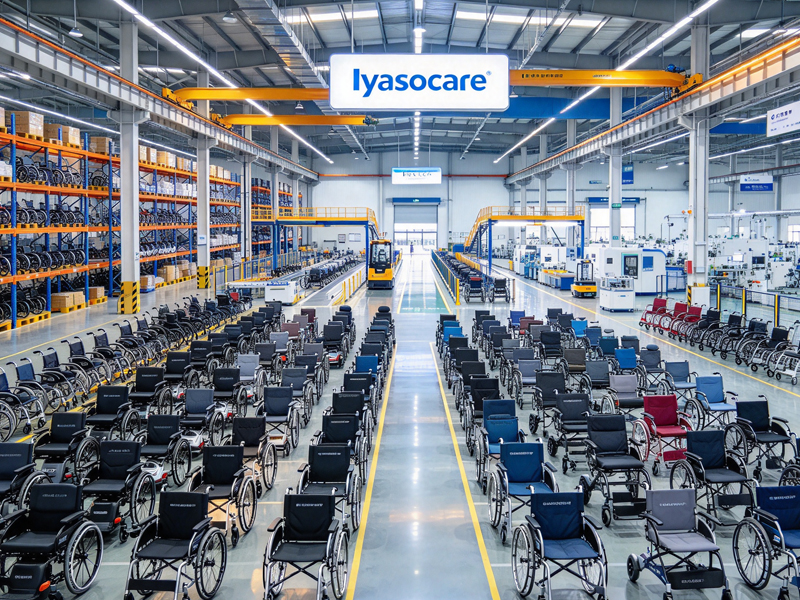
A wholesale supplier should be evaluated as a long-term business partner, not simply as a source of discounted products.
There is a meaningful difference between a trading company that coordinates orders and a manufacturer that controls important production processes. Both may be suitable for certain purchasing strategies, but buyers should understand which arrangement they are entering.
A direct manufacturer may offer better visibility into production schedules, component specifications, customization options, and quality control. A trading company may provide access to a broader selection of products from multiple factories. The right choice depends on your product range, order size, service expectations, and need for manufacturing transparency.
During supplier evaluation, ask practical questions:
Factory visits can provide useful insight, but they are not always necessary or practical for overseas buyers. Live video tours, production records, sample evaluations, third-party inspections, and clear written agreements can all contribute to a more informed decision.
Look beyond polished marketing materials. A reliable supplier should be able to answer detailed technical questions and provide evidence to support its claims.
It is also useful to evaluate communication quality before placing a large order. If a supplier responds slowly, avoids specific questions, or gives conflicting information during the quotation stage, these issues may become more difficult to resolve once money and inventory are involved.
Consistency matters more than a persuasive sales presentation. Your business needs a supplier that can deliver the agreed product, at the agreed quality level, within a realistic timeframe.
Minimum order quantity is one of the first commercial terms buyers encounter when purchasing wheelchairs wholesale. However, MOQ should be considered alongside production capacity, order flexibility, and inventory risk.
A low MOQ can help a new distributor test market demand without committing too much capital. Larger orders may unlock more favorable pricing, but they also increase the risk of holding slow-moving inventory. The most suitable order size depends on sales forecasts, available storage, cash flow, and the expected replenishment cycle.
When discussing MOQ, clarify whether it applies per model, per color, per configuration, or across the entire order. Ask whether different wheelchair models can be combined in one shipment and whether mixed orders affect pricing or production time.
Lead times require similar attention. A supplier’s stated production period may not include sample approval, customization, packaging design, raw-material procurement, final inspection, or international transportation.
Ask for a written schedule that separates the main stages of the order. For example, confirm when the production clock starts, how long sample approval may take, when inspection occurs, and when the goods are expected to be ready for shipment.
Production capacity is especially important when you plan seasonal promotions, public-sector tenders, or expansion into new distribution territories. A manufacturer may be able to fulfill a small initial order but struggle when your monthly volume increases.
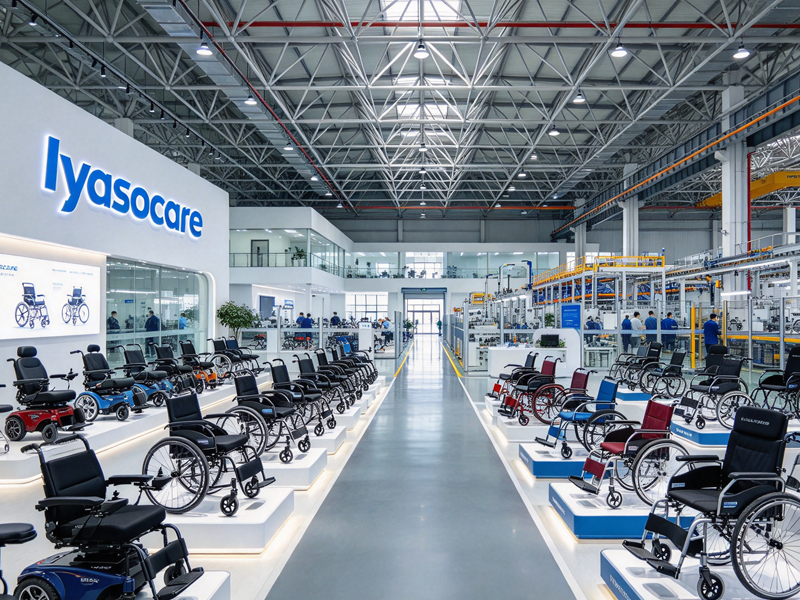
Iyasocare’s company information describes three wheelchair production lines and manufacturing processes that include stamping, injection molding, welding, and assembly. These details may help buyers begin assessing its production setup, but the relevant capacity and lead time should be confirmed directly for the particular models and quantities under consideration.
Before committing to a delivery date, also ask how the supplier manages production bottlenecks and unexpected delays. A clear communication process is valuable when you need to coordinate warehouse capacity, customer commitments, or onward distribution.
The objective is to establish a supply arrangement that matches your sales rhythm rather than buying more inventory than your business can comfortably support.
International shipping can have a significant effect on the economics of wholesale wheelchair purchases. Wheelchairs contain bulky frames and components, so packaging dimensions may matter almost as much as product weight.
Request both the net weight of the wheelchair and the gross weight of the packed unit. Ask for carton dimensions, units per carton, total shipment volume, and pallet configuration where applicable. These figures help freight forwarders calculate transport costs and determine how efficiently a container or shipment can be loaded.
Folding wheelchairs may offer packaging advantages, but do not assume that every folding model will reduce shipping costs. Compare the actual carton measurements of the products under consideration.
Packaging quality deserves careful attention. A wheelchair can leave the factory in excellent condition and still arrive with damaged upholstery, scratched frames, bent components, or missing accessories if the packaging is unsuitable for the journey.
Ask the supplier how it protects the frame, secures loose components, prevents moisture damage, and identifies cartons. For electric wheelchairs, battery packaging and transport documentation may also require special consideration depending on the battery type and shipping method.
Before confirming an international order, agree on the shipping terms under the applicable Incoterms rules. These rules help clarify responsibilities for transport, costs, delivery, and risk, but they do not replace a complete purchasing contract or determine every aspect of ownership and payment.
Also establish who will arrange customs clearance, provide the necessary commercial documents, and handle destination charges. Import duties, taxes, and local compliance expenses should be checked for the relevant destination rather than estimated from another market.
A freight quotation that appears inexpensive may exclude charges that become payable later. Ask for a clear breakdown and confirm which costs are included.
For repeat orders, maintain a record of actual freight costs, damage rates, customs delays, and delivery performance. Over time, this information can help you compare suppliers more accurately and negotiate more effectively.
After-sales service is often overlooked during the initial purchasing stage, especially when the focus is on unit price and delivery. Yet it becomes critically important once wheelchairs are in the hands of end users.
Even well-manufactured products require routine maintenance, and components may eventually need replacement. A supplier that cannot provide compatible parts or useful technical guidance can create unnecessary disruption for distributors and their customers.
Before placing a bulk order, request the written warranty policy. Check what it covers, how long coverage lasts, which parts are excluded, and what evidence is required when making a claim. Clarify whether the supplier provides replacement components, repairs, replacement units, or another remedy when a verified defect occurs.
For electric wheelchairs, ask specifically about batteries, chargers, controllers, motors, wiring, and other electrical components. Confirm the availability of compatible replacements and whether the supplier can provide troubleshooting instructions or technical support.
Manual wheelchair buyers should also consider the long-term availability of casters, tires, brakes, upholstery, armrests, footrests, and common fasteners.
Ask whether spare parts can be purchased individually or only in bulk. Check typical dispatch times, shipping arrangements, and whether illustrated parts lists or repair manuals are available.
A useful supplier agreement should also explain how defects discovered after delivery will be handled. For example, determine the inspection period, claim submission procedure, documentation requirements, and process for resolving disagreements about responsibility.
Iyasocare’s official website describes its focus on medical equipment manufacturing and quality control. When evaluating the company for a wholesale partnership, buyers should request the current warranty terms, replacement-parts policy, and support arrangements applicable to their intended order.
Reliable after-sales service is not merely an additional benefit. It helps protect your reputation, reduce avoidable downtime, and build trust with customers who depend on their mobility equipment.
For established distributors and growing mobility brands, private labeling can be a useful way to differentiate products in a competitive market. Instead of selling an identical catalog item under the manufacturer’s name, a business may choose customized branding, packaging, accessories, colors, or selected product features.
However, customization should be guided by a clear commercial objective. A logo on the frame may strengthen brand recognition, while a packaging change may improve retail presentation. More substantial modifications to components or product design can introduce additional engineering, testing, documentation, and regulatory considerations.
Before requesting customization, identify which changes will genuinely benefit your customers. Ask the manufacturer which options are already available and which require new tooling, minimum order quantities, or longer lead times.
Clarify who owns the artwork, tooling, and any custom design elements. Establish whether the supplier can manufacture the same specification for future orders and how changes will be approved. Your agreement should also address confidentiality and the permitted use of your brand assets.
Iyasocare presents itself as a supplier of wheelchairs and other rehabilitation products and describes support for international business partnerships. Buyers interested in customized sourcing can review its company information and contact the company to discuss the specific models, quantities, and requirements they have in mind.
For a first order, it is usually sensible to prioritize proven product configurations and introduce customization gradually. This approach helps you understand customer demand before investing in more complex modifications.
Once you have shortlisted several manufacturers, compare them using the same criteria. This reduces the influence of attractive sales presentations and makes commercial differences easier to identify.
A simple scorecard can include the following categories:
| Evaluation area | What to verify |
|---|---|
| Product suitability | Models, dimensions, user capacity, and intended applications |
| Build quality | Materials, components, inspection procedures, and sample results |
| Compliance | Applicable certificates, declarations, and model-specific documentation |
| Pricing | Unit cost, MOQ, customization charges, and payment terms |
| Logistics | Packaging, shipping volume, lead time, and delivery responsibilities |
| Quality consistency | Written specifications, change control, and inspection records |
| After-sales support | Warranty, spare parts, technical assistance, and claim handling |
| Communication | Response quality, documentation, and problem-solving |
| Growth potential | Ability to support repeat orders and expanding demand |
Not every category should carry the same weight. A buyer supplying healthcare facilities may prioritize documentation and durability, while a retailer specializing in travel wheelchairs may place greater emphasis on weight, folded dimensions, and ease of handling.
Use the scorecard to identify gaps rather than relying only on a total numerical score. A supplier with a slightly higher price may be the better option if it offers stronger documentation, better product consistency, and more dependable support.
Whenever possible, evaluate samples against written specifications before approving bulk production. For larger or higher-risk orders, agree on inspection criteria in advance and consider third-party quality checks.
It is also wise to document all important commitments in the purchase order or supply agreement. Product specifications, packaging, delivery terms, warranty obligations, and procedures for handling nonconforming goods should not depend on informal conversations alone.
Finding a manufacturer that understands both product requirements and international distribution needs can make wholesale purchasing more manageable. Iyasocare is one company buyers may wish to include in their supplier evaluation.
According to its About Us page, Chongqing Iyasocare Medical Co., Ltd. focuses on medical equipment research, development, production, sales, and consulting. Its product categories include wheelchairs, walkers, rollators, and other rehabilitation products.
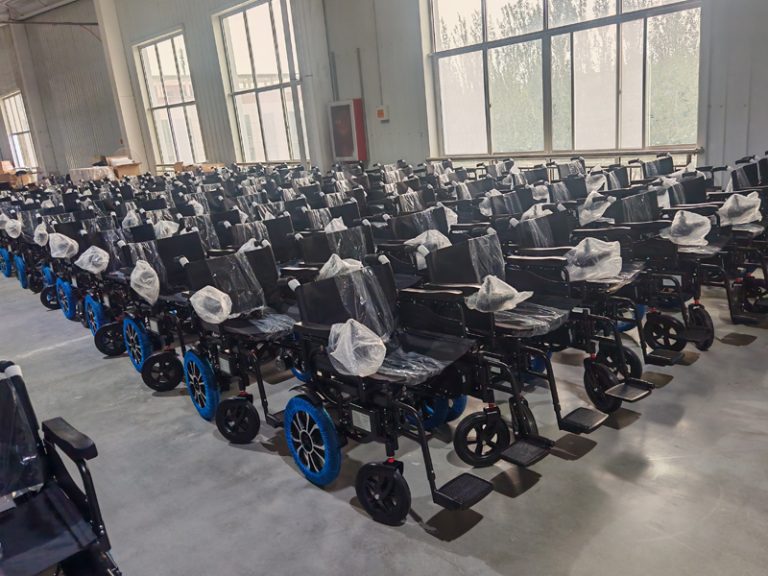
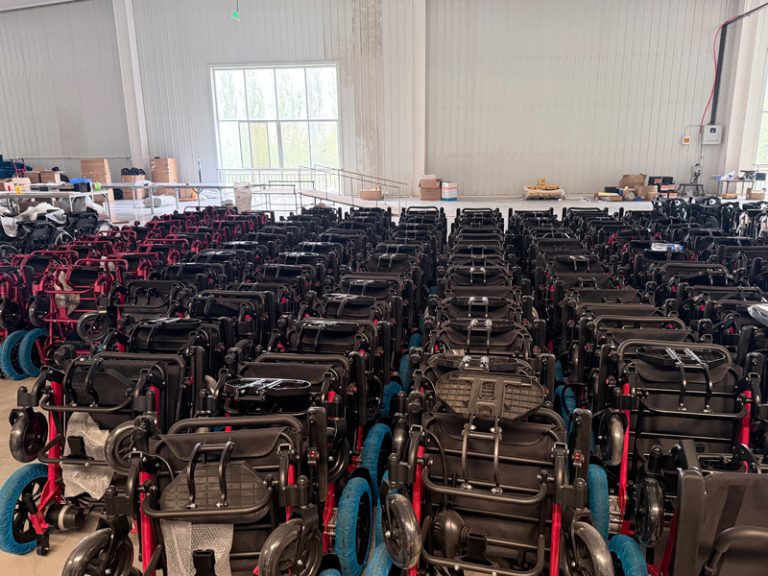
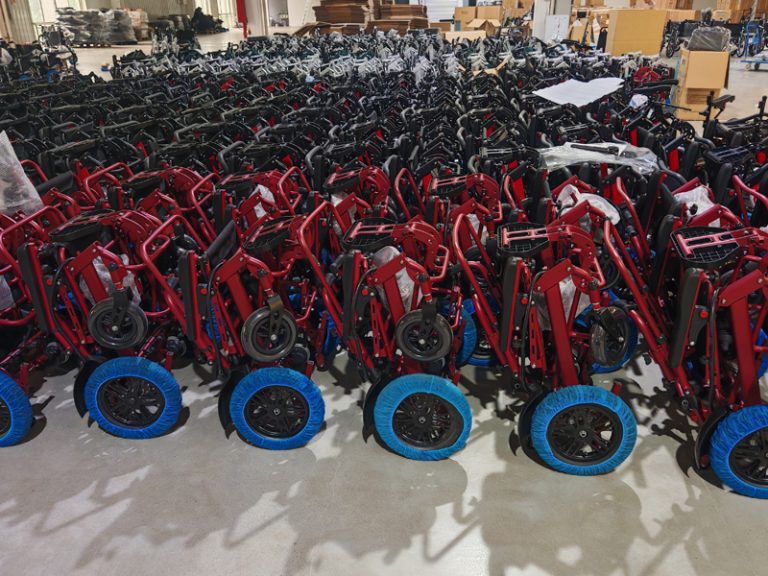
The company describes its own factory, established in 2019, and manufacturing processes covering stamping, injection molding, welding, and assembly. It also reports operating three wheelchair production lines, developing new products in response to market needs, and conducting quality checks during production.
These capabilities are relevant to wholesale buyers because manufacturing control, product development, and repeat-order consistency can influence the reliability of a long-term supply relationship.
Iyasocare also describes partnerships with customers in multiple countries and regions and identifies international certifications, including CE and ISO 13485, among its credentials. As with any potential supplier, buyers should confirm the current status, scope, and applicability of the relevant documentation before purchasing.
For distributors, the practical next step is to identify the models that match their market and request a detailed quotation. Useful information to provide includes the destination country, preferred wheelchair types, estimated order quantity, required certifications, packaging preferences, and whether private labeling is needed.
Buyers can begin by visiting the Iyasocare About Us page to learn about the company, its manufacturing background, and its international business activities.
The aim is not to choose a supplier based on its website alone. It is to use that information as the starting point for a more detailed evaluation involving product samples, written specifications, verified documentation, commercial terms, and after-sales arrangements.
A supplier relationship becomes valuable when both sides understand the requirements, communicate clearly, and can support a consistent flow of products over time.
Buying wheelchairs wholesale can create meaningful opportunities for medical equipment distributors, rehabilitation suppliers, and mobility retailers. The key is to balance product quality, market demand, landed cost, regulatory compliance, and supplier reliability rather than focusing on price alone.
Start by understanding your customers and selecting the right wheelchair categories. Evaluate samples, verify the relevant documentation, calculate the full cost of importing, and establish clear expectations for production, delivery, warranty coverage, and spare parts.
Most importantly, choose a supplier that can support your business beyond the first shipment. Consistent specifications, responsive communication, transparent commercial terms, and dependable after-sales support all contribute to a more resilient supply chain.
If you are comparing manufacturers for your next wholesale order, Iyasocare is one option to investigate. Review its company background and manufacturing capabilities, identify the models that fit your market, and request the technical and commercial information needed to make an informed decision.
A well-planned purchasing strategy does more than reduce sourcing risks. It helps you build a product range that customers can trust and a business that is better positioned for sustainable growth.
1. What should I check before buying wheelchairs wholesale?
Start with product suitability, build quality, applicable certifications, supplier reliability, and total landed cost. Check the wheelchair’s frame material, dimensions, weight capacity, brakes, wheels, comfort features, and intended use. For electric models, also evaluate battery performance, controller operation, charging requirements, and replacement-part availability.
Before placing a large order, request a detailed quotation, product samples where practical, current compliance documentation, and written warranty terms. Confirm the minimum order quantity, production lead time, packaging specifications, shipping responsibilities, and procedures for resolving quality issues.
2. Is it better to buy wheelchairs directly from a manufacturer or through a wholesaler?
Both options can work, depending on your business model. Buying directly from a manufacturer may provide greater visibility into production, customization, specifications, and repeat-order planning. A wholesaler may offer a broader product selection, smaller purchasing quantities, or consolidated sourcing from different brands.
Compare the complete commercial offer rather than assuming one channel is always cheaper. Consider minimum order quantities, landed costs, product consistency, documentation, delivery schedules, and after-sales support. If you plan to build a long-term product line or develop a private-label brand, a manufacturer with suitable production capabilities may be particularly worth evaluating.
3. How can I choose a reliable wheelchair manufacturer for international orders?
Begin by checking the manufacturer’s business background, factory capabilities, product range, quality management procedures, and experience supplying international customers. Request model-specific specifications, applicable certificates, test reports, sample products, and references where available.
Verify that all documentation matches the products and destination market. Discuss production capacity, lead times, packaging, shipping arrangements, warranty coverage, and spare parts before placing your order. For larger shipments, consider an independent pre-shipment inspection.
Companies such as Iyasocare can be included in your shortlist. Visit its official About Us page to review its manufacturing background and business information, then contact the supplier directly to confirm current product availability, certifications, pricing, and order requirements.