Our Location
Free Trade Tower, Xiyong street.
Chongqing, China

Free Trade Tower, Xiyong street.
Chongqing, China
For many people who rely on a wheelchair every day, mobility is only part of the challenge. A chair may provide reliable movement from one place to another, yet if the user spends several hours sitting, comfort, posture, pressure management, leg positioning, and the ability to rest become equally important. This is where an Electric Reclining Wheelchair can make a meaningful difference. Instead of treating the wheelchair simply as a powered transportation device, a reclining model combines mobility with a more adaptable seating position, allowing users to change posture throughout the day.
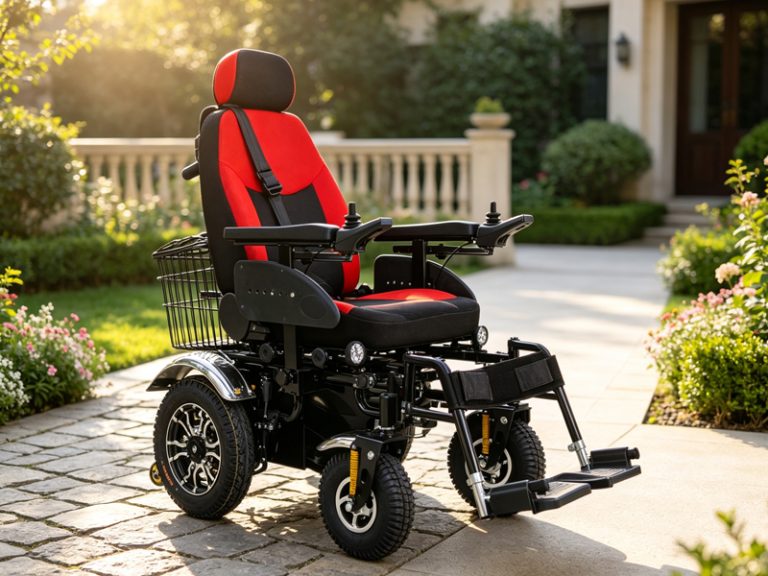
An Electric Reclining Wheelchair – Power Mobility Chair with Adjustable Backrest is particularly relevant for elderly users, people with limited mobility, rehabilitation users, and anyone who needs extended seating support. The adjustable backrest allows the user to move beyond a fixed upright position, while powered drive systems reduce the physical effort required to travel. Depending on the design, adjustable armrests, footrests, headrests and leg supports can further improve the experience.
A conventional electric wheelchair is primarily designed around powered movement. The user operates a joystick or controller, the motors drive the wheels, and the chair provides a stable platform for everyday mobility. That basic approach works well for many people, but it does not necessarily address the needs of someone who spends most of the day in the chair.
An Electric Reclining Wheelchair adds another layer of functionality: adjustable positioning. Instead of remaining in the same posture for hours, the user can change the backrest angle to find a more comfortable position for reading, resting, watching television, talking with family members or spending time outdoors.
This distinction becomes particularly important for users who have limited ability to reposition themselves independently. A reclining backrest can give caregivers and users more flexibility when managing daily routines. It can also make the chair more suitable for environments such as home care and rehabilitation, where the wheelchair may be used not only for transportation but also as a primary seating solution.
The concept should not be confused with a medical treatment claim. Reclining functionality is a practical positioning feature, but individual users have different clinical and postural requirements. For people with specific medical or pressure-management needs, professional assessment should always guide the final wheelchair configuration.
The best Power Mobility Chair with Adjustable Backrest therefore needs to balance several factors at the same time: driving performance, seating dimensions, adjustability, stability, braking, battery configuration, portability and overall user comfort. A wheelchair that performs well in one area but poorly in another may not be the right long-term solution.
When evaluating an Electric Reclining Wheelchair, the first feature worth examining is the actual reclining mechanism. A backrest that simply tilts slightly is different from a system capable of moving into a substantially reclined or lying position. The range of adjustment should be considered together with seat depth, seat height, head support and leg positioning.
The second consideration is whether the chair provides enough support when the backrest changes angle. Reclining should not simply mean moving the backrest backward. The user’s legs, feet, head and upper body also need to remain appropriately supported. Adjustable armrests, footrests, headrests and leg rests can therefore be important elements of the overall design.
The third factor is control accessibility. A sophisticated wheelchair is only useful when the user can operate it comfortably. A controller should be positioned according to the user’s physical abilities, and intuitive speed control is particularly important for indoor environments. For some users, left- or right-side controller flexibility can make a substantial difference.
The fourth consideration is braking and stability. Powered mobility equipment should provide predictable stopping performance, especially when used on slopes or uneven surfaces. Electromagnetic braking is commonly used on powered wheelchairs because it can automatically engage when the drive control is released, depending on the wheelchair’s control system.
Finally, battery accessibility matters more than many first-time buyers expect. A removable battery can make charging easier because the user or caregiver does not necessarily have to move the entire wheelchair close to a charging point. Battery type and capacity should also be selected according to the intended range, transportation requirements and local regulations.
For buyers specifically searching for an Electric Reclining Wheelchair – Power Mobility Chair with Adjustable Backrest, the IYASOCARE YSE148 is one of the most directly relevant models in the range.
The YSE148 is built around a hydraulic reclining system that allows the backrest to move from an upright seating position toward a fully reclined position. This makes the design particularly relevant to users who need more flexibility during long periods of wheelchair use. The manufacturer specifies a full lying size of 1380 × 600 × 1050 mm, providing additional space when the chair is reclined.
Its seating system is designed with adjustability in mind. The model has a 430 mm seat width, 440 mm seat depth and 530 mm seat height. The armrests, pedals, headrest and telescopic leg rests can be adjusted to accommodate different users and seating preferences. For users who spend substantial time in their chair, this kind of adjustability can be more valuable than simply having a powerful motor.
Another practical feature is controller flexibility. The YSE148 controller can be configured for left- or right-hand operation and positioned at the front or rear. This can be useful for users with different physical abilities and gives dealers greater flexibility when matching the chair to individual requirements.
From a mobility perspective, the YSE148 uses dual 250W motors and has a stated maximum speed of 6 km/h. The manufacturer lists a driving range of approximately 10–25 km depending on battery configuration and usage conditions, with a climbing capability of up to 9 degrees. An electromagnetic braking system is included for controlled stopping.
Battery selection is another selling point for distributors. The YSE148 can be configured with either lead-acid or lithium batteries, with several capacity options listed by the manufacturer. The quick-release battery design simplifies removal for charging and maintenance. For dealers, offering different battery configurations can make it easier to serve customers with different priorities, whether they value lower weight, longer range or a particular charging setup.
The frame is made from steel, with a listed maximum load of 120 kg and a net weight of approximately 32 kg. Despite its reclining structure, the chair can also be folded, with a listed folding size of 600 × 350 × 920 mm. This gives the YSE148 a useful balance between a feature-rich seating system and practical storage.
For a customer whose main priority is reclining comfort, the YSE148 should be one of the first models to consider.
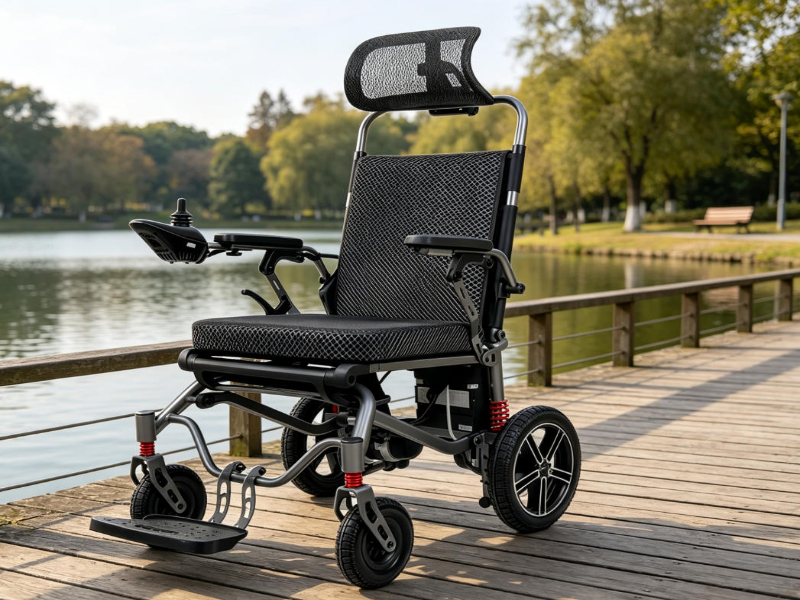
Not every customer who searches for an Electric Reclining Wheelchair actually needs a full reclining mechanism. Some users may prioritize low weight, portability, ergonomic seating and everyday maneuverability instead.
For those customers, the IYASOCARE YSE136 provides a different approach.
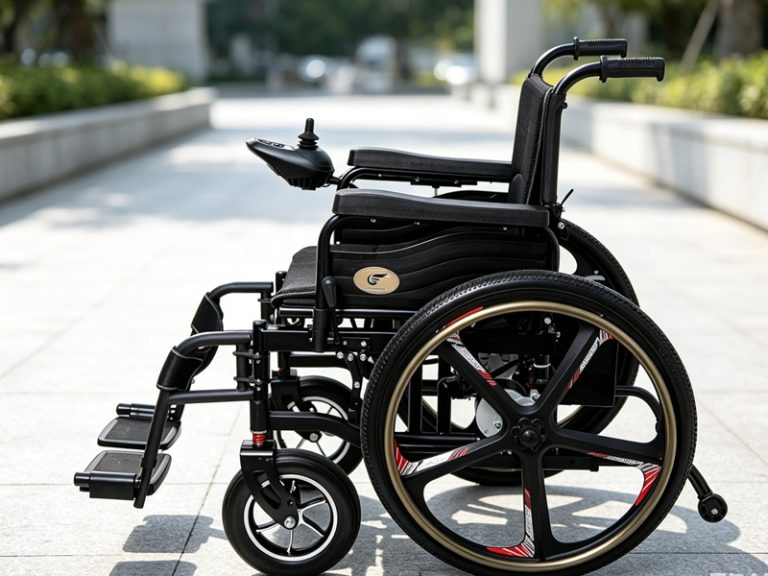
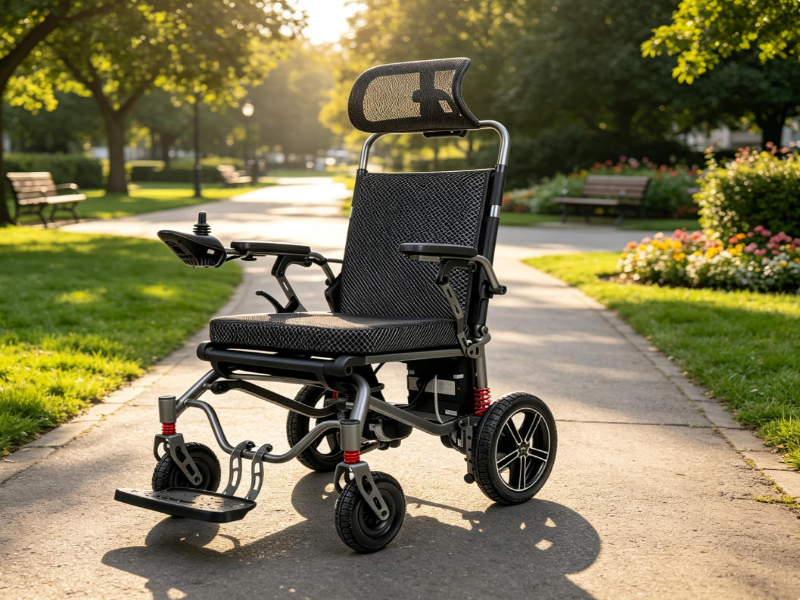
The YSE136 uses a high-strength aluminum alloy frame and has a listed net weight of only 20 kg. Its foldable structure makes it easier to store and transport, which can be especially attractive to families who frequently use a car or have limited storage space at home.
Rather than focusing primarily on full reclining, the YSE136 emphasizes ergonomic everyday seating. Its second-generation ergonomic seat includes a removable cushion, while the armrests can fold back and both the footrest and headrest can be adjusted in height. These features are designed to provide greater flexibility when entering, exiting or changing seating arrangements.
The YSE136 also uses independent front and rear shock-absorption systems and PU tires. The manufacturer states that the design is intended for different everyday surfaces, including grass, gravel and mildly uneven roads. Dual 250W motors provide a maximum speed of 6 km/h, with a listed range of 5–20 km and climbing ability of up to 9 degrees.
An electromagnetic parking brake is also included. The manufacturer describes an automatic parking function in which releasing the control lever brings the wheelchair smoothly to a stop, helping reduce unintended rolling on slopes.
The YSE136 is therefore better positioned as a lightweight ergonomic power wheelchair rather than a traditional full reclining wheelchair. For dealers, this distinction is useful because it allows customers to choose based on their actual priorities instead of assuming that every user needs the same configuration.
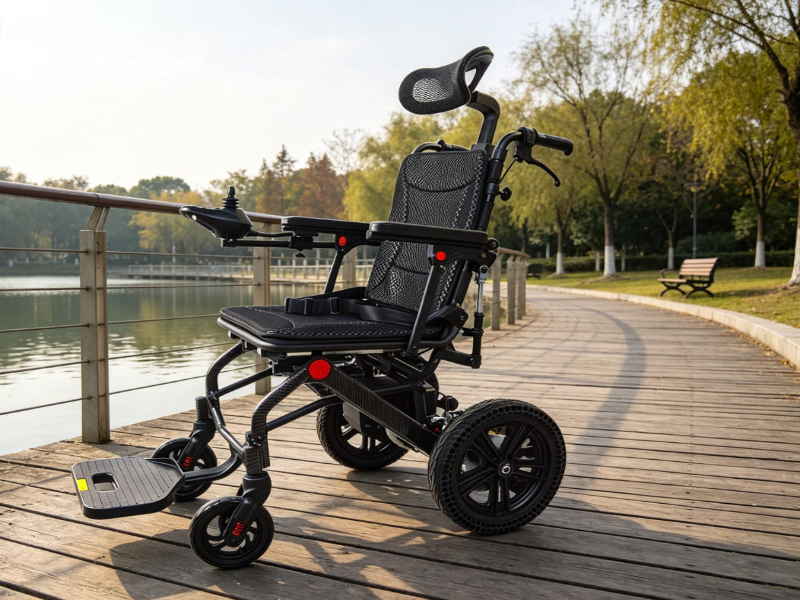
The third model worth considering is the IYASOCARE YSE109, which sits between basic powered mobility and the more specialized full reclining configuration.
The YSE109 combines a high-back structure with an adjustable backrest, allowing the backrest angle to be adjusted from 90 to 150 degrees. Its high-back design can also be converted to a lower-back configuration, providing additional flexibility for different usage scenarios.
For long-distance or extended daily use, the adjustable footrest and backrest are important features. The armrests can also be reversed, helping users with seating and sideways transfer requirements. These details make the YSE109 more adaptable than a fixed-position power wheelchair.
The chair uses a steel frame with a listed load capacity of 130 kg. Its 16-inch rear wheels and 10-inch front wheels are designed to provide stable movement, while the manufacturer lists a maximum speed of 6 km/h and a driving range of approximately 15 km. The chair also supports manual and electric operating modes, which can be useful if the battery becomes unavailable.
The YSE109 is also designed to fold for transportation, with a listed folding size of 79 × 39 × 74 cm. For customers who want a Power Mobility Chair with Adjustable Backrest but do not necessarily require a full lying position, this can be a practical alternative.
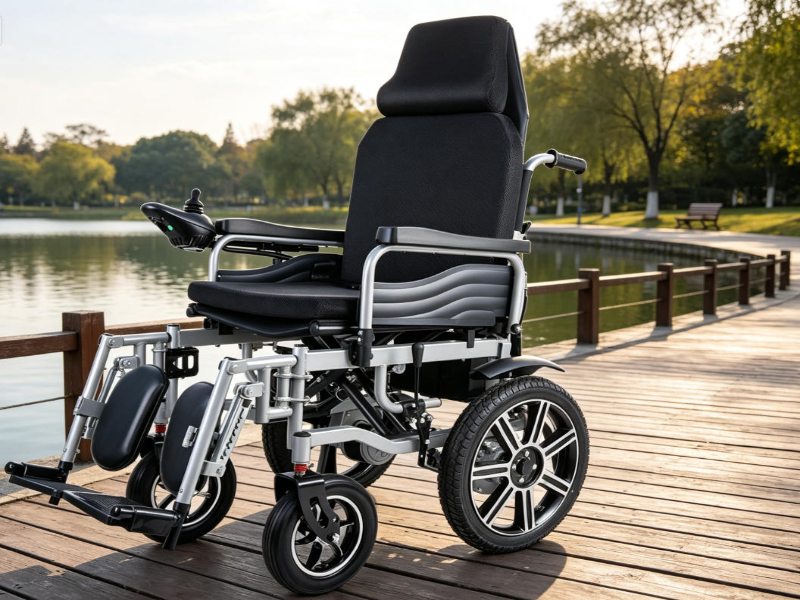
A wheelchair is not simply something a person sits in for a few minutes. For many users, it becomes part of everyday life. That means small ergonomic details can have a large practical impact over time.
An adjustable backrest allows the user to change posture rather than remaining locked into one position. Adjustable footrests can help accommodate different leg lengths and sitting preferences. Headrests can provide additional support, while adjustable armrests may make transfers and positioning easier.
This is why an Electric Reclining Wheelchair with Adjustable Backrest can be particularly attractive for home-care environments. A caregiver may need the user to sit upright for meals, move into a more relaxed position during rest, or change the chair configuration for transportation. A flexible seating system can make these transitions easier.
However, adjustability should never be treated as a substitute for professional seating assessment. Seat width, seat depth, pelvic position, back support and foot positioning all need to be considered together. A chair that is highly adjustable but incorrectly sized can still be uncomfortable.
For international distributors, this also means product education is important. A customer should understand what each adjustment does and how to use it safely. Good after-sales support can be just as valuable as the wheelchair itself.
The versatility of an Electric Reclining Wheelchair makes the category relevant across several environments.
At home, reclining functionality can allow the wheelchair to serve as both a mobility device and a comfortable seating platform. Users can move between rooms without transferring to another chair every time they want to rest.
In rehabilitation settings, adjustable positioning can offer healthcare professionals and caregivers more options when supporting users during daily routines. The appropriate configuration will depend on the individual’s rehabilitation plan and professional assessment.
For outdoor mobility, motor performance and braking become especially important. A reclining chair still needs to provide controlled movement and predictable stopping. The YSE148, for example, combines dual 250W motors with electromagnetic brakes and a stated climbing ability of up to 9 degrees.
Portability also matters. A foldable wheelchair can be easier to store and transport, but buyers should pay attention to the actual folded dimensions and total weight rather than relying only on the word “foldable.”
The YSE136 demonstrates this particularly well with its 20 kg listed net weight and compact folding structure, while the YSE148 and YSE109 offer more substantial frames and additional seating features.
For B2B buyers, selecting an electric wheelchair involves more than comparing retail prices. Product consistency, specifications, customization options, spare parts, packaging, technical support and communication with the manufacturer all influence the long-term value of the partnership.
IYASOCARE identifies itself as a manufacturer and supplier of rehabilitation products, with product categories covering electric wheelchairs, manual wheelchairs, standing wheelchairs, stair-climbing wheelchairs, beach wheelchairs, handcycles and other mobility equipment. The company’s product pages also provide information on OEM and ODM services.
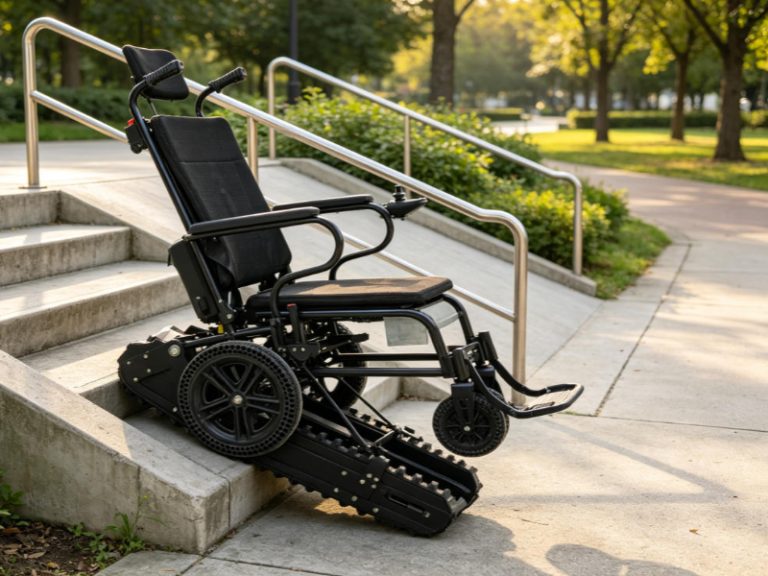
For a distributor building a product portfolio, this broader range can be useful because different customers require different mobility solutions. One customer may need a lightweight folding power wheelchair, another may need a reclining chair, while another may need a standing or stair-climbing model.
Before placing a wholesale order, however, dealers should confirm the specifications for the exact configuration being purchased, including battery type, charger requirements, seat dimensions, load capacity, packaging, warranty terms and applicable market compliance requirements. Requirements can differ substantially between countries and regions.
This is especially important for electric mobility products because batteries, medical-device classifications, transportation requirements and electrical standards may vary by market.
The best Electric Reclining Wheelchair – Power Mobility Chair with Adjustable Backrest is not necessarily the model with the greatest number of features. It is the model whose configuration genuinely matches the user’s daily routine.
For users who spend long periods in their wheelchair and want the ability to rest in a deeply reclined position, the IYASOCARE YSE148 stands out because of its hydraulic reclining system, adjustable seating components, dual 250W motors, electromagnetic braking and multiple battery configurations.
For users who place greater emphasis on lightweight transportation, the YSE136 offers a 20 kg aluminum alloy design, ergonomic seating, adjustable components and a folding structure.
For customers who want a high-back power wheelchair with adjustable positioning and practical folding capability, the YSE109 provides a strong combination of comfort, stability and flexibility, including a backrest adjustment range of 90–150 degrees and a manual/electric operating option.
Ultimately, an Electric Reclining Wheelchair should be evaluated as a complete mobility system rather than simply a motorized chair. Backrest adjustment, seating dimensions, leg support, braking, battery access, portability and driving performance all contribute to the user’s everyday experience. When these elements are matched correctly, a power wheelchair can provide much more than transportation—it can become a practical part of a person’s daily independence.
1. What is an Electric Reclining Wheelchair?
An Electric Reclining Wheelchair is a powered mobility chair that combines motorized driving with an adjustable backrest. Depending on the model, the backrest may move from an upright position into a significantly reclined or fully lying position. Models such as the IYASOCARE YSE148 also include adjustable armrests, headrest, footrests and telescopic leg rests for more personalized positioning.
2. Which IYASOCARE model is best for users who need a Power Mobility Chair with Adjustable Backrest?
The YSE148 is the most direct choice when full reclining is a priority because it uses a hydraulic reclining system and supports a fully reclined position. The YSE109 is a strong alternative for users who want a high-back design with a 90–150-degree adjustable backrest, while the YSE136 is better suited to customers who prioritize lightweight ergonomic design and portability.
3. Is a reclining electric wheelchair suitable for everyday use?
Yes, a reclining electric wheelchair can be designed for everyday home and outdoor mobility, provided the model is correctly matched to the user’s needs and operated according to the manufacturer’s instructions. Features such as adjustable seating, reliable braking, suitable battery capacity and appropriate support can make the chair practical for daily use. For users with specific postural, pressure-management or rehabilitation requirements, a qualified healthcare or seating professional should help determine the appropriate configuration.