Our Location
Free Trade Tower, Xiyong street.
Chongqing, China

Free Trade Tower, Xiyong street.
Chongqing, China
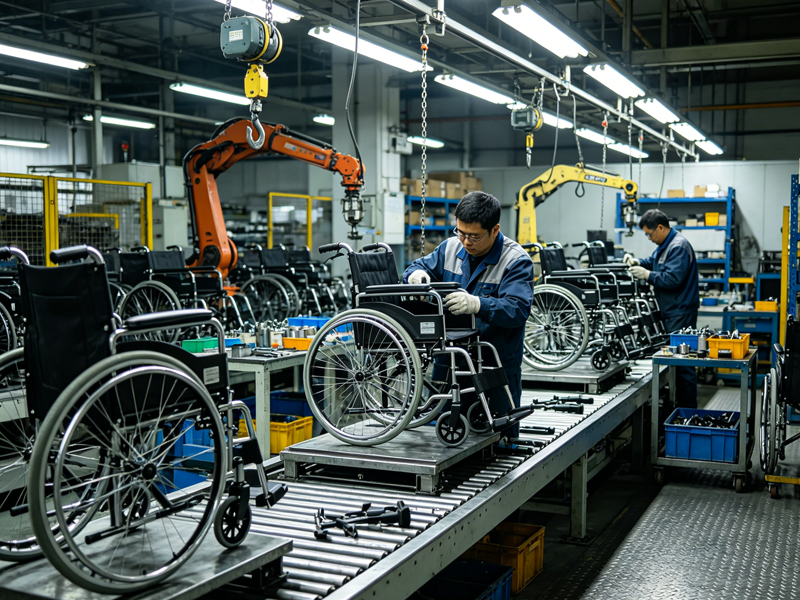
Singapore is one of Asia’s most accessible and mobility-friendly cities. From barrier-free MRT stations and wheelchair-accessible buses to modern shopping centers and pedestrian-friendly urban planning, the city has created an environment where mobility users can live with greater independence. Yet even in a highly accessible city, choosing the right electric wheelchair remains one of the most important decisions for individuals with mobility needs, caregivers, and healthcare professionals.
Today’s electric wheelchairs are no longer simply mobility devices. They represent freedom, autonomy, safety, lifestyle, and confidence. Whether someone is commuting across the city, navigating a compact apartment, visiting hospitals regularly, traveling internationally, or simply enjoying a day outdoors, the wheelchair they choose directly impacts daily comfort and quality of life.
In Singapore, demand for electric wheelchairs has grown steadily over the past decade. An aging population, increased awareness of rehabilitation technologies, and advancements in mobility engineering have transformed the local market. Buyers are now faced with an impressive range of options—from ultra-lightweight carbon fiber wheelchairs to intelligent models equipped with advanced drive systems, terrain control, and customizable seating support.
Singapore’s urban design presents a unique combination of advantages and challenges for wheelchair users. On one hand, the city is highly accessible. Most public transport systems, healthcare facilities, malls, parks, and government buildings are designed with mobility access in mind. On the other hand, the compact nature of many residential spaces, combined with frequent transitions between indoor and outdoor environments, creates specific performance demands.
A wheelchair user in Singapore may move from a narrow HDB corridor to a lift, onto a crowded MRT platform, through shopping districts, and eventually into a public park—all within a single day. This requires a wheelchair that can deliver both maneuverability and endurance.
Weather also plays a significant role. Singapore’s tropical climate means high humidity, frequent rainfall, and year-round heat. Materials used in wheelchair construction must resist corrosion, maintain structural integrity, and remain comfortable under prolonged outdoor exposure.
Battery reliability becomes equally important. Many users spend long hours outside the home, making charging opportunities limited. A wheelchair with poor battery management can quickly become a source of stress rather than independence.
As a result, wheelchair buyers in Singapore often prioritize five core factors:
These priorities have shaped the evolution of the local electric wheelchair market.
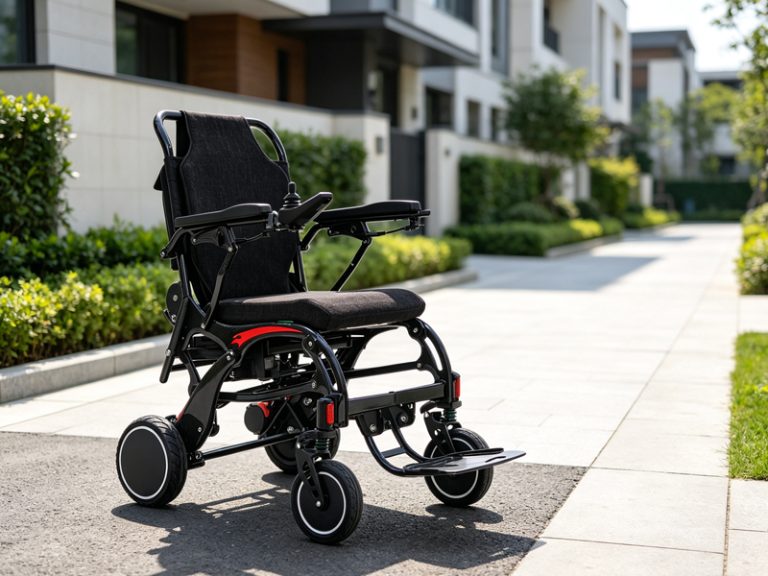
One of the biggest innovations in recent years has been the introduction of carbon fiber electric wheelchairs.
Traditional electric wheelchairs often weigh between 25 to 50 kilograms, making transportation difficult. Folding them into a vehicle, carrying them across travel checkpoints, or storing them in compact apartments can become physically demanding for both users and caregivers.
Carbon fiber technology has changed that.
Originally developed for aerospace engineering, motorsports, and premium sports equipment, carbon fiber combines exceptional strength with incredibly low weight. In the mobility industry, this material has allowed manufacturers to create electric wheelchairs that weigh significantly less than conventional aluminum or steel models while maintaining structural durability.
For Singapore users, the benefits are immediately noticeable.
A lightweight carbon fiber wheelchair can be folded quickly and stored in car trunks, taxi compartments, or apartment corners without requiring excessive effort. For families who travel often or use ride-hailing services regularly, this convenience becomes invaluable.
Carbon fiber also performs exceptionally well in humid climates. Unlike some metals that may corrode over time, carbon fiber resists moisture exposure more effectively, making it suitable for Singapore’s weather conditions.
Beyond functionality, these wheelchairs also offer a more modern and stylish appearance. Many users today care not only about mobility but also about aesthetics. Sleek carbon fiber designs provide a premium look that feels less clinical and more lifestyle-oriented.
These models are particularly popular among:
Active seniors who still enjoy social outings
Frequent travelers
Working professionals with mobility needs
Younger users who prioritize design and portability
Caregivers seeking easier transportation solutions
While carbon fiber wheelchairs often come at a higher initial price, many users view them as a long-term investment in convenience, independence, and comfort.
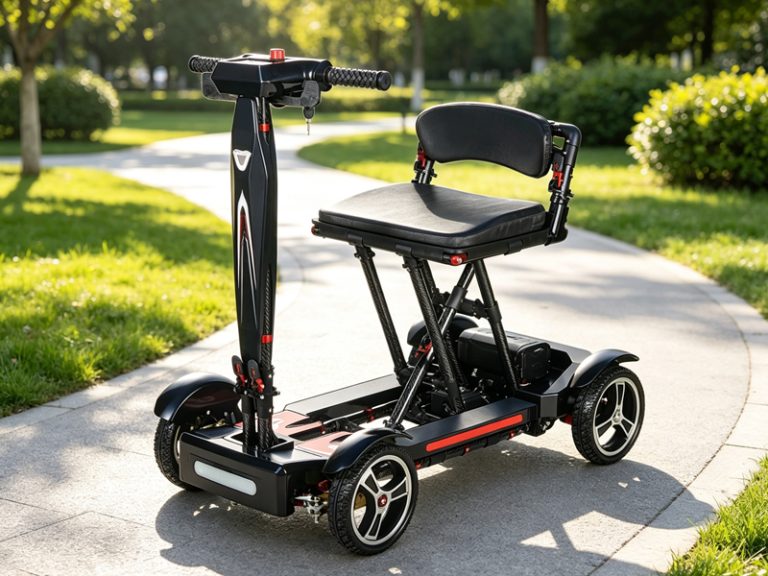
While electric wheelchairs remain the preferred solution for many users, motorized mobility scooters have carved out their own place in Singapore’s mobility market.
Scooters are designed differently from traditional power wheelchairs. They typically feature:
A steering tiller
A forward-facing seat
A larger wheelbase
Higher ground clearance
Extended battery range
These characteristics make scooters highly effective for outdoor travel.
Users who enjoy visiting East Coast Park, Marina Bay, community centers, or neighborhood shopping areas often find scooters appealing because they provide stability and comfort over longer distances.
Scooters also create a stronger sense of independence. For users who still have sufficient upper body control, balance, and coordination, steering a scooter can feel natural and empowering.
However, scooters are not ideal for everyone.
Singapore’s indoor spaces can be tight. HDB lifts, apartment corridors, clinic waiting areas, and shopping center elevators may challenge scooters with larger turning radii.
Users with limited arm strength, poor trunk stability, or transfer difficulties may also find scooters less practical than electric wheelchairs.
That said, scooters remain an excellent option for individuals who prioritize outdoor mobility, neighborhood independence, and recreational movement.
Not every electric wheelchair is designed for the same environment.
One of the biggest mistakes buyers make is choosing a wheelchair based purely on appearance or price without considering where it will actually be used.
Indoor electric wheelchairs are engineered for precision and maneuverability.
They usually feature:
Smaller frames
Tighter turning radii
Compact wheel configurations
Responsive joystick controls
Lighter overall construction
These features allow users to navigate kitchens, bedrooms, bathrooms, hallways, and elevators with confidence.
In Singapore’s residential environments, this matters greatly. Apartments often prioritize efficient space usage, meaning furniture placement, narrow entrances, and shared corridors can create mobility challenges.
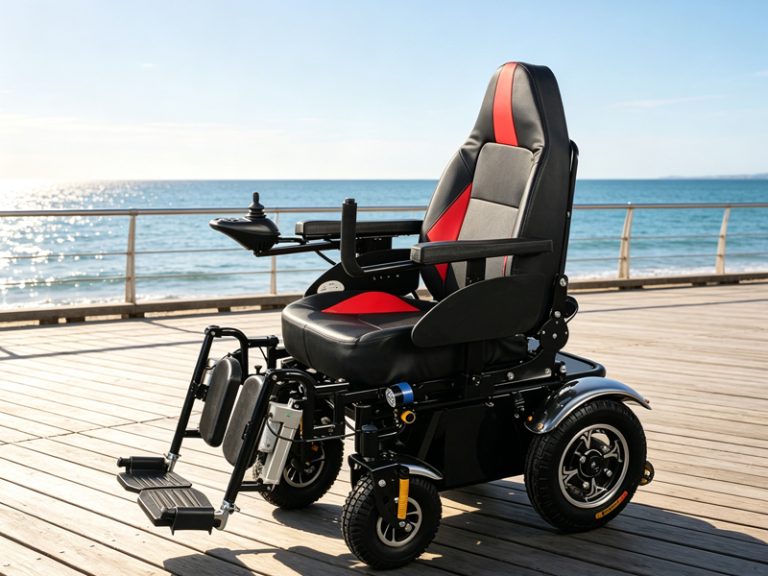
Outdoor wheelchairs, by contrast, focus on power and stability.
They often include:
Larger drive wheels
Enhanced suspension systems
Higher ground clearance
Longer battery capacity
Improved obstacle climbing ability
These features make them ideal for uneven pavements, ramps, park pathways, and longer travel routes.
Many modern buyers now choose hybrid electric wheelchairs that combine indoor agility with outdoor capability. These models are becoming increasingly popular in Singapore because they support the dynamic lifestyle many users lead.
One of the most misunderstood aspects of electric wheelchair technology is the drive system.
The drive system determines where the powered wheels are located, which directly affects stability, maneuverability, and terrain performance.
Front-wheel drive systems place the powered wheels at the front of the wheelchair.
This setup provides:
Excellent obstacle climbing
Strong traction
Smooth navigation over uneven surfaces
Better performance on ramps
In Singapore, front-wheel drive can be useful for navigating curb transitions, tactile pavement surfaces, and outdoor pathways.
Because the drive wheels pull the chair forward, some users may need time to adapt to the steering response. Once mastered, however, front-wheel drive can deliver impressive versatility.
Rear-wheel drive places the powered wheels at the back.
This configuration offers:
Predictable steering
Excellent directional stability
Comfortable long-distance travel
Smooth outdoor performance
Rear-wheel drive wheelchairs are often recommended for users who travel longer distances or prefer a driving experience that feels intuitive and stable.
They perform particularly well in larger open spaces such as parks, hospitals, and public facilities.
Mid-wheel drive places the powered wheels directly beneath the user.
This design is known for:
Exceptional turning radius
Highly responsive control
Balanced weight distribution
Superior indoor maneuverability
In Singapore’s compact urban environment, mid-wheel drive has become one of the most popular options.
Navigating elevators, crowded malls, narrow corridors, and apartment layouts becomes significantly easier.
For users who spend most of their day indoors but still require occasional outdoor travel, mid-wheel drive often offers the best balance.
Battery performance is often underestimated during the buying process.
A wheelchair with insufficient battery capacity can limit independence, increase anxiety, and create logistical challenges.
Modern electric wheelchairs generally use lithium-ion batteries because they offer:
Faster charging
Longer lifespan
Lighter weight
More stable performance
For Singapore users who spend long hours outside, battery range should be evaluated based on real-world travel habits.
Questions to consider include:
How often will the wheelchair be used each day?
Will it be used indoors only, or across outdoor routes?
Will public transportation be part of daily travel?
Are charging opportunities available during the day?
Choosing a wheelchair with reliable battery performance ensures greater freedom and confidence.
Mobility is only one part of the equation.
Long-term comfort directly impacts physical health, circulation, posture, and fatigue management.
A quality electric wheelchair should support:
Pressure relief
Proper spinal alignment
Adjustable armrests
Foot support customization
Seat cushioning
Backrest positioning
Users with neurological conditions, muscular weakness, or prolonged sitting requirements should prioritize ergonomic seating solutions.
In many cases, working with occupational therapists or mobility specialists can significantly improve wheelchair selection outcomes.
Buying an electric wheelchair should never be a rushed decision.
The ideal wheelchair depends on several personal factors:
Lifestyle and activity level
Primary usage environment
Transportation needs
Storage limitations
Medical conditions
Caregiver involvement
Budget expectations
A lightweight carbon fiber model may be ideal for frequent travelers.
A mid-wheel drive chair may suit apartment living.
A rear-wheel drive model may better serve users who spend more time outdoors.
A mobility scooter may support recreational independence.
The key is not choosing the most expensive option.
The key is choosing the option that fits daily life.
Singapore offers a mature and growing mobility market, giving users access to world-class technology, professional fitting services, and specialized support. With the right research and guidance, users can find a mobility solution that not only improves movement but transforms confidence, independence, and overall quality of life.
1. Is a carbon fiber electric wheelchair worth the higher price?
Yes, for many users it is. Carbon fiber electric wheelchairs offer excellent portability, corrosion resistance, durability, and ease of transport. For users who travel frequently or live in compact spaces, the long-term convenience often justifies the higher initial investment.
2. Which drive system is best for Singapore homes and apartments?
Mid-wheel drive is often the best choice for Singapore homes due to its tight turning radius and excellent indoor maneuverability. However, users who spend more time outdoors may benefit more from front-wheel or rear-wheel drive systems.
3. Can electric wheelchairs be used on public transport in Singapore?
Yes. Singapore’s public transport infrastructure is generally wheelchair accessible, including MRT stations and public buses. However, users should always check wheelchair dimensions, turning radius, and battery regulations before regular commuting to ensure compatibility and comfort.