Our Location
Free Trade Tower, Xiyong street.
Chongqing, China

Free Trade Tower, Xiyong street.
Chongqing, China
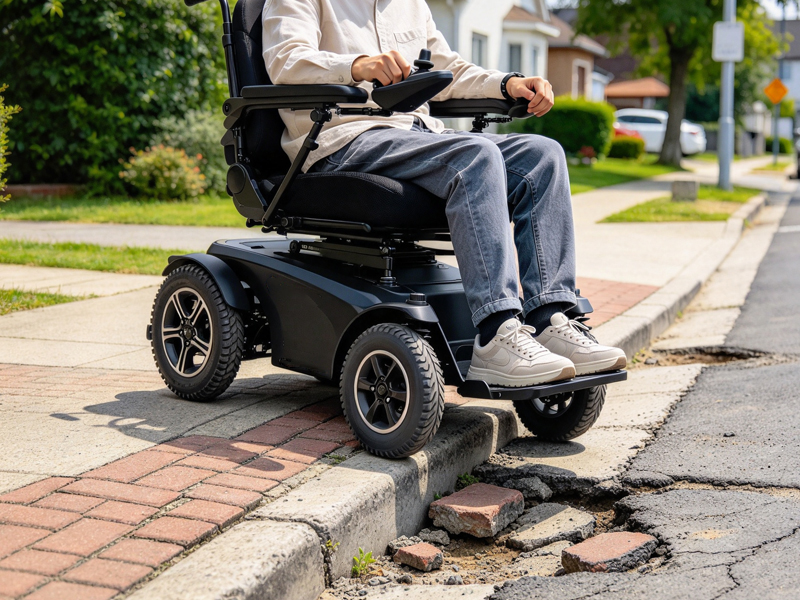
That is why choosing a power wheelchair involves more than comparing battery range, seat comfort, or maximum speed. The way a chair handles everyday outdoor surfaces depends on its drive system, wheel size, suspension, ground clearance, motor performance, and stability features. These components work together to determine how confidently a wheelchair can move across uneven pavement and navigate changes in elevation.
The good news is that many modern power wheelchairs are designed to handle common outdoor obstacles. However, not every model is built for the same conditions, and a chair that performs well on a smooth shopping-center walkway may struggle on an older neighborhood sidewalk.
Understanding how these machines respond to different surfaces makes it easier to choose the right equipment, recognize potential hazards, and plan safer trips. Whether you are shopping for your first power wheelchair or looking to improve your current outdoor experience, the details below will help you understand what really matters.
A power wheelchair relies on a combination of powered wheels, smaller caster wheels, a stable frame, and electronic controls. Each component plays a role in keeping the chair moving in the intended direction while supporting the rider.
On level pavement, these systems generally work without much difficulty. The wheels maintain relatively consistent contact with the ground, and the motors can move the chair forward with little resistance. Uneven surfaces introduce a different set of demands.
Consider a sidewalk with a raised concrete joint. When a small caster reaches the edge, it must roll upward instead of continuing along a flat surface. Depending on the wheel’s diameter, the height of the obstruction, and the chair’s momentum, the wheel may climb over it smoothly or catch against the edge. That sudden resistance can affect the chair’s direction and comfort.
Curbs present a more significant challenge because they require the wheelchair to move between two different elevations. The powered wheels must generate enough force to move the chair upward, while the frame and other wheels must remain stable throughout the transition. A steep or irregular curb can also change the distribution of weight across the wheels.
Other outdoor conditions create their own problems:
The important distinction is that an obstacle’s height is only part of the problem. Its shape, approach angle, surface condition, and position relative to the wheelchair’s wheels all influence how difficult it will be to cross.
For everyday mobility, the goal is not to find a chair that can conquer every obstacle. It is to find one that matches the terrain you regularly encounter while maintaining a suitable level of safety and comfort.
One of the most important factors affecting outdoor performance is the location of the wheelchair’s powered wheels. Power wheelchairs generally use front-wheel drive, mid-wheel drive, or rear-wheel drive. Each configuration offers a different balance of maneuverability, traction, and stability.
Front-wheel drive: Built to pull over obstacles
In a front-wheel-drive power wheelchair, the main powered wheels are positioned toward the front of the frame. Because these wheels encounter an obstacle early, their traction and torque can help pull the chair forward and upward.
This arrangement can be useful when traveling across uneven pavement, negotiating certain thresholds, or moving over small raised edges within the manufacturer’s limits. Front-wheel-drive models may also offer a useful combination of indoor maneuverability and outdoor capability.
However, front-wheel drive does not automatically make a wheelchair suitable for every curb. Wheel size, motor output, weight distribution, caster placement, and the manufacturer’s approved climbing limits still matter. A chair that performs well on a shallow pavement transition may not be appropriate for a tall, abrupt curb.
Mid-wheel drive: Excellent maneuverability in tighter spaces
Mid-wheel-drive wheelchairs place the main powered wheels near the middle of the frame. This layout is popular because it allows the chair to turn within a relatively small space, making it practical for indoor environments, narrow hallways, and crowded public buildings.
Additional caster wheels at the front and rear help support the frame. On uneven surfaces, however, the relationship between the drive wheels and the supporting casters becomes especially important. When one wheel encounters a raised slab or depression, the chair’s movement depends on how its suspension and wheel arrangement respond.
Mid-wheel-drive models vary considerably. Some are well suited to regular outdoor use, while others are intended mainly for smoother surfaces. Rather than assuming that all mid-wheel-drive chairs handle rough pavement in the same way, compare the specifications of individual models and test them on representative terrain.
Rear-wheel drive: Predictable travel on open paths
Rear-wheel-drive power wheelchairs position their main powered wheels toward the back. Many users appreciate this configuration for outdoor travel, particularly on open paths, longer sidewalks, and relatively smooth pavement.
These chairs can offer a stable, predictable driving experience, although turning characteristics differ from those of mid-wheel-drive models. Their ability to cross raised edges and uneven surfaces depends on the relationship between the drive wheels, front casters, ground clearance, and suspension.
There is no universal winner among the three configurations. Someone who spends most of the day indoors may value a tight turning radius, while someone who regularly travels across older sidewalks may place greater importance on wheel size and suspension.
The best starting point is to identify where the wheelchair will actually be used, then compare drive configurations against those needs.
When comparing power wheelchairs, you may see a specification describing maximum curb height or curb-climbing capability. This figure indicates the obstacle height a particular model is designed and rated to negotiate under specified conditions.
Some power wheelchairs have published curb-climbing ratings in the range of 2 to 4 inches, although capabilities vary by model. These figures should never be treated as a universal standard or a guarantee that the chair can safely climb an obstacle of that height in every situation.
A wheelchair’s performance depends on several factors working together.
Motor torque and available power influence how effectively the powered wheels can overcome resistance. Climbing a raised edge requires more effort than rolling across level pavement, particularly when the chair is carrying a heavier load.
Battery condition also matters. A low battery, aging battery, or electrical problem may affect performance. A chair that seems to struggle with an obstacle it previously handled should be inspected rather than repeatedly pushed to its limits.
Total load includes the rider and any permitted accessories or cargo. Staying within the manufacturer’s weight capacity is essential, but maximum load alone does not guarantee the same climbing performance under every condition.
Approach angle and obstacle shape can make a significant difference. A square, straight-on approach is generally easier to assess than an angled approach that causes the wheels to meet the edge at different times. Angled curb attempts can increase instability and should not be used as an improvised way to overcome an obstacle.
Ground clearance and wheel geometry determine whether the frame or another component may contact the pavement as the wheels move over a raised edge.
For these reasons, a maximum curb-height rating should be viewed as one part of the buying decision, not the only number worth checking.
There is also an important distinction between a curb and an accessible curb ramp. A curb ramp provides a sloped transition between sidewalk and street level, reducing the need to climb a vertical edge. When one is available and unobstructed, it is generally the preferred route.
If a curb ramp is blocked by a parked vehicle, damaged, or covered in loose debris, look for a safer alternative rather than attempting a climb beyond the wheelchair’s approved capability.
A wheelchair’s ability to move forward is only one part of outdoor performance. How it responds to bumps, cracks, and uneven pavement also affects comfort, control, and stability.
Suspension helps manage the movement of the wheels and frame when the chair crosses irregular surfaces. Depending on the design, springs, dampers, and other suspension components can reduce the force transmitted through the frame when a wheel encounters a bump.
Imagine crossing a sidewalk where one concrete slab sits slightly higher than the next. A chair with limited suspension may transmit more of that impact to the seat, making the ride feel abrupt. A well-designed suspension system can help absorb some of the movement and allow the wheels to maintain better contact with the surface.
That contact matters because traction and steering depend partly on how consistently the tires meet the ground. If a wheel loses contact over an uneven section, control may become less predictable.
Not every power wheelchair has the same suspension arrangement. Some compact models prioritize portability and indoor use, while outdoor-oriented models may include more substantial suspension components. The right choice depends on the terrain, the rider’s needs, and the chair’s overall design.
Caster wheels deserve equal attention.
Casters are the smaller wheels that support and guide the chair, with their positions varying by drive configuration. They help the wheelchair change direction and maintain support as it travels.
In general, larger caster wheels can roll over small gaps and raised seams more easily than smaller wheels of otherwise comparable design. A larger wheel encounters an obstacle at a less severe angle relative to its diameter, which can reduce the resistance experienced at the point of contact.
The trade-off is that larger wheels can require more space, influencing turning geometry and the chair’s overall dimensions. Smaller casters may work well in compact indoor environments, but they can be less forgiving on damaged sidewalks.
Neither wheel size nor suspension should be judged in isolation. A wheelchair with large casters but inadequate ground clearance may still struggle on certain obstacles. Likewise, a sophisticated suspension system cannot make an unsafe curb climb safe.
When possible, test the complete chair over a modest, controlled surface transition similar to those you encounter at home. A demonstration on a perfectly smooth showroom floor reveals very little about how the wheelchair will behave on your regular route.
Power wheelchairs are designed with stability in mind, but that does not mean they are immune to tipping or loss of control. Uneven ground, abrupt steering, steep slopes, and poorly approached obstacles can all increase risk.
Anti-tip wheels are one feature intended to help limit excessive forward or backward tipping, depending on the chair’s design. These small wheels are positioned near the frame and are typically not in continuous contact with the ground during normal travel.
If the chair begins to rotate beyond its intended operating range, the anti-tip wheels may contact the surface and help limit further movement.
Their effectiveness depends on proper design, adjustment, and maintenance. Incorrect positioning can reduce the intended safety margin or interfere with the wheelchair’s ability to negotiate certain transitions. Adjustments should follow the manufacturer’s instructions and, where appropriate, be handled by a qualified mobility equipment technician.
Other important stability considerations include the following:
Safe operation also depends on the user. Moving quickly toward a curb, making a sharp turn on a slope, or attempting to cross an obstacle diagonally can increase instability. A wheelchair should never be pushed beyond its rated capabilities simply because an obstacle appears manageable.
If you are unfamiliar with a new model, ask the supplier or a qualified wheelchair professional to explain its stability features, approved operating angles, and safe obstacle-handling procedures.
Even a well-equipped power wheelchair benefits from thoughtful driving habits. The following practices can help make everyday outdoor travel more predictable.
1. Read the surface before moving onto it.
Look ahead for cracks, loose stones, standing water, broken pavement, and sudden changes in elevation. A quick visual check can help you decide whether to continue, slow down, or choose another route.
Pay particular attention to sections where the sidewalk slopes toward the road. These areas may require more steering correction than a level path.
2. Reduce speed before reaching an obstacle.
Approaching a raised edge slowly gives you more time to judge the situation and stop if necessary. Use the speed settings recommended for your chair and avoid sudden joystick movements.
Do not assume that extra momentum will help the wheelchair climb. Depending on the obstacle and design, it can instead make the transition harder to control.
3. Use accessible curb ramps whenever possible.
A properly designed curb ramp offers a gradual transition between levels. Approach it in a controlled manner, following the chair manufacturer’s instructions for ramps and slopes.
Check the ramp for loose debris, slippery surfaces, damaged edges, or obstructions before proceeding.
4. Avoid attempting a curb that exceeds the chair’s rating.
If you cannot confirm that the obstacle is within the wheelchair’s approved limits, choose another route. Never attempt to climb an ordinary staircase or a steep vertical curb unless the equipment is specifically designed and approved for that use.
5. Pay attention to changes in traction.
Wet leaves, mud, loose gravel, and smooth surfaces covered in water can affect wheel grip. If traction appears unreliable, stop in a safe location and find a more suitable path.
6. Know when to turn back.
A route that looks manageable from a distance may be unsafe when you reach it. If the pavement is badly broken, the slope is too steep, or the available space does not allow a controlled approach, taking a different route is a sensible decision.
These habits are especially valuable for users who travel independently. Safe outdoor mobility is not simply about overcoming obstacles; it is also about recognizing when an obstacle should not be attempted.
The most suitable power wheelchair is the one that fits your mobility needs, environment, and daily routine. A model designed primarily for indoor use may be perfectly appropriate for someone who travels mostly across smooth floors and accessible paths. Someone who regularly encounters broken sidewalks, sloping driveways, and uneven outdoor surfaces may need a different combination of features.
Before purchasing, think about your typical journeys.
Do you travel from home to nearby shops? Are there raised pavement joints outside your building? Do you frequently cross driveways or travel through parks? Is the route mostly smooth, or does it include gravel, grass, and older concrete?
These details can guide your comparison more effectively than a long list of specifications.
| Feature | Why It Matters Outdoors | What to Check |
|---|---|---|
| Drive configuration | Influences maneuverability and obstacle handling | Whether front-, mid-, or rear-wheel drive suits your routes |
| Maximum curb height | Defines the manufacturer’s approved climbing capability | Published limits and required operating conditions |
| Suspension | Helps manage bumps and uneven surfaces | Suspension design and intended terrain |
| Caster size | Affects how small wheels cross gaps and raised seams | Wheel dimensions and clearance |
| Ground clearance | Helps prevent the frame from contacting the ground | Clearance at the lowest part of the chair |
| Anti-tip system | Helps limit certain tipping movements | Proper setup and maintenance |
| Battery performance | Supports reliable operation throughout a trip | Range, battery condition, and charging requirements |
| Weight capacity | Defines the permitted combined load | Rider weight and any additional cargo |
Use this table as a starting point rather than a substitute for a professional assessment. Two wheelchairs with similar specifications can behave differently because their frame geometry, wheel placement, suspension, and control systems are not identical.
A hands-on demonstration is particularly useful. Ask the supplier whether you can test the chair on a safe, controlled surface that resembles your normal environment. A shallow pavement seam, a mild slope, or a textured outdoor path may reveal handling differences that are difficult to judge from photographs or product descriptions.
You should also consider how easily the chair fits into your daily life. Seat comfort, posture support, battery range, transport requirements, service availability, and ease of maintenance remain important even when outdoor performance is a priority.
For users who need a wheelchair for longer outdoor journeys, a model intended for outdoor or all-terrain use may be worth investigating. However, the term “all-terrain” should not be taken to mean that every surface or obstacle is safe. Always verify the manufacturer’s specific limits and intended applications.
The best purchase is not necessarily the chair with the highest speed or the most impressive curb-climbing figure. It is the chair that performs reliably within the conditions you actually encounter.
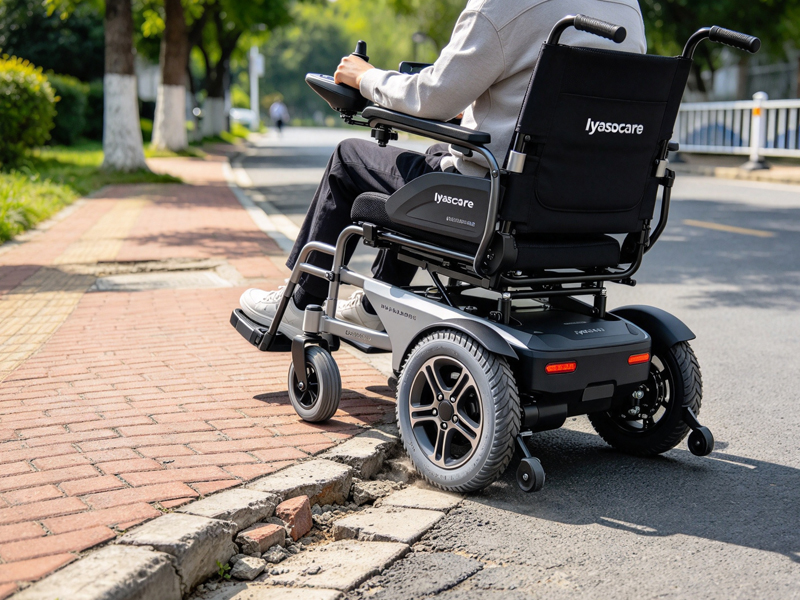
A power wheelchair’s outdoor performance can change as its components wear. Regular maintenance helps preserve handling, reliability, and safety.
Start with the wheels and tires. Check for visible damage, excessive wear, embedded debris, and any signs that a wheel is not rotating or tracking normally. Follow the manufacturer’s guidance for tire pressure if the chair uses pneumatic tires.
Battery care is equally important. Charge the battery according to the manufacturer’s recommendations, and investigate unusual changes in range or power. A wheelchair that repeatedly loses power or struggles during ordinary travel may need professional inspection.
Suspension components, caster assemblies, and anti-tip wheels should also be checked periodically. Loose hardware, worn bearings, misaligned casters, or improperly adjusted stabilizers can affect how the chair moves over uneven ground.
Pay attention to changes in behavior. If the wheelchair begins pulling to one side, produces unfamiliar noises, vibrates excessively, or becomes noticeably less capable of crossing surfaces it previously handled, do not assume the issue is simply the pavement.
A qualified technician can inspect the drive system, wheels, suspension, controls, and other components to identify the cause.
Maintenance is not just about extending the life of the equipment. It helps ensure that the wheelchair continues to perform as expected when the terrain becomes less forgiving.
Curbs and uneven sidewalks are a normal part of the built environment, but their effect on power wheelchair users can be significant. The right equipment can reduce some of these challenges, although no single design eliminates every risk.
Drive configuration influences how the wheelchair approaches obstacles. Suspension helps manage bumps and maintain contact with the ground. Caster wheels affect how easily smaller gaps and raised seams can be crossed, while anti-tip features contribute to stability when used and maintained correctly.
These systems work together, and their effectiveness depends on the individual chair, the rider’s needs, and the environment.
When choosing a power wheelchair, look beyond the headline specifications. Consider the surfaces you travel across every week, ask questions about real-world performance, and arrange a suitable demonstration whenever possible. Keep the equipment properly maintained, follow its operating limits, and use accessible curb ramps instead of attempting unnecessary vertical climbs.
A well-matched wheelchair can make daily journeys more manageable and help users travel with greater confidence. The goal is not to conquer every sidewalk. It is to find a reliable, comfortable way to navigate the places that matter most in everyday life.
1. Can power wheelchairs climb curbs?
Some power wheelchairs can climb small curbs within their manufacturer’s specified limits. The exact capability depends on the model, motor performance, wheel configuration, ground clearance, total load, and operating conditions. Many models have published curb-climbing ratings in the approximate range of 2 to 4 inches, but this is not universal. Always check the manufacturer’s specifications and use an accessible curb ramp whenever one is available.
2. What is the best power wheelchair for uneven sidewalks?
The best power wheelchair for uneven sidewalks depends on how frequently you travel outdoors and the conditions you encounter. Look for a model with suitable suspension, appropriate caster and drive-wheel sizes, adequate ground clearance, and stability features designed for your intended use. Front-wheel-drive models may handle some raised edges effectively, while certain mid-wheel- and rear-wheel-drive models may better suit other needs. Test individual chairs on safe, representative surfaces before making a decision.
3. How can I safely drive a power wheelchair over cracked or bumpy pavement?
Reduce speed before reaching uneven pavement, scan the route for hazards, and use smooth, controlled joystick movements. Avoid sudden turns, steep or unstable surfaces, and obstacles that exceed your wheelchair’s rated capability. Use accessible curb ramps where possible, maintain your tires and suspension, and consult a qualified mobility equipment professional if you are unsure how your chair should handle a particular surface.